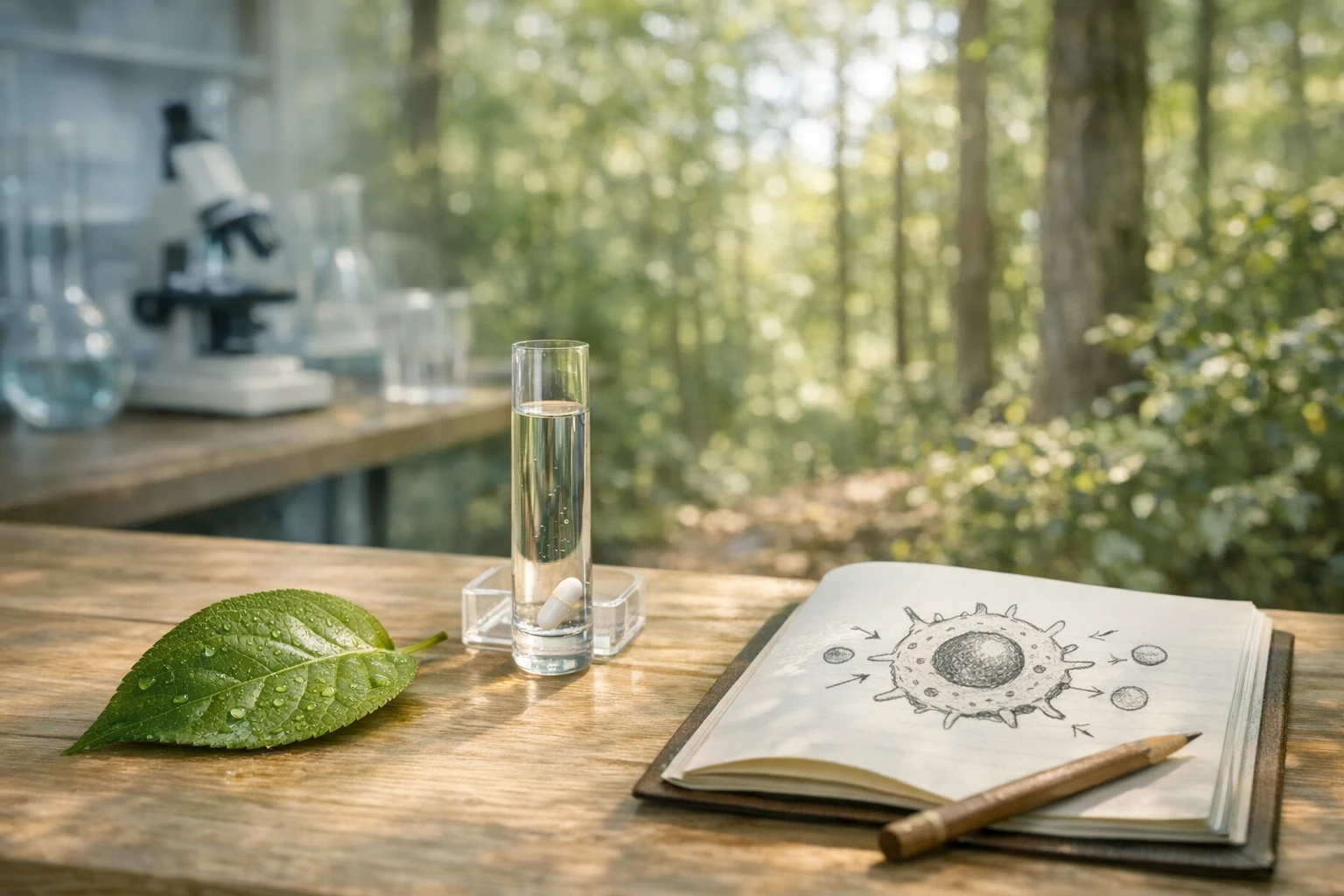
Updated and contextualized version of an article originally published on June 15, 2020
The article retains its original focus by presenting it through a scholarly and accessible perspective, supported by verifiable references.
Authors
- Dr. A. Conte – Biologist
- Roberto Panzironi –Independent researcher
Note editoriali
- First publication: June 15, 2020
- Last update: April 20, 2026
- Version: 2026 narrative revision
Editorial note: This article was previously published and has been updated according to scientific and informative criteria to clarify available evidence. The text is for informational purposes only and does not replace medical advice.
IN BRIEF
- Regular contact with green and natural spaces is associated with measurable reductions in stress and certain cardiometabolic indicators.
- Experimental studies on "forest bathing" show temporary increases in immune cell (NK) activity and reductions in blood pressure and stress parameters in selected groups.
- Exposure to daylight, especially in the morning, helps regulate the circadian rhythm and promotes sleep; vitamin D synthesis is maximal during the central hours of the day.
- Evidence for long-term outcomes (mortality, diabetes, cardiovascular diseases) is predominantly observational: useful for assessing associations, less so for establishing direct causality.
- Interpreting the benefits of nature requires attention to dose, frequency, context, and possible confounding factors (air, physical activity, socioeconomic conditions).
Abstract: what does science say?
Being outdoors and spending time in natural environments is associated, in numerous studies, with improvements in mood, a reduction in physiological parameters related to stress (e.g., cortisol levels and blood pressure), and measurable changes in the immune system after repeated or prolonged exposures. Experimental evidence from brief interventions (e.g., walks in forests) shows immediate biological effects, while observational epidemiological studies link proximity to and use of green spaces to a lower risk of certain chronic diseases and a possible reduction in mortality. However, the results depend heavily on the definition of "nature" (forest, park, urban green space), the dose (frequency and duration of exposures), the outcome measure, and confounding factors; therefore, associations do not automatically imply a direct causal relationship.
Plausible mechanisms
Proposed mechanisms include: reduction of psychophysiological stress and sympathetic activation, improved sleep through synchronization of circadian rhythms induced by morning light, increased physical activity and social interaction, reduced exposure to pollutants, and increased exposure to volatile plant compounds (phytoncides) which, in experimental studies, appear to modulate certain immune functions. These pathways can act together and vary from individual to individual.
What influences efficacy and duration
Observed effects vary with the duration and frequency of exposure, the type of natural environment (forest vs. urban park), the activities performed (walking vs. sitting), and individual conditions (age, health status). Short-term measures (e.g., changes in blood pressure or cortisol levels) tend to manifest after single exposures; long-term effects (reduction in the risk of chronic diseases) primarily emerge from observational studies on populations exposed over time.
What it means in practice
For the general public, evidence suggests that integrating regular outings into green or natural spaces during the week can produce measurable benefits for mental well-being and certain physiological indicators. Short-term interventions such as walks in natural environments have been associated with reductions in perceived stress and biological changes (for example, heart rate variability and cortisol levels) [5]. Studies on organized forest interventions document temporary increases in natural killer cell activity, a non-clinical biological signal but indicative of an acute immune response [1][2].
Regarding sleep, protocols that increase exposure to daylight, particularly in the morning hours, are associated with better circadian alignment and superior sleep quality in groups of workers and specific populations [10]. Cutaneous vitamin D synthesis depends on UVB radiation: it is maximal during the central hours of the day, but sun exposure must be balanced with skin protection when necessary, especially for fair skin or prolonged exposures [9].
Practical suggestions (without prescriptions)
Consider short daily outings in green spaces: even 20–30 minute walks can contribute to relaxation and increased physical activity. Prioritize exposure to natural light in the morning hours to promote circadian entrainment. When spending time in the sun, balance exposure to contribute to vitamin D synthesis while avoiding sunburn. These indications are informative in nature and do not replace individual medical recommendations.
Warnings and precautions
The recommendations are general and not prescriptive: individuals with specific medical conditions (immunodeficiencies, photosensitivity, sleep disorders) should consult a healthcare professional before significantly changing their habits. Furthermore, the quality of green spaces, safety, accessibility, and exposure to environmental agents (pollutants, allergens, ticks) can modify the expected benefits.
KEY POINTS TO REMEMBER
- Regular contact with nature is associated with stress reduction and benefits for mood and sleep; however, most evidence for long-term outcomes is observational and shows associations, not proof of causality.
- Short-term experimental interventions in forests have shown temporary biological changes, such as increased NK cell activity and decreased blood pressure in some studies [1][2][4].
- Exposure to natural morning light helps synchronize the circadian rhythm and can improve sleep quality and latency [10].
- Living in greener areas is associated with a lower risk of certain chronic diseases in population analyses, but results vary based on green space measurement, context, and control of confounding factors [6][7][8].
- Vitamin D synthesis depends on UVB exposure, which is higher during the central hours of the day; however, exposure must be managed based on phototype and the risk of photoexposure [9].
Limitations of the evidence
It is important to distinguish between types of studies. Many studies on the effect of nature are observational: these can highlight associations between an environmental variable (e.g., proximity to green spaces) and a health outcome, but they are susceptible to confounding factors (e.g., socioeconomic status, physical activity, air quality). Experimental studies and randomized trials on short-term interventions provide information on acute effects (stress, physiological parameters), but the generalizability and duration of long-term effects remain limited [5][4].
Common methodological limitations include: heterogeneous measures of "green," non-standardized exposure times and methods, often small or unrepresentative samples, and the absence of complete control for environmental or behavioral variables that can mediate the effect. To interpret the results with caution, it is therefore necessary to evaluate the methodological quality of the studies and not assume that an observed association always implies a direct causal effect.
Editorial conclusion
Research on the effects of nature on health shows a consistent and multidimensional picture: regular outings in natural environments are associated with immediate psychophysiological benefits and positive signals at the population level for some chronic outcomes. Plausible biological mechanisms (stress reduction, better sleep, physical activity, exposure to plant compounds, and improved air quality) support the credibility of the link, but the strength of the evidence varies by outcome and study design. For the community and healthcare decision-makers, the evidence justifies investments in the quality, accessibility, and safety of urban green spaces; for the individual, regular integration of contact with nature represents a low-risk strategy to promote well-being, to be evaluated on a case-by-case basis.
Editorial note
This content was originally published in the past and updated today according to scientific and informative criteria. The purpose is informative: it does not replace diagnosis, treatment, or personalized medical advice. For clinical questions, consult your doctor or trusted healthcare professional.
SCIENTIFIC RESEARCH
Below are the cited and verified research with clickable DOIs for transparency and verification.
- Li Q. Effect of forest bathing trips on human immune function. Environ Health Prev Med. 2010;15:9–17. https://doi.org/10.1007/s12199-008-0068-3
- Li Q et al. Forest bathing enhances human natural killer activity and expression of anti-cancer proteins. Int J Immunopathol Pharmacol. 2007;20(2 Suppl):3–8. https://doi.org/10.1177/03946320070200S202
- Bratman GN, Hamilton JP, Daily GC, Gross JJ. Nature experience reduces rumination and subgenual prefrontal cortex activation. Proc Natl Acad Sci U S A. 2015;112(28):8567–8572. https://doi.org/10.1073/pnas.1510459112
- Li Q et al. Blood pressure-lowering effect of Shinrin-yoku (forest bathing): a systematic review and meta-analysis. BMC Complement Altern Med. 2017. https://doi.org/10.1186/s12906-017-1912-z
- Roberts et al. The effect of exposure to the natural environment on stress reduction: a meta-analysis. Urban Forestry & Urban Greening. 2020. https://doi.org/10.1016/j.ufug.2020.126932
- Shanahan DF et al. Health benefits from nature experiences depend on dose. Sci Rep. 2016;6:28551. https://doi.org/10.1038/srep28551
- Rojas-Rueda D et al. Green spaces and mortality: a systematic review and meta-analysis of cohort studies. Lancet Planet Health. 2019;3:e469–e477. https://doi.org/10.1016/S2542-5196(19)30215-3
- Chen H et al. Residential Greenness and Cardiovascular Disease Incidence, Readmission, and Mortality. Environ Health Perspect. 2020;128:087005. https://doi.org/10.1289/EHP6161
- Holick MF. Vitamin D deficiency. N Engl J Med. 2007;357:266–281. https://doi.org/10.1056/NEJMra070553
- Figueiro MG. Individually tailored light intervention through closed eyelids to promote circadian alignment and sleep health. Sleep Health. 2015;1(1):75–82. https://doi.org/10.1016/j.sleh.2014.12.009
Internal DOI verification checklist performed: for each entry, the existence of the DOI, the correspondence of the first author, year, title, and journal, and the relevance of the content to the cited claim were checked.