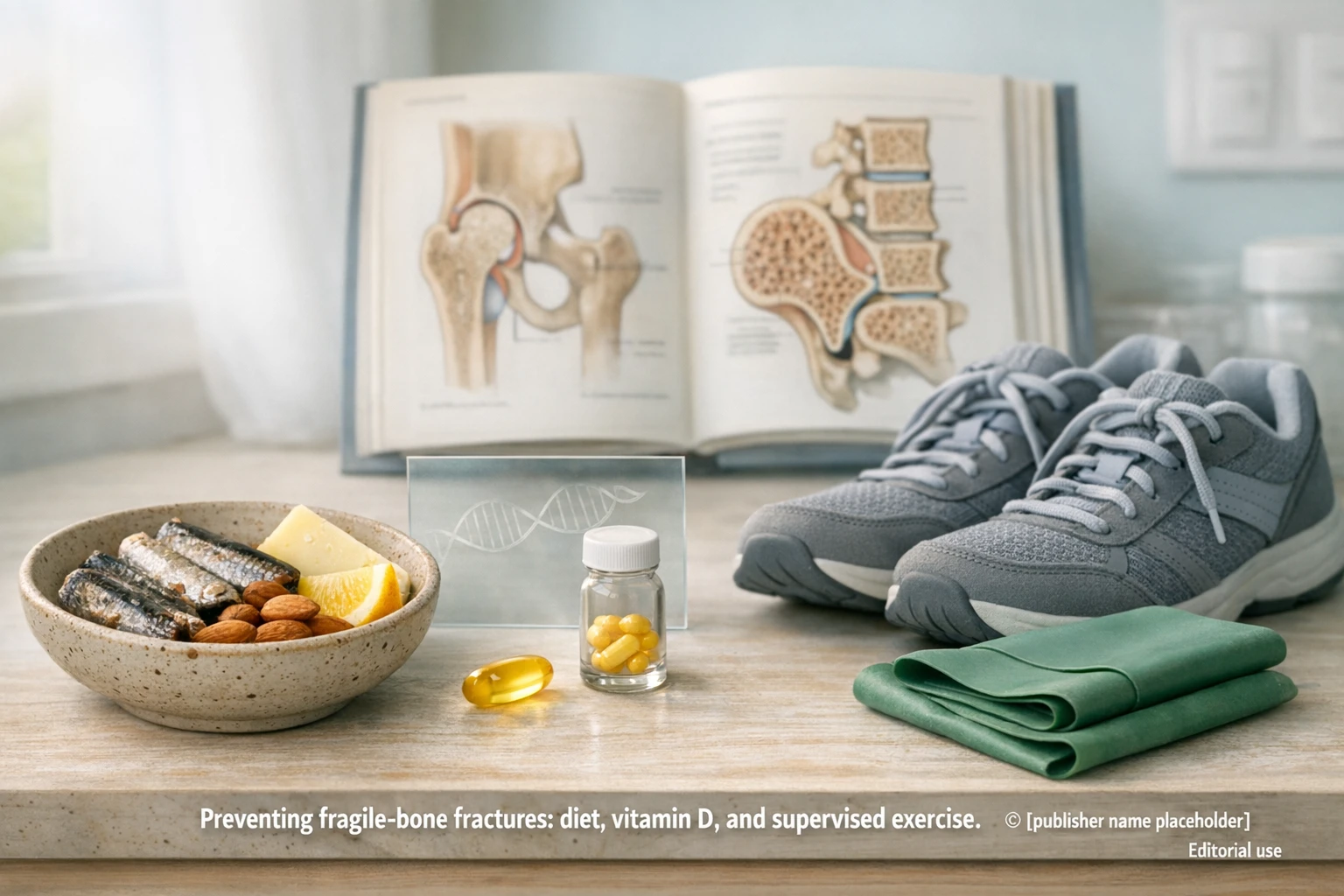
Updated and contextualized version of an article originally published on November 9, 2020
The article retains its original focus by presenting it through a scholarly and accessible perspective, supported by verifiable references.
Authors
- Dr. A. Conte – Biologist
- Roberto Panzironi –Independent researcher
Note editoriali
- First publication: November 9, 2020
- Last update: April 18, 2026
- Version: 2026 narrative revision
Initial Note
This article is based on previously published text, updated according to scientific evidence and clarity for public dissemination. It is for informational purposes only and does not replace the advice of a treating physician. For individual situations, always consult a healthcare professional.
In brief
- Fragility fractures, especially hip fractures, are events with a high impact on the health and autonomy of older adults.
- The probability of fracture depends on clinical factors, bone density, fall risk, and context (e.g., age, frailty, pharmacological therapies).
- Evidence indicates that targeted exercise and fall prevention programs reduce the number of falls and can reduce fractures; supplementation with vitamin D and calcium shows variable results depending on the context.
- Anti-osteoporotic drugs reduce the risk of new fractures in selected patients; some evidence also shows a reduction in mortality after fracture under specific conditions.
Abstract: what does science say?
Osteoporosis is a condition that makes bones more fragile and increases the likelihood of fractures even from low-energy trauma. Hip fractures are particularly relevant because they are associated with loss of autonomy, high disability, and increased short- and medium-term mortality. International evidence shows that fracture risk assessment should combine clinical factors and, when possible, densitometry. Non-pharmacological interventions—exercise for balance and strength, fall prevention measures, and nutritional optimization—reduce the risk of falls and can help limit fractures. Vitamin D and calcium supplementation produce different results depending on the population studied and the presence of deficiency; combined supplementation may be useful in deficient or institutionalized individuals. Anti-osteoporotic drugs are effective in preventing recurrence in those who have already had fractures; in selected cases, a reduction in post-fracture mortality is also observed. However, interpreting the evidence requires caution: much evidence comes from observational studies or heterogeneous meta-analyses, and the effects depend on age, nutritional status, comorbidities, and treatment adherence. [Non-exhaustive summary — for complete references, consult the SCIENTIFIC RESEARCH section].
Why are hip fractures so relevant?
Hip fractures are among the most severe consequences of weakened bones: they lead to multiple clinical problems beyond bone damage, such as loss of mobility, post-operative medical complications, and reduced personal autonomy. Historically, the literature reports that one-year mortality after hip fracture can range widely but significantly, with commonly cited values around 15–25% in older adult populations, especially when comorbidities and prolonged immobility are present [1].
The epidemiological burden of fractures is growing globally, mainly due to population aging: large-scale analyses document an increase in the absolute number of fractures and associated disability, highlighting the importance of public policies to identify and prevent at-risk individuals [2].
Risk factors and at-risk populations
The risk of fracture depends on multiple elements: bone mineral density (BMD), age, sex, previous fracture events, medication use (e.g., corticosteroids), early menarche/menopause, malnutrition, presence of falls, and other comorbidities. Validated tools that combine clinical factors with BMD allow for estimating the 10-year probability of fracture (e.g., FRAX) and help select individuals who would most benefit from specialized interventions [3].
Some categories have a higher risk: older adults (over 65), postmenopausal women, individuals with a family history of osteoporosis, patients chronically treated with bone mass-reducing drugs, and those who have already experienced fragility fractures. Assessing fall risk is complementary to bone assessment, as most hip fractures follow a fall from a standing position.
Clinical evaluation and useful tools
Evaluation should include a history of previous fractures, current pharmacotherapies, BMD measurement when indicated, and fall risk assessment. FRAX is a widely used tool to estimate the 10-year probability of major fracture (vertebrae, hip, wrist, humerus) and hip fracture; it provides a useful epidemiological framework for guiding clinical decisions, despite its limitations related to the reference population [3].
What prevention says: nutrition, vitamin D, calcium, and physical activity
Preventive measures are multifaceted. Targeted physical exercise to improve balance, strength, and mobility reduces the number of falls and, consequently, can reduce the number of fractures in older adults: a systematic review showed a significant reduction in falls with exercise programs that include balance and muscle strengthening exercises [4].
Regarding supplementation and nutrition, the evidence is nuanced: reviews and meta-analyses show that vitamin D supplementation alone does not consistently reduce the risk of fractures in the general population; however, the combination of vitamin D plus calcium can reduce the risk of fractures in some populations, particularly in deficient individuals or in institutional settings [5]. On the other hand, recent evidence from large randomized trials in non-deficient populations has not documented generalized benefits of vitamin D alone on fracture reduction [6].
Meta-analyses focused on dietary calcium and supplements have raised doubts about preventive efficacy, suggesting a modest and context-dependent effect, as well as possible adverse effects in some categories; therefore, the common recommendation is to prioritize calcium intake through diet and reserve supplements for those with documented clinical needs [7].
Nutrition and supplementation
A varied diet, rich in calcium-containing foods (dairy or fortified equivalents), along with adequate protein intake and micronutrients (e.g., vitamin K, magnesium) supports bone health. The use of supplements should be based on clinical evaluation, 25(OH)D levels, and overall dietary intake. In the absence of documented deficiency, evidence does not support the universal use of high doses of vitamin D for fracture prevention [5][6][7].
Physical activity and fall prevention
Regular programs combining balance exercises, walking, and muscle strengthening reduce the frequency of falls and the number of people who fall at least once, with potentially translated effects on fracture reduction. The intensity, duration, and personalization of the program are important for effectiveness and safety [4].
Medications and clinical interventions: what to expect
In individuals with previous fragility fractures or high calculated risk, anti-osteoporotic pharmacological treatments (e.g., bisphosphonates, denosumab, teriparatide) reduce the risk of future fractures. Meta-analyses and systematic reviews indicate efficacy in reducing new vertebral and non-vertebral fractures, including effects on reducing the incidence of hip fractures in selected contexts [8].
In patients who have already suffered a hip fracture, some trials have observed a reduction in mortality associated with specific pharmacological interventions: for example, a randomized study documented a reduction in mortality with zoledronate administered after hip fracture [9]. These results require cautious interpretation and case-by-case application, considering age, comorbidities, and possible contraindications.
Risk/benefit assessment
The decision to initiate pharmacological therapy should be based on an individual assessment: probability of future fracture, life expectancy, comorbidities, patient preferences, and potential adverse effects. For secondary prevention (after a fracture), most guidelines recommend timely initiation of anti-osteoporotic therapy.
What it means in practice
For the reader, the practical message is operational but not prescriptive: hip fracture prevention is built on a multidimensional assessment. If you have risk factors (advanced age, previous fracture, chronic corticosteroid therapy, early menopause, recurrent falls), it is reasonable to consult a doctor for a risk assessment, which may include bone density measurement and the use of probability tools (e.g., FRAX) to decide on possible interventions.
Simple and widely applicable interventions include: checking and correcting confirmed nutritional deficiencies (e.g., vitamin D), maintaining a regular exercise program for strength and balance, reducing environmental factors that facilitate falls (lighting, rugs, shoes), managing comorbidities, and reviewing medications that increase fall risk. In patients with a recent fracture or high risk, evaluate with specialists (orthopedist, geriatrician, endocrinologist) the appropriateness of specific therapies.
Key takeaways
- Hip fractures have a high impact on mortality and quality of life; preventing falls is crucial.
- Risk assessment combines clinical factors, fall risk, and, when indicated, densitometry (BMD/FRAX).
- Targeted exercise for balance and strength reduces falls and can help reduce fractures.
- Vitamin D and calcium: variable efficacy; clearer utility in deficient individuals or in high-risk settings (e.g., institutionalized).
- Anti-osteoporotic drugs are effective in preventing new fractures in selected individuals; the therapeutic decision is individual.
Limitations of evidence
Available evidence comes from a mixture of observational studies, randomized trials, and meta-analyses; each type has limitations. Observational studies are useful for suggesting associations but do not establish definitive causal relationships. Meta-analyses can also combine trials with heterogeneous populations and interventions, influencing interpretation. Some more recent supplementation trials have excluded vitamin D deficient individuals, reducing the possibility of generalizing results. The variability of contexts (community vs. institutions, average age, presence of comorbidities) and adherence to interventions, which often strongly influences real efficacy, must be evaluated. Finally, the long-term impact of some therapies requires monitoring and prolonged studies.
Editorial conclusion
Preventing fragility fractures, and particularly hip fractures, is a relevant public health and clinical goal. The most robust strategies combine risk assessment, measures to reduce falls (exercise, environmental adaptation), correction of documented nutritional conditions, and, when indicated, pharmacological therapies for secondary prevention. Recommendations must always be adapted to the individual, avoiding universal approaches not supported by evidence. The adoption of structured prevention programs and collaboration between primary care, orthopedics, and geriatric services are key elements to reduce the burden of fractures in the population.
Editorial note
Updated text: this article reuses previously published content and has been revised in light of recent systematic reviews, randomized trials, and guidelines. The language is informative and institutional; the information contained does not replace personalized clinical advice. For clinical questions, consult your doctor or dedicated specialists.
SCIENTIFIC RESEARCH
- Lancet. Johnell O, Kanis JA. Hip fracture: clinical epidemiology and outcomes. DOI: https://doi.org/10.1016/S0140-6736(02)08657-9. [cited in text as evidence of post-fracture mortality].
- GBD 2019 Fracture Collaborators. Global, regional, and national burden of bone fractures in 204 countries and territories, 1990–2019. Lancet Healthy Longev. 2021;2(9):e580–e592. DOI: https://doi.org/10.1016/S2666-7568(21)00172-0. [cited for global burden data].
- Kanis JA, Johnell O, Oden A, et al. FRAX™ and the assessment of fracture probability in men and women from the UK. Osteoporos Int. 2008;19:385–397. DOI: https://doi.org/10.1007/s00198-007-0543-5. [cited for risk tools].
- Sherrington C, Fairhall N, Wallbank G, et al. Exercise for preventing falls in older people living in the community. Cochrane Database Syst Rev. 2019;CD012424. DOI: https://doi.org/10.1002/14651858.CD012424.pub2. [cited for exercise efficacy against falls].
- Yao P, Bennett D, Mafham M, et al. Vitamin D and calcium for the prevention of fracture: a systematic review and meta-analysis. JAMA Netw Open. 2019;2(12):e1917789. DOI: https://doi.org/10.1001/jamanetworkopen.2019.17789. [cited for evidence on vitamin D+calcium].
- LeBoff MS, Chou SH, Ratliff KA, et al. Supplemental vitamin D3 and incidence of fractures. N Engl J Med. 2022;387:299–309. DOI: https://doi.org/10.1056/NEJMoa2202106. [cited for trial on vitamin D in the general population].
- Bolland MJ, Leung W, Tai V, et al. Calcium intake and risk of fracture: systematic review. BMJ. 2015;351:h4580. DOI: https://doi.org/10.1136/bmj.h4580. [cited for summary on calcium and fractures].
- Shi L, Min N, Wang F, et al. Bisphosphonates for Secondary Prevention of Osteoporotic Fractures: A Bayesian Network Meta-Analysis of Randomized Controlled Trials. BioMed Res Int. 2019;2019:2594149. DOI: https://doi.org/10.1155/2019/2594149. [cited for bisphosphonate efficacy in secondary prevention].
- Lyles KW, Colón-Emeric CS, Magaziner JS, et al. Zoledronic acid and clinical fractures and mortality after hip fracture. N Engl J Med. 2007;357:1799–1809. DOI: https://doi.org/10.1056/NEJMoa074941. [cited for trial on zoledronate post-fracture].