Updated and contextualized version of an article originally published on December 18, 2020
The article retains its original focus by presenting it through a scholarly and accessible perspective, supported by verifiable references.
Authors
- Dr. A. Conte – Biologist
- Roberto Panzironi –Independent researcher
Note editoriali
- First publication: December 18, 2020
- Last update: April 18, 2026
- Version: 2026 narrative revision
EDITORIAL NOTE (initial)
This article was previously published and has been updated according to scientific and informative criteria to reflect available knowledge and peer-reviewed evidence. The text is for informational purposes only and does not replace medical advice: for specific problems or ocular symptoms, consult your healthcare professional.
IN BRIEF
- Vision is influenced by biological and environmental factors; nutrition can modulate some risk mechanisms but does not offer absolute guarantees.
- Certain nutrients — carotenoids (lutein/zeaxanthin), long-chain omega-3, and antioxidant vitamins — are correlated with indicators of ocular health in observational and clinical studies.
- Robust evidence supports the use of specific nutrient formulations in people at risk of advanced macular degeneration; for other conditions (e.g., dry eye), results are variable.
- Prioritizing a varied diet rich in fish, colorful vegetables, and fruit is a reasonable strategy for general and ocular health; targeted supplementation should be discussed with a doctor.
Abstract: what does science say?
Simple definition: the relationship between diet and ocular health includes both biological mechanisms (antioxidant protection, blue light filtration, modulation of cell membranes) and observational associations between the consumption of specific nutrients and a lower incidence or progression of certain eye diseases. Available evidence shows consistent signals for macular carotenoids (lutein, zeaxanthin, meso-zeaxanthin) in supporting macular pigment density and possible reductions in the risk of advanced macular degeneration, while results related to omega-3 and dry eye are conflicting. Many epidemiological studies suggest associations between higher antioxidant intake and a lower risk of cataracts, but evidence from clinical trials is less uniform. The effect depends on dose, form (food vs. supplement), duration, population, and disease stage; therefore, interpretations must remain cautious and based on the overall body of evidence.
Main section
Biological mechanisms relevant to vision
The retina and lens are tissues with high metabolic demand and are subject to free radical production: light, oxidative metabolism, and environmental factors generate reactive oxygen species that can damage lipids, proteins, and DNA. The defense system includes endogenous enzymes and antioxidant molecules that limit damage; when the imbalance between production and defense increases, oxidative stress increases, which is associated with degenerative processes in the retina and ocular structures [1]. Macular carotenoids (lutein, zeaxanthin, and meso-zeaxanthin) perform two plausible biological actions: they filter high-energy blue light, reducing photodamage, and act as local antioxidants in retinal cells. Long-chain omega-3 (DHA, EPA) are structural components of retinal membranes and can modulate inflammation and membrane fluidity, with possible effects on retinal function and ocular surface lubrication. However, clinical evidence requires precise measurements of dose, duration, and reference populations to move from association to proof of clinical efficacy [1].
Nutrients and mechanisms of action: what to expect
From a biological perspective, the effect of nutrients on the eyes depends on tissue concentration, bioavailability, and interaction with other factors (genetics, smoking, light exposure). For example, an increase in macular pigment density requires prolonged intake of xanthophylls in adequate amounts and in an absorbable form; the observable visual effect may be modest and more evident in subjects with low baseline levels. Supplements in clinical studies are often added to a basic diet, and results vary depending on the formulation and the presence of other nutrients in the diet or supplements [1][4].
Foods and food groups linked to eye health
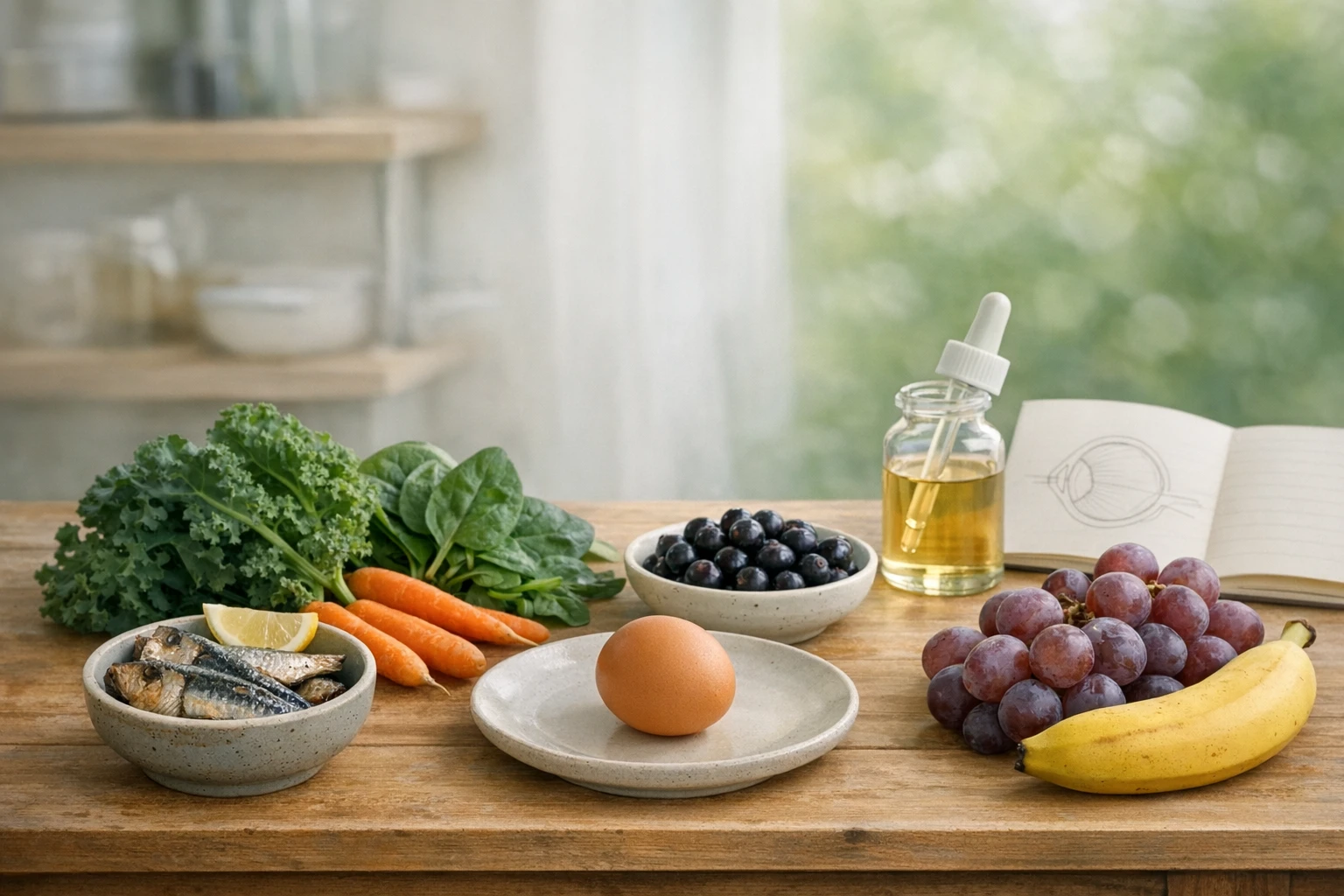
Oily fish and fatty fish
Oily fish refers to species rich in long-chain unsaturated fats (EPA, DHA) such as sardines, mackerel, herring, and anchovies. These fatty acids are important components of retinal membranes and modulate systemic inflammatory responses. Clinical studies on supplements have evaluated effects on both macular degeneration and the tear film and dry eye syndrome: the results are not uniform, and in large trials, no clear reduction in the progression of macular degeneration was observed by adding omega-3 to specific preventive formulations; similarly, well-conducted trials on DED (dry eye disease) have yielded conflicting results, suggesting that omega-3 are not a universal solution for all dry eye patients [2][5]. From a practical point of view, regular consumption of fatty fish (1–2 servings/week) falls within general nutritional recommendations for cardiovascular health and contributes to EPA/DHA intake; for the use of supplements, it is advisable to consult a doctor, especially in the presence of cardiovascular conditions or concomitant therapies.
Currants and berries rich in anthocyanins
Dark berries (blackcurrants, blueberries, blackberries, black grapes) are sources of anthocyanins and other phenolic compounds with in vitro antioxidant capacity. Observational evidence links a diet rich in colorful fruits to better indicators of vascular health and oxidative recovery, factors also useful for the small vessels that supply the retina. Nutritional studies show that some anthocyanins increase the biomarker of plasma antioxidants, but the clinical translation in terms of specific prevention of eye diseases requires further controlled trials. Using these berries as part of a varied diet can be useful as a source of dietary antioxidants and fiber.
Carrots and vitamin A/provitamin A
Carrots are a rich dietary source of provitamin A (beta-carotene) and other carotenoids. The fundamental role of vitamin A in vision is well known: retinoids are essential components of the visual cycle, and severe vitamin A deficiency causes impaired night vision and, in extreme cases, irreversible damage. In populations with adequate nutritional status, high doses of beta-carotene through supplementation are not recommended for smokers due to the documented risk of increased incidence of certain cancers; therefore, the practical recommendation favors food sources and dietary balance rather than high-dose supplementation without clinical supervision [9].
Red cabbage and vegetables rich in anthocyanins
Red cabbage and similar vegetables provide anthocyanins and other polyphenols that show antioxidant activity in experimental models. The presence of these pigments in a varied diet can support systemic antioxidant status and vascular health, elements relevant for nutrient supply to the retina. However, direct clinical evidence linking the consumption of red cabbage to the prevention of specific eye diseases is limited: the most robust studies concern general risk indicators and biomarkers, not direct causal evidence.
Celery, fiber, and micronutrients
Celery provides micronutrients such as B vitamins, vitamin C, minerals, and fiber. These elements participate in metabolic processes, the control of systemic inflammation, and the maintenance of vascular health. The literature does not attribute a unique protective effect to celery on eye diseases, but as part of a balanced diet, it contributes to a favorable nutritional profile for microcirculation and general metabolism.
Bananas and minerals
Bananas are rich in potassium and provide quick energy and some micronutrients. Good fluid and electrolyte balance and healthy circulation are components of vascular health that indirectly support eye irrigation. There is no evidence that bananas, by themselves, prevent specific eye diseases, but their contribution to the nutritional profile is useful within the overall diet.
Grapes and phytonutrients
Grapes contain flavonoids and resveratrol (in some varieties) which exert antioxidant effects and can modulate endothelial function. Laboratory and observational studies suggest a potential protective role of phytonutrients on microcirculation and oxidative stress; however, direct clinical evidence in the ocular field remains limited and should be interpreted with caution.
What it means in practice
For the general population, research results indicate that a varied diet rich in colorful plant foods, fatty fish, and natural sources of antioxidants is a reasonable strategy to support eye health and general health. The practical actions derived from the evidence are primarily preventive and not therapeutic: regularly consume leafy and colorful vegetables, include portions of omega-3-rich fish (when appropriate), and prefer fruits and berries over high-sugar sources or ultra-processed foods. For people with a diagnosis or specific risk of advanced macular degeneration, some clinically validated nutritional formulations (see controlled trials) have shown benefit in reducing progression to advanced forms in selected populations; the decision to use supplements should be made with a doctor/ophthalmologist, evaluating nutritional status, risk factors, and ongoing therapies [2].
Key takeaways
- Nutrition can support the eye's defense mechanisms but does not guarantee absolute prevention of eye diseases.
- Lutein and zeaxanthin increase macular pigment density in many studies and are associated with a reduced risk of advanced AMD in selected populations [4].
- Omega-3 play a biological role in the retina; however, large trials on supplements show variable results for dry eye and do not confirm clear universal benefits for AMD when added to specific formulations [2][5].
- For cataracts, observational evidence suggests favorable associations with dietary antioxidants, but clinical trials are less consistent and do not replace regular ophthalmic check-ups [6].
- Prefer real food, rich in fruits, vegetables, fish, and legumes; supplementation should be evaluated on a case-by-case basis and under medical supervision.
Limitations of the evidence
It is important to distinguish between observational associations and causal proof: population studies can show correlations between nutrient intake and lower disease risk, but they do not prove that the single nutrient is the cause of the risk reduction. Clinical trials (randomized) offer more robust evidence but are often limited by duration, selected populations, dosages, and formulations used. Some common methodological limitations include imprecise dietary measurements, heterogeneity in supplement doses and formulations, and different outcomes between studies. Furthermore, the effect of a nutrient can depend on many factors (dose, combination with other nutrients, baseline nutritional status, genetic background, smoking, light exposure), so recommendations must remain cautious and contextualized. Finally, favorable observational results do not authorize replacing effective therapies or delaying recommended ophthalmological check-ups [1][6].
Editorial conclusion
Research shows that diet is a factor that can contribute to ocular health through plausible biological mechanisms and consistent epidemiological observations. For some conditions, particularly in individuals at risk of advanced macular degeneration, there is evidence that certain nutrient combinations can reduce the risk of progression; for other conditions, the results are less definitive. A cautious and evidence-based strategy is to adopt a varied and balanced diet, rich in fruits, colorful vegetables, and fish, and consult a doctor before starting high-dose supplementation. Preventing vision loss requires an integrated approach that includes healthy lifestyles, control of major systemic conditions (e.g., hypertension, diabetes), light protection, and regular eye exams.
Editorial note (final)
Article updated according to editorial and scientific criteria. The cited sources are peer-reviewed and are listed in the "Scientific Research" section with verified DOIs to ensure transparency and traceability. This content is for informational purposes only and does not replace personalized medical advice.
SCIENTIFIC RESEARCH
- Bellezza I. Oxidative Stress in Age‑Related Macular Degeneration: Nrf2 as Therapeutic Target. Front Pharmacol. 2018. https://doi.org/10.3389/fphar.2018.01280 [1]
- Age‑Related Eye Disease Study 2 Research Group; Chew EY, Clemons TE, SanGiovanni JP, et al. Lutein + zeaxanthin and omega‑3 fatty acids for age‑related macular degeneration: The Age‑Related Eye Disease Study 2 (AREDS2) randomized clinical trial. JAMA. 2013;309(19):2005–2015. https://doi.org/10.1001/jama.2013.4997 [2]
- Age‑Related Eye Disease Study 2 Research Group; Chew EY, SanGiovanni JP, Ferris FL 3rd, et al. Lutein/Zeaxanthin for the Treatment of Age‑Related Cataract: AREDS2 Randomized Trial Report No. 4. JAMA Ophthalmol. 2013;131(7):843–850. https://doi.org/10.1001/jamaophthalmol.2013.4412 [3]
- Ma L, Dou HL, Wu YQ, et al. Lutein, zeaxanthin and meso‑zeaxanthin supplementation associated with macular pigment optical density: a meta‑analysis of randomized controlled trials. Nutrients. 2016;8(7):426. https://doi.org/10.3390/nu8070426 [4]
- Dry Eye Assessment and Management (DREAM) Study Research Group; Asbell PA, Maguire MG, et al. n‑3 Fatty Acid Supplementation for the Treatment of Dry Eye Disease. N Engl J Med. 2018;378(18):1681–1690. https://doi.org/10.1056/NEJMoa1709691 [5]
- Ye W, et al. Association of blood antioxidants and vitamins with risk of age‑related cataract: a meta‑analysis of observational studies. Am J Clin Nutr. 2013;98(3):778–786. https://doi.org/10.3945/ajcn.112.053835 [6]
- Ma L, Wang Y, Xiao Y, et al. Association between lutein and zeaxanthin status and the risk of cataract: a meta‑analysis. Nutrients. 2014;6(1):452–465. https://doi.org/10.3390/nu6010452 [7]
- Mason RP, Dahabreh IJ, et al. Associations of omega‑3 fatty acid supplement use with cardiovascular disease risks: meta‑analysis of randomized trials. JAMA Cardiol. 2018;3(3):225–233. https://doi.org/10.1001/jamacardio.2017.5205 [8]