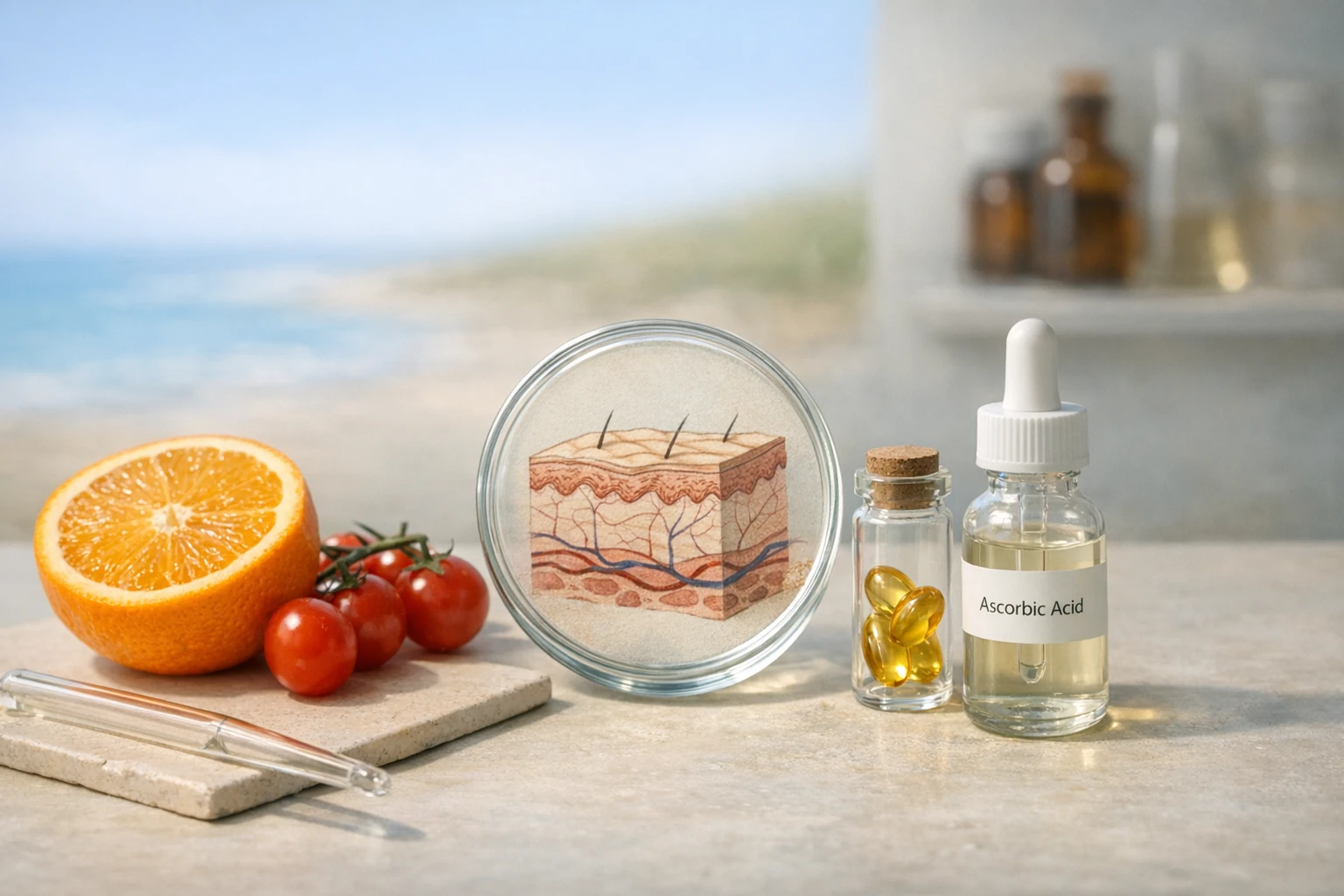
Updated and contextualized version of an article originally published on August 23, 2021
The article retains its original focus by presenting it through a scholarly and accessible perspective, supported by verifiable references.
Authors
- Dr. D. Iodice – Biologist
- Roberto Panzironi –Independent researcher
Note editoriali
- First publication: August 23, 2021
- Last update: April 18, 2026
- Version: 2026 narrative revision
Initial note: this article was previously published and has been updated according to scientific and informative criteria. It is for informational purposes only and does not replace individual medical advice.
In brief
- Sun exposure promotes skin synthesis of vitamin D, but protection, habits, and supplementation (if necessary) should be evaluated on a case-by-case basis.
- Foods rich in vitamin C, carotenoids, vitamin E, zinc, and omega-3 can contribute to oxidative defense and skin health.
- Evidence that nutrients offer complete "shielding" from the sun is limited: some supplements reduce erythema, other effects remain observational.
- Sun protection remains the primary preventive measure; nutrition is a systemic and complementary support.
Abstract: what does science say?
Research indicates that sun exposure, diet, and nutritional status interact with skin and immune function. Most of the body's vitamin D is produced in the skin due to UVB light; however, diet and supplements contribute when exposure is limited. Diets rich in fruits and vegetables provide vitamin C, carotenoids, and polyphenols, which have antioxidant action and can, after prolonged treatments, increase the epidermis's resistance to photo-oxidative stress. Some clinical trials have shown reductions in erythema with carotenoid supplementation; however, evidence for the prevention of skin cancers or strong and generalizable protective effects is limited and sometimes conflicting. Vitamin C is essential for collagen synthesis and as a skin antioxidant; vitamin E and omega-3 lipids modulate inflammation and the skin barrier; zinc participates in tissue repair and immune function. The evidence includes experimental studies, controlled trials, and reviews; many conclusions depend on the dose, duration, nutritional form (dietary vs. supplemental), and population studied. It remains crucial to distinguish between biological plausibility, observational associations, and consolidated causal evidence.
Conscious Tanning: Sun, Vitamin D, and Limits of Expectations
The skin synthesizes vitamin D when UVB radiation reaches skin cholesterol, transforming it into previtamin D3, which is then converted into the circulating form 25-OH-vitamin D. For many people, skin synthesis covers most seasonal needs, but the extent depends on individual factors: phototype, age, latitude, season, time of day, exposed surface, use of sunscreens, and skin condition. Guidelines recognize that sun exposure is the primary source of vitamin D for most adults [1].
It is important to consider that a tan is a biological signal of melanin production, but it does not equate to complete protection from sun damage: tanning partially reduces the effect of UV rays but does not eliminate the risk of photo-induced damage. For this reason, practical recommendations combine moderate exposure, physical and chemical protection (clothing, shade, creams with adequate SPF), and attention to the time of exposure. When sun exposure is scarce or risk factors increase, diet and supplementation (evaluated by a professional) can supplement vitamin D reserves [1].
Carotenoids and Color: Advantages and Limitations of Evidence
Dietary carotenoids (β-carotene, lutein, zeaxanthin, lycopene, astaxanthin) accumulate in light-exposed tissues and can offer a form of endogenous antioxidant defense. In controlled clinical studies, supplementation with β-carotene or mixtures of carotenoids reduced erythema induced by simulated exposure, suggesting a measurable protective effect on an acute outcome like sun sensitivity [2].
However, broader reviews and analyses show that the effect depends on dose and duration (often weeks or months) and that not all carotenoids or all formulations produce the same result. Long-term prevention of precancerous lesions or skin cancers has not been definitively demonstrated, and some large trials have not shown reductions in the incidence of skin cancers with β-carotene supplementation alone. Therefore, carotenoids can be considered a support to the skin's antioxidant system, not a replacement for sun protection or behavioral measures [3][2].
Vitamin C and Skin: Structural Function and Antioxidant Role
Vitamin C (ascorbic acid) is an essential cofactor for collagen synthesis and a powerful water-soluble antioxidant in the skin matrix. Studied mechanisms include support for collagen stability, neutralization of reactive species generated by UV rays, and modulation of the inflammatory response. From a practical standpoint, adequate levels of vitamin C in the blood and skin are associated with better barrier function, less fragility, and signs of less photo-aging [4].
Vitamin C is not produced by the human body and must be regularly consumed through diet: fresh fruits and vegetables are the main source. Experimental studies and reviews indicate benefits for both topical use (stabilized formulations) and structurally for dietary intake; however, clinical efficacy depends on the form, concentration, and mode of administration [4].
Antioxidants and Protection from Oxidation: What Do We Really Know?
Free radicals don't take holidays
Sun exposure generates reactive oxygen species (ROS) that cause damage to lipids, proteins, and DNA. Dermatological research has shown that endogenous antioxidants and those taken through diet or topically can limit some of this damage and modulate inflammatory responses [5].
Recent reviews emphasize that the combined use of antioxidants (e.g., vitamin C + vitamin E) can be more effective than single compounds, and that adding antioxidants to sunscreen formulations can improve protection against skin oxidative stress. It remains important not to consider antioxidants as substitutes for SPF: direct protection from radiation remains the prerogative of sunscreens. Furthermore, the systemic effect requires prolonged integration times and specific dosages to become measurable [6][5].
Zinc and Repair: Role in Barrier Maintenance and Healing
Zinc is an essential micronutrient involved in numerous cellular processes: DNA replication, enzymatic function, immune regulation, and extracellular matrix remodeling. In the skin, zinc is associated with repair and coagulation processes, and its deficiency is known to impair wound healing [7].
The literature includes experimental studies and reviews describing how zinc contributes to modulating local inflammation, metalloproteinase activity, and keratinocyte migration. In clinical practice, targeted supplementation in cases of deficiency is associated with improved repair; however, the routine use of high doses in the absence of deficiency is not supported by robust evidence [7].
Omega-3: Inflammation, Barrier, and Possible Skin Benefits
Polyunsaturated omega-3 fats (EPA, DHA) modulate the production of pro-inflammatory and pro-resolving lipid mediators and play a role in the immune response. Reviews and clinical studies in dermatology document beneficial effects in inflammatory conditions such as psoriasis, atopic dermatitis, and some acneiform manifestations [8].
For protection from sunlight, evidence comes from laboratory studies and interventions showing reductions in some skin inflammatory responses, as well as improved lipid barrier. Here too, the magnitude of the effect depends on dose, duration, and formulation (oral vs. topical) and does not replace traditional photoprotection measures [8].
What This Means in Practice
For those seeking practical, evidence-based information: the most solid strategy for summer protection remains behavioral and topical (limit exposure during peak hours, wear protective clothing, apply appropriate sunscreens). Nutrition plays a complementary role: a varied diet, rich in fruits, vegetables, fish, and seeds, provides vitamins (C, E), carotenoids, zinc, and omega-3 that support antioxidant defenses and skin health.
Specific supplements may be useful in individuals with documented deficiencies or particular conditions, but preventive and generalized use requires caution and professional evaluation. For example, prolonged supplementation with carotenoids at studied doses can reduce experimental erythema, but does not demonstrate total protection or reliable prevention of skin cancers [2][3]. Vitamin C is fundamental for collagen synthesis and skin function, but the form, concentration, and route of administration determine the observable effect [4].
Key Points to Remember
- Expose skin to the sun in moderation: vitamin D synthesis is important, but protection remains a priority.
- A diet rich in antioxidants and omega-3 supports skin health; however, it does not replace SPF and physical protection measures.
- Some supplements (e.g., carotenoids) show effects on erythema, but the quality, dose, and duration of studies influence the results.
- Zinc and vitamin C are relevant for skin repair and structure; their supplementation is indicated in cases of documented deficiency.
- For individual choices on supplementation, consult a healthcare professional.
Limitations of Evidence
Much of the available research includes experimental studies, small controlled trials, and reviews; however, generalizability is often limited by sample sizes, variable duration, and differences in tested formulations. Observational studies show associations between nutritional status and skin outcomes, but do not prove causality. Some controlled clinical trials have measured acute endpoints (e.g., erythema) while evidence on long-term clinical endpoints (skin cancer prevention, reduction of keratoses) is lacking or conflicting. Therefore, recommendations must consider the quality of studies, the dose, the form of the nutrient, and the individual context.
Editorial Conclusion
Science suggests that nutrition and micronutrients support skin health and the body's ability to respond to sun stress. The most effective practices for reducing sun damage remain physical protection and the correct use of sunscreens. Nutrients such as vitamin C, carotenoids, vitamin E, omega-3, and zinc represent valuable tools for improving skin resilience and healing, especially in cases of documented deficiencies. Informed choices—based on evidence, contextualized to the individual, and agreed upon with healthcare professionals—are the most prudent and useful path.
Editorial Note
This version is an editorial update of the original article with bibliographic additions and language suitable for a general audience. The information presented here is for informational purposes only and does not replace a professional medical visit or evaluation.
SCIENTIFIC RESEARCH
- Holick MF. Vitamin D deficiency. N Engl J Med. 2007;357(3):266–281. https://doi.org/10.1056/NEJMra070553
- Heinrich U, Gärtner C, Wiebusch M, Eichler O, Sies H, Tronnier H, Stahl W. Supplementation with beta-carotene or a similar amount of mixed carotenoids protects humans from UV-induced erythema. J Nutr. 2003;133(1):98–101. https://doi.org/10.1093/jn/133.1.98
- Fernández-García E. Skin protection against UV light by dietary antioxidants. Food Funct. 2014;5:1994–2003. https://doi.org/10.1039/C4FO00280F
- Pullar JM, Carr AC, Vissers MCM. The Roles of Vitamin C in Skin Health. Nutrients. 2017;9(8):866. https://doi.org/10.3390/nu9080866
- Chen L, Hu JY, Wang SQ. The role of antioxidants in photoprotection: a critical review. J Am Acad Dermatol. 2012;67(5):1013–1024. https://doi.org/10.1016/j.jaad.2012.02.009
- Jesus A, Mota S, Torres A, et al. Antioxidants in Sunscreens: Which and What For? Antioxidants. 2023;12(1):138. https://doi.org/10.3390/antiox12010138
- Lin P-H, Sermersheim M, Li H, Lee PHU, Steinberg SM, Ma J. Zinc in Wound Healing Modulation. Nutrients. 2018;10(1):16. https://doi.org/10.3390/nu10010016
- Thomsen BJ, Chow EY, Sapijaszko MJ. The Potential Uses of Omega-3 Fatty Acids in Dermatology: A Review. (J Clin / Dermatology Review) 2020. https://doi.org/10.1177/1203475420929925
Note: all references above provide verifiable DOIs and direct links to the cited publications. The numbers are in order of citation in the text and follow the Vancouver numerical style.