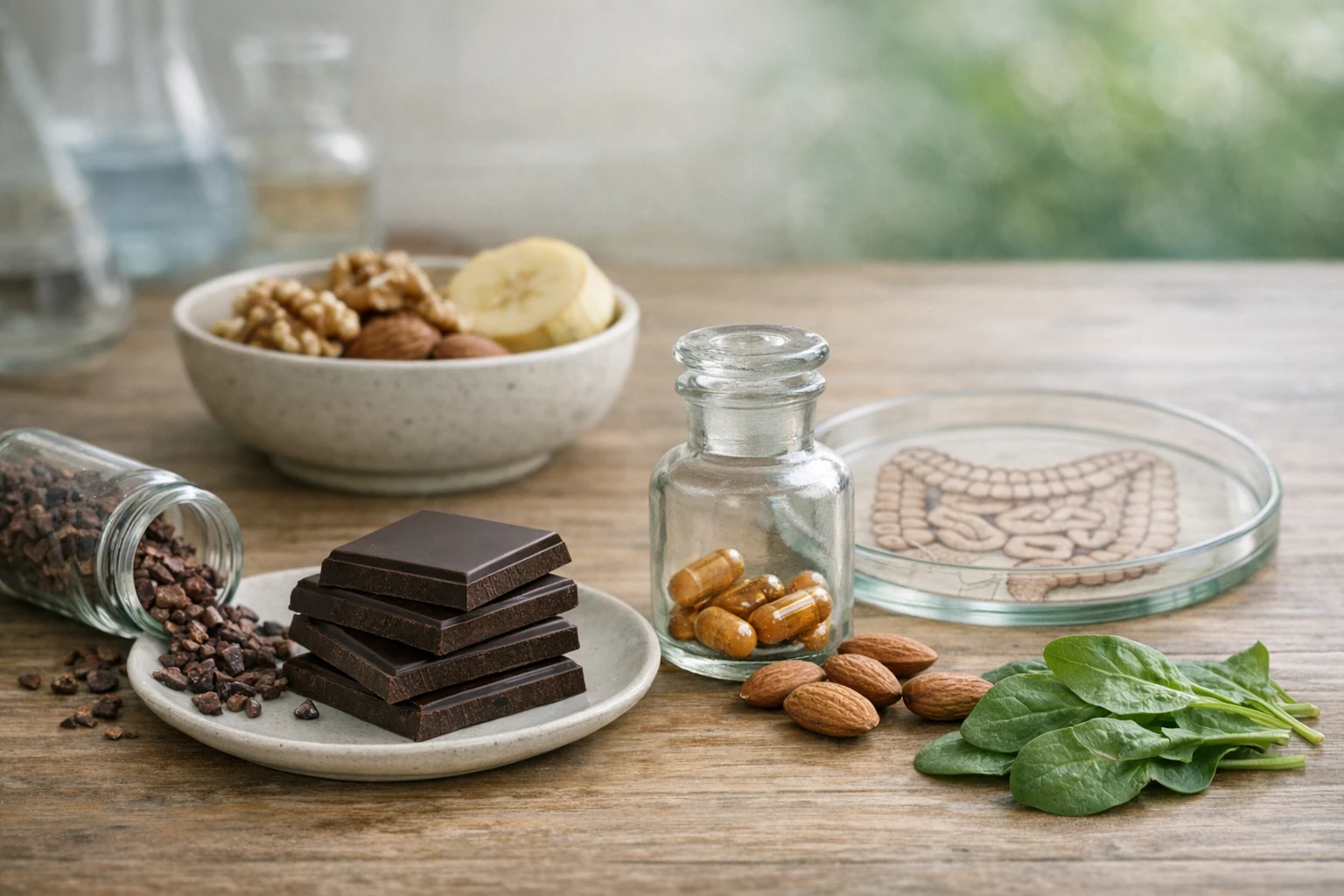
Updated and contextualized version of an article originally published on October 15, 2021
The article retains its original focus by presenting it through a scholarly and accessible perspective, supported by verifiable references.
Authors
- Dr. M. Mondini – Biologist
- Roberto Panzironi –Independent researcher
Note editoriali
- First publication: October 15, 2021
- Last update: April 18, 2026
- Version: 2026 narrative revision
Editorial note (initial)
This article was previously published and has been updated according to scientific and informative criteria. Purpose: to inform; it does not replace specialist medical advice.
IN BRIEF
- The gut-brain system communicates via neural, hormonal, and metabolic pathways: a large part of the body's serotonin is produced in the gut, and the gut flora regulates its synthesis.
- Dark chocolate contains flavanols and other substances that, in observational and experimental studies, are associated with improvements in mood and cardiovascular biomarkers; the evidence does not establish clear causality.
- Supplements or cocoa extracts with high concentrations of flavanols have shown moderate effects on some cardiometabolic outcomes, but clinical results vary among studies.
- In sports contexts, some studies report antioxidant effects and lower markers of muscle damage after chronic dark chocolate intake; the evidence is not homogeneous.
- Practical recommendations must consider dose, frequency, product composition, and individual context: there are no generalized therapeutic prescriptions based solely on chocolate consumption.
Abstract: what does science say?
The relationship between food and mood is bidirectional: foods and nutrients influence signals that modulate mood, and conversely, emotional state influences choices and appetites. Research shows associations between the consumption of cocoa-based products (especially dark chocolate) and a reduced prevalence of depressive symptoms in observational surveys; experimental studies detect acute and subacute effects of cocoa flavanols on mood, cerebral vascularization, and some cardiometabolic biomarkers. The gut microbiota regulates the production of metabolites and neurotransmitters (including peripheral serotonin) that can influence the brain through metabolic, immune, and neural pathways. However, most clinical studies are short-term or show modest effects: uncertainties remain regarding dose, duration, product quality, and the direction of causality. In summary: there is biological plausibility and observational and experimental data supporting a role for cocoa and specific nutrients in modulating mood and cardiometabolic health, but definitive clinical evidence justifying routine therapeutic use is not yet available.
Food, brain, and gut: the communication pathway
The relationship between diet and emotional state passes through a complex system involving nerves, hormones, metabolites, and the microbiota. The gut is not just a digestive organ: it houses enteroendocrine and enterochromaffin cells that synthesize neurotransmitters (including serotonin) and send signals to the central nervous system and the immune system. Experimental research shows that specific microbes present in the gut influence the biosynthesis of intestinal serotonin, thereby modulating gastrointestinal functions and potentially systemic signals associated with mood [1]. The reference literature on the microbiota-gut-brain highlights multiple communication pathways (vagus nerve, microbial metabolites, cytokines, neuroendocrine axes) that can influence anxiety, stress, and behavior in preclinical models and small-scale human studies [2]. These findings support the idea that alterations in microbial composition or gut function may contribute to variations in mood and sleep regulation, although further longitudinal and interventional studies are needed to define clinically relevant effects.
Serotonin, tryptophan, and melatonin
Tryptophan is an essential amino acid and a precursor to serotonin; its systemic availability and ratio to other competing amino acids determine the amount that can cross the blood-brain barrier and be converted into cerebral serotonin. Peripheral serotonin, largely produced in the gut, does not directly cross the blood-brain barrier but contributes to systemic signals that can influence inflammation, motility, and the synthesis of metabolites such as melatonin, which regulates the sleep-wake cycle [1].
Microbiota and chemical signals
The microbiota produces metabolites—short-chain fatty acids, tryptophan-derived indoles, and other compounds—that interact with immune and neural cells. Some metabolites stimulate serotonin production in enterochromaffin cells; others modulate systemic inflammation, a hypothesized mechanism linking diet, inflammatory state, and the risk of mood disorders [2]. The evidence is strong at the preclinical level; in humans, many uncontrolled variables remain, complicating interpretation.
Chocolate and mood: what observational and experimental studies show
Several exploratory studies have associated chocolate consumption, particularly dark chocolate, with fewer reports of depressive symptoms in cross-sectional surveys of large population samples. For example, an analysis of over 13,000 adults from the NHANES survey found a lower probability of depressive symptoms in those who reported dark chocolate consumption compared to non-consumers; however, the authors emphasize that the cross-sectional design does not allow for establishing causal direction [3].
Proposed mechanisms
Multiple factors in cocoa may contribute to mood effects: flavanols (with antioxidant and vascular activity), methylxanthines (caffeine and theobromine), biological amines (e.g., phenylethylamine), and nutrients such as tryptophan. The sensory and gratifying component of consumption (taste pleasure) consistently contributes to subjective mood improvement, making it difficult to separate pharmacological from psychological effects. Systematic reviews and meta-analyses indicate a short-term positive effect of consuming cocoa-rich products on mood and anxiety, but with methodological heterogeneity among studies [8].
Interpreting observational studies
Population studies indicate associations useful for generating hypotheses but are subject to confounding biases and phenomena such as reverse causation (e.g., depression can reduce interest in food). For this reason, longitudinal studies and randomized trials are needed to establish causal effects and optimal dosages [3][8].
Cocoa, heart, and metabolism: flavanols and biomarkers
Clinical research on cocoa flavanols has shown favorable effects on some cardiometabolic biomarkers: improved endothelial pressure, modest reductions in glycemia and insulin resistance, slight improvements in lipid profile, and reduced inflammatory markers in some short-term studies [4]. A meta-analysis of randomized trials on flavanols showed benefits on HDL, triglycerides, and inflammatory markers, suggesting biological plausibility for protective effects.
Clinical evidence on cardiovascular events
A large randomized trial (COSMOS) on cocoa extract in elderly subjects evaluated the incidence of cardiovascular events as a primary endpoint: the treatment did not significantly reduce the composite endpoint of cardiovascular events in intention-to-treat analysis but showed a 27% reduction in cardiovascular mortality in secondary analyses and favorable signals in per-protocol analysis [5]. These results indicate potential benefit but require cautious interpretation and further confirmation.
Physical activity, oxidative stress, and recovery: is there a role for cocoa?
Intense physical activity increases oxidative stress and markers of muscle damage; some experimental research associates chronic intake of dark chocolate (or polyphenol-rich extracts) with a reduction in muscle damage biomarkers and an improvement in antioxidant status in elite athletes [6]. Systematic reviews on flavonoids and recovery suggest favorable effects in specific exercise scenarios, but with variations due to dose, duration, and type of polyphenols studied [10][7].
What are the limitations in sports studies?
Trials are often small, with different products and dosages; some studies do not confirm significant clinical effects on performance or functional recovery. Therefore, the results are interesting but not yet conclusive for universally valid practical guidelines [7][10].
What it means in practice
For the general public, the evidence indicates that:
- Moderate consumption of dark chocolate (a product with a good percentage of cocoa and low added sugars) can be part of a healthy eating pattern and, for some individuals, be associated with a subjective feeling of mood improvement. However, it should not be considered a cure for depression or a substitute for therapies indicated by healthcare professionals.
- The reported beneficial effects depend on the product's composition (flavanol, sugar, fat content), dose, and frequency: not all chocolates are equivalent, and products with low cocoa content or high in sugars can negate potential benefits.
- Those with metabolic conditions (diabetes, obesity, hyperlipidemia) should evaluate the overall energy balance: even dark chocolate provides calories and fats; any supplementation should be evaluated in the context of the overall diet.
- Athletes and physically active individuals can consider the role of polyphenols as part of dietary strategies to support recovery, but with the awareness that the evidence is variable and that established strategies (adequate protein intake, recovery, hydration) remain priorities.
Key takeaways
- Gut-brain communication is real: the microbiota influences neurotransmitters and metabolites that can modulate mood [1][2].
- Dark chocolate contains biologically active compounds (flavanols, methylxanthines) with plausible action on mood and vascular function, but product quality is crucial [8][4].
- Observed associations between dark chocolate consumption and fewer depressive symptoms do not prove causality and require prospective studies and randomized trials for confirmation [3].
- Some controlled trials show favorable effects on cardiovascular biomarkers and reduced markers of muscle damage in athletes, but the results are not uniform [5][6][10].
- Dietary choices should be integrated into a healthy lifestyle (physical activity, sleep, stress management): food is one piece of the puzzle, not a sole solution.
Limitations of the evidence
It is important to distinguish between observational associations and causal evidence derived from randomized trials. Observational studies can suggest correlations but not establish direction or causal mechanisms. Clinical trials on cocoa and flavanols are sometimes short-term, with variability in product composition, dosage, and measured outcomes; this limits interpretation and generalizability. Furthermore, there is heterogeneity in the studied groups (general population vs. athletes vs. subjects with chronic conditions) and in the methods of assessing mood and biomarkers. Caution is needed in extending specific results to clinical recommendations: longer studies, with standardized products and well-defined clinical endpoints, are needed to clarify efficacy, doses, and populations that might eventually benefit.
Editorial transparency
This content was written for informational purposes and is based on peer-reviewed literature (see "Scientific Research" section with verified DOIs). No materials or names not present in the original text provided were used. Statements on conflicts of interest, editorial data, and reviewers are available as follows:
- Author(s): [insert author name if available]
- Scientific reviewer(s): [insert if available]
- Funding sources for the article: [if not applicable, write "None reported"]
- Date of last source verification: [update date: see site metadata]
Editorial conclusion
Food and mood communicate through complex pathways: nutrients, microbiota, and neural signals contribute to modulating mental and physical well-being. Dark chocolate and its flavanols are promising ingredients within a framework of biological plausibility and experimental data; however, science suggests caution: there is currently insufficient evidence to recommend chocolate as a therapy for depression or as a substitute for medical interventions. For the general population, the most robust approach remains a balanced diet, regular physical activity, adequate sleep, and, when necessary, consultation with healthcare professionals for mood disorder management.
Editorial note
This article was published in a previous version and updated to reflect recent research and systematic reviews. It is for informational purposes only and does not replace the evaluation or advice of a physician. For personal questions about diet, mood, or therapies, consult a healthcare professional.
SCIENTIFIC RESEARCH
- Cryan JF, Dinan TG. Mind-altering microorganisms: the impact of the gut microbiota on brain and behaviour. Nat Rev Neurosci. 2012;13:701–712. https://doi.org/10.1038/nrn3346
- Yano JM, Yu K, Donaldson GP, et al. Indigenous bacteria from the gut microbiota regulate host serotonin biosynthesis. Cell. 2015;161:264–276. https://doi.org/10.1016/j.cell.2015.02.047
- Jackson SE, Smith L, Firth J, et al. Is there a relationship between chocolate consumption and symptoms of depression? A cross-sectional survey of 13,626 US adults. Depress Anxiety. 2019;36(10):987–995. https://doi.org/10.1002/da.22950
- Lin X, et al. Cocoa Flavanol Intake and Biomarkers for Cardiometabolic Health: A Systematic Review and Meta-Analysis of Randomized Controlled Trials. J Nutr. 2016. https://doi.org/10.3945/jn.116.237644
- Sesso HD; COSMOS Research Group. Effect of cocoa flavanol supplementation for the prevention of cardiovascular disease events: the COcoa Supplement and Multivitamin Outcomes Study (COSMOS) randomized clinical trial. Am J Clin Nutr. 2022;115:1490–1500. https://doi.org/10.1093/ajcn/nqac055
- Cavarretta E, Peruzzi M, Del Vescovo R, et al. Dark Chocolate Intake Positively Modulates Redox Status and Markers of Muscular Damage in Elite Football Athletes: A Randomized Controlled Study. Oxid Med Cell Longev. 2018;2018:4061901. https://doi.org/10.1155/2018/4061901
- References on flavanols and recovery: Nutrients. 2019;11(7):1471. (Review on cocoa products and exercise). https://doi.org/10.3390/nu11071471
- Fusar-Poli L, Gabbiadini A, Ciancio A, et al. The effect of cocoa-rich products on depression, anxiety, and mood: a systematic review and meta-analysis. Crit Rev Food Sci Nutr. 2021. https://doi.org/10.1080/10408398.2021.1920570
- Wang J, et al. Cocoa extracts reduce oligomerization of amyloid-β: implications for cognitive improvement in Alzheimer's disease. J Alzheimers Dis. 2014;41(2):643–650. https://doi.org/10.3233/JAD-132231
- Flavonoid containing polyphenol consumption and recovery from exercise-induced muscle damage: Systematic review and meta-analysis. Sports Med. 2021. https://doi.org/10.1007/s40279-021-01440-x