Updated and contextualized version of an article originally published on May 2, 2014
The article retains its original focus by presenting it through a scholarly and accessible perspective, supported by verifiable references.
Authors
- Dr. A. Colonnese – Nutrition biologist
- Roberto Panzironi –Independent researcher
Note editoriali
- First publication: May 2, 2014
- Last update: April 18, 2026
- Version: 2026 narrative revision
Introductory note: This article was previously published and has been updated according to scientific and divulgative criteria. The text is for informational purposes only and does not replace medical advice: in case of health problems or ongoing therapies, consult a healthcare professional.
IN BRIEF
- Cloves primarily contain eugenol, a compound responsible for many antioxidant, antimicrobial, and analgesic properties.
- Laboratory research and some clinical trials suggest beneficial effects on oral health, glycemic control, and antifungal activity, but clinical evidence remains limited and contextual.
- Clove essential oil is effective as a short-term repellent for some insects; topical application and oral use require attention to concentration and safety.
- There is no solid evidence that cloves prevent cancer in humans: promising results come from in vitro and preclinical in vivo studies but not from definitive clinical trials.
Abstract: What does science say?
Cloves (Syzygium aromaticum) are a spice rich in phenolic compounds, particularly eugenol, which accounts for much of the antioxidant, antimicrobial, and anti-inflammatory activity observed in the laboratory. Experimental evidence indicates that clove extracts and essential oils can reduce the growth of bacteria and fungi in culture, modulate oxidative processes, and influence cellular signals related to inflammation and cell proliferation. Some standardized extracts have shown benefits on glycemia control in pilot studies or small trials, and the essential oil has repellent properties against some mosquito species. However, most evidence comes from preclinical studies or trials with methodological limitations; the effects depend heavily on the form (powder, aqueous extract, essential oil), dosage, duration, and quality of preparation. Consequently, results must be interpreted with caution, and cloves should not be considered a substitute therapy for established medical conditions.
Main Section
Composition and biological mechanisms
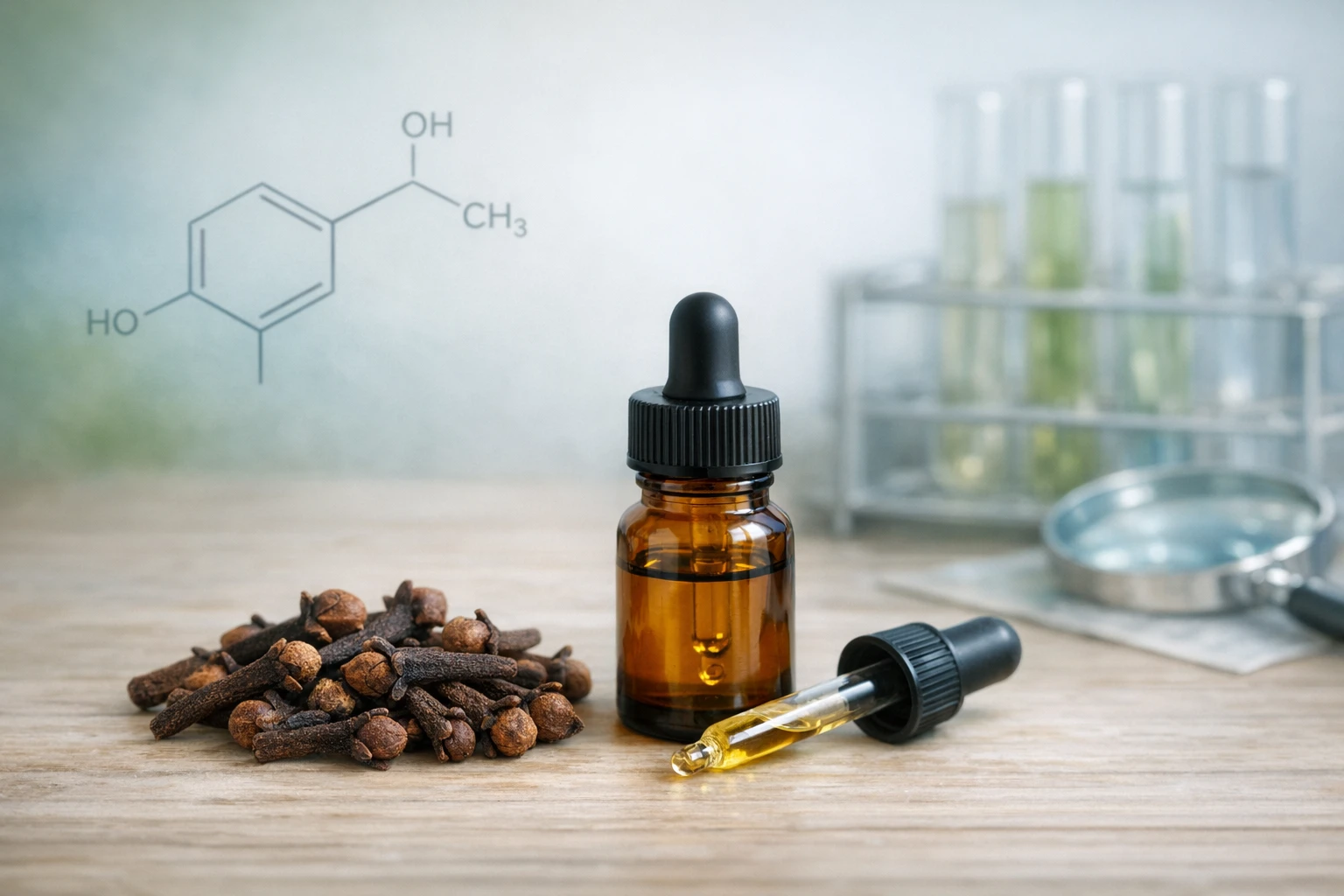
Cloves are rich in essential oils and polyphenols: eugenol is the most abundant constituent and contributes to most of the biological activities attributed to the plant. The oil also contains eugenyl acetate, β-caryophyllene, and other terpenes; the proportion of compounds varies with botanical origin and extraction method [1]. These compounds can act at the cellular level in multiple ways: scavenging free radicals (antioxidant activity), interfering with microbial membranes (antimicrobial action), modulating inflammatory pathways, and influencing gene expression linked to stress response. The bioavailability and chemical stability of eugenol are limited by its tendency to oxidize; for this reason, some formulations use encapsulation techniques to improve its preservation and controlled release [1].
Antimicrobial activity and oral health
In the laboratory, clove extracts and oil inhibit various bacteria and fungi relevant to human health, including the Candida genus and oral pathogens; mechanisms include membrane damage, inhibition of key enzymes, and increased oxidative stress in microorganisms [3]. Clinical studies on oral products containing clove oil, often in polypharmacological formulations, show improvements in plaque and gingival inflammation comparable to conventional agents in some contexts, but clinical evidence is heterogeneous and depends on the dosage and composition of the formula [7]. For dental practice, the use of clove-based products can be considered as a complement, not a substitute, for mechanical therapies and standard oral hygiene measures.
Effects on glycemic metabolism
Some standardized clove extracts, rich in polyphenols, have shown small favorable effects on glycemic control in pilot clinical studies and controlled trials: modest and transient reductions in post-prandial glycemia and improvements in metabolic indicators in subjects with impaired glucose tolerance [5]. Proposed mechanisms include enzymatic inhibition of α-amylase/α-glucosidase, increased glucose absorption in tissues, and modulation of hepatic homeostasis. These results are interesting but do not constitute sufficient evidence to recommend routine clinical use: the effects seem to depend on the preparation (polyphenolic extract vs. powder), dose, and study duration [5].
Antioxidant, anti-inflammatory, and anticancer properties (preclinical evidence)
Numerous in vitro studies and animal models indicate that eugenol and other clove components modulate molecular pathways linked to oxidative stress, inflammation, and apoptosis, with potential consequences on cell proliferation and tumor invasiveness. Research in experimental settings shows effects on signaling involved in cell growth and survival; however, these observations do not constitute proof of preventive or therapeutic efficacy in humans and require translation through adequate clinical trials [6].
Biological activities observed in experimental models
Experimental models, from cell culture to model organisms like Caenorhabditis elegans, have shown improvements in the response to oxidative stress and, in some cases, extended survival correlated with the activation of antioxidant transcription factors (e.g., DAF-16/FOXO pathway) [7]. These results explain part of the observed biological properties but do not guarantee an immediate translation into clinical benefits in humans; the scale, dose, and context differ significantly between in vivo models and human practice [7].
Repellent properties and practical non-medical uses
Clove essential oil has demonstrated repellent activity against some mosquito species in controlled tests: applications of undiluted oil or gels with high concentrations can provide temporary protection (hours) against bites, but the duration varies with concentration and application method [8]. Such uses in domestic settings or personal protection products must, however, consider possible skin irritations and regulations on repellent products.
Practical Section
What it means in practice
For the general public, current evidence indicates that cloves can be useful as part of a dietary and oral hygiene strategy that values foods and ingredients with antioxidant and antimicrobial properties. Some formulated products (standardized extracts) have shown positive effects on glycemic parameters and oral microorganisms in limited studies; however, there are no universally recommended dosages or products authorized as medicines for these indications. Culinary use (small quantities as a spice) is generally considered safe for most people. Essential oil should be used with caution: concentrated and potentially irritating, it should not be ingested without supervision and should not be applied undiluted to mucous membranes or sensitive skin. In case of concomitant pharmacological therapies (e.g., anticoagulants, diabetes medications), it is prudent to consult a doctor before taking high-dose extracts.
Practical indications for common uses (oral hygiene, local relief)
Clove-based oral health formulations can contribute to reducing oral microbial load when used as a complement to daily hygiene; available clinical studies show variable results, and comparisons with standard products (e.g., chlorhexidine) often report comparable efficacy in certain contexts, but with differences in tolerability [7]. For local relief (e.g., mild toothache), traditional use involves small amounts of diluted oil; however, the local application of concentrated essential oil can cause irritation or allergic reactions and is therefore not recommended without professional guidance.
KEY POINTS TO REMEMBER
- Cloves contain eugenol, responsible for many biological activities observed in the laboratory.
- Antimicrobial and antifungal properties are well-documented in vitro; some formulations show benefits in limited clinical studies on oral health. [3][7]
- Standardized polyphenolic extracts can improve glycemic indicators in small or pilot studies, but do not replace established medical therapies. [5]
- Anticancer activities are primarily based on preclinical studies; there is no sufficient clinical evidence to assert a protective effect in humans. [6]
- Essential oil can act as a short-term insect repellent but requires attention to concentration and skin safety. [8]
LIMITATIONS OF EVIDENCE
The differences between observational studies, in vitro studies, and clinical trials are central to correctly interpreting information. Many positive results come from laboratory tests or animal models that do not account for human absorption, metabolism, and achievable dosages. Available clinical evidence is often small, with different designs and non-standardized formulations, which limits generalizability. Furthermore, the effect of a spice consumed as food is different from that of a concentrated extract or oil: dose, matrix, and duration profoundly influence the effect. For these reasons, every observation on the effects of cloves requires confirmation with larger and well-designed clinical trials.
Editorial Conclusion
Cloves are an interesting source of bioactive compounds with antioxidant, antimicrobial, and potentially metabolism-modulating activity. Experimental evidence is solid for some molecular mechanisms; clinical evidence, while promising in selected areas (oral health, glycemic control with standardized extracts), remains limited. Therefore, cloves can be valued in the diet and considered as a component of complementary strategies, but should not be understood as substitutes for validated medical treatments. It is advisable to await further clinical studies on defined dosages and standardized formulations to define precise therapeutic roles.
Editorial Note
The article was previously published and has been updated according to criteria of scientific rigor and divulgative clarity. The goal is to provide summary and balanced information based on peer-reviewed literature; it does not constitute medical advice. For therapeutic decisions or dosage, consult a healthcare professional.
SCIENTIFIC RESEARCH
- Liñán‑Atero R et al., Clove Essential Oil: Chemical Profile, Biological Activities, Encapsulation Strategies, and Food Applications. Antioxidants. 2024.
- Abdelmuhsin AA et al., Clove (Syzygium aromaticum) Pods: Revealing Their Antioxidant Potential via GC‑MS Analysis and Computational Insights. Pharmaceuticals. 2025.
- Clove Essential Oil and Its Main Constituent, Eugenol, as Potential Natural Antifungals against Candida spp. Alone or in Combination with Other Antimycotics Due to Synergistic Interactions. Molecules. 2023.
- Effectiveness of Herbal Medicines with Anti‑Inflammatory, Antimicrobial, and Antioxidant Properties in Improving Oral Health and Treating Gingivitis and Periodontitis: A Systematic Review. Nutrients. 2025.
- Mohan R et al., Water‑soluble polyphenol‑rich clove extract lowers pre‑ and post‑prandial blood glucose levels in healthy and prediabetic volunteers: an open label pilot study. BMC Complementary and Alternative Medicine. 2019.
- Anticancer Properties of Eugenol: A Review. Molecules. 2021.
- Zhang L., Gu B., Wang Y., Clove essential oil confers antioxidant activity and lifespan extension in Caenorhabditis elegans via the DAF‑16/FOXO transcription factor. Comparative Biochemistry and Physiology Part C. 2020.
- Trongtokit Y., Rongsriyam Y., Komalamisra N., Apiwathnasorn C., Comparative repellency of 38 essential oils against mosquito bites. (Mahidol University study). Phytotherapy Research. 2005.