Updated and contextualized version of an article originally published on May 13, 2014
The article retains its original focus by presenting it through a scholarly and accessible perspective, supported by verifiable references.
Authors
- Dr. A. Conte – Biologist
- Roberto Panzironi –Independent researcher
Note editoriali
- First publication: May 13, 2014
- Last update: April 18, 2026
- Version: 2026 narrative revision
Editorial note: This article was previously published and has been updated according to scientific and informative criteria to reflect current literature. The text is for informational purposes only and does not replace professional medical advice.
In brief
- Beetroot is a significant dietary source of inorganic nitrates and betalain pigments, with potential effects on blood pressure, endothelial function, and physical performance.
- Experimental and clinical evidence indicates moderate reductions in blood pressure and improved vascular function in specific contexts; effects depend on dose, frequency, and health status.
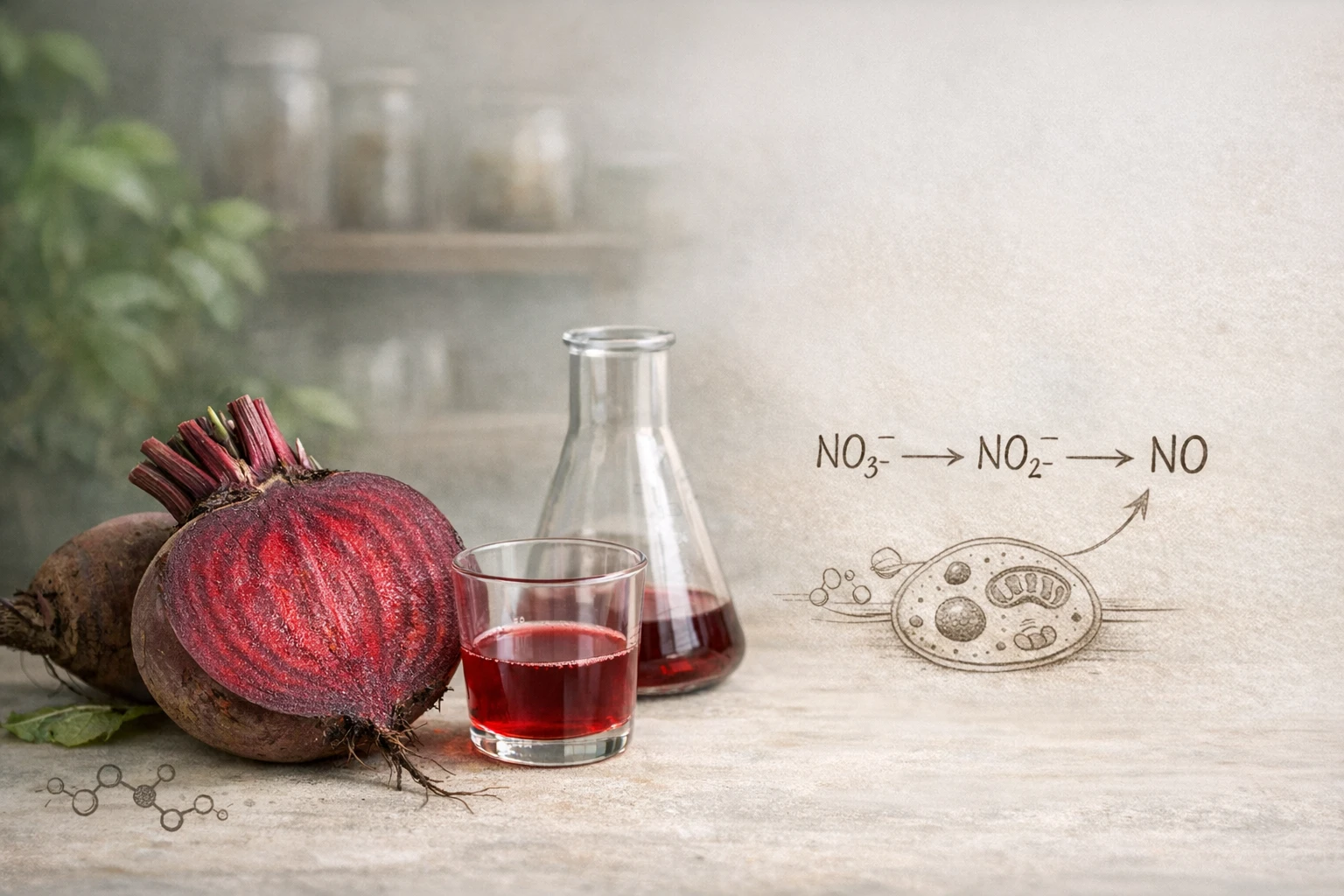
- Proposed mechanisms include the nitrate→nitrite→nitric oxide (NO) pathway and antioxidant and anti-inflammatory actions of phytochemicals (betalains).
- Practical recommendations require caution: beetroot can supplement a vegetable-rich diet but does not replace medical therapies. Studies are heterogeneous and do not prove long-term effects on reducing major clinical risks.
Abstract: what does science say?
Beetroot (Beta vulgaris) is a vegetable rich in inorganic nitrates, phenolic compounds, and betalain pigments. Clinical and experimental studies show that, in selected individuals and with defined doses (typically in the form of concentrated juice or extracts), dietary nitrate intake can increase nitric oxide availability, promote vasodilation, and moderately reduce blood pressure. In parallel, betalains exert antioxidant activity and can modulate inflammatory processes in experimental models. The observed effects on physical performance and cerebral blood flow are often modest and depend on the protocol, dose, and studied population. In summary: there is biological plausibility and clinical experimental data supporting short-term beneficial effects, but evidence of a sustained and general clinical impact on cardiovascular morbidity and mortality is still limited.
Nutritional composition and biological mechanisms
Beetroot is a multifactorial food from a nutritional perspective: it contains inorganic nitrates (variable by cultivation and processing), vitamin C, folate, potassium, fiber, and water-soluble pigments called betalains (including betanin). Two lines of mechanisms explain most of the studied biological effects: a) the nitrate→nitrite→nitric oxide (NO) pathway, which can modulate vascular tone, endothelial function, and some aspects of muscle metabolism; b) the antioxidant and inflammation-modulating activity of betalains and other phytochemicals. The concentration of nitrates in a serving of beetroot or juice can vary greatly; for this reason, experimental results depend on the precise correspondence between ingested dose and measured outcome.
Nitrates, nitrites, and nitric oxide
Dietary nitrates are converted to nitrites by oral bacteria and then, under certain conditions (e.g., acidic gastric environment or hypoxic tissues), can be further reduced to nitric oxide (NO), a fundamental signaling molecule for vasodilation and hemodynamic regulation. This integrative pathway to classical enzymatic NO synthesis is now well-established in the literature and is considered central to the vascular effects of nitrate-rich vegetables. [1]
Betalains and other phytochemicals
Beetroot's betalain pigments (betanin and analogues) show in vitro antioxidant activity and have been detected in human plasma after dietary consumption, suggesting bioaccessibility. Experimental studies indicate that betalains can reduce lipoprotein oxidation and modulate cellular inflammatory signals, thus contributing to a favorable biological context at the vascular level. [6]
Observed benefits: what clinical studies show
Clinical research on beetroot and nitrate-based products has yielded consistent results on some physiological endpoints but variable in magnitude and duration. Acute and chronic studies have shown average reductions in blood pressure and improved endothelial function, especially in people with hypertension or impaired vascular function. [2][3][4] In sports, nitrate supplementation (often in the form of beetroot juice) can improve some measures of efficiency and performance, particularly in prolonged tests and in non-athletes; however, results are heterogeneous, and the effect seems to depend on the dose and type of physical exertion. [5]
Some studies have also reported effects on cerebral perfusion in elderly subjects after high-nitrate diets, with regional perfusion changes that have fueled hypotheses of cognitive benefit in selected contexts. [7] Other more recent trials, however, have shown no effect on microvascular measures in specific populations, suggesting that the effect is not universal and depends on doses, timing, and sample characteristics. [8]
Method of consumption, dose, and form: what really matters
Clinical studies have used various forms of beetroot: fresh juice, standardized extracts, powders, or enriched food products. The physiological effect is closely related to the amount of nitrate ingested (measured in mmol or mg); many studies use doses in the order of 5–15 mmol of nitrate, obtainable with 70–500 ml of concentrated juice depending on the preparation. Timing is relevant: acute effects on blood pressure and plasma NO typically appear within 1–6 hours of ingestion, while repeated supplementations can produce overlapping or different adaptations depending on the duration. [2][3][5]
Individuals with prolonged use of oral flora inhibitors (e.g., antibacterial mouthwashes) may have reduced conversion of nitrates to nitrites and thus a lower physiological response; similarly, therapies or conditions that alter gastric pH or oral microbiome can modify efficacy. Expected signs after consumption include temporary changes in urine color (beeturia), which is not indicative of toxicity but of pigment elimination. [8]
What it means in practice
For those seeking a benefit related to beetroot consumption, evidence suggests that supplementing the diet with portions of beetroot or nitrate-rich juice can help modulate blood pressure and improve aspects of vascular function in selected individuals. However, the effect is not guaranteed for everyone and cannot be considered a substitute medical treatment. The choice of form (concentrated juice, cooked beetroot, extracts) affects the effective nitrate dose and the bioavailability of phytochemicals; to achieve the effects observed in clinical trials, the amount of nitrate consumed must be comparable to experimental doses.
In practical and non-prescriptive terms: consuming beetroot as part of a varied, vegetable-rich diet is consistent with nutritional guidelines. People with hypertension or on medical therapies should always consult their doctor before significantly modifying their diet or supplementing with concentrated nitrate products. The use of antibacterial mouthwashes or drugs that alter gastric function can reduce potential nitrate-mediated benefits. [3][8]
Key takeaways
- Beetroot provides dietary nitrates and betalain pigments with plausible vascular and antioxidant efficacy observed in acute and chronic studies.
- Modest but clinically relevant reductions in blood pressure have been reported in controlled trials; effects are dose- and context-dependent. [2][3][4]
- Physical performance may improve in prolonged tests and in non-athletes with nitrate supplementation, but the heterogeneity of studies requires cautious interpretation. [5]
- Effects on cerebral perfusion have been observed in some studies on the elderly, but the clinical translation in terms of cognitive improvement is not consolidated. [7]
- The food safety of beetroot is good for most people; caution is advised with concentrated products and medical conditions requiring medical supervision.
Limitations of evidence
It is important to distinguish between types of evidence. Many observations derive from controlled experimental studies (randomized) on small samples or from meta-analyses that aggregate heterogeneous trials. Observational studies may suggest associations between intake of nitrate-rich vegetables and reduced cardiovascular risk, but they do not establish direct causality. Randomized controlled trials (RCTs) provide more robust evidence on physiological effects (blood pressure, FMD, performance), but often have limitations: small sample sizes, variability in doses and administration forms, short follow-up duration, and selected populations. [4][5]
Furthermore, the heterogeneity of protocols (nitrate dose, timing, measurement method) makes it difficult to generalize results and define precise recommendations. Some more recent studies have also reported null or inconsistent results in specific populations; this indicates the need for larger, standardized, and long-term studies to evaluate lasting clinical impacts. [8]
Editorial conclusion
Beetroot is a food with solid biological bases that can explain the beneficial effects observed in the short term on blood pressure, vascular function, and, in some cases, physical performance and cerebral perfusion. Current knowledge supports the inclusion of beetroot as part of a vegetable-rich diet; however, the evidence does not authorize absolute therapeutic claims or the routine use of concentrated products without medical supervision. To consolidate practical indications on doses, duration, and target populations, larger and longer clinical studies are needed.
Editorial note
This article was originally published in the past and updated following criteria for literature review and informative clarity. The information provided is for educational purposes and does not replace the advice of your treating physician. For specific questions regarding therapies, clinical conditions, or drug interactions, it is recommended to consult a qualified healthcare professional.
SCIENTIFIC RESEARCH
- Lundberg JO, Weitzberg E, Gladwin MT. The nitrate–nitrite–nitric oxide pathway in physiology and therapeutics. Nat Rev Drug Discov. 2008;7(2):156-167. https://doi.org/10.1038/nrd2466
- Webb AJ, Patel N, Loukogeorgakis S, et al. Acute blood pressure lowering, vasoprotective, and antiplatelet properties of dietary nitrate via bioconversion to nitrite. Hypertension. 2008;51(3):784-790. https://doi.org/10.1161/HYPERTENSIONAHA.107.103523
- Kapil V, Khambata RS, Robertson A, et al. Dietary nitrate provides sustained blood pressure lowering in hypertensive patients: a randomized, phase 2, double-blind, placebo-controlled study. Hypertension. 2015;65(2):320-327. https://doi.org/10.1161/HYPERTENSIONAHA.114.04675
- Siervo M, Lara J, Ogbonmwan I, Mathers JC. Inorganic nitrate and beetroot juice supplementation reduces blood pressure in adults: a systematic review and meta-analysis. J Nutr. 2013;143(6):818-826. https://doi.org/10.3945/jn.112.170233
- Campos HO, et al. Nitrate supplementation and performance: systematic review and meta-analysis. Br J Nutr. 2018;119:636–657. https://doi.org/10.1017/S0007114518000132
- Tesoriere L, Allegra M, Butera D, Livrea MA. Absorption, excretion, and distribution of dietary antioxidant betalains in LDLs: potential health effects of betalains in humans. Am J Clin Nutr. 2004;80(4):941-945. https://doi.org/10.1093/ajcn/80.4.941
- Presley TD, Morgan AR, Bechtold E, et al. Acute effect of a high nitrate diet on brain perfusion in older adults. Nitric Oxide. 2011;24(1):34-42. https://doi.org/10.1016/j.niox.2010.10.002
- Gallen IW, et al. Acute Effects of Inorganic Nitrate Intake on Brachial and Femoral Flow-Mediated Vasodilation: a randomized, double-blinded, placebo-controlled cross-over study in abdominally obese men. Nutrients. 2022;14(17):3560. https://doi.org/10.3390/nu14173560