Updated and contextualized version of an article originally published on May 13, 2014
The article retains its original focus by presenting it through a scholarly and accessible perspective, supported by verifiable references.
Authors
- Dr. M. Mondini – Biologist
- Roberto Panzironi –Independent researcher
Note editoriali
- First publication: May 13, 2014
- Last update: April 18, 2026
- Version: 2026 narrative revision
Editorial Note
This article was previously published and has been updated according to criteria of scientific accuracy and communicative clarity. It is intended to inform the reader and does not replace medical consultation. Statements are presented with a clear distinction between biological plausibility, observational evidence, and experimental proof.
IN BRIEF
- Some foods contain nutrients or compounds to which a plausible action on sexual function is attributed; however, human causal proof is often limited or absent.
- Sexual function is closely linked to vascular and endocrine health, and energy status: many observations connect a healthy diet with better outcomes for sexual function.
- Individual foods (e.g., walnuts/pistachios, chili peppers) can have measurable physiological effects on vascular or metabolic parameters, but clinical data on libido and desire are heterogeneous.
- Supplements or high doses of nutrients do not guarantee improvement and, in some cases, randomized studies have found no benefits (e.g., zinc + folates for fertility).
These points summarize the operational conclusions: the relationship between food and libido is multifactorial, mediated by circulation, hormones, and psychosocial factors; dietary choice makes sense as part of a healthy lifestyle, but there are no "miracle foods" with guaranteed effects.
Abstract: What does science say?
Simple definition: "increasing libido" here means correcting or improving desire, arousal, and sexual function, which depend on vascular, hormonal, neurochemical, and psychological factors. Available evidence shows that a diet focused on cardiovascular and metabolic well-being can be associated with improved erectile function and a more favorable perception of sexual performance. Some foods contain nutrients or molecules (e.g., arginine, unsaturated fatty acids, capsaicin, zinc) that have measurable physiological effects: they improve vasodilation, nitric oxide activity, or provide micronutrients necessary for reproductive function. However, most human studies on individual foods are limited in size, duration, or design, and do not demonstrate a direct causal relationship with libido: they are often observational studies or small trials. The effect depends on the dose, the method of consumption (whole food vs. supplement), and the context (e.g., cardiovascular health status, pre-existing nutritional deficiency, medications). Interpretive limitations are significant: positive results in preclinical models do not always translate into clinical benefit; supplementation does not replace medical therapies for sexual disorders. In summary, biological plausibility exists for some foods, but direct clinical evidence is partial; practical recommendations must be moderate and focused on overall healthy interventions.
What it means in practice
Evidence and biological plausibility suggest some practical indications, without formulating medical prescriptions. First of all, improving the diet as a whole (more fruits, vegetables, legumes, fish, nuts; fewer ultra-processed foods) is consistent with better cardiovascular and metabolic outcomes, which are strongly correlated with sexual function [1]. For those with risk factors (hypercholesterolemia, hypertension, diabetes, overweight), lifestyle interventions can improve erectile function and the perception of desire [1][2].
Some foods are plausible coadjuvants: tree nuts (in particular, studies on pistachios) have shown favorable effects on hemodynamic parameters and sexual function questionnaires in limited trials [3]. Other food sources (foods rich in arginine, n-3, antioxidants) can support endothelial health, a key mechanism for erection [4][5]. Spicy foods containing capsaicin have biological effects on neurovascular pathways that can increase vasodilation in experimental models, but the clinical relevance for libido remains to be defined [6][7].
Important: correcting deficiencies (e.g., severe zinc deficiency) can have effects on reproductive function, but the evidence that zinc intake in non-deficient populations improves libido or fertility is weak; large trials have not shown routine benefits for fertility with zinc + folates [8]. In practice, prioritizing a varied and balanced diet and evaluating any medical problems with your doctor remains the most prudent choice.
Key points to remember
- Sexual function is linked to vascular health; foods that improve endothelial function can have indirect effects on sexual performance [1][4].
- Individual foods show biological plausibility, but human clinical evidence is often limited or conflicting [3][5][6].
- Supplements or high doses are not a guarantee of efficacy and, in some cases, show no benefits in controlled trials [8].
- For persistent problems with sexual desire or function, consultation with a healthcare professional is necessary; diet is part of a multidimensional approach.
Section: Cited Foods — what we know (food-by-food analysis)
Celery
What is often said: celery is sometimes cited as an "aphrodisiac" due to the presumed presence of steroid compounds. What science says: there is no robust clinical evidence that celery consumption increases libido. Some popular sources report the presence of aromas or volatile compounds that could have perceived effects on body chemistry, but there is no clinical evidence with a DOI directly linking celery to an increase in sexual desire. For transparency, it should be noted that there is no public and verifiable experimental evidence for this specific claim [placeholder: direct research on the presence of androsterone in celery with DOI not available].
Oysters
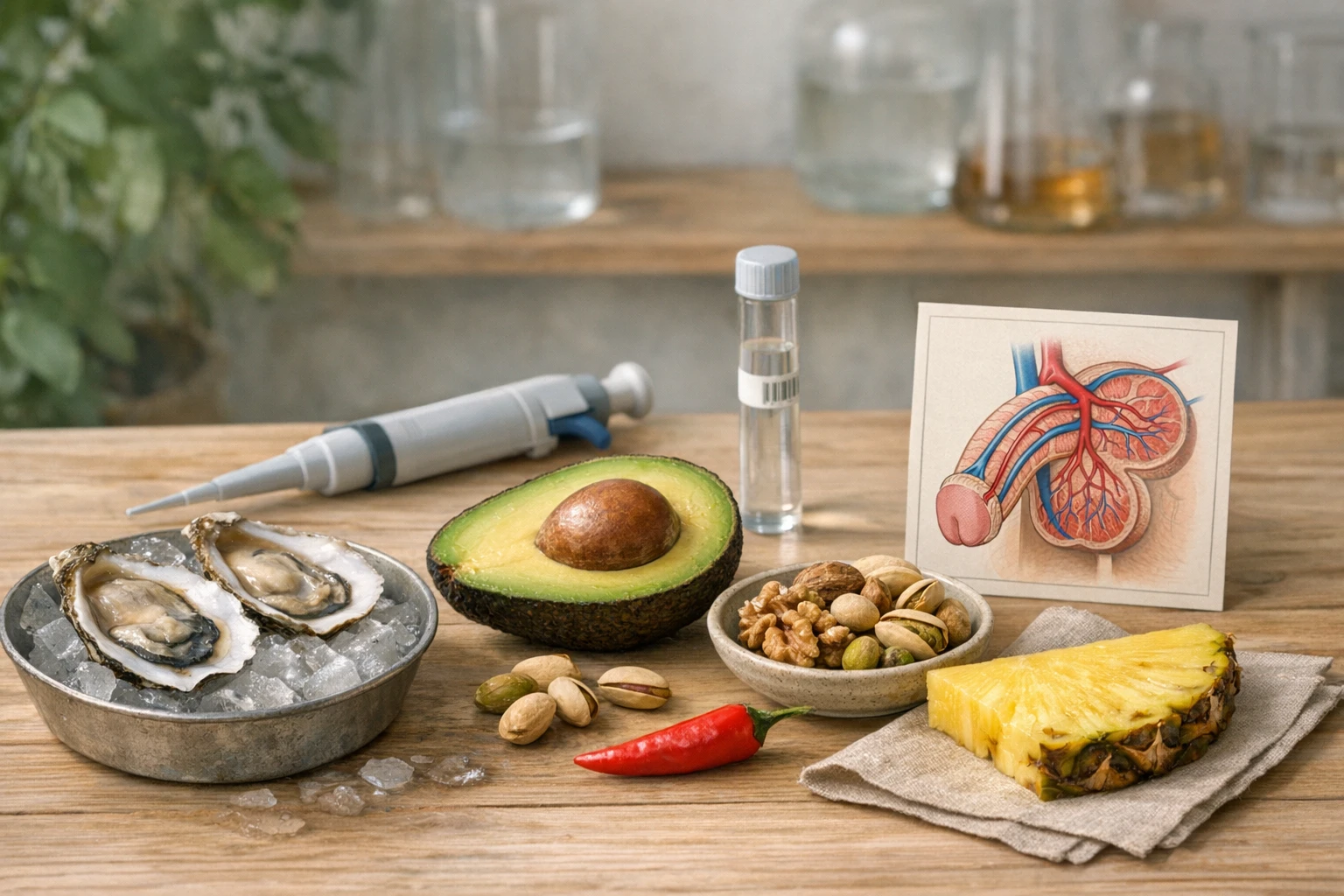
Starting point: oysters are traditionally associated with libido, especially for their zinc content. Scientifically: oysters and other shellfish are rich food sources of zinc, an essential trace element for numerous functions, including spermatogenesis in deficiency conditions [9]. However, the evidence that simple oyster consumption improves libido or fertility in non-deficient individuals is limited; large clinical studies on supplements containing zinc (in combination with folates) have not shown substantial improvements in live births or semen quality in general populations [8]. In summary: oysters provide zinc, but the effect on libido depends on the initial nutritional status and a universal effect is not proven.
Bananas
Correction of common inaccuracy: bananas are often reported as a source of "bromelain," but bromelain is an enzyme found in pineapple (Ananas comosus), not in bananas. Bananas are, however, a source of potassium, vitamin B6, and readily available carbohydrates, nutrients that promote energy and recovery; their direct role in desire is plausibly linked to energy support and sleep quality, factors that indirectly influence sexual desire. For information on bromelain and possible systemic effects, technical review literature exists [10].
Avocado
Avocado is rich in monounsaturated fats, folates, and other nutrients useful for cardiometabolic health. Improvements in cardiovascular health and metabolic status promote endothelial function and can therefore translate into better sexual performance in individuals with vascular risk [1][2]. There is no evidence that avocado is an "aphrodisiac" per se, but when included in a healthy diet, it contributes to a nutritional profile favorable to sexual function.
Figs
Figs provide fiber, antioxidants, and carbohydrates; they are foods with high sensory value, but scientific literature does not report direct clinical data linking their consumption to an increase in libido. Like many fruit species, they can contribute to a diet rich in phytonutrients that supports cardiovascular health, a mechanism considered important for sexual function.
Tree nuts (walnuts, almonds, pistachios)
Tree nuts are a useful source of unsaturated fatty acids, arginine, and antioxidants. Limited clinical studies have shown that regular consumption of pistachios can improve hemodynamic parameters and sexual function questionnaires in men with erectile dysfunction in small controlled trials [3]. Other research indicates favorable effects of walnuts on endothelial function and lipid profiles, plausible mechanisms for an improvement in sexual function [4]. Therefore, there is biological plausibility supported by clinical trials of limited size, but broader and longer-lasting confirmations are needed.
Spicy foods and spices (capsaicin)
Capsaicin, responsible for "spiciness," activates the TRPV1 receptor; in experimental models, this activation can increase nitric oxide production from the endothelium and modulate neurovascular responses that promote vasodilation [6][7]. Animal studies and some human studies suggest effects on blood pressure and vascular function; the direct translation to libido is plausible but not proven in clinical trials focused on desire or subjective desire. Therefore, chili pepper may have a plausible physiological role, but it is not proof of a "guaranteed increase" in libido.
Limitations of the evidence
It is necessary to carefully evaluate how to interpret the available studies. Methodological difference: much evidence is observational (cohorts, cross-sectional) which identifies associations but not causality. Even the available clinical trials on individual foods or supplements are often small, short-term, or with subjective secondary outcomes. Common methodological limitations include: sample selection (often men with pre-existing ED), insufficient size for robust results, lack of control over confounding factors (psychological state, medications, sleep), and variability in the form of consumption (whole food vs. extract or supplement). Context variability: the same food can behave differently in a person deficient in a nutrient compared to a normonourished person. Furthermore, biological effects observed in animal models or in vitro studies do not always translate into human clinical benefits. Finally, there are risks of publication bias and commercial interest in the literature on supplements. For all these reasons, recommendations must remain cautious and based on a general health approach rather than on "miracle recipes."
Editorial Conclusion
The relationship between food and libido is interesting and biologically plausible for some mechanisms (vascular health, nitric oxide, essential nutrients), but direct clinical evidence is incomplete. The best strategies for those seeking to improve their sex life remain the correction of pre-existing medical conditions (diabetes, hypertension, dyslipidemia), the reduction of risk factors (smoking, overweight), regular physical exercise, and a balanced diet. Some foods — nuts, arginine-rich foods, spices like chili pepper, zinc-rich foods — can contribute to a favorable framework, but do not replace medical diagnoses and treatments. In case of significant changes in sexual function or desire, it is advisable to consult a specialist to evaluate underlying medical, psychological, or pharmacological causes.
Final Note
If some passages of the article report a lack of verifiable data or direct links to studies on specific claims (e.g., the presence of particular compounds in individual vegetables), placeholders have been inserted in square brackets for transparency. The intent is to offer a critical, readable, and useful summary for the general public, with verifiable references to the main research.
SCIENTIFIC RESEARCH
- Relation of endothelial cell function to erectile dysfunction: implications for treatment. Am J Cardiol. 2005. https://doi.org/10.1016/j.amjcard.2005.10.006
- Mediterranean diet improves erectile function in subjects with the metabolic syndrome. Int J Impot Res. 2006. https://doi.org/10.1038/sj.ijir.3901447
- Pistachio diet improves erectile function parameters and serum lipid profiles in patients with erectile dysfunction. Int J Impot Res. 2011. https://doi.org/10.1038/ijir.2010.33
- Acute effects of high-fat meals enriched with walnuts or olive oil on postprandial endothelial function. J Am Coll Cardiol. 2006. https://doi.org/10.1016/j.jacc.2006.06.057
- Comparison of efficacy and safety of daily oral L-arginine and PDE5Is alone or combination in treating erectile dysfunction: a systematic review and meta-analysis of randomized controlled trials. Andrology. (meta-analysis). https://doi.org/10.1111/and.14007
- Activation of TRPV1 by dietary capsaicin improves endothelium-dependent vasorelaxation and prevents hypertension. Cell Metabolism. 2010. https://doi.org/10.1016/j.cmet.2010.05.015
- Role of TRP channels and capsaicin in cardiovascular physiology: review (IJMS or related reviews). https://doi.org/10.3390/ijms21124472
- Effect of folic acid and zinc supplementation in men on semen quality and live birth among couples undergoing infertility treatment: a randomized clinical trial. JAMA. 2019. https://doi.org/10.1001/jama.2019.18714
- To Eat or Not to Eat?—Food Safety Aspects of Essential Metals in Seafood. Foods. 2023. https://doi.org/10.3390/foods12224082
- Properties and therapeutic application of bromelain: a review. (Review on bromelain, pineapple). 2012. https://doi.org/10.1155/2012/976203
[Note: where paragraphs indicate a lack of verifiable data or direct links to studies on specific claims (e.g., the presence of particular compounds in individual vegetables), explicit placeholders have been inserted in square brackets for transparency. The intent is to offer a critical, readable, and useful summary for the general public, with verifiable references to the main research.]