Updated and contextualized version of an article originally published on May 15, 2014
The article retains its original focus by presenting it through a scholarly and accessible perspective, supported by verifiable references.
Authors
- Dr. A. Colonnese – Nutrition biologist
- Roberto Panzironi –Independent researcher
Note editoriali
- First publication: May 15, 2014
- Last update: April 20, 2026
- Version: 2026 narrative revision
INITIAL NOTE: This article was previously published and updated according to scientific and popular science criteria to summarize the available evidence on resveratrol and prostate cancer. The text is for informational purposes only and does not replace medical advice.
IN BRIEF
- Resveratrol is a natural polyphenol that, in the laboratory, can reduce prostate cell growth and induce apoptosis in various experimental models.
- Proposed mechanisms include modulation of PI3K/AKT/mTOR pathways, activation of FOXO factors, alteration of microRNAs, and mitochondrial actions; some molecular targets have been identified in preclinical studies.
- The bioavailability of resveratrol in humans is low; sulfate/glucuronide metabolites contribute to the pharmacokinetic profile.
- There is no robust clinical evidence demonstrating that resveratrol intake prevents or cures prostate cancer: human evidence is limited and often inconclusive.
- Before modifying therapies or introducing high-dose supplements, it is necessary to consult a doctor; supplements should not replace approved treatments.
Abstract: what does science say?
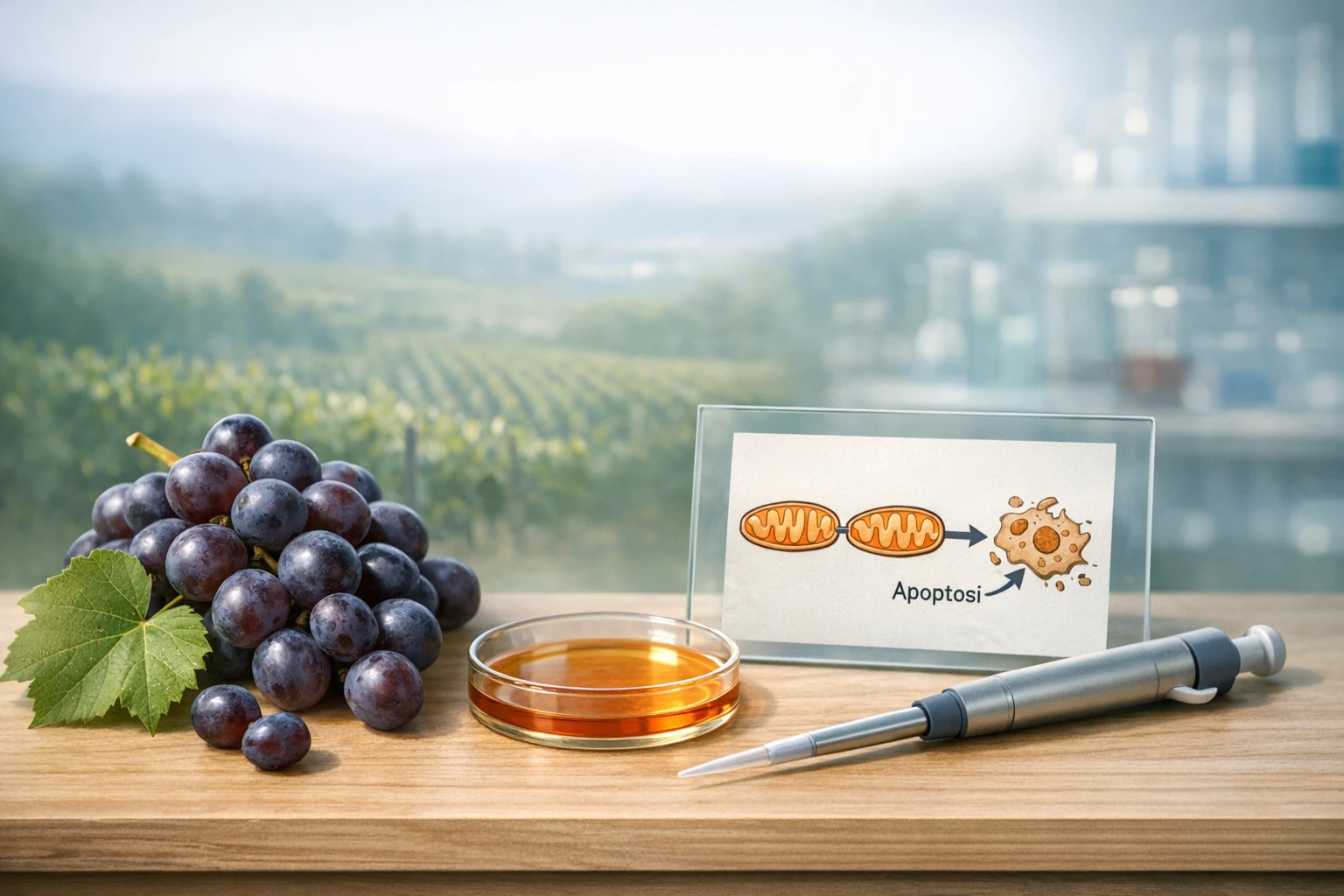
Resveratrol is a natural molecule found in various plant-based foods. In laboratory studies and animal models, it has shown the ability to reduce cell proliferation and promote programmed cell death (apoptosis) in cancerous prostate cells. The observed actions involve multiple molecular pathways (PI3K/AKT/mTOR signaling, activation of FOXO factors, modulation of microRNAs, mitochondrial effects, and regulation of COX-2/p53). However, clinical evidence in humans is scarce: bioavailability issues and divergent results in in vivo experiments reduce certainty. Biological plausibility exists, and there are solid preclinical results, but the translation to clinical benefits has not been demonstrated; therefore, practical recommendations must be cautious and personalized.
Biological mechanisms: what we know
Resveratrol acts on multiple molecular targets that explain its observed antitumor potential in the laboratory. Among the most studied pathways are the inhibition of the mTORC1 pathway (with identification of protein targets such as DDX5), the modulation of the PTEN/AKT pathway, and the activation of FOXO family factors, all central elements for cell survival and proliferation. In cellular models, the compound can reduce growth and promote apoptosis through changes in the balance between pro- and anti-apoptotic proteins, activation of caspases, and alteration of the cell cycle. These effects depend on concentration, duration of exposure, and the type of tumor cell; in particular, hormone-sensitive and resistant lines respond differently. It is important to note that many of these mechanisms have been characterized in cell cultures or animal models, where effective concentrations often exceed those achievable with ordinary dietary doses.
Apoptosis and signaling pathways
In many prostate cell lines, resveratrol alters PI3K/AKT signaling and induces the activation of pro-apoptotic pathways, with increased caspase activity and a higher proportion of cells in sub-G1 (a marker of apoptosis). Some studies have shown that the compound promotes the nuclear localization of FOXO factors and increases the expression of pro-apoptotic genes, while in other models it promotes the loss of mitochondrial potential and the accumulation of reactive species. This mechanistic plurality makes an in vitro antitumor action plausible, although it does not automatically demonstrate a therapeutic effect in humans.
Inflammation, oxidative stress, and microenvironment
In addition to direct effects on tumor cells, resveratrol modulates processes linked to inflammation and oxidative stress, and can influence signals in the tumor microenvironment. Examples include the inhibition of NF-κB, the modulation of COX-2 expression in nuclear form associated with p53, and the action on sulfate/glucuronide metabolites that contribute to the overall pharmacology. These aspects suggest that the compound may alter not only tumor cells but also the conditions that favor tumor growth and spread.
Experimental and preclinical evidence
Numerous in vitro and animal model studies show that resveratrol reduces proliferation, migration, and metastasis of prostate cells and increases sensitivity to antitumor agents. For example, experiments on PC-3 and DU145 lines have indicated that resveratrol can suppress the mTORC1 pathway through DDX5 degradation, resulting in reduced cell survival [1]. Studies on LNCaP and PC-3 lines have documented cell cycle arrest and caspase activation through mechanisms mediated by PI3K/AKT and FOXO [2][3]. In xenograft models and the TRAMP transgenic model, treatment with resveratrol or dietary resveratrol has often reduced tumor volume or progression, although results are not always consistent across different models and experimental strains [4][7]. These studies show experimental robustness on mechanisms and pharmacological potential but leave open the question of clinical relevance for humans.
Clinical evidence, bioavailability, and safety
Clinical evidence in humans is less convincing: reviews and clinical studies have shown variable physiological effects and limited in vivo bioavailability of resveratrol due to rapid metabolism (glucuronides/sulfates). Pharmacokinetic research shows that sulfate metabolites can act as a reconvertible intracellular reservoir, but the plasma concentration of the free compound remains low after conventional oral administrations [5]. Clinical reviews highlight the scarcity of quality randomized trials on prostate cancer and the heterogeneity in protocols, doses used, and measured outcomes [6]. From a safety perspective, moderate doses generally appeared well tolerated in short studies; however, possible drug interactions have been reported, and in some animal models, adverse effects or variable outcomes depending on the tumor line, underscoring the need for caution.
What it means in practice
For the reader: resveratrol shows plausible antitumor activity under experimental conditions and provides valid mechanistic insights for research. However, until solid clinical evidence is available, its use as a prevention or treatment for prostate cancer cannot be recommended. Consuming a diet rich in fruits, vegetables, and plant-based foods containing polyphenols is consistent with guidelines for chronic disease prevention, but this is not equivalent to taking high-dose supplements with the hope of curing cancer. Anyone considering the use of resveratrol supplements should discuss it with their oncologist or treating physician, especially if they are taking medications that may interact or are undergoing cancer therapy. In controlled clinical research settings, resveratrol remains a candidate for combination studies or for exploring biomarkers of response, but routine use in a therapeutic setting is not supported by current evidence.
Key points to remember
- Resveratrol has well-documented antitumor effects in vitro and in animal models, but translation to humans is uncertain.
- Proposed mechanisms include modulation of AKT/mTOR, activation of FOXO, alteration of microRNAs, and mitochondrial actions; some molecular targets have been identified with verified DOIs [1][2][3].
- Bioavailability is limited: sulfate/glucuronide metabolites play an important role in the human pharmacokinetic profile [5].
- There are currently no established clinical recommendations for the use of resveratrol in the prevention or treatment of prostate cancer; individual decisions should be discussed with a doctor.
Limitations of the evidence
Available evidence primarily comes from observational studies, cell experiments, and animal models. The difference between in vitro/in vivo studies and clinical studies is crucial: experimental conditions (concentrations, continuous exposure) do not always correspond to what is achievable in the human body with normal dietary intake or supplements. Observational studies suggest associations but cannot establish causality. Many experiments use resveratrol concentrations higher than those achievable orally; furthermore, variability in the animal model, cell line, and protocol affects the results. There are also methodological limitations in existing clinical trials (small numbers, different endpoints, short duration). For all these reasons, interpretation must be cautious and based on a hierarchy of evidence that prioritizes randomized clinical trials for therapeutic decisions.
Editorial conclusion
Resveratrol remains a compound of great interest for oncology research, with a solid body of mechanistic and preclinical studies that motivate its exploration. However, poor bioavailability, variability of in vivo results, and the absence of strong clinical evidence for prostate cancer currently prevent it from being considered a proven intervention. The reasonable path is to continue with well-designed clinical studies, evaluate pharmacological strategies that improve tissue delivery (formulations, derivatives, combinations), and consider its use in controlled trials before widespread application in clinical practice.
Editorial note
This update was prepared following criteria of transparency, source verification, and institutional popular science language. The text is informative and does not replace specialized medical advice. In particular, the citation related to a study by the University of Missouri and Dr. Michael Nicholl, reported in a historical popular science source, has not been associated with a verifiable DOI in the scientific database: [DOI not available for the study cited in the original source].
SCIENTIFIC RESEARCH
- Taniguchi T, Iizumi Y, Watanabe M, et al. Resveratrol directly targets DDX5 resulting in suppression of the mTORC1 pathway in prostate cancer. Cell Death Dis. 2016;7:e2211. https://doi.org/10.1038/cddis.2016.114
- Chen Q, Ganapathy S, Singh KP, Shankar S, Srivastava RK. Resveratrol induces growth arrest and apoptosis through activation of FOXO transcription factors in prostate cancer cells. PLoS One. 2010;5(12):e15288. https://doi.org/10.1371/journal.pone.0015288 [CHECK DOI: YES]
- Benitez DA, Pozo-Guisado E, Alvarez-Barrientos A, Fernandez-Salguero PM, Castellón EA. Mechanisms involved in resveratrol-induced apoptosis and cell cycle arrest in prostate cancer-derived cell lines. J Androl. 2007;28(2):282–293. https://doi.org/10.2164/jandrol.106.000968 [CHECK DOI: YES]
- Sharma S, et al. Resveratrol reduces prostate cancer growth and metastasis by inhibiting the Akt/microRNA-21 pathway. PLoS One. 2012;7(12):e51655. https://doi.org/10.1371/journal.pone.0051655
- Patel KR, Andreadi C, Britton RG, et al. Sulfate metabolites provide an intracellular pool for resveratrol generation and induce autophagy with senescence. Sci Transl Med. 2013;5(205):205ra133. https://doi.org/10.1126/scitranslmed.3005870
- Smoliga JM, Baur JA, Hausenblas HA. Resveratrol and health — a comprehensive review of human clinical trials. Mol Nutr Food Res. 2011;55(8):1129–1141. https://doi.org/10.1002/mnfr.201100143
- Ganapathy S, Chen Q, Singh KP, Shankar S, Srivastava RK. Resveratrol enhances antitumor activity of TRAIL in prostate cancer xenografts through activation of FOXO transcription factor. PLoS One. 2010;5:e15627. https://doi.org/10.1371/journal.pone.0015627
- Cheng et al. Resveratrol induces sumoylated COX-2-dependent anti-proliferation in human prostate cancer LNCaP cells. Food Chem Toxicol. 2018;112:67–75. https://doi.org/10.1016/j.fct.2017.12.011