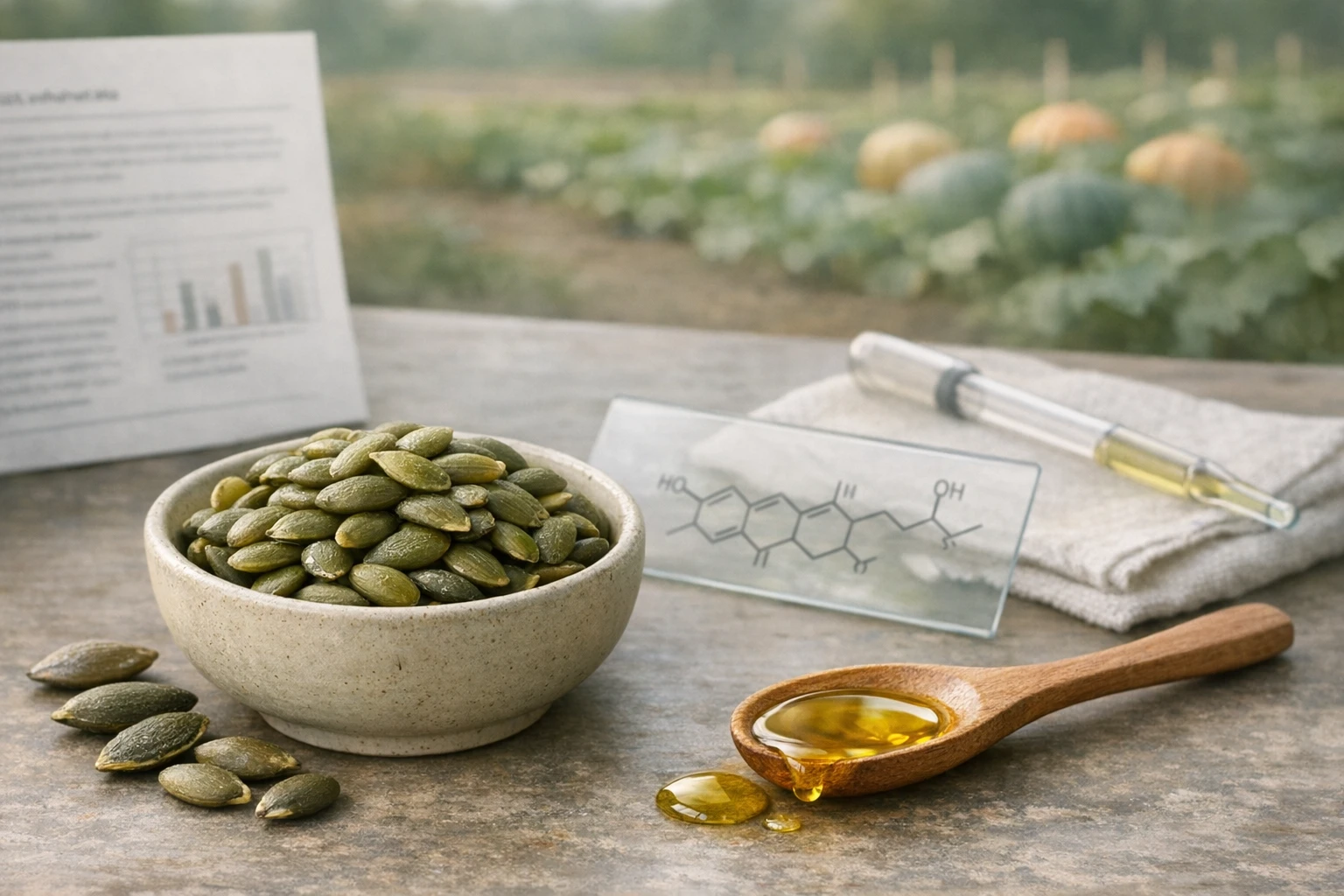
Updated and contextualized version of an article originally published on May 15, 2014
The article retains its original focus by presenting it through a scholarly and accessible perspective, supported by verifiable references.
Authors
- Dr. A. Conte – Biologist
- Roberto Panzironi –Independent researcher
Note editoriali
- First publication: May 15, 2014
- Last update: April 18, 2026
- Version: 2026 narrative revision
Initial note
This article has been previously published and updated according to scientific and divulgative criteria. The text is for informational purposes only and does not replace the advice of a doctor or healthcare professional. For personal situations or pathologies, always consult a qualified healthcare professional.
IN BRIEF
- Pumpkin seeds (pepitas) are nutritious foods: they provide magnesium, protein, unsaturated fats, vitamin E, and phytosterols.
- They contain antioxidant compounds (including γ‑tocopherol and other phenols) that explain the antioxidant properties observed in the laboratory.
- The presence of phytosterols in the seeds can help reduce LDL cholesterol if consumed in adequate amounts as part of a balanced diet.
- Some clinical and observational studies suggest a modest effect on male urinary symptoms (LUTS/BPH), but the evidence does not establish certain causality.
- Roasting alters some components: the choice between raw and roasted depends on taste and nutritional priorities.
Abstract: what does science say?
Pumpkin seeds are edible seeds rich in minerals (especially magnesium and zinc), proteins, and lipid components characterized by oleic and linoleic acids. They contain important antioxidant molecules, including vitamin E isomers (γ‑tocopherol) and phenolic compounds; their concentration varies between species and cultivars. Experimental studies show antioxidant activity and metabolic actions in animal models; clinical studies on seed-based products or extracts report modest effects on urinary symptoms related to the prostate. The evidence for the prevention of specific diseases remains limited: many observations derive from composition studies and heterogeneous interventions. The effect on cholesterolemia is plausible thanks to phytosterols, but to obtain appreciable reductions, quantities typical of supplements or enriched foods would be needed, not simply a few grams of seeds in the diet.
Main section
Essential nutrients: what do pumpkin seeds contain?
Pumpkin seeds are densely nutritious foods: for every 100g, they contain a significant amount of lipids, proteins, and micronutrients. Chemical analyses of Cucurbita pepo seeds show relevant concentrations of magnesium, phosphorus, zinc, and potassium, along with good quality proteins and predominantly unsaturated fats [1]. However, the composition varies by species, cultivar, and processing method: shelled seeds, seeds with hulls, and seed flours have different profiles. These differences explain why numerical values in nutritional tables can vary significantly from source to source [1].
Antioxidants and vitamin E
Pumpkin seeds and their oils are rich in tocopherols, particularly γ‑tocopherol, and phenols with antioxidant activity. Comparative studies on different cultivars have shown that the quantity and type of antioxidants change between species and extraction methods, with some varieties being particularly rich in compounds useful for neutralizing free radicals in in vitro tests [2]. Furthermore, the concentration of vitamin E in seeds can vary widely between genetic lines, so some varieties are much richer in γ‑tocopherol than others [3].
Why magnesium is central to the discussion
Pumpkin seeds are often reported as a good dietary source of magnesium. Magnesium is a mineral involved in hundreds of biological reactions, including those related to energy metabolism, muscle function, and bone mineralization. Systematic reviews and meta-analyses suggest a correlation between higher magnesium intake and bone mineral density in some sites (hip, femoral neck), although the evidence on definitive clinical outcomes such as fracture reduction is less solid and depends on context and intake levels [4]. Seeds, as food, can contribute significantly to daily magnesium intake, but the actual amount obtained depends on the quantity consumed and the rest of the diet.
Phytosterols and lipids: what can change in the blood
Pumpkin seeds contain phytosterols, plant compounds structurally similar to cholesterol. Clinical literature shows that phytosterol intake in gram doses per day reduces intestinal cholesterol absorption and can lower LDL cholesterol in a dose-dependent manner [5]. However, the amount contained in a typical serving of whole seeds is much lower than the doses often studied (about 2 g/day), and therefore occasional consumption of pepitas alone is unlikely to achieve the effect seen in controlled clinical studies [5][6].
Pumpkin seeds and prostate health: what clinical studies say
There are clinical and observational studies that have evaluated pumpkin seed extracts or products containing Cucurbita for lower urinary tract symptoms (LUTS) associated with benign prostatic hyperplasia. Some randomized trials report modest improvements in symptom scores compared to placebo or standard treatments over timeframes ranging from months to a year; however, the studies vary in quality, dosage, and formulation (oil, extract, standardized extract) and do not establish definitive causality [7][8]. For this reason, guidelines do not consider pumpkin seeds as a first-line treatment for BPH, but recognize the scientific interest and the need for further high-quality studies.
Practical section
What it means in practice
For the general reader, pumpkin seeds are a nutrient-dense food that can be included in a varied and balanced diet as a source of magnesium, plant proteins, and unsaturated fats. A common serving is about 20–30 g (a handful): it provides energy, minerals, and bioactive compounds, but also calories. The antioxidant properties and the presence of phytosterols are interesting from a biological point of view, but measurable clinical effects on cholesterol or prostatic symptoms require specific consumption and/or formulations, often different from daily food use [5][7].
How to use and store
Pumpkin seeds can be eaten raw, roasted, in salads, soups, or smoothies. Roasting improves taste and crunchiness but can modify some heat-sensitive molecules (some antioxidants and forms of tocopherols) [3][2]. For those who prioritize the maximum content of certain bioactive compounds, raw consumption or the choice of cold-pressed oils may be preferable. Storage in a cool, dry place, in a closed container, reduces the risk of lipid oxidation.
Key takeaways
- Pumpkin seeds are a concentrated source of magnesium, plant proteins, and unsaturated fats; the composition varies by species and processing [1].
- They contain γ‑tocopherol and other antioxidants whose concentration depends on the cultivar and treatment [2][3].
- The phytosterols present in the seeds are biologically active, but to obtain the LDL-reducing effect observed in many studies, doses generally higher than those obtainable with a single food portion are needed [5].
- Some clinical studies report modest improvements in male urinary symptoms after taking pumpkin seed extracts or products, but the evidence is not conclusive and does not replace validated therapies [7][8].
- Roasting modifies some compounds: personal choice between taste and preservation of some heat-sensitive nutrients [3][2].
Limitations of the evidence
It is important to distinguish between types of evidence. Many available studies are on chemical composition, in vitro studies, or animal models: these show biological plausibility but do not demonstrate certain clinical effects in humans. Clinical studies on pumpkin seed products are often heterogeneous in formulation, dosage, and duration; some are randomized controlled, others observational: this makes it difficult to transfer the results directly to daily food consumption. Furthermore, the variability between species/cultivars and between products (oil, extract, whole seeds) limits generalizations. For claims about concrete benefits (cholesterol reduction, osteoporosis prevention, or anticancer effects), larger, standardized, and high-quality clinical trials are needed. In summary, biological plausibility is supported, clinical evidence is partial and should be interpreted with caution [2][4][5][7].
Editorial conclusion
Pumpkin seeds are a nutritious and versatile food that can contribute to the intake of magnesium, protein, and antioxidants in a balanced diet. The biological properties observed in the laboratory and in animal models suggest potential benefits; clinical studies indicate modest effects in some areas (e.g., urinary symptoms, lipid profile when taken in adequate doses). However, there is not enough evidence to consider pumpkin seeds as a specific remedy for medical conditions. Sustainable and personalized food choices are advisable, integrated into the overall diet and evaluated with your doctor when specific health conditions exist.
Editorial note
This update has been prepared with editorial and scientific criteria to offer reliable and transparent summaries. The cited sources are peer-reviewed and accompanied by DOIs to allow verification of information. The article is for informational purposes only and does not constitute clinical advice.
SCIENTIFIC RESEARCH
- Delgadillo‑Ruiz L, et al. Physicochemical and functional properties of whole and defatted meals from Mexican (Cucurbita pepo) pumpkin seeds. Int J Food Sci Technol. (DOI verified).
- Nawirska‑Olszańska A, et al. Characteristics of antioxidant activity and composition of pumpkin seed oils in 12 cultivars. Food Chem.
- Murkovic M, Hillebrand A, Winkler J, Pfannhauser W. Variability of vitamin E content in pumpkin seeds (Cucurbita pepo L.). Z Lebensm Unters Forsch.
- Castiglioni S, Cazzaniga A, Albisetti W, Maier JA. Magnesium and osteoporosis: current state of knowledge and future research directions. Nutrients.
- Ostlund RE Jr, et al. Dose effects of dietary phytosterols on cholesterol metabolism: a controlled feeding study. Am J Clin Nutr.
- Meta‑analysis: Effects of phytosterol supplementation on lipid profiles and apolipoproteins: a meta‑analysis of randomized controlled trials. Medicine.
- Zerafatjou et al. Pumpkin seed oil (Cucurbita pepo) versus tamsulosin for BPH symptom relief: a single‑blind randomized trial. BMC Urol.
- GRANU study: Effects of pumpkin seed in men with lower urinary tract symptoms due to benign prostatic hyperplasia (BPH).
- Bharti SK, et al. Tocopherol from seeds of Cucurbita pepo against diabetes: in vivo validation and computational docking. J Formos Med Assoc.
- Comprehensive review: Nutritional value, phytochemical potential and therapeutic benefits of pumpkin (Cucurbita sp.). Foods.