Updated and contextualized version of an article originally published on May 22, 2014
The article retains its original focus by presenting it through a scholarly and accessible perspective, supported by verifiable references.
Authors
- Dr. A. Conte – Biologist
- Roberto Panzironi –Independent researcher
Note editoriali
- First publication: May 22, 2014
- Last update: April 18, 2026
- Version: 2026 narrative revision
IN BRIEF
- Lemon is a natural source of vitamin C, flavonoids, and essential oils; these substances have plausible biological roles, but clinical evidence is often limited.
- Vitamin C is essential for collagen, immune function, and cellular metabolism; however, observed clinical effects depend on dose, form, and nutritional context.
- Flavonoids in the peel and limonene have antioxidant activity and in vitro/animal activity; human trials show variable results depending on the food matrix and dose.
- For kidney stone prevention, the literature suggests that citrus juices increase citraturia and may reduce risk, but data are not uniform.
- Topical and dietary applications are generally safe if practiced with care; in case of clinical conditions or allergies, it is advisable to consult a doctor.
Abstract: what does science say?
Lemon (Citrus limon) is a common food and cultural ingredient with two categories of health interest: essential micronutrients (especially vitamin C) and active non-nutritional compounds (flavonoids, limonene, other terpenes). Laboratory and clinical studies suggest that the vitamin C contained in lemons is crucial for fundamental biological functions such as collagen synthesis, modulation of antioxidant mechanisms, and certain aspects of the immune response. Flavonoids, mainly present in the peel, may have measurable vascular and metabolic effects in some experimental contexts; however, the translation into stable clinical benefits in humans is still partial and depends on the dose, form (whole fruit, juice, extract), and duration of exposure. Some observed effects (for example, increased citraturia with citrus juices or in vitro antimicrobial activity of essential oils) are physiologically plausible but require larger and higher-quality randomized studies. In summary: there are solid biological bases to support a nutritional and functional role for lemon, but the strength of clinical evidence varies greatly depending on the outcome considered, the population, and the mode of consumption. Methodological limitations and variation in product composition necessitate cautious and contextualized judgments.
What lemon contains: main components and biological significance
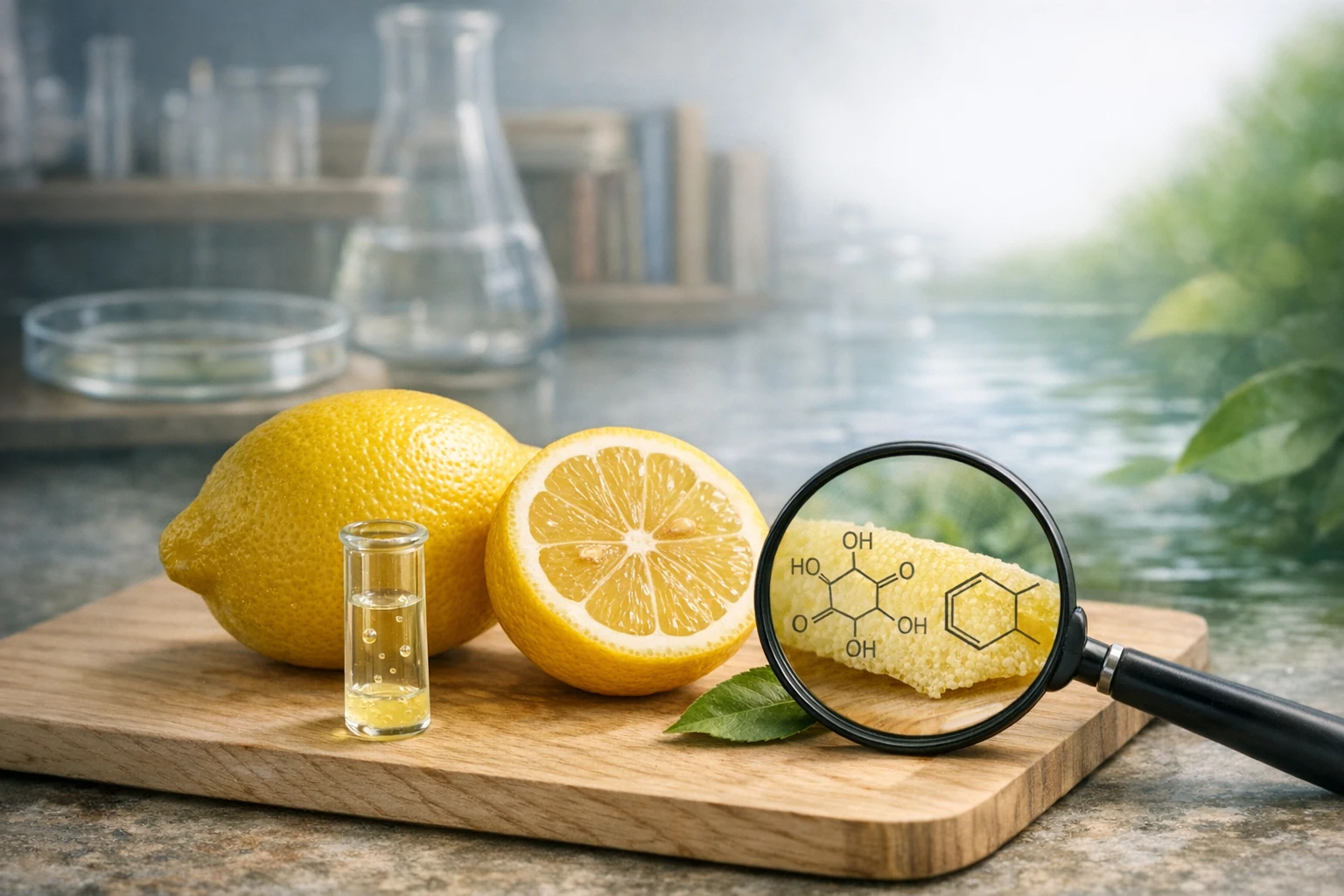
Lemon is composed of water-soluble and fat-soluble components: the juice is the main source of ascorbic acid (vitamin C) and citrates; the peel contains high concentrations of flavonoids (e.g., eriocitrin, hesperidin, naringin) and essential oils with limonene as the predominant component. Vitamin C is essential for collagen synthesis, intracellular antioxidant function, and various enzymatic processes related to metabolism and epigenetic regulation. These roles explain why a severe deficiency causes scurvy and why sufficient regular intake supports tissue and immune function. Citrates, present as potassium and sodium salts in the juice, affect urinary pH and citraturia, with possible implications for kidney stone formation. Finally, flavonoids in the peel and terpenes in essential oils show antioxidant activity, modulation of inflammatory pathways, and, in laboratory tests, antiviral, antibacterial, or modulatory actions on endothelial function. These biochemical observations constitute biological plausibility but do not automatically equate to proof of clinical efficacy when the compounds are consumed as food in the daily diet.
Vitamin C and cellular functions
Vitamin C (ascorbic acid) is a water-soluble molecule that acts as a cofactor in enzymatic reactions (e.g., pro-/lysyl-hydroxylase that stabilize collagen) and as a modulator of cellular redox homeostasis. At the immune level, review data indicate that adequate plasma levels contribute to leukocyte function and response to pathogens; prevention of deficiency is a consolidated clinical effect. The extent of effects in non-deficient conditions is subject to individual variability and context of use (dose, duration, nutritional status). [1]
Flavonoids, limonene, and essential oils
Flavanones (e.g., hesperidin) and other polyphenolic classes are concentrated in the peel and pulp; they have been associated with anti-inflammatory effects, modulation of the lipid profile in some clinical studies, and interactions with the gut microbiota. Reviews and meta-analyses on supplements or extracts indicate modest but sometimes significant results on some cardiovascular parameters, with strong heterogeneity among studies. Essential oils, rich in limonene, show antimicrobial activity and counter biofilm formation in in vitro tests and experimental models, but clinical relevance for systemic use remains limited. [4][5][7]
Plausible biological mechanisms and clinical translation
The biological evidence linking lemon components to possible benefits is articulated on multiple levels: enzymatic co-factor activity (vitamin C), antioxidant action and transcriptional modulation, increased citraturia (effect of citrates on the kidney), and pharmacological activity of flavonoids and terpenes on endothelium, inflammation, and microbes. Laboratory studies and animal models have documented how these compounds can reduce oxidative stress, modulate cytokines, and limit bacterial biofilm formation. However, the translation into clinical effects is conditioned by practical variables: actual amount consumed, bioavailability (the peel is richer in flavonoids but less consumed), food matrix (juice vs. whole fruit vs. extracts), individual metabolism, and duration of exposure. Randomized human studies have produced heterogeneous results: some improvements in circulatory or lipid biomarkers have been reported in subgroups, while broader analyses often do not confirm consistent effects for all outcomes studied. This discrepancy highlights the need to distinguish biological plausibility from strong and replicated clinical evidence. [3][4][8]
What it means in practice
For the public: including lemon in the diet (as fruit, unsweetened juice, or to flavor foods) is consistent with healthy eating habits and can contribute to daily vitamin C intake without normally posing risks for healthy individuals. For kidney stone prevention, observational literature and some clinical studies indicate that consuming citrus juices can increase urinary citrate and be protective in certain contexts; however, the form (e.g., orange juice vs. diluted lemon) and quantity are relevant, and not all populations will obtain the same benefit. [6]
When considering the use of extracts or supplements (e.g., isolated hesperidin), clinical evidence suggests modest effects on some cardiovascular risk factors under specific conditions, but the evidence is not sufficient to recommend generalized use as a therapeutic intervention. The antimicrobial action of essential oils is demonstrated in vitro and in experimental models; topical or dietary use should be carefully evaluated for tolerability, concentration, and risk of irritation. [4][5]
Food, cosmetic use, and safety
The culinary use of lemon remains among the most widespread: condiments, marinades, beverages, and food preservation. The peel provides flavonoids and terpenes that enrich the aromatic profile and contribute bioactive compounds. In topical applications, juice and essential oils can cause irritation, photosensitization, or allergic reactions in sensitive individuals; direct application of concentrated juice to the skin is not recommended without precautions. Storing fresh lemons is simple: ripe fruits keep longer in the refrigerator; the intact peel retains some volatile oils. It is advisable to use untreated lemons if the peel is to be used extensively for food or cosmetic purposes.
Preparation instructions and practical doses
Small, regular amounts of juice (e.g., a few teaspoons or a slice of lemon in water) contribute to vitamin C intake; however, documented therapeutic doses for specific clinical outcomes in trials are often higher than what is obtained from occasional fruit consumption. To increase urinary citrate intake used in stone prevention, clinical studies use significant amounts of juice or concentrated preparations: this practice should be evaluated with a doctor in case of a history of kidney stones. [6]
Limitations of evidence
There are substantial differences between observational evidence, experimental laboratory data, and randomized clinical trials. Observational studies can highlight associations (e.g., higher citrus consumption and lower risk of certain diseases) but do not establish causality due to residual confounding and exposure measurement. In vitro and animal studies document plausible mechanisms but do not account for human pharmacokinetics and the food matrix. Meta-analyses on vitamin C or flavonoid supplementation often show methodological heterogeneity (doses, duration, populations) and small or inconsistent effects, with results that may appear significant only in subgroups or in conditions of initial deficiency. Finally, the composition of lemon-based products varies by cultivar, ripening, and processing, which complicates the generalizability of results. [3][4][2]
Key takeaways
- Lemon provides vitamin C and other bioactive compounds with plausible biological effects.
- Prevention of vitamin C deficiency is a proven benefit; additional effects on chronic disease risk are less certain.
- Flavonoids and essential oils show activity in vitro and in some studies, but translation into stable clinical benefits requires further RCTs.
- Citrus juices can increase citraturia and contribute to stone prevention in some populations, but choice and dose matter.
- Avoid undiluted topical applications and consult a doctor if you have chronic conditions or allergies.
Editorial conclusion
Lemon is a food rich in health-beneficial components: vitamin C is an essential nutrient with consolidated physiological effects, while flavonoids and essential oils offer interesting biological mechanisms. However, there is still a gap between biological plausibility and clinical proof: many of the proposed benefits require confirmation through controlled studies, with clearly defined doses and forms of consumption. For the general public, moderate consumption of lemon as part of a varied and balanced diet is sensible and safe in most cases; for therapeutic indications or targeted supplementation, it is appropriate to rely on healthcare professionals and specific evidence.
Editorial note
This article is based on previously published content and has been updated following scientific and divulgative criteria: literature review, terminological clarity, and attention to source transparency. The text is for informational purposes only and does not replace the advice of a doctor or health professional. For clinical decisions or therapies, always consult a qualified professional.