Updated and contextualized version of an article originally published on May 22, 2014
The article retains its original focus by presenting it through a scholarly and accessible perspective, supported by verifiable references.
Authors
- Dr. M. Mondini – Biologist
- Roberto Panzironi –Independent researcher
Note editoriali
- First publication: May 22, 2014
- Last update: April 18, 2026
- Version: 2026 narrative revision
Initial note — This article is based on previously published research and has been updated according to scientific and divulgative criteria for clarity and transparency. The information is for informational purposes only and does not replace the advice of a healthcare professional.
IN BRIEF
- Observational evidence links high intake of added sugars and sugar-sweetened beverages to an increased risk of obesity, type 2 diabetes, and cardiovascular diseases.
- Interventions that reduce sugar intake show modest but consistent reductions in body weight in adults in controlled studies.
- Plausible mechanisms include effects on liver metabolism (fructose), glycemic spikes, and inflammatory processes; however, relationships are not always proven as definitive causal links.
- Dental caries is strongly correlated with free sugar intake; reduction to below 10% of total energy is recommended by health organizations.
- The main evidence is observational: long-term intervention studies and population-based approaches are needed to better define the overall impact.
Abstract: what does science say?
Dietary sugar (especially "added sugars" or "free sugars") has been associated, in numerous epidemiological studies, with adverse health outcomes such as weight gain, risk of type 2 diabetes, certain cardiovascular diseases, and dental caries. Systematic reviews and meta-analyses indicate a dose-response relationship with sugar-sweetened beverages and, more generally, with high added sugar intake. Controlled studies show that reducing sugars can lead to a small weight loss in adults. However, methodological limitations remain: many associations come from observational studies, dietary measurement is imprecise, and effects depend on dose, frequency, and food matrix (beverage vs. solid food). In summary, there is biological plausibility and consistency across different lines of evidence, but caution is needed in attributing exclusive causal responsibility to a single dietary component.
Plausible biological mechanisms
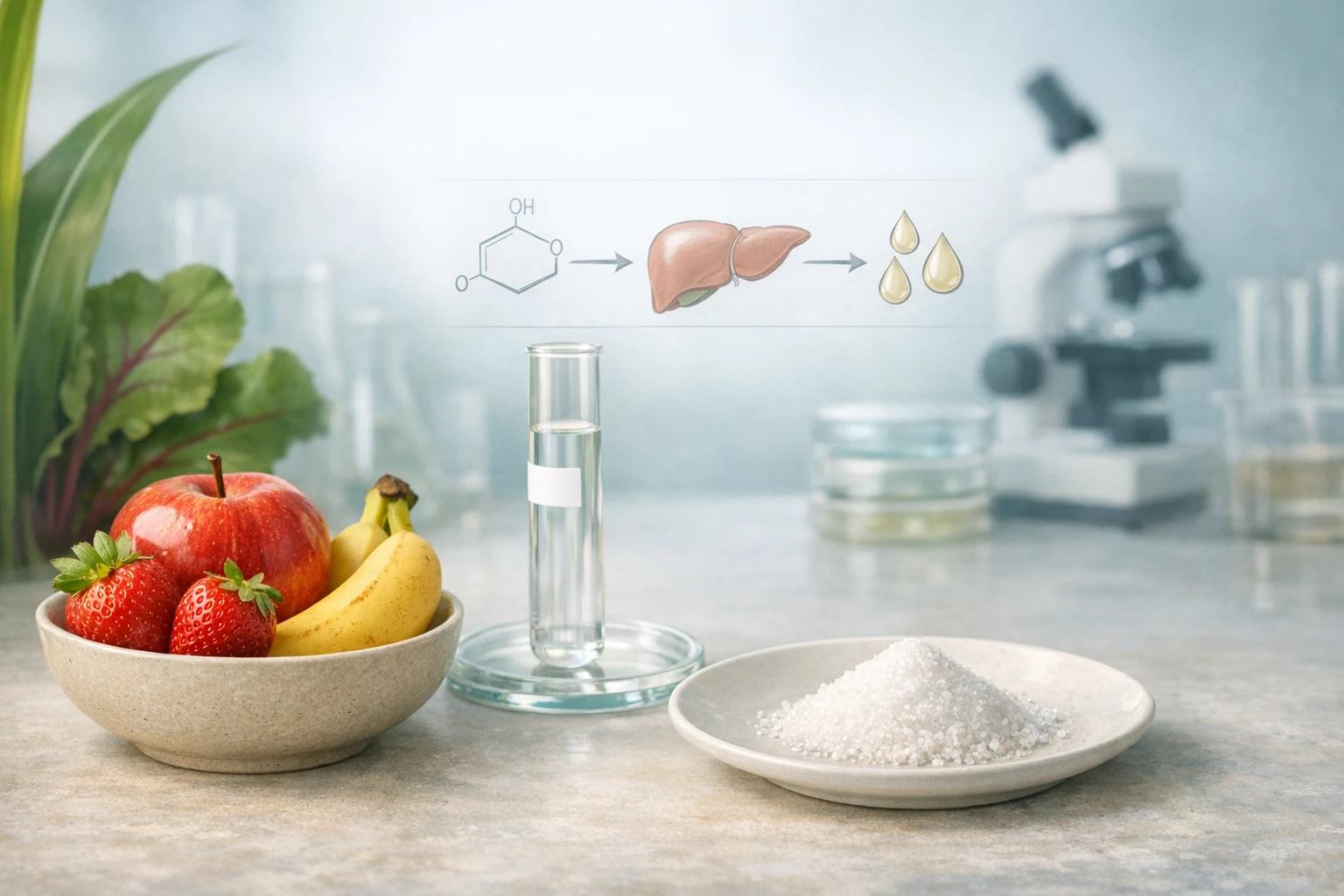
High intake of added sugars can influence metabolic physiology through multiple pathways. Fructose, present in high-fructose corn syrup and some sucrose, is largely metabolized by the liver and can promote hepatic triglyceride synthesis, increased visceral fat, and alterations in the lipid profile under conditions of excessive intake. These metabolic processes are associated with insulin resistance and inflammatory markers in experimental models and controlled human studies. At the same time, rapid intake of large amounts of sugar leads to glycemic elevations and acute insulin responses which, if repeated over time, contribute to metabolic dysfunction. It is important to distinguish probable mechanisms (biological and experimental evidence) from observational population evidence: the former provides plausibility, while the latter shows large-scale associations, conditioned by dietary habits and lifestyle.
Liver metabolism and fructose
Fructose is predominantly metabolized in the liver and, under conditions of energy excess, can stimulate hepatic fat synthesis and increase visceral adipose tissue deposition. Intervention studies with fructose-sweetened beverages have shown increases in postprandial triglycerides and reduced insulin sensitivity compared to carbohydrate substitutes, suggesting a specific role for fructose in modulating certain metabolic risk factors. These mechanisms support the hypothesis that excess sugars can contribute to hepatic dysmetabolism known to be linked to metabolic diseases.
Glycemia, insulin, and eating behavior
Rapid glycemic spikes followed by relative drops can influence appetite and short-term eating behavior, increasing the likelihood of repeated consumption of sweet foods. This glycemic pattern and related hormonal responses can foster a vicious cycle of additional caloric intake. However, the idea of a chemical "addiction" similar to drugs is not uniquely supported by the literature: complex subjective and behavioral responses exist, but clinical evidence requires rigorous measures and more longitudinal data.
Epidemiological evidence and impact on mortality
Large cohort studies and meta-analyses show associations between high intake of added sugars or regular consumption of sugar-sweetened beverages and an increased risk of cardiometabolic diseases. For example, analyses of national data linking sugar intake to mortality outcomes have shown an association with cardiovascular mortality after adjustment for confounding factors [1]. Prospective reviews and meta-analyses also indicate a consistent association between consumption of sugar-sweetened beverages and the onset of type 2 diabetes, even after partial correction for adiposity [2][3]. These estimates primarily come from observational studies and statistical models: they provide a measure of association at the population level but do not, by themselves, prove direct causality.
Controlled clinical interventions that reduce sugar intake show modest but consistent reductions in body weight in adults, confirming that at least part of the observational effect is mediated by caloric intake and the role of sugar-sweetened beverages as "liquid calories" easily consumed in excess [4]. Recent meta-analyses on cardiovascular outcomes include prospective studies associating the habit of consuming sugar-sweetened beverages with a higher risk of cardiac events and cardiovascular mortality, in a dose-response relationship [7]. The overall picture indicates a significant contribution of excess sugars to the burden of chronic diseases at the population level, despite limitations in precision and residual confounding.
Oral health, microbiota, and other effects
The relationship between sugars and dental caries is well documented: observational studies and systematic reviews show that high intake of free sugars is associated with a higher prevalence of caries and that reductions in intake lead to decreases in caries rates at the population level. For this reason, public health recommendations suggest limiting "free sugars" to low percentages of daily energy intake [6].
Dental caries and oral health
The fermentation of sugars by oral flora produces acids that demineralize enamel; a high frequency of sugar exposure (snacking, repeated beverages) increases the risk. Systematic reviews have indicated that reducing the proportion of sugars in the diet is associated with a reduction in caries over time, supporting public health recommendations to limit free sugar consumption [6].
Gut microbiota and metabolism
The direct impact of sugar on the gut microbiota and intestinal fermentation processes is an active area of research: some studies suggest that diets rich in simple sugars can alter microbial composition and bacterial metabolism, with possible repercussions on inflammation and intestinal permeability. However, much evidence comes from animal studies or short-term interventions; long-term human studies are needed to clearly define clinical effects.
What this means in practice
For the general public, the evidence indicates that moderating added sugar intake and limiting the consumption of sugar-sweetened beverages is a plausible strategy to reduce the risk of weight gain, type 2 diabetes, and certain cardiovascular events. Reducing "empty calories" from liquid sugars (sodas, added juices, flavored drinks) tends to produce clearer benefits compared to isolated changes in sugar intake from solid foods where the food matrix (fiber, protein) modulates the metabolic response. Public health recommendations advise keeping free sugar intake well below 10% of total calories, with possible additional benefits if approached at 5% in at-risk populations.
This does not mean demonizing individual foods absolutely: the overall dietary context, nutritional quality, and energy balance are decisive. For individuals with specific medical conditions (diabetes, heart disease, liver disease), choices must be personalized and discussed with healthcare professionals.
Key takeaways
- High intake of added sugars and sugar-sweetened beverages is associated with a higher risk of type 2 diabetes and cardiovascular diseases at the population level. [1][2][3]
- Reducing sugars can lead to small but consistent weight loss in adults in controlled studies. [4]
- Fructose, when consumed in excess, has hepatic metabolic effects that can promote dyslipidemia and visceral fat deposition. [5]
- Dental caries is strongly linked to the frequency and quantity of free sugars consumed; reductions are associated with decreased caries. [6]
- Evidence is mostly observational: proof of exclusive causality is limited and requires further long-term intervention studies and population assessments. [7][8]
Limitations of the evidence
It is important to distinguish between observational associations and causal evidence. Cohort studies measure correlations over time but remain susceptible to residual confounding, dietary measurement error, and selection bias. Experimental evidence (clinical trials) that manipulate sugar intake are often short-term or not always isolated from other dietary changes: this limits interpretation of long-term outcomes. Furthermore, the dose effect, the matrix (beverage vs. food), the frequency of exposure, and the overall energy context influence outcomes. For these reasons, public health recommendations are based on a body of evidence that combines biological plausibility, experimental results, and observational data, applying prevention principles at the population level.
Editorial conclusion
Scientific evidence agrees that an excess of added sugars, and particularly the habitual consumption of sugar-sweetened beverages, contributes to the burden of non-communicable diseases in the population. This contribution occurs through plausible metabolic mechanisms (hepatic effects of fructose, increased caloric intake due to liquid calories, glycemic spikes) and is supported by observational studies and several clinical trials. However, methodological uncertainties and limitations remain, requiring caution in attributing the totality of the risk to a single dietary component. For public health, policies and interventions aimed at reducing the use of added sugars (especially in beverages) and promoting diets that are overall richer in unprocessed foods appear to be strategies consistent with available evidence.
Editorial note
This update has been prepared following criteria of scientific rigor and transparency. Primary sources are listed in the "Scientific Research" section. For personal clinical questions, always consult a doctor or qualified healthcare professional.
SCIENTIFIC RESEARCH
- Yang Q, Zhang Z, Gregg EW, Flanders WD, Merritt R, Hu FB. Added sugar intake and cardiovascular diseases mortality among US adults. JAMA Internal Medicine. 2014;174(4):516-524. https://doi.org/10.1001/jamainternmed.2013.13563
- Te Morenga L, Mallard S, Mann J. Dietary sugars and body weight: systematic review and meta-analyses of randomised controlled trials and cohort studies. BMJ. 2013;346:e7492. https://doi.org/10.1136/bmj.e7492
- Malik VS, Popkin BM, Bray GA, Després JP, Hu FB. Sugar-sweetened beverages and risk of metabolic syndrome and type 2 diabetes: a meta-analysis. Diabetes Care. 2010;33(11):2477–2483. https://doi.org/10.2337/dc10-1079
- Imamura F, O’Connor L, Ye Z, et al. Consumption of sugar sweetened beverages, artificially sweetened beverages, and fruit juice and incidence of type 2 diabetes: systematic review, meta-analysis, and estimation of population attributable fraction. BMJ. 2015;351:h3576. https://doi.org/10.1136/bmj.h3576
- Stanhope KL, Schwarz JM, Keim NL, et al. Consuming fructose-sweetened, not glucose-sweetened, beverages increases visceral adiposity and lipids and decreases insulin sensitivity in overweight/obese humans. Journal of Clinical Investigation. 2009;119(5):1322–1334. https://doi.org/10.1172/JCI37385
- Moynihan P, Kelly S. Effect on caries of restricting sugars intake: systematic review to inform WHO guidelines. Journal of Dental Research. 2014;93(1):8-18. https://doi.org/10.1177/0022034513508954
- Intake of Sugar-Sweetened and Low-Calorie Sweetened Beverages and Risk of Cardiovascular Disease: A Meta-Analysis and Systematic Review. Advances in Nutrition. 2021;12:89–101. https://doi.org/10.1093/advances/nmaa084
- American Heart Association Nutrition Committee. Dietary sugars intake and cardiovascular health: a scientific statement from the American Heart Association. Circulation. 2009;120(11):1011–1020. https://doi.org/10.1161/CIRCULATIONAHA.109.192627