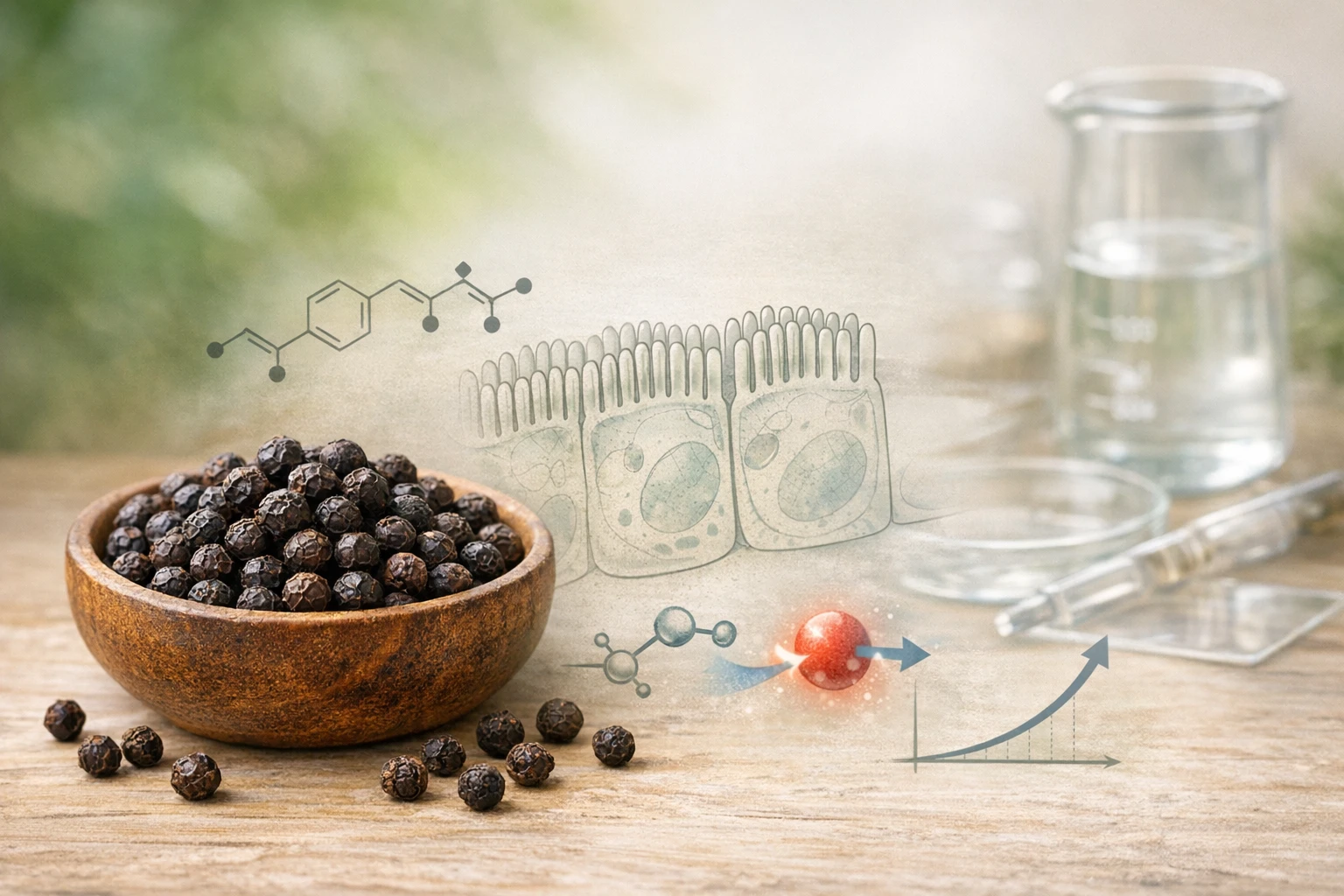
Updated and contextualized version of an article originally published on May 26, 2014
The article retains its original focus by presenting it through a scholarly and accessible perspective, supported by verifiable references.
Authors
- Dr. A. Colonnese – Nutrition biologist
- Roberto Panzironi –Independent researcher
Note editoriali
- First publication: May 26, 2014
- Last update: April 18, 2026
- Version: 2026 narrative revision
Initial note: this article was previously published and updated according to scientific and divulgative criteria. The text is for informational purposes only and does not replace medical advice.
IN BRIEF
- The main active component of black pepper is piperine, studied for its effects on digestion, absorption, and metabolism.
- In experimental models, pepper can modify the morphology and functionality of the intestinal mucosa and stimulate the secretion of digestive enzymes.
- Piperine increases the bioavailability of certain molecules (e.g., curcumin) and shows antioxidant and anti-inflammatory properties in preclinical studies.
- There is experimental evidence of neuroprotective effects, but clinical translation remains limited and requires further human studies.
- Pepper is generally safe when used in cooking; concentrated doses or supplements containing piperine can interfere with medications and are not advisable without supervision.
Abstract: what does science say?
Black pepper (Piper nigrum) is a widely used spice whose main active ingredient, piperine, is the subject of numerous studies. Experimental evidence indicates that piperine can stimulate the secretion of digestive enzymes, modify the structure of the intestinal absorbing surface, increase the bioavailability of other food molecules (e.g., curcumin), exert antioxidant activity, and modulate inflammatory processes. These results mainly come from in vitro studies, animal models, and some pharmacokinetic experiments in humans. The effect strongly depends on the dose, the form of consumption (food vs. concentrated extract), and the context (diet, presence of medications). Direct clinical evidence on the systemic health benefits of pepper as a single food remains limited; for many claims, biological plausibility and observational data are available rather than complete causal evidence.
1. Pepper and digestion: enzyme stimulation and motility
Black pepper is traditionally associated with a "digestive" effect. Experimental studies in animals and observations on intestinal tissues show that pungent compounds like piperine can increase the activity of intestinal surface enzymes and influence bile secretion, important elements for the digestion of fats and nutrients. These alterations can also reduce intestinal transit time in experimental models, promoting a faster progression of food content along the gastrointestinal tract [1][2].
What the studies say
Research on rats fed with spices has shown increases in brush-border enzyme activity and changes in membrane fluidity, correlated with a larger absorbing surface. In experiments on animal models with high-fat diets, the introduction of piperine or spice mixtures altered bile secretion and some lipid digestion parameters [1][2].
Limitations and contexts
These results mainly come from studies on animals and tissue preparations. The effect in healthy adult humans, its intensity with normal dietary consumption of pepper, and the impact on specific pathological conditions (e.g., gastroparesis or malabsorption syndromes) require dedicated clinical confirmation.
2. Effects on the intestine: morphology, barrier, and motility
Piperine also affects the physical characteristics of the intestinal epithelium in animal models. Microscopic studies indicate an increase in microvilli length and exchange surface in mucosa treated with spices, an effect that in theory can improve the absorption efficiency of some substances. In parallel, piperine can modulate intestinal motility by acting on sensory receptors and ion channels, with effects ranging from stimulation to inhibition depending on the experimental model and dose [1][2][8].
What the studies say
In rats fed with spices, increased microvilli membrane fluidity and a slight increase in microvilli length and perimeter have been documented, along with variations in mucosal enzymatic activities. Other experiments in intestinal cells show that piperine can stimulate enteric hormonal pathways such as GLP‑1 secretion, a molecule involved in the regulation of appetite and glycemic metabolism [1][8].
Limitations and contexts
These observations are predominantly preclinical. The effects on gut microbiota, intestinal barrier, and digestive health in humans depend on many variables: piperine dose, food matrix, nutritional status, and clinical conditions. The use of concentrated extracts is not equivalent to the consumption of pepper as a spice in cooking.
3. Antioxidant activity and impacts on lipid metabolism
Piperine possesses antioxidant properties demonstrated in numerous in vitro and animal studies. Some research indicates that piperine can modulate aspects of lipid metabolism: for example, in liver cells, a favorable regulation of the LDL receptor has been observed, a possible mechanism that could make LDL less susceptible to oxidation, although the clinical relevance of these mechanisms in humans remains to be defined [3][4].
What the studies say
Cellular and animal studies show a reduction in oxidative stress and modulation of metabolic pathways related to cholesterol and lipoprotein uptake. Systematic reviews emphasize that antioxidant effects are consistent at the experimental level, but the size and quality of clinical evidence remain limited [3][4].
Limitations and contexts
Most of the evidence comes from non-human models or in vitro experiments. There is no solid evidence that habitual consumption of pepper, at typical cooking doses, produces measurable reductions in cardiovascular events. Caution is needed in extending cellular results to clinical recommendations.
4. Anti-inflammatory and gastric mucosal protection
Piperine shows anti-inflammatory activity in various experimental models: it modulates NF‑κB, decreases the expression of pro-inflammatory cytokines, and can improve histological parameters in animal models of colitis. Paradoxically, some studies also indicate gastroprotective effects in experimental models of acute ethanol injury, through antioxidant mechanisms and the activation of mucosal defense pathways [5][9].
What the studies say
In murine models of induced colitis, piperine reduced inflammation markers, improved the expression of tight junction proteins between epithelial cells, and reduced tissue damage. In models of acute gastric damage, piperine showed protective activity linked to the reduction of oxidative stress [5][9].
Limitations and contexts
These results do not authorize defining piperine as a treatment for inflammatory diseases or ulcers. Clinical evidence in patients is scarce; moreover, effects vary with dose and form (concentrated extract vs. spice). In individuals with active ulcers or sensitive gastritis, pungent spices can be irritating in some cases.
5. Effects on the brain: signs of neuroprotection but still preclinical
Several experimental studies suggest that piperine exerts neuroprotective actions: reduction of oxidative stress in nervous tissue, modulation of inflammatory processes, and improvement of some behavioral parameters in animal models of cognitive damage. These results support biological plausibility, but clinical translation remains limited [6][7].
What the studies say
In animal models of neurodegenerative disease and in cell cultures of hippocampal neurons, piperine attenuated signs of neuroinflammation, reduced oxidative damage, and in some protocols improved memory performance. These effects have also been observed in studies combining piperine with curcumin to increase the tissue availability of the latter [6][7][10][11].
Limitations and contexts
There is currently no robust clinical evidence that pepper consumption reduces the risk of neurodegenerative diseases. Most data come from experimental models; well-designed clinical research is needed to evaluate safety, effective dosages, and impact on human outcomes.
What it means in practice
For the general public, the practical message is measured: black pepper is a spice rich in piperine with interesting biological effects at the experimental level. Used as a condiment in typical cooking quantities, it can contribute to meal enjoyment and, plausibly, to small digestive benefits and the enhancement of the absorption of some nutrients. However, there is insufficient evidence to recommend piperine-based supplements for the prevention or treatment of diseases. Those taking medications with a narrow therapeutic window, anticoagulants, or those with sensitive gastrointestinal conditions should consult a doctor before using concentrated piperine extracts, as documented pharmacokinetic interactions exist [10][11].
KEY POINTS TO REMEMBER
- Piperine is the main active compound in black pepper and has measurable biological effects in the laboratory.
- Documented benefits mainly concern cellular mechanisms and animal models; clinical evidence is limited.
- Pepper in cooking is generally safe, but concentrated extracts can interact with medications or cause gastrointestinal effects.
- Piperine enhances the bioavailability of certain molecules (e.g., curcumin); this can be relevant for nutraceutical formulations and pharmacokinetic studies [10][11].
- Well-designed clinical studies are still needed to confirm benefits on cardiovascular, intestinal, and neurological health.
Limitations of the evidence
Many claims about the benefits of pepper are based on observational studies, in vitro experiments, or animal models. There are important differences between this evidence and causal evidence derived from randomized clinical trials. Common methodological limitations include dosages not comparable to dietary use, small samples, surrogate endpoints, or biochemical measures instead of long-term clinical outcomes. Furthermore, the form of consumption (whole spices vs. concentrated extracts) and possible interactions with medications introduce variability and risks that require attention. For all these reasons, claims about systemic benefits must be interpreted with caution and contextualized to the quantity and method of use.
Editorial conclusion
Black pepper is more than just a flavoring: the piperine within it explains part of its biological properties observed in the laboratory. Current evidence shows biological plausibility for benefits on digestion, intestinal function, oxidative and inflammatory processes, and neuroprotective mechanisms. However, the strength of clinical evidence is still insufficient to translate these observations into therapeutic recommendations. For now, the practical advice remains to use pepper as part of a varied and balanced diet, avoiding unsupervised use of concentrated extracts, and consulting a doctor in case of chronic diseases or medication use.
Editorial note
This article has been updated to align content and references with the best available evidence. The purpose is informative and does not replace personalized medical advice. For questions about your specific clinical case, always consult a healthcare professional.
SCIENTIFIC RESEARCH
- Platel K, Srinivasan K. Beneficial influence of dietary spices on the ultrastructure and fluidity of the intestinal brush border in rats. British Journal of Nutrition. 2010;104:31–39. https://doi.org/10.1017/S0007114510000334
- Prakash UNS, Srinivasan K. Fat digestion and absorption in spice-pretreated rats. Journal of the Science of Food and Agriculture. (See article) https://doi.org/10.1002/jsfa.4597
- Lee HJ, et al. Piperine induces hepatic low‑density lipoprotein receptor expression through proteolytic activation of SREBPs. PLoS ONE. 2015;10:e0139799. https://doi.org/10.1371/journal.pone.0139799
- Rahman S, et al. A systematic review on black pepper (Piper nigrum L.): from folk uses to pharmacological applications. Critical Reviews in Food Science and Nutrition. 2019. https://doi.org/10.1080/10408398.2019.1565489
- Guo G, Shi F, Zhu J, et al. Piperine, a functional food alkaloid, exhibits inhibitory potential against TNBS‑induced colitis via inhibition of IκB‑α/NF‑κB and induces tight junction proteins in mice. Experimental and Toxicologic Pathology (SAGE). 2020. https://doi.org/10.1177/0960327119892042
- Zhao Z, et al. Piperine attenuates cognitive impairment in an experimental mouse model of sporadic Alzheimer’s disease. The Journal of Nutritional Biochemistry. 2019; https://doi.org/10.1016/j.jnutbio.2019.05.009
- Neuroprotective effect of piperine on primarily cultured hippocampal neurons. Biological & Pharmaceutical Bulletin. https://doi.org/10.1248/bpb.33.598
- Teng Y, et al. Piperine as a TAS2R14 agonist stimulates GLP-1 secretion in the human enteroendocrine cell line Caco‑2. Food & Function. 2022. https://doi.org/10.1039/D1FO02932K
- Duan Z, Yu S, Wang S, et al. Protective effects of piperine on ethanol‑induced gastric mucosa injury by oxidative stress inhibition. Nutrients. 2022;14:4744. https://doi.org/10.3390/nu14224744
- Shoba G, Joy D, Joseph T, et al. Influence of piperine on the pharmacokinetics of curcumin in animals and human volunteers. Planta Medica. 1998;64(4):353–356. https://doi.org/10.1055/s-2006-957450
- Wang P, Li H, Lin Z, et al. Comparing the effect of piperine and ilepcimide on the pharmacokinetics of curcumin in SD rats. Frontiers in Pharmacology. 2021;12:725362. https://doi.org/10.3389/fphar.2021.725362
Note: where present, references include clickable DOIs to allow direct verification of sources. Some cited works are experimental studies or reviews; for methodological details, consult the individual original texts.