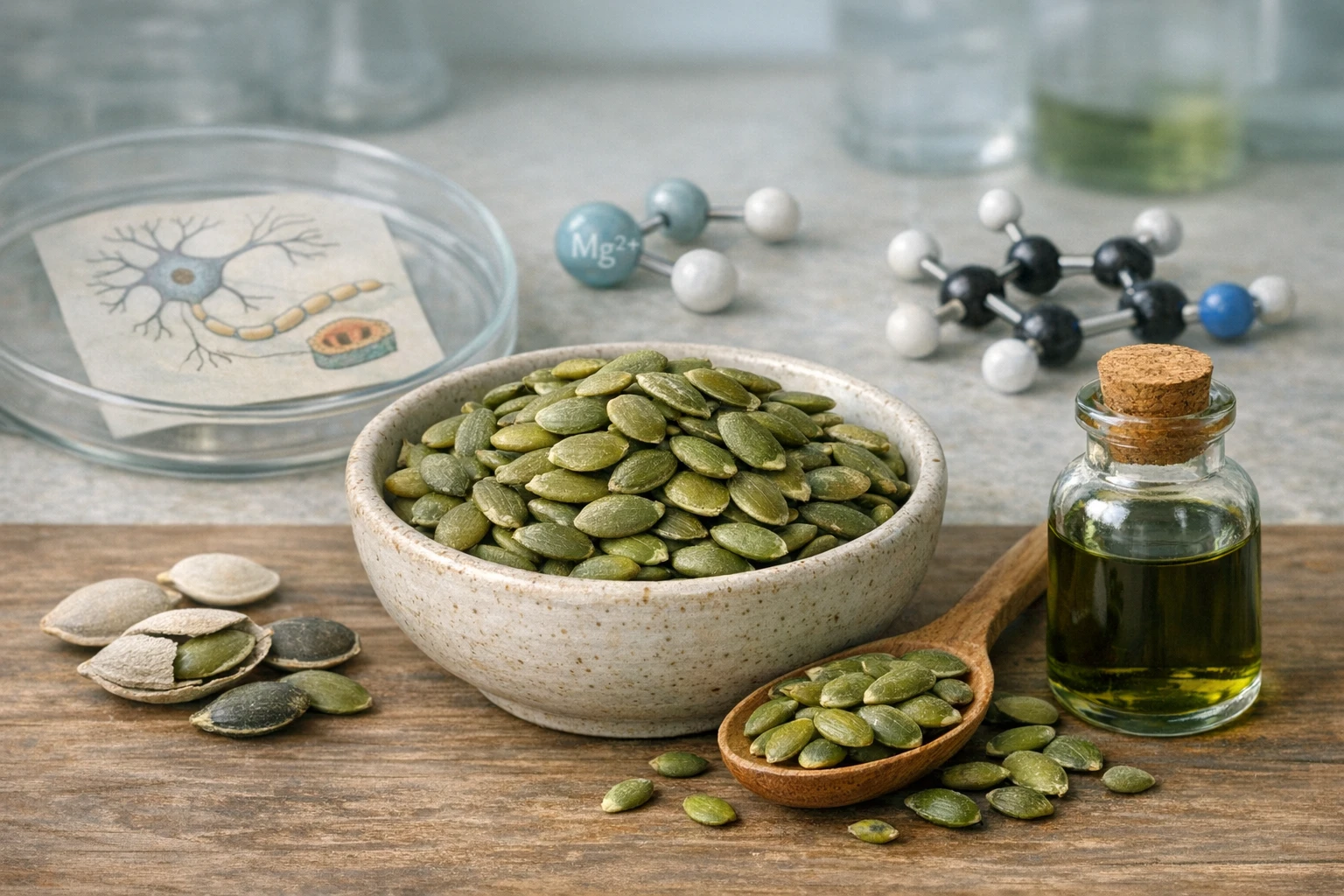
Updated and contextualized version of an article originally published on May 26, 2014
The article retains its original focus by presenting it through a scholarly and accessible perspective, supported by verifiable references.
Authors
- Dr. D. Iodice – Biologist
- Roberto Panzironi –Independent researcher
Note editoriali
- First publication: May 26, 2014
- Last update: April 18, 2026
- Version: 2026 narrative revision
Initial note: this article has been previously published and updated according to scientific and informative criteria. The text is for informational purposes only and does not replace personal medical advice. If you have specific health questions, please consult a healthcare professional.
IN BRIEF
- Pumpkin seeds are nutritious foods: they concentrate minerals (especially magnesium), proteins, unsaturated fats, and bioactive compounds.
- The magnesium and tryptophan present in the seeds have plausible roles in supporting the nervous system and sleep, but clinical evidence is variable.
- Pumpkin seed extracts and oils have been studied for prostate and urinary tract symptoms: some studies show modest improvements, but the results do not equate to specific medications.
- Seeds are caloric: their inclusion should be evaluated in the context of the overall diet; cooking and processing can modify bioactivity.
Abstract: what does science say?
Pumpkin seeds (Cucurbita spp.) are a nutrient-dense food that can significantly contribute to the intake of magnesium, plant proteins, vitamin E, and phytosterols. Experimental and clinical evidence indicates plausible mechanisms for a supportive effect on the nervous system (via magnesium and serotonin precursors) and a moderate action on urinary symptoms related to prostatic hypertrophy (through phytosterols and other compounds); however, clinical results are heterogeneous: some trials and meta-analyses show subjective improvements in urinary symptoms over the long term, while a controlled study found that seed oil is less active than an alpha-blocker. The effect depends on the form, dose, duration, and quality of the preparation; for many claims, robust and generalizable causal evidence is still lacking.
Nutritional properties of pumpkin seeds
Pumpkin seeds are a concentrated source of macronutrients and micronutrients: they have high percentages of plant-based proteins, a significant amount of unsaturated fats, and a significant caloric density. In terms of micronutrients, the seeds contain relevant amounts of minerals (potassium, phosphorus, zinc, and, above all, magnesium) and vitamin E in the form of tocopherols. The composition varies among species (C. pepo, C. moschata, C. maxima), cultivars, and conditions of cultivation, harvesting, and industrial processing; therefore, the values reported in nutritional tables are approximate and should be considered as indicative ranges [1].
Minerals and the role of magnesium
Pumpkin seeds are among the plant foods with the highest magnesium content by weight; magnesium is an enzymatic cofactor involved in many cellular reactions and in the regulation of nervous excitability. Review studies indicate that magnesium intake can influence subjective indicators of anxiety and sleep parameters in some groups (e.g., elderly people or individuals with insufficient intake) but the effects are variable and depend on the dose and baseline status [2].
Proteins, amino acids, and tryptophan
The seeds contain good quality proteins for a plant source and provide amino acids such as tryptophan, a precursor to serotonin and melatonin. At a biological level, a higher intake of tryptophan in the diet can increase the availability of serotonin and melatonin and influence sleep and mood in specific clinical or dietary contexts; however, the concrete nutritional effect depends on the absolute amount of tryptophan consumed, the presence of other competing amino acids, and the overall nutritional status [3].
Vitamin E, antioxidants, and fats
Pumpkin seeds and seed oils contain tocopherols (vitamin E) and a mixture of predominantly unsaturated fatty acids. Vitamin E acts as a lipid antioxidant, and its concentration in the seeds can contribute to the stability of the oil and the nutritional value of the food. The precise amount of tocopherols varies by species and oil extraction technique [4].
Pumpkin seeds and urological health: what studies show
Pumpkin seed extracts and oils have been studied for their impact on lower urinary tract symptoms associated with benign prostatic hyperplasia (LUTS/BPH). Some clinical trials and meta-analyses indicate a subjective improvement in symptoms and quality of life after months of treatment with standardized preparations based on seeds or soft seed extract; however, the benefits are often modest and not always comparable to first-line medications. A randomized study compared seed oil with tamsulosin: both groups reported improvement, but the drug showed a faster and more marked reduction in symptom scores [5]. A meta-analysis of 12-month studies with standardized extract suggested a favorable effect compared to placebo but highlighted methodological limitations and the need for further studies [6].
Plausible mechanisms
Potential mechanisms include the action of phytosterols (which can modulate 5α-reductase activity), anti-inflammatory and antioxidant effects, and the influence on cell proliferation signals observed in experimental models. Preclinical studies on extracts and phytosterol fractions have shown a reduction in prostatic hyperplasia in animal models, with alterations in pathways related to proliferation and apoptosis [7]. These results support biological plausibility but do not in themselves establish definitive clinical efficacy in humans.
How to prepare and consume seeds: form, dose, and safety
Seeds can be consumed raw, toasted, shelled, or whole; it is important to consider that the shell increases the fiber content and can make chewing and digestion more difficult for some people. Thermal processing (toasting) modifies sensory characteristics and can marginally alter the nutritional profile and antioxidants; industrial processes and oil extraction determine significant differences in the content of phytosterols and tocopherols between products [8]. For this reason, when the goal is an effect associated with specific components (e.g., phytosterols), the pharmaceutical form or extract used in studies is relevant.
Quantity and caloric intake
Pumpkin seeds are caloric: a usual portion (for example, 1–2 tablespoons) provides significant energy and nutrients. In therapeutic contexts used in trials, doses and forms vary: the preparations studied in urology are standardized products with specific dosages and do not always correspond to simple food consumption. If consumed as a snack or ingredient, the rule is to include them in the overall daily energy balance.
What this means in practice
For those who wish to integrate pumpkin seeds into their diet: they are a useful food to increase the intake of magnesium, plant proteins, and antioxidants. They can be a nutritionally valid choice as a snack, in salads, or in baked goods. However, they should not be considered medical-therapeutic treatments for conditions such as BPH or sleep disorders; if targeted effects are being evaluated (e.g., for urinary symptoms), it is preferable to use clinically studied standardized products and consult a doctor. It is also advisable to pay attention to any allergies to the Cucurbitaceae group and to the caloric content when following a low-calorie diet or managing weight.
KEY POINTS TO REMEMBER
- Pumpkin seeds are nutritious foods concentrated in minerals like magnesium, proteins, and bioactive compounds.
- Magnesium and tryptophan can contribute to favorable effects on stress and sleep in specific contexts, but clinical evidence is variable and depends on dose and initial status [2][3].
- For prostate-related urinary symptoms, seed extracts and oils have shown subjective improvements in some studies, but they do not replace established pharmacological therapies [5][6].
- Nutritional composition varies by species, cultivar, and process: choose quality products and, for therapeutic purposes, preparations with recognized standards [1][8].
- Being caloric, seeds should be included in the context of the total diet to avoid energy excesses.
Limitations of the evidence
It is important to distinguish between observations, biological plausibility, and causal evidence. Much of the research on pumpkin seeds and oil includes preclinical studies, small-to-medium sized clinical studies, trials with proprietary products, and some meta-analyses of a few studies. Observational studies can signal associations but not prove causality; available clinical trials also have limitations such as small sample sizes, differences in product form, variability in doses, and often short or highly variable durations. For these reasons, conclusions must be cautious and contextualized: larger, replicated, and independent studies are needed to reliably establish efficacy, dose, and long-term safety [5][6].
Editorial conclusion
Pumpkin seeds are a nutrient-rich food with plausible health benefits due to their content of magnesium, proteins, tocopherols, and phytosterols. Experimental and clinical evidence suggests potentially useful effects on nervous function, sleep, and urinary symptoms, but clinical results are heterogeneous and do not replace established medical therapies. Regular dietary use is reasonable to improve the nutritional quality of the diet; for therapeutic purposes, it is necessary to refer to standardized products and consult with the treating physician.
Editorial note: the article has been updated following criteria of scientific rigor and informative clarity. The information is not intended to provide medical prescriptions. For therapeutic decisions and personalized evaluations, consult a healthcare professional.
SCIENTIFIC RESEARCH
- The Profile of Secondary Metabolites and Other Bioactive Compounds in Cucurbita pepo L. and Cucurbita moschata Pumpkin Cultivars. Molecules. 2019. https://doi.org/10.3390/molecules24162945
- The Effects of Magnesium Supplementation on Subjective Anxiety and Stress—A Systematic Review. Nutrients. 2017. https://doi.org/10.3390/nu9050429
- Beneficial Effect of Increased Tryptophan Intake on Its Metabolism and Mental State of the Elderly. Nutrients. (review). https://doi.org/10.3390/nu15040847
- Phytosterols in hull-less pumpkin seed oil, rich in ∆7-phytosterols, ameliorate benign prostatic hyperplasia by lowing 5α-reductase and regulating balance between cell proliferation and apoptosis in rats. Food & Nutrition Research. 2021. https://doi.org/10.29219/fnr.v65.7537
- Pumpkin seed oil (Cucurbita pepo) versus tamsulosin for benign prostatic hyperplasia symptom relief: a single-blind randomized clinical trial. BMC Urology. 2021. https://doi.org/10.1186/s12894-021-00910-8
- Beneficial effects of pumpkin seed soft extract on lower urinary tract symptoms and quality of life in men with benign prostatic hyperplasia: a meta-analysis of two randomized, placebo-controlled trials over 12 months. Clin Phytoscience. 2022. https://doi.org/10.1186/s40816-022-00345-0
- Components and biological activities of seeds and oil of the Styrian oil pumpkin. Eur J Lipid Sci Technol. (review). https://doi.org/10.1002/ejlt.200700105
- Compositional and bioactive characterization of pumpkin seeds and oils: comparative assessments across species and cultivars. Int J Mol Sci. (various analyses). https://doi.org/10.3390/ijms21072346
Placeholder: if you would like additional references on specific nutritional values for cultivars or official nutritional tables (e.g., USDA FoodData Central), please indicate your preferences and we will integrate them.