Updated and contextualized version of an article originally published on June 9, 2014
The article retains its original focus by presenting it through a scholarly and accessible perspective, supported by verifiable references.
Authors
- Dr. M. Bitonti – Biologist
- Roberto Panzironi –Independent researcher
Note editoriali
- First publication: June 9, 2014
- Last update: April 18, 2026
- Version: 2026 narrative revision
Editorial note: This article was originally published in the past and has been updated according to scientific and informative criteria. The purpose is informational: it does not replace medical advice.
IN BRIEF
- Radicchio is a leafy form of Cichorium intybus containing polyphenols, anthocyanins, and bitter compounds that contribute to its color and some biochemical activities.
- Experimental research and some clinical studies on Cichorium components (especially inulin and extracts) suggest effects on gut microbiota, intestinal function, and oxidative stress, but most human evidence is limited or derived from preparations other than the fresh leaf.
- The main plausible mechanisms include the antioxidant action of phenols, modulation of the gut microbiota by prebiotic fibers (mainly from the root), and the activity of sesquiterpenes with anti-inflammatory properties observed in experimental models.
- For the prevention or treatment of clinical conditions (constipation, liver diseases, etc.), the evidence is insufficient for specific therapeutic recommendations; observed effects depend on dose, extract form, and context.
MAIN SECTION
Abstract: what does science say?
Radicchio (Cichorium intybus var. foliosum), known for its red leaves and bitter taste, contains a mixture of phenolic compounds, anthocyanins, and sesquiterpenes. Experimental evidence indicates that Cichorium extracts may have antioxidant activity and, in animal or cellular models, protective effects on the liver and anti-inflammatory activity. Some components derived from chicory root (inulin and oligofructose) have shown benefits on the gut microbiota and intestinal regularity in clinical studies. However, most of the evidence linking the consumption of fresh radicchio leaves to specific health benefits comes from laboratory studies or research on extracts or other parts of the plant; therefore, significant limitations remain in generalizing to concrete dietary recommendations.
Nutritional properties and bioactive compounds
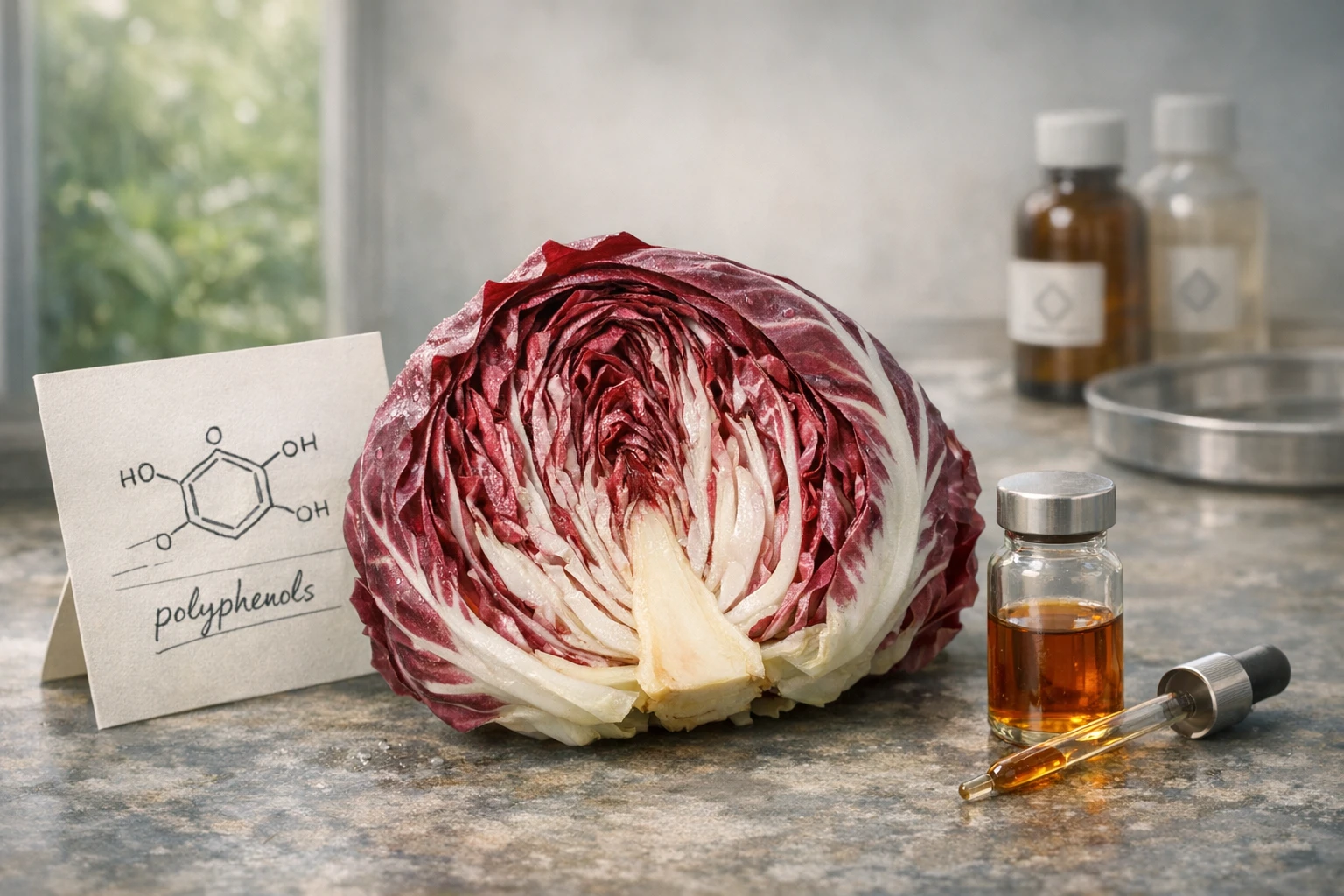
Radicchio is a leafy variant of the Cichorium genus and concentrates phenolic compounds, including anthocyanins responsible for its red-purple color, hydroxycinnamic acids, and various flavonoids. Studies on red cultivars document good antioxidant capacity measured in vitro, with phenol and vitamin C content varying in relation to the variety and cultivation practices [1]. Processing operations, drying, or 'forcing' (an agricultural practice used to obtain intense color in some varieties) can modify the quantity and availability of these compounds: research on red radicchio documents measurable variations in phenols and antioxidant capacity related to the processing method [2].
A critical synthesis of the literature on Cichorium intybus shows that the plant also provides secondary compounds such as sesquiterpenes (lactucopicrin, lactucin, and analogues) and chlorogenic derivatives; these molecules partly explain the biological observations reported in experimental models and traditional applications [3]. From a nutritional point of view, the leaves provide few calories and contribute to the count of dietary fiber and micronutrients, but the specific composition depends on the variety and detection method [1].
Radicchio and digestive function: fiber, prebiotics, and constipation
The relationship between radicchio and intestinal function must be interpreted taking into account the difference between leaves and root. The Cichorium root is a recognized source of inulin, a fermentable fiber with prebiotic activity; numerous human and experimental studies indicate that inulin and oligofructose can modulate the gut microbiota, increase bifidobacteria, and improve some parameters of intestinal regularity [6][7]. A recent trial showed that inulin supplementation can increase bowel movement frequency and improve quality of life in adults with functional constipation in a randomized, double-blind, placebo-controlled study [8].
It is important to note that the amount of inulin present in radicchio leaves is much lower than in the root; therefore, the effects observed with concentrated inulin preparations are not directly transferable to the simple consumption of raw leaves. For those seeking a significant prebiotic effect, the source and dose matter: clinical studies on inulin use standardized doses and products extracted from chicory root, not the fresh leaf [7][8].
Bitter compounds, sesquiterpenes, and appetite and inflammation modulation
Bitter taste and appetite regulation
The bitter compounds present in Cichorium, particularly some sesquiterpenes and lactone-terpenes, can activate bitter taste receptors and potentially influence feelings of satiety or appetite. Biological plausibility is supported by sensory pharmacology data, but direct clinical evidence on the effect of radicchio on human eating behavior is scarce and inconclusive [3].
Anti-inflammatory properties of sesquiterpenes
Extracts and isolated compounds from Cichorium root systems and leaves show measurable anti-inflammatory activity in preclinical studies: recent work on sesquiterpenes has reported modulation of inflammatory pathways (e.g., NF-κB) and activation of antioxidant systems (e.g., NRF2) in cellular and animal models [4]. These results are interesting from a mechanistic point of view, but their applicability to ordinary food consumption requires caution: active concentrations in vitro often exceed those achieved with the consumption of fresh leaves.
Radicchio, liver, and experimental evidence
Some experimental studies on Cichorium extracts report protective effects in models of chemically induced liver damage, with a reduction in markers of oxidative stress and liver enzymes in animals treated with root or plant extracts [5]. This evidence suggests a biological plausibility of antioxidant and cytoprotective action of plant components. However, these are preclinical studies or studies on concentrated extracts: the effect of regular consumption of radicchio leaves on hepatoprotection in humans is not documented by controlled clinical trials and therefore remains a hypothesis to be confirmed with appropriate studies [5].
Practical section
What it means in practice
For the consumer, the main message is that radicchio is a low-calorie vegetable food, rich in phenolic compounds and with an interesting nutritional profile for a varied diet. Its consumption as part of a balanced diet can contribute to the intake of dietary fiber and antioxidants. If the goal is to obtain demonstrated prebiotic or therapeutic benefits (for example, for constipation or glycemic control), available evidence indicates that specific products or dosages are needed (e.g., inulin extracted from the root) evaluated in clinical studies [6][7][8].
Popular claims about 'detoxifying' or 'fever-reducing' effects associated with radicchio consumption alone are not supported by solid human evidence; any hepatoprotective properties have been observed in experimental models with concentrated extracts and cannot be automatically transferred to the daily diet [5].
Consumption and safety advice
Radicchio is generally well tolerated in the diet. Those with gastrointestinal problems sensitive to fermentable fibers (e.g., individuals with irritable bowel syndrome sensitive to FODMAPs) may experience bloating or flatulence if they consume large quantities of fermentable vegetables; conversely, the gradual addition of fermentable fibers can reduce adverse effects. In the presence of pharmacological therapies or specific pathologies, it is recommended to consult a doctor before adopting targeted dietary interventions. There is no clinical evidence that radicchio consumption cures or prevents diseases: any possible benefit should be understood as part of an overall dietary pattern and not as a therapy.
KEY POINTS TO REMEMBER
- Radicchio contains phenols, anthocyanins, and bitter compounds with demonstrated biological activity in vitro and in animal models [1][2][4].
- The prebiotic properties and effects on constipation documented in the literature specifically concern inulin from chicory root or concentrated products, not directly fresh leaves [6][7][8].
- Cichorium extracts have shown hepatoprotective effects in experimental models; clinical evidence in humans is needed to confirm practical relevance [5].
- Differences between varieties, cultivation conditions, and post-harvest processes influence the content of active compounds and antioxidant capacity [2].
LIMITATIONS OF EVIDENCE
The main limitations to consider are: (1) much evidence is observational or derived from in vitro/animal studies and does not establish causality in humans; (2) available clinical studies often use extracts or parts of the plant other than the leaf (e.g., root) and dosages not equivalent to ordinary food consumption; (3) variability among cultivars, growing conditions, and post-harvest processes reduces generalizability; (4) the methodological quality and sample size of several studies are heterogeneous, requiring cautious interpretation and further controlled trials for solid conclusions.
Editorial conclusion
Radicchio is a vegetable food rich in phenolic compounds and characterized by a sensory and nutritional profile that makes it a useful ingredient in a varied diet. Its antioxidant properties and the presence of bioactive compounds justify scientific interest; however, the specific health benefits reported in the literature are often based on extracts or parts of the plant other than the leaves consumed in salads. To translate biological plausibility into practical recommendations, well-designed clinical studies are needed to evaluate forms and dosages actually consumed in the diet. In the meantime, including radicchio in a balanced diet is reasonable as a gastronomic and nutritional choice, avoiding unsupported therapeutic expectations.
EDITORIAL NOTE
This update was carried out following criteria of transparency, informative language, and attention to the quality of sources. The content is for informational purposes only and does not replace the advice of a healthcare professional.
SCIENTIFIC RESEARCH
- Carlo Nicoletto, Ferdinando Pimpini. Influence of the Forcing Process on Some Qualitative Aspects in Radicchio “Rosso di Treviso Tardivo” (Cichorium intybus L., Group Rubifolium). 2. Antioxidant Capacity, Phenols and Ascorbic Acid. Italian Journal of Agronomy. 2010. https://doi.org/10.4081/ija.2010.43
- H. J. J. van der Sman et al. Thermal inactivation kinetics and effects of drying methods on the phenolic profile and antioxidant activities of chicory (Cichorium intybus L.) leaves. Scientific Reports. 2018. https://doi.org/10.1038/s41598-018-27874-4
- Street RA, Sidhu G, Wijayaratne L. Cichorium intybus: Traditional Uses, Phytochemistry, Pharmacology, and Toxicology. Evidence-Based Complementary and Alternative Medicine. 2013. https://doi.org/10.1155/2013/579319
- Ren et al. Sesquiterpene lactones with anti-inflammatory and cytotoxic activities from the roots of Cichorium intybus. Phytochemistry. 2022. https://doi.org/10.1016/j.phytochem.2022.113377
- Chicory root extract regulates oxidative status and antioxidant gene transcripts in CCl4‑induced hepatotoxicity. PLoS ONE. 2017. https://doi.org/10.1371/journal.pone.0173587
- Lightowler HJ, Thondre PS, Holz A, Theis S. Replacement of glycaemic carbohydrates by inulin‑type fructans from chicory reduces the postprandial blood glucose and insulin response to foods: report of two double‑blind, randomized, controlled trials. European Journal of Nutrition. 2018. https://doi.org/10.1007/s00394-017-1409-z
- Reimer RA et al. Effect of chicory inulin‑type fructan‑containing snack bars on the human gut microbiota in low dietary fiber consumers in a randomized crossover trial. American Journal of Clinical Nutrition. 2020. https://doi.org/10.1093/ajcn/nqaa074
- Inulin‑induced improvements on bowel habit and gut microbiota in adults with functional constipation: randomized, double‑blind, placebo‑controlled study. BMC Gastroenterology. 2025. https://doi.org/10.1186/s12876-025-04409-6