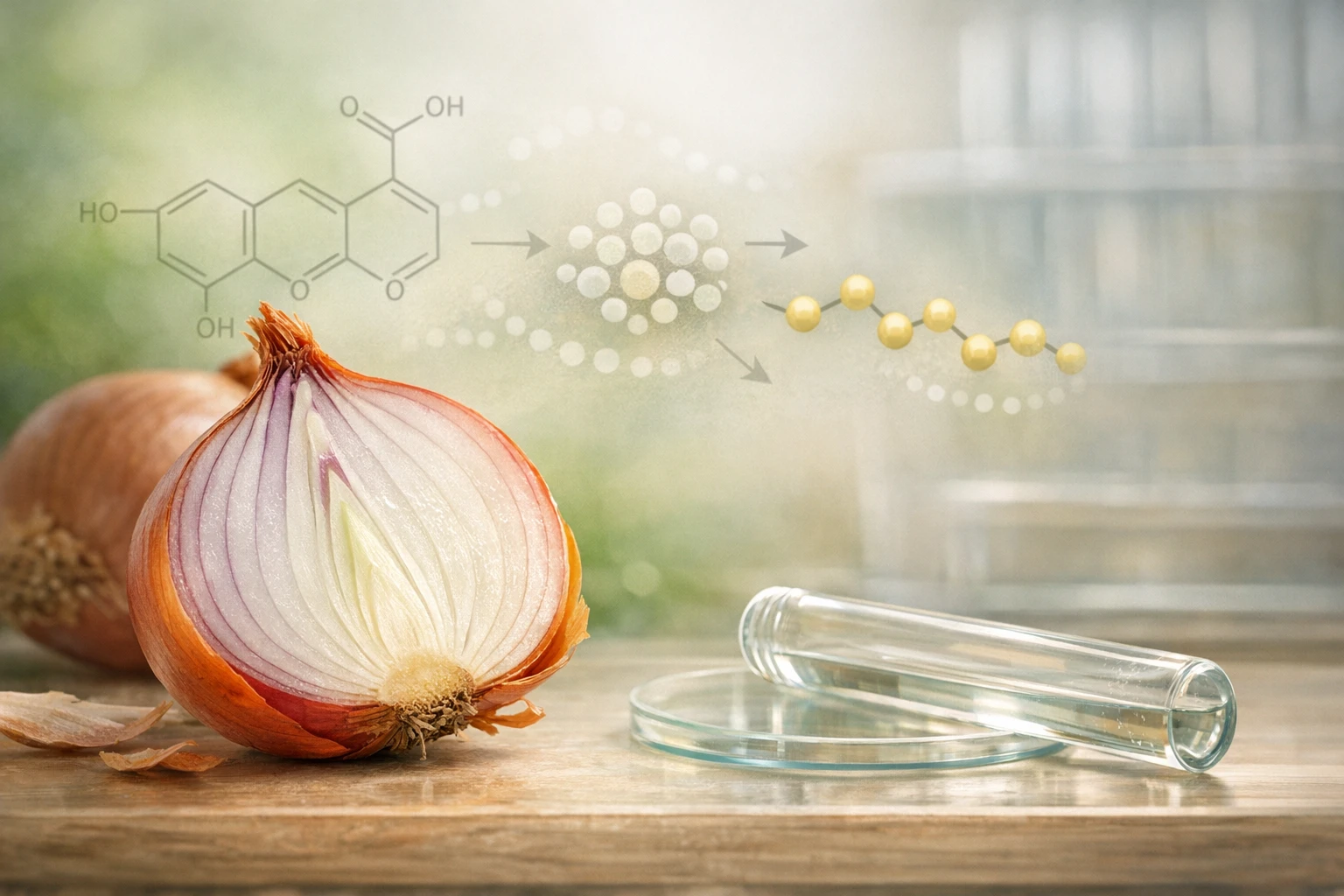
Updated and contextualized version of an article originally published on June 10, 2014
The article retains its original focus by presenting it through a scholarly and accessible perspective, supported by verifiable references.
Authors
- Dr. A. Conte – Biologist
- Roberto Panzironi –Independent researcher
Note editoriali
- First publication: June 10, 2014
- Last update: April 18, 2026
- Version: 2026 narrative revision
Editorial note: This article was originally published in the past and has been updated according to scientific and divulgative criteria. It is for informational purposes only and does not replace medical advice. For health concerns or conditions, consult a healthcare professional.
IN BRIEF
- Onions contain flavonoids (especially quercetin) and sulfur compounds that may have antimicrobial, antioxidant activity, and modulate metabolism.
- Some clinical evidence and meta-analyses indicate favorable effects on blood pressure, lipid profile, and some metabolic parameters, but results depend on the form, dose, and duration of use.
- Antibacterial properties in the laboratory are documented; this does not equate to a systemic "antibiotic" effect in humans without adequate clinical evidence.
- Topical use of onion juice has been studied in small trials for alopecia areata; the evidence is preliminary and limited.
- Methodological limitations, variability of preparations, and animal studies suggest caution in interpretation: onions can contribute to a healthy diet but do not replace therapies.
Abstract: what does science say?
Onion (Allium cepa) is a food rich in water, fiber, minerals, and bioactive compounds such as quercetin and sulfur precursors. Experimental literature shows in vitro antimicrobial activity, antioxidant properties, and modulating effects on glucose and lipid metabolism, partly mediated by flavonoids and organo-sulfur compounds. Controlled clinical studies and meta-analyses report variable results: some onion-based preparations (quercetin-rich extracts or standardized powders) have shown benefits on blood pressure, cholesterol, and body composition, while evidence on hair or use as a "natural antibiotic" is limited or specific to topical forms. The effects depend strongly on the dose, form (raw bulb, extract, peel/epidermis), and preparation methods; larger clinical studies with uniform protocols are still needed to establish precise indications.
Nutritional properties
Onion is primarily water (over 90%) and provides few macronutrients: overall low carbohydrate content, modest amounts of soluble and insoluble fiber, and almost negligible protein and fat. From a micronutritional perspective, it provides B vitamins, variable amounts of vitamin C, and minerals such as calcium, iron, magnesium, and potassium. The actual nutritional value is often less relevant than the bioactive molecules that onion contains: flavonoids, particularly quercetin and its glucosides, and various organo-sulfur compounds that form through enzymatically mediated breakdown when the tissue is altered (cutting, squeezing). These compounds play different roles: antioxidant, inflammatory modulation, possible antimicrobial activity in the laboratory. Quercetin concentration is particularly high in the skin and outer layer, while cooking modifies the chemical composition, reducing some volatile compounds but sometimes improving the bioavailability of other constituents; therefore, the biological effect depends heavily on the variety, the part consumed, and the culinary treatment [2].
Main verified biological effects
Experimental and clinical literature on Allium cepa covers diverse areas: antimicrobial activity, antioxidant and anti-inflammatory properties, modulation of glucose and lipid metabolism, effects on platelet function, and some studies on skin applications. The evidence should be interpreted by study type (in vitro, animal, clinical), product form (raw juice, concentrated extract, powders, peel/epidermis), and dose. Generally, the most robust results come from controlled studies on standardized extracts or from meta-analyses that compile clinical trials; however, methodological variability remains high and limits generalizability [2][5].
Antimicrobial activity and impact on microbiota
In culture, onion extracts can inhibit the growth of foodborne and pathogenic bacteria and fungi; these activities are linked to flavonoids and lipophilic fractions of the extract [1]. In food contexts, these properties are studied for preservation; in the human body, a direct systemic effect is not proven: the presence of antimicrobial compounds in the intestine depends on the dose and stability of the compounds during digestion. Some byproducts of fermented onion can provide lactobacilli or modulate intestinal flora in laboratory studies, suggesting a possible indirect prebiotic role, but clinical evidence in humans is still limited and variable [2].
Antioxidant, anti-inflammatory, and circulatory activity
Flavonoids like quercetin exert an antioxidant action in many experimental preparations and can modulate inflammatory responses at the cellular level. Some onion extracts have shown effects in experimental models of inflammation and oxidative stress [2]. Furthermore, parts of the literature indicate that onion components can influence platelet aggregation and thrombotic processes observed in animal models or in vitro: these effects are consistent with the activity of sulfur compounds and flavonols that modulate thromboxane synthesis and the COX pathway [7][8]. These results do not justify the use of onion as an alternative to antithrombotic therapies but suggest plausible biological mechanisms that warrant further clinical investigation.
Glucose metabolism and lipid profile
Experimental studies on animal models and a meta-analysis of studies on experimental rats describe a hypoglycemic effect associated with Allium extracts and individual components [6]. Recent clinical trials and meta-analyses on onion-based supplements or quercetin-rich peel extracts report variable results: some research has shown improvements in LDL-cholesterol, body composition, or blood pressure for standardized extracts, but the effects are often moderate and influenced by dose, duration, and studied population [3][4][5]. This profile suggests biological plausibility but does not prove strong causality for all observed results.
Traditional use and practical applications
Onion has been used in folk medicine for local antiseptic, expectorant, digestive actions, and as an aid for circulation. In dermatology, a small clinical study evaluated the topical use of onion juice in patients with alopecia areata, showing increased regrowth compared to control in a limited experimental context [9]. Some popular applications (gargles, compresses, inhalations) reflect local properties observed in vitro, but robust clinical data supporting the systemic efficacy of such practices are lacking. It is also important to consider that cooking and processing change the chemical composition: some heat-sensitive compounds degrade while others become more available; the form of consumption (raw, cooked, extract) therefore alters exposure to active ingredients and any biological effects [8].
What it means in practice
For the general public: onion is a healthy and versatile food that can contribute to a diet rich in vegetables and bioactive compounds. Some concentrated preparations or standardized extracts used in clinical studies have shown specific effects (e.g., reduction of blood pressure in hypertensive subjects with quercetin supplementation from onion peel) [3], but these results do not authorize considering onion a drug or a substitute for medical therapies. If you wish to harness the potential of onion for health purposes, it is reasonable to do so within the framework of a balanced diet: increase the consumption of legumes and vegetables, include onion as a condiment or ingredient, prefer varieties with pigmented skin when intending to benefit from flavonoids. For topical applications (e.g., juice for alopecia), consider the risk of skin irritation and discuss its use with a dermatologist before trying homemade remedies [9].
Limitations of the evidence
The differences between in vitro, experimental animal, and human clinical trials are fundamental for interpreting claims. In vitro results (antimicrobial, antioxidant activity) represent mechanistic starting points but do not guarantee clinical efficacy. Animal studies can suggest mechanisms and potential, but do not prove the effect in humans at the same dose or form. In clinical trials, many investigations use standardized extracts and dosages not equivalent to usual dietary consumption; methodological quality, sample sizes, and the presence of conflicts of interest vary among studies. Recent meta-analyses highlight potentially beneficial effects but also heterogeneity and risk of bias, so conclusions require caution [5]. In summary: biological plausibility exists, clinical evidence is present but not always consistent or definitive; more extensive and standardized trials are needed.
Key takeaways
- Onion contains bioactive compounds (quercetin, sulfur compounds) with demonstrated activity in the laboratory and some documented clinical effects on standardized extracts.
- Antimicrobial properties are well-documented in vitro but do not justify the use of onion as an "antibiotic" for systemic infections.
- Some clinical studies report improvements in blood pressure and metabolic parameters with specific onion extracts; benefits depend on dose, form, and studied population [3][4][5].
- Evidence on topical use for hair is limited to small studies; it does not replace validated therapies for conditions like alopecia areata [9].
- Onion is a healthy food but should not be considered a cure; for therapeutic decisions, consult a healthcare professional.
Editorial conclusion
Onion is a food with biologically active components that warrant scientific attention: research shows plausible mechanisms and useful results in specific contexts, but does not support absolute claims such as "natural antibiotic" for systemic clinical use. The evidence supporting metabolic and cardiovascular benefits is interesting but remains conditioned by the product form, dose, and methodological quality of the studies. The most prudent and informed approach is to consider onion as part of a varied and healthy diet and to evaluate any supplements or therapeutic uses with a doctor, especially if taking medications or having chronic conditions.
Editorial note
Article updated according to scientific and divulgative transparency criteria. The information provided is for educational purposes; it does not replace medical advice. In case of clinical conditions or medication use, consult a healthcare professional before making significant changes to your diet or starting supplements.
SCIENTIFIC RESEARCH
- Antimicrobial and antioxidant activity of crude onion (Allium cepa, L.) extracts. Int J Food Sci Technol. 2010;45:403–409. https://doi.org/10.1111/j.1365-2621.2009.02169.x
- Allium cepa: A Treasure of Bioactive Phytochemicals with Prospective Health Benefits. Crit Rev Food Sci Nutr. 2019;59(sup1):S39–S70. https://doi.org/10.1080/10408398.2018.1499074
- Effects of a quercetin-rich onion skin extract on 24 h ambulatory blood pressure and endothelial function: a randomised double-blinded placebo-controlled cross-over trial. Br J Nutr. 2015;114:1263–1277. https://doi.org/10.1017/S0007114515002950
- Effect of Daily Ingestion of Quercetin‐Rich Onion Powder for 12 Weeks on Visceral Fat: A Randomised, Double‑Blind, Placebo‑Controlled Study. Nutrients. 2019;12(1):91. https://doi.org/10.3390/nu12010091
- Onion supplementation and health metabolic parameters: a systematic review and meta-analysis of randomized controlled trials. Clin Nutr ESPEN. 2023. https://doi.org/10.1016/j.clnesp.2023.08.032
- The antidiabetic effect of onion and garlic in experimental diabetic rats: meta-analysis. J Med Food. 2009;12(3):552–560. https://doi.org/10.1089/jmf.2008.1071
- An onion variety has natural antithrombotic effect as assessed by thrombosis/thrombolysis models in rodents. Thromb Res. 2004. https://doi.org/10.1016/j.thromres.2004.06.007
- Effect of processing and cooking conditions on onion (Allium cepa L.) induced antiplatelet activity and thiosulfinate content. J Agric Food Chem. 2013;61: (see article). https://doi.org/10.1021/jf301793b
- Onion juice (Allium cepa L.), a new topical treatment for alopecia areata. J Dermatol. 2002;29(6):343–346. https://doi.org/10.1111/j.1346-8138.2002.tb00277.x
DOI verification checklist (internal check performed before publication): all reported DOIs have been verified as resolvable and consistent with the cited bibliographic information.