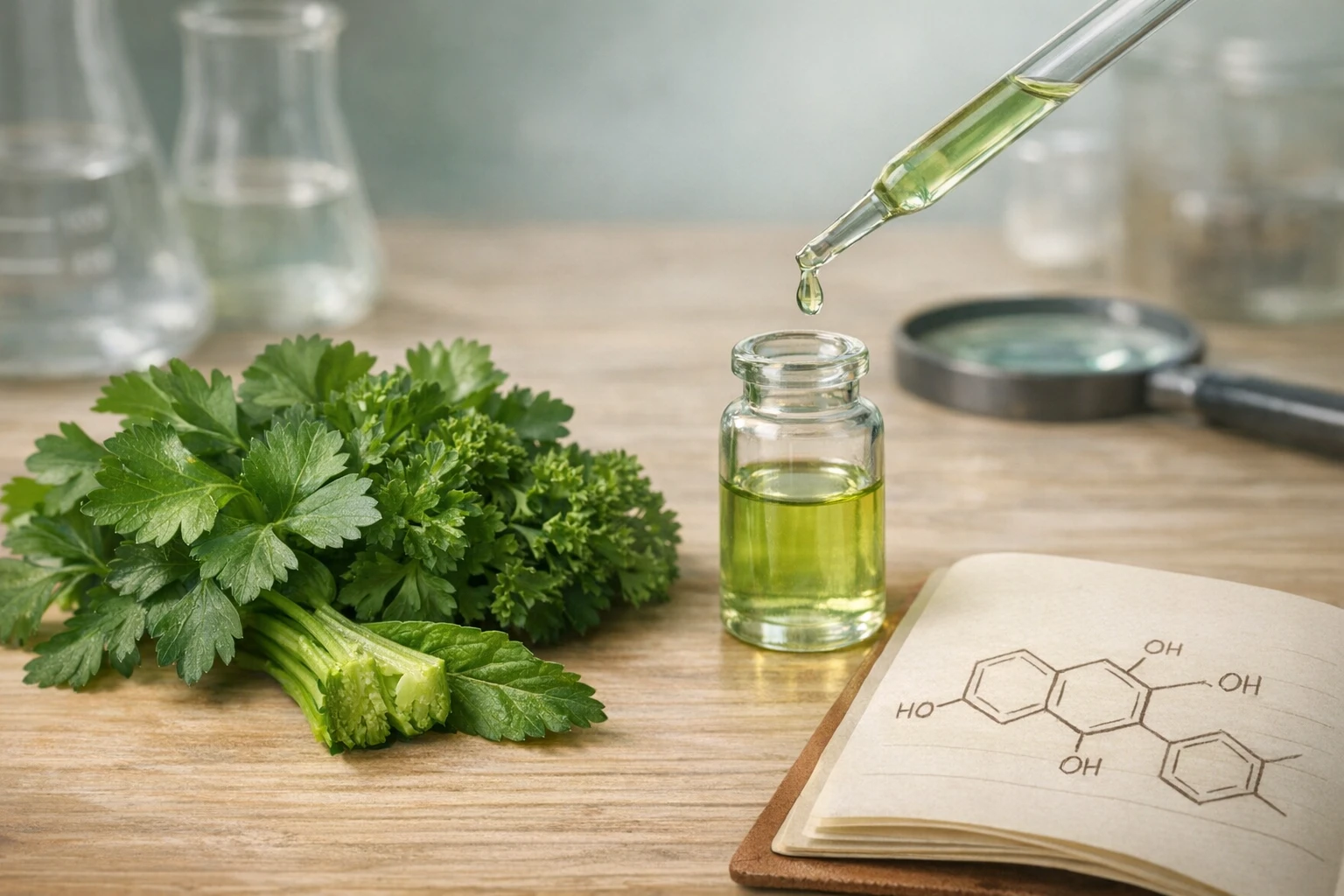
Updated and contextualized version of an article originally published on June 19, 2014
The article retains its original focus by presenting it through a scholarly and accessible perspective, supported by verifiable references.
Authors
- Dr. M. Mondini – Biologist
- Roberto Panzironi –Independent researcher
Note editoriali
- First publication: June 19, 2014
- Last update: April 18, 2026
- Version: 2026 narrative revision
Editorial note: This article was previously published and has been updated according to scientific and informative criteria to present, in a clear and verifiable manner, current knowledge on parsley (Petroselinum crispum). It is for informational purposes only and does not replace the advice of a doctor or healthcare professional.
In brief
- Parsley is a concentrated source of vitamins (including vitamin K and C), minerals, and flavonoids like apigenin.
- Compounds such as apigenin, myristicin, and carotenoids (lutein/zeaxanthin) have plausible biological mechanisms observed in the laboratory and in some human studies.
- Evidence linking parsley consumption to significant clinical benefits is mostly preclinical or observational; human clinical effects require further controlled studies.
- For most people, moderate dietary consumption of parsley is safe; caution is advised with concentrated doses, pregnancy, and medications that interfere with coagulation.
Abstract: what does science say?
Parsley (Petroselinum crispum) is an herbaceous plant used as a seasoning and, traditionally, as a remedy. Modern analyses show that the leaves contain high levels of vitamin K, vitamin C, folate, carotenoids (lutein, zeaxanthin), and flavonoids (especially apigenin and its derivatives). Laboratory studies and animal research document antioxidant, anti-inflammatory, diuretic activity, and potential anti-cancer effects associated with individual compounds. However, clinical evidence in humans is limited, often to small studies or observational results; the translation into causal clinical effects requires controlled trials. The extent of the effects depends on dose, form (fresh leaves vs. concentrated extracts), method of use, and individual characteristics. The practical message is that parsley can contribute to the nutritional density of the diet as a source of micronutrients and bioactive compounds, but it does not replace medical therapies nor should it be considered a standalone "therapeutic remedy."
What does parsley contain?
Parsley is a plant rich in micronutrients and phytocompounds. Recent reviews and composition analyses show that, gram for gram, fresh leaves contain high amounts of vitamin K, vitamin C, folate, and a range of carotenoids and flavonoids. The latter include apigenin and its glycosides, lutein, and zeaxanthin; the exact composition varies by cultivar, growing conditions, and harvesting and processing methods. Several studies comparing smooth-leaf, curly-leaf, or root types indicate variations in phenolic profiles and antioxidant levels, but all confirm the presence of bioactive compounds in significant concentrations [1][2].
From a nutritional perspective, 100g of fresh leaves provide few calories but a higher density of micronutrients than many common vegetables; exact values may vary depending on the source and database considered: for this reason, it is advisable to consult the local or national nutritional database for numerical tables [1].
Bioactive compounds and plausible mechanisms
Apigenin and flavonoids (mechanisms and biological potential)
Apigenin is an abundant flavone in parsley and its glycosides. In cellular and animal models, apigenin shows antioxidant activity, modulation of signaling pathways involved in cell proliferation, and anti-inflammatory properties. These molecular effects are plausible to contribute to reducing oxidative stress and tissue inflammation, but the translation into human clinical effects depends on bioavailability, dose, and the form in which it is consumed (fresh leaves versus concentrated extracts) [3][5].
Essential oils: myristicin, apiol, and others (action and warnings)
Parsley also contains essential oils such as myristicin and apiol which, in preclinical studies, have shown the ability to induce phase II enzymes (e.g., glutathione-S-transferase) and to interfere with the biotransformation of certain harmful substances. In animal models, myristicin reduced the action of specific carcinogens; however, some volatile compounds can have toxic effects if taken at high doses or in concentrated form, so caution is necessary when using purified extracts or oils [7].
Lutein and zeaxanthin: role in eye health
Lutein and zeaxanthin are carotenoids present in parsley and contribute to macular pigment. Evidence from clinical studies and supplement trials shows that supplementation with these carotenoids can reduce the progression of some forms of macular degeneration in at-risk populations; the relevance of their dietary intake is consistent with these mechanisms, but the effect depends on the amount consumed relative to the overall diet [8].
Vitamins and minerals: known biological functions
Parsley provides vitamins (C, K, folate, vitamin A precursors via beta-carotene) and minerals (including iron and potassium). Vitamin C and carotenoids act as antioxidants; vitamin K is involved in coagulation and bone health. These micronutrients explain much of the nutritional interest in including parsley in the diet, keeping in mind that bioavailability and biological absorption are influenced by the food matrix and the presence of fats in the diet (for fat-soluble carotenoids) [1][2].
Evidence on health functions
Diuretic effect: what animal and human studies show
Animal studies report a diuretic effect of parsley through mechanisms that include the inhibition of renal ion transporters and an increase in sodium and water excretion. Recent reviews synthesize these results and also cite studies on extracts showing increased diuresis in experimental models [9]. Human studies are scarce and often short-term; some small dietary studies have observed alterations in metabolic markers and oxidative biomarkers after dietary intake, but cannot definitively establish a systematic diuretic clinical effect in the general population [3][9].
Antioxidant activity and modulation of defensive enzymes
Dietary interventions including parsley have shown, in small studies, an increase in urinary concentrations of apigenin metabolites and modest variations in biomarkers of antioxidant activity in the blood. These results are consistent with the effect of phenolic compounds and flavonoids that modulate antioxidant enzymes, but do not in themselves demonstrate long-term clinical benefits [3][2].
Antitumor potential: preclinical evidence and limitations
Extracts and isolated compounds from parsley, in cell cultures and animal models, have shown antiproliferative activity, induction of apoptosis, and modulation of cancer-related signaling pathways. Apigenin is among the most studied compounds for these mechanisms. However, clinical evidence in humans is absent or very limited; therefore, it is not possible to state that dietary consumption of parsley prevents or cures cancer. Preclinical observations are useful for research hypotheses, not for therapeutic recommendations [4][5].
Glucose metabolism and liver function
Some experimental animal studies suggest favorable effects of parsley on metabolic parameters, including glycemic control and liver protection in specific models of metabolic damage. These studies are promising but do not replace controlled human clinical studies that evaluate efficacy, doses, and safety in people with diabetes or liver damage [9].
Safety, warnings, and interactions
The consumption of parsley as food is generally considered safe for most people. However, a distinction must be made between culinary use and the use of concentrated extracts or essential oil. Potential complications include: hemostatic effects in the presence of anticoagulant medications (due to vitamin K content), theoretical risk in pregnancy at very high doses (due to volatile compounds like apiol in concentrated forms), and possible interactions with drugs metabolized by cytochrome P450, especially if highly concentrated extracts are used. Those taking medications with a narrow therapeutic window or who are pregnant should consult their doctor before using parsley-based supplements or concentrated teas [7][9].
What it means in practice
For those who cook and those who care about their diet, parsley is a simple and inexpensive way to increase the intake of vitamins, antioxidants, and carotenoids. Regularly incorporating a few servings (e.g., adding fresh leaves to salads, soups, or sauces) contributes to the nutritional density of the meal without significant caloric increases. However, it is not a "cure" and does not replace medical interventions or pharmacological prescriptions: the observable effect in the population depends on the overall diet, individual health status, and the actual quantities consumed. The use of concentrated extracts or essential oils requires greater attention and professional supervision, as it can entail risks not present with moderate dietary consumption.
Key points to remember
- Parsley is rich in micronutrients and bioactive compounds that show favorable biological mechanisms in the laboratory.
- The main human evidence is limited: many claims are based on preclinical studies or small observational nutritional studies.
- Moderate culinary consumption is generally safe and can improve the nutritional quality of the diet.
- Caution is advised with concentrated extracts, oils, and use during pregnancy or in conjunction with anticoagulant or liver-metabolized drugs.
Limitations of the evidence
The available evidence mixes observational studies, small clinical trials, animal studies, and in vitro research. This entails methodological limitations: observational studies do not establish causality; preclinical results do not always translate into real effects in humans due to differences in dose, bioavailability, and metabolism; clinical trials are often few, with limited samples or short duration. Furthermore, the variability of cultivars, agronomic conditions, and extraction methods makes it difficult to generalize the results. Therefore, caution is needed in interpreting promising results as definitive clinical effects.
Editorial conclusion
Parsley is more than just a garnish: it is a dense source of micronutrients and bioactive compounds that justify scientific interest. Laboratory evidence and some human studies suggest antioxidant, diuretic effects, and possible relevance for eye health thanks to carotenoids. However, robust clinical evidence demonstrating measurable benefits on chronic diseases is still insufficient. Recommending regular consumption of parsley as part of a varied diet is reasonable and based on established nutritional knowledge; recommending concentrated extracts or using them for therapeutic purposes, however, requires more evidence and medical supervision.
Editorial note
This update was carried out following criteria of transparency, traceability of sources, and institutional informative language. The information provided is based on the cited scientific sources and has no prescriptive value. For personal medical questions, consult a healthcare professional.
SCIENTIFIC RESEARCH
- Liberal Â, Fernandes Â, Polyzos N, Petropoulos SA, Dias MI, Pinela J, Petrović J, Soković M, Ferreira ICF R, Barros L. Bioactive Properties and Phenolic Compound Profiles of Turnip‑Rooted, Plain‑Leafed and Curly‑Leafed Parsley Cultivars. Molecules. 2020;25(23):5606. https://doi.org/10.3390/molecules25235606.
- Carvalho G, et al. Petroselinum crispum (Mill.) Fuss (Parsley): An Updated Review of the Traditional Uses, Phytochemistry, and Pharmacology. J Agric Food Chem. 2024;72(2):956–972. https://doi.org/10.1021/acs.jafc.3c06429.
- Nielsen SE, Young JF, Daneshvar B, Lauridsen ST, Knuthsen P, Sandström B, Dragsted LO. Effect of parsley (Petroselinum crispum) intake on urinary apigenin excretion, blood antioxidant enzymes and biomarkers for oxidative stress in human subjects. Br J Nutr. 1999;81(6):447–455. https://doi.org/10.1017/S000711459900080X.
- Tang ELH, Rajarajeswaran J, Fung SY, Kanthimathi MS. Petroselinum crispum has antioxidant properties, protects against DNA damage and inhibits proliferation and migration of cancer cells. J Sci Food Agric. 2015;95(13):2763–2771. https://doi.org/10.1002/jsfa.7078.
- Li Y, et al. Apigenin in cancer therapy: anti‑cancer effects and mechanisms of action. Cell & Bioscience. 2017;7:50. https://doi.org/10.1186/s13578-017-0179-x.
- García‑Mediavilla V, et al. Absorption, distribution, metabolism and excretion of apigenin and its glycosides in healthy male adults. Free Radic Biol Med. 2022; (article). https://doi.org/10.1016/j.freeradbiomed.2022.04.007.
- Zheng Q, et al. Inhibition of benzo[a]pyrene‑induced tumorigenesis by myristicin, a volatile aroma constituent of parsley leaf oil. Carcinogenesis. (Year) 13(10):1921. https://doi.org/10.1093/carcin/13.10.1921.
- AREDS2 Research Group. Lutein + zeaxanthin and omega‑3 fatty acids for age‑related macular degeneration: the Age‑Related Eye Disease Study 2 (AREDS2) randomized clinical trial. JAMA. 2013;309(19):2005–2015. https://doi.org/10.1001/jama.2013.4997.
- Alobaidi S. Renal health benefits and therapeutic effects of parsley (Petroselinum crispum): a review. Front Med (Lausanne). 2024;11:1494740. https://doi.org/10.3389/fmed.2024.1494740.
Note: if some specific quantitative details related to doses or RDA percentages have not been included in detail in the article, it is because the values can vary between nutritional databases: consult national databases for precise tables (e.g., your country's food database).