Updated and contextualized version of an article originally published on June 22, 2014
The article retains its original focus by presenting it through a scholarly and accessible perspective, supported by verifiable references.
Authors
- Dr. M. Bitonti – Biologist
- Roberto Panzironi –Independent researcher
Note editoriali
- First publication: June 22, 2014
- Last update: April 18, 2026
- Version: 2026 narrative revision
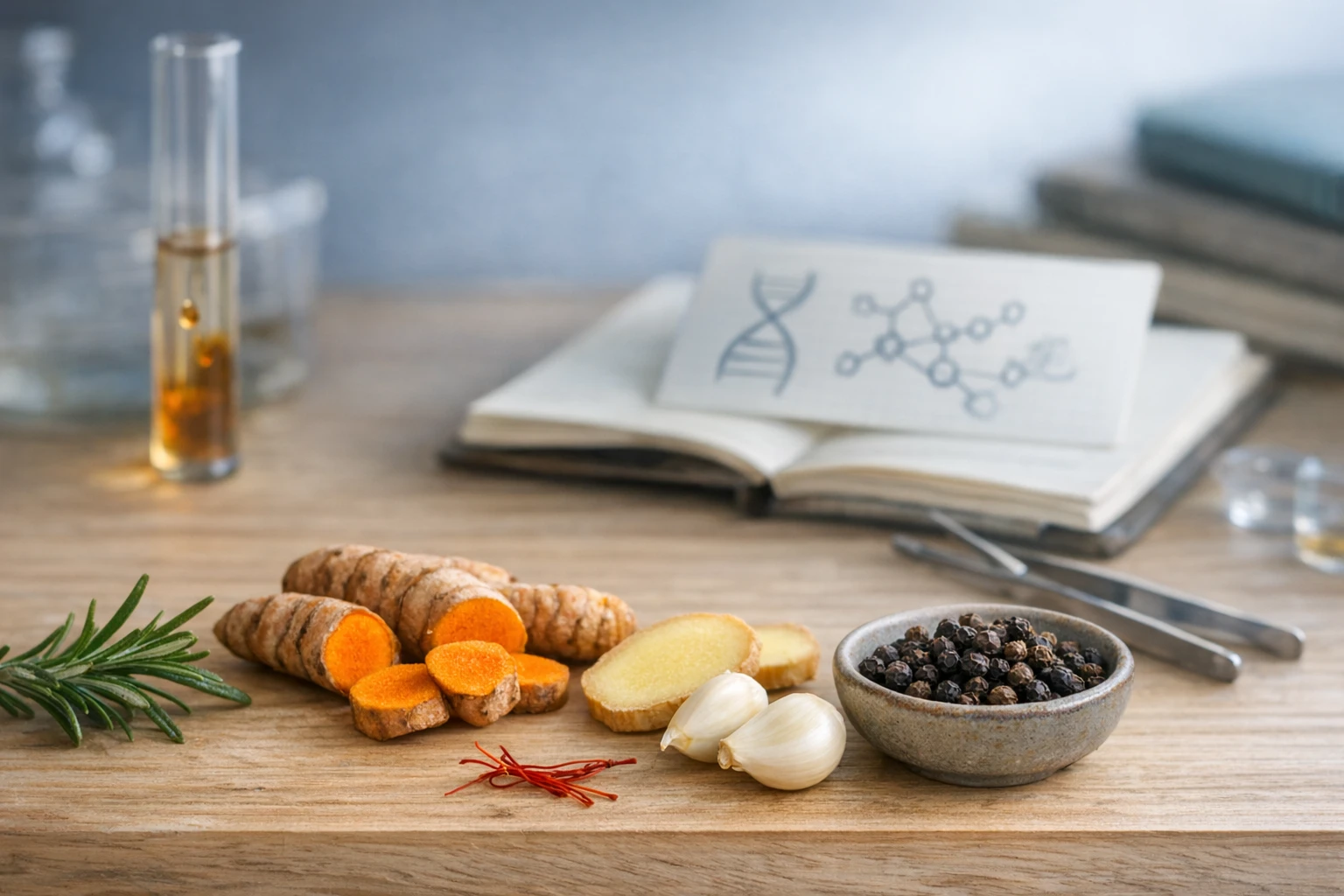
Turmeric (curcumin)
Curcumin is the most studied compound present in turmeric and exhibits multiple mechanisms: modulation of signaling pathways (NF-κB, STAT3, PI3K/Akt), anti-inflammatory and antioxidant activity, induction of apoptosis, and inhibition of invasiveness in in vitro and in vivo models. Laboratory reviews and syntheses have described these mechanisms and discuss the limitations due to curcumin's poor oral bioavailability. In clinical settings, systematic reviews indicate that curcumin can reduce some side effects of oncological therapies and has been studied as an adjuvant in small trials; robust evidence of preventive or therapeutic efficacy in large human cohorts is still lacking. [2][3]