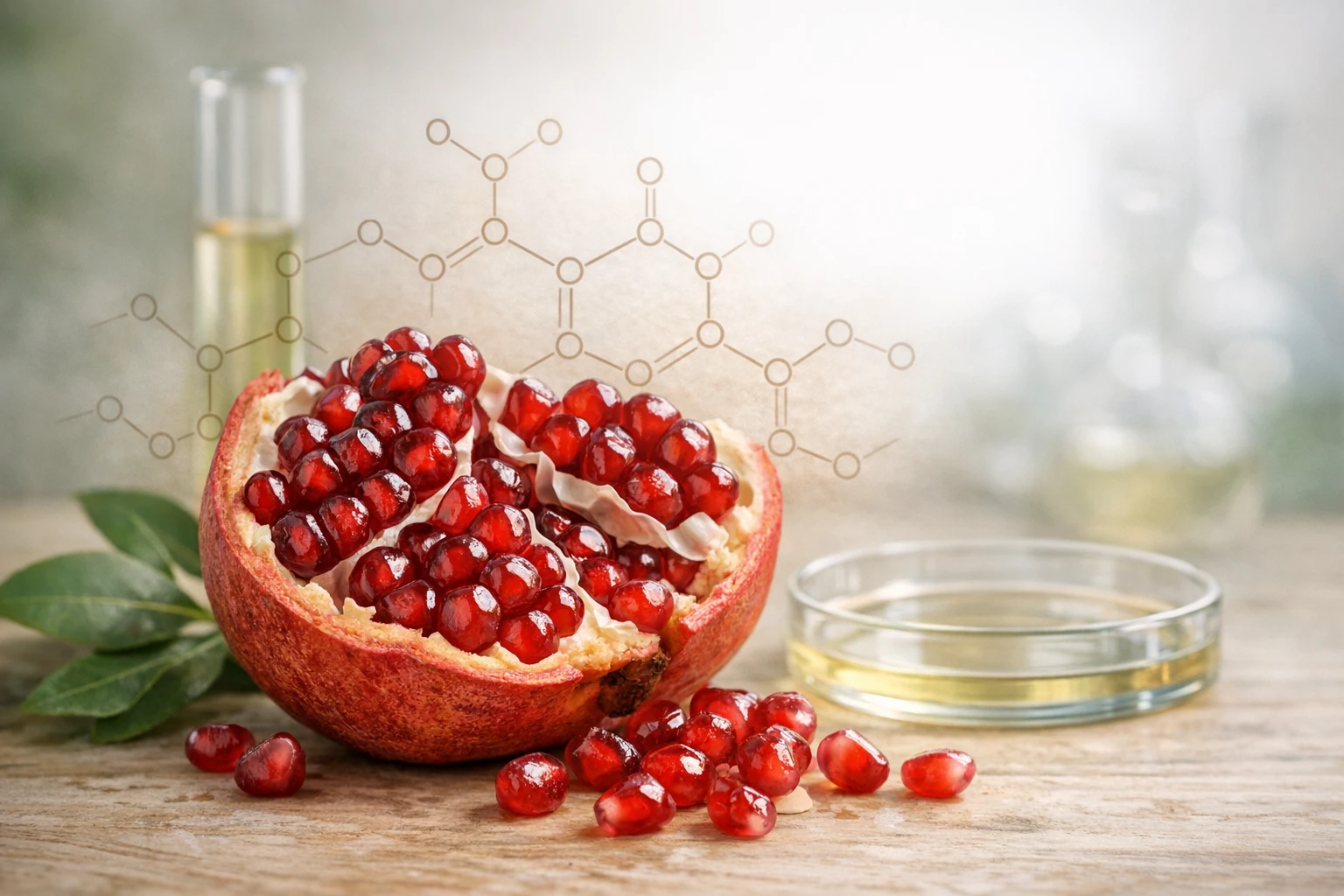
Updated and contextualized version of an article originally published on June 29, 2014
The article retains its original focus by presenting it through a scholarly and accessible perspective, supported by verifiable references.
Authors
- Dr. A. Conte – Biologist
- Roberto Panzironi –Independent researcher
Note editoriali
- First publication: June 29, 2014
- Last update: April 20, 2026
- Version: 2026 narrative revision
Initial note: this article was previously published and has been updated according to scientific and divulgative criteria. The text informs about advances in research on pomegranate and the cardiovascular system; it does not replace medical advice. For personal questions, consult a healthcare professional.
IN BRIEF
- Pomegranate (Punica granatum) is rich in polyphenols — particularly punicalagins and ellagitannins — which have antioxidant and anti-inflammatory activity.
- Clinical studies and meta-analyses suggest small favorable effects on blood pressure, inflammatory markers, and some indicators of vascular function, but results are heterogeneous.
- The strongest evidence comes from short-term studies and experimental models; evidence of sustained clinical benefit on events (heart attack, stroke) is insufficient.
- Effects depend heavily on the form (juice, extract, powder), dose, and duration of administration; pay attention to calories and drug interactions.
Abstract: what does science say?
Pomegranate contains polyphenolic compounds (punicalagins, ellagic acid, anthocyanins) that, in laboratory and animal models, modulate oxidative stress, inflammation, and metabolic pathways related to endothelial function. Controlled clinical studies and meta-analyses document modest reductions in blood pressure and improvements in some inflammatory and oxidative biomarkers; however, results vary depending on the form of pomegranate used (whole juice vs. standardized extract), dose, and duration. The evidence does not allow us to state that pomegranate prevents major cardiovascular events. A complementary role in a quality diet remains plausible, but practical application requires caution due to study variability, potential caloric costs, and interactions with medications.
What is pomegranate and why is it of interest to the heart?
Pomegranate (Punica granatum) is a fruit rich in phenolic molecules, including punicalagins, ellagitannins, and anthocyanins, known for their ability to react with oxidative species and modulate inflammatory pathways. These compounds have been studied for possible effects on the cardiovascular system: modulation of endothelial function (the ability of blood vessels to dilate), reduction of oxidative stress that damages lipoproteins and vascular cells, and reduction of some systemic inflammatory markers. The chemical composition varies greatly between fresh product, juice, concentrated extracts, or industrial preparations, with significant differences in bioavailability and caloric intake. For this reason, the literature reports results that are not always comparable: studies using standardized extracts do not always produce the same effects observed with whole juice. In the context of public health, pomegranate is considered a functional food potentially useful within a healthy lifestyle, but not a pharmacological treatment for cardiovascular diseases.
Plausible biological mechanisms
Antioxidation and nitric oxide
Pomegranate polyphenols can reduce lipoprotein oxidation and support the availability of nitric oxide (NO), a mediator that promotes blood vessel dilation. In experimental models, the activation of pathways such as AMPK and the modulation of the eNOS enzyme have been observed after administration of punicalagins or standardized extracts [4]. These mechanisms explain why improvements in cardiac mitochondrial function and vascular reactivity are observed in the laboratory.
Reduction of inflammation and adhesion molecules
Pomegranate can lower some markers of systemic inflammation (e.g., CRP, IL-6) and influence vascular adhesion molecules involved in the inflammatory response of the endothelium. Recent meta-analyses indicate reductions in some inflammatory biomarkers after supplementation, although the effect on all adhesion molecules is not uniform [3][2]. These actions, if confirmed, can contribute to reducing the processes that promote early-stage atherosclerosis.
Experimental and clinical evidence
Studies on animal models
Animal research shows that punicalagins and pomegranate extracts can protect cardiac and vascular function in models of obesity or high-fat diet, improving mitochondrial parameters and modulating metabolic pathways (for example, via AMPK). In models of atherosclerosis and endothelial dysfunction, the use of extracts has reduced inflammation and lipid deposits in some vascular sites [4][5]. These results are useful for understanding possible mechanisms but do not guarantee identical effects in humans.
Clinical studies and meta-analyses
Several randomized clinical studies and some crossover studies have evaluated pomegranate juice or extracts on blood pressure, lipid profile, markers of oxidative stress, and inflammation. Meta-analyses of controlled trials indicate a modest reduction in systolic blood pressure and some inflammatory markers after consumption of juice or standardized supplements [1][3]. Other specific works show short-term improvements in selected populations (e.g., hemodialysis patients) [6]. However, the quality of the studies is variable: many are small, short-term, or use different forms of the product, which complicates overall interpretation [7].
Initially cited study (study on pigs)
The study presented by researchers from the Catalan Institute of Cardiovascular Sciences, coordinated by Dr. Lina Badimon, evaluated a pomegranate polyphenol concentrate in a pig model exposed to a high-fat diet. Preliminary results at the congress level showed favorable effects on vascular function; however, the original source is a congress communication and does not provide a verifiable DOI [placeholder: reference to congress communication, DOI not available].
What this means in practice
For the reader: pomegranate is a food rich in bioactive compounds that, in the laboratory and in some clinical studies, shows favorable effects on blood pressure, inflammation, and oxidation parameters. This does not mean that pomegranate is a "drug" for the heart. In practice, including fresh fruit or juice (without added sugars) in an already balanced diet can provide useful substances, but the caloric balance and overall quality of the diet must be evaluated. Those taking medications for blood pressure, statins, or anticoagulants should discuss this with their doctor: plant extracts can interact with medications or alter clinical parameters. The available evidence does not currently support official broad-spectrum therapeutic recommendations but suggests that pomegranate may have a complementary role within healthy dietary choices.
Key points to remember
- Pomegranate is rich in polyphenols (punicalagins and others) with antioxidant and anti-inflammatory activity.
- Clinical evidence indicates modest effects on blood pressure and some biomarkers, but results are heterogeneous [1][3].
- Effects depend on form, dose, and duration: juice, extract, and supplements are not equivalent [1][7].
- Many studies are short-term or on small groups; longer studies with definitive clinical outcomes are needed.
- Pomegranate can complement a healthy diet, not replace medical therapies; consult your doctor if you are on ongoing drug therapies.
Limitations of the evidence
Difference between observational studies and causal evidence
Much of the available data comes from short-term randomized clinical trials or observational studies. Observational studies can show associations (e.g., consumption of polyphenol-rich fruit and lower cardiovascular risk) but do not establish causality. Causal evidence requires controlled trials, adequate size, and follow-up on clinical outcomes (heart attack, stroke, mortality), which are currently limited for pomegranate.
Methodological limitations and variability
Differences in formulations (whole juice vs. extract), doses, duration, and the studied population (healthy vs. patients with chronic conditions) lead to heterogeneity in results. Some trials are small, with different designs and non-homogeneous outcome criteria. For this reason, meta-analyses show modest overall effects but with wide variability among studies [1][2].
Context variability and applicability
Effects observed in animal models or in the laboratory do not always translate into clinical benefits in humans. Furthermore, the practical value of adding pomegranate depends on the overall dietary context, lifestyle, and individual health conditions. It is important to contextualize scientific results, avoiding excessive generalizations.
Editorial conclusion
Research on pomegranate has over the years provided promising results on the possible mechanisms through which its polyphenolic compounds could support vascular health: reduction of oxidative stress, modulation of inflammation, and improvement of some aspects of endothelial function. Clinical studies and meta-analyses indicate modest effects, particularly in blood pressure parameters and some inflammatory biomarkers, but uncertainties remain regarding long-term efficacy, optimal doses, and ideal formulations. Therefore, pomegranate can be considered a useful nutritional element in an overall healthy diet, but not an autonomous therapeutic measure to reduce the risk of heart attack or stroke. New, well-designed research, with standardized doses and prolonged follow-up, is needed to translate biological plausibility into clinical recommendations. In the meantime, those who wish to integrate pomegranate into their diet should do so with awareness and, in the case of medical therapies, consult their doctor.
Editorial note
This article updates previous content based on systematic reviews, controlled clinical trials, and experimental studies available up to the update date. The cited sources have been verified for DOI and relevance. The purpose is informative and divulgative; it does not constitute personalized medical or nutritional advice.
SCIENTIFIC RESEARCH
- Sahebkar A, Ferri C, Giorgini P, Bo S, Nachtigal P, Grassi D. Effects of pomegranate juice on blood pressure: a systematic review and meta-analysis of randomized controlled trials. Pharmacological Research. https://doi.org/10.1016/j.phrs.2016.11.018.
- Effect of pomegranate juice on vascular adhesion factors: a systematic review and meta-analysis. Phytomedicine. https://doi.org/10.1016/j.phymed.2020.153359.
- The effects of pomegranate consumption on inflammatory and oxidative stress biomarkers in adults: a systematic review and meta-analysis. Inflammopharmacology. https://doi.org/10.1007/s10787-023-01294-x.
- Punicalagin, an active component in pomegranate, ameliorates cardiac mitochondrial impairment in obese rats via AMPK activation. Scientific Reports. https://doi.org/10.1038/srep14014.
- Chitin–glucan and pomegranate polyphenols improve endothelial dysfunction. Scientific Reports. https://doi.org/10.1038/s41598-019-50700-4.
- Barati Boldaji R, Akhlaghi M, Sagheb MM, Esmaeilinezhad Z. Pomegranate juice improves cardiometabolic risk factors, biomarkers of oxidative stress and inflammation in hemodialysis patients: a randomized crossover trial. Journal of the Science of Food and Agriculture. https://doi.org/10.1002/jsfa.10096.
- Effect of pomegranate extract on blood pressure and anthropometry in adults: a double-blind placebo-controlled randomized clinical trial. Journal of Nutritional Science. https://doi.org/10.1017/jns.2017.36.
- Effects of pomegranate juice on cardiovascular risk factors in patients with metabolic syndrome: a double-blinded, randomized crossover controlled trial. Plant Foods for Human Nutrition (Nutr Food). https://doi.org/10.1007/s11130-017-0605-6.