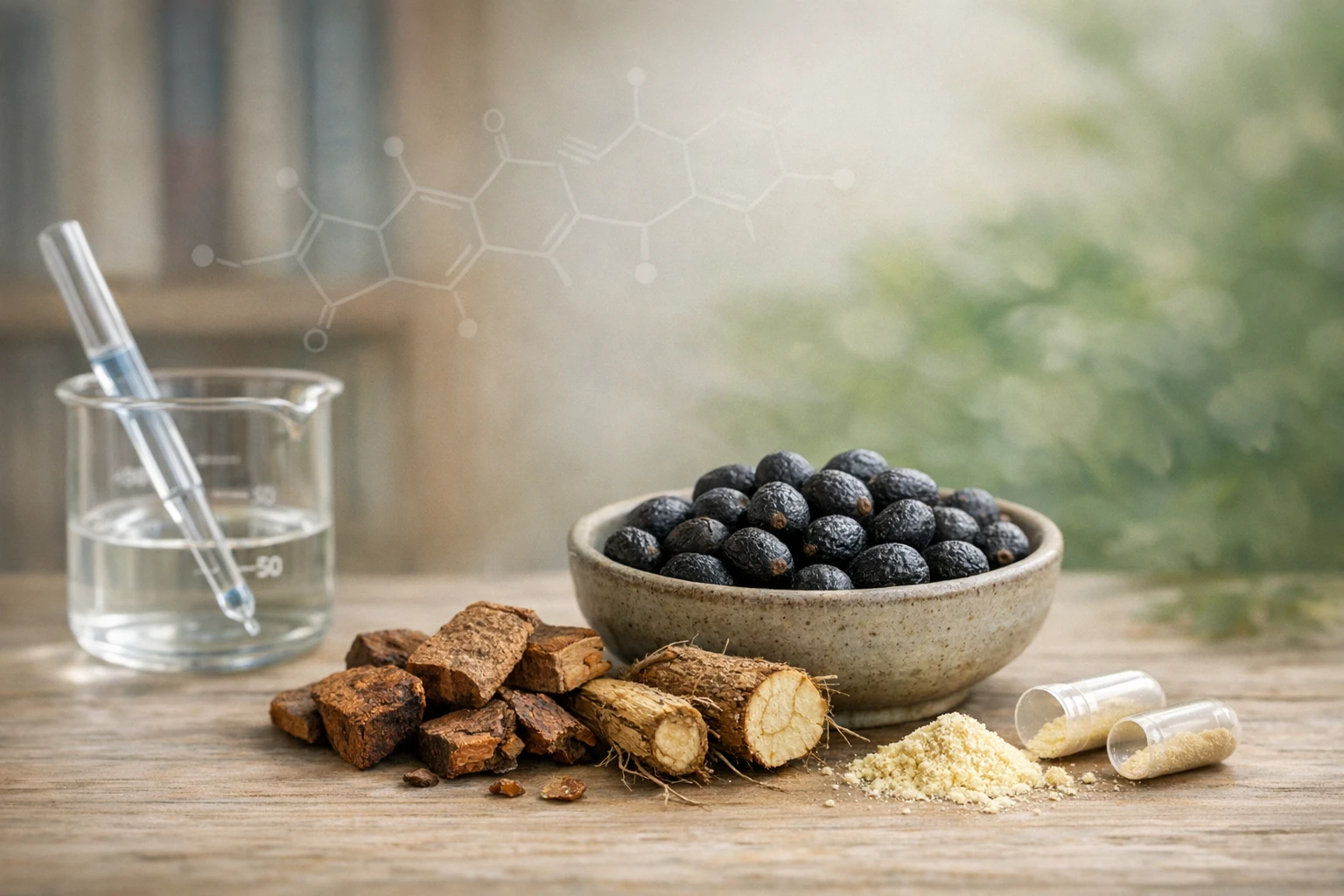
Updated and contextualized version of an article originally published on July 8, 2014
The article retains its original focus by presenting it through a scholarly and accessible perspective, supported by verifiable references.
Authors
- Dr. A. Conte – Biologist
- Roberto Panzironi –Independent researcher
Note editoriali
- First publication: July 8, 2014
- Last update: April 20, 2026
- Version: 2026 narrative revision
Editorial note: This article has been previously published and updated according to scientific and divulgative criteria. The information presented here is for informational purposes only and does not replace individual medical advice. For therapeutic choices, consult your doctor.
In brief
- BPH is very common with age and can cause urinary problems; it does not always require immediate treatment.
- The most studied plant extracts for BPH are: saw palmetto (Serenoa repens), nettle (Urtica dioica), pygeum (Pygeum africanum), and beta-sitosterol.
- Rigorous clinical studies show conflicting results: high-quality trials have not confirmed clear benefits for standard saw palmetto, while some standardized preparations and other phytotherapies show modest effects in earlier studies.
- Evidence has methodological limitations and variability in preparation; informed choice requires discussion with a doctor and attention to quality and dosages.
Abstract: what does science say?
Benign prostatic hyperplasia (BPH) is a non-cancerous enlargement of the prostate that increases with age and can cause urinary symptoms. The scientific literature on the use of natural remedies for BPH is extensive but heterogeneous: extracts of Serenoa repens, Pygeum africanum, Urtica dioica, and preparations rich in beta-sitosterol have been the subject of numerous clinical studies, systematic reviews, and meta-analyses. Modern controlled trials and extensive reviews show conflicting results: some standardized extracts (e.g., hexanic extracts) may slightly reduce symptoms in certain contexts, but high-quality studies do not confirm a consistent clinical benefit for many non-standardized preparations. Observed effects strongly depend on product quality, treatment duration, and the measures used in studies. The evidence is not sufficient to recommend self-treatment without medical consultation. This summary reports the main evidence, methodological limitations, and practical implications for readers seeking information based on peer-reviewed studies.
What is BPH and how common is it?
BPH (benign prostatic hyperplasia) is a non-malignant growth of prostatic tissue that can compress the urethra and cause lower urinary tract symptoms (e.g., frequent urination, weak stream, nocturia, feeling of incomplete emptying). Histological and population data show that prevalence increases with age: autopsy studies and historical series indicate that the presence of hyperplastic prostatic tissue is relatively low before age 40 and increases in subsequent decades, reaching high percentages in octogenarians. However, this high frequency does not mean that all men with hyperplastic tissue have clinically relevant symptoms: the relationship between prostatic volume, histological presence, and symptom severity is not direct and varies among individuals [1].
Clinical evidence on the most studied plant extracts
Saw palmetto (Serenoa repens)
Saw palmetto is one of the most common supplements for BPH: berry extracts contain fatty acids and plant sterols, including beta-sitosterol. Controlled studies and systematic reviews have yielded conflicting results. A large randomized trial published in the New England Journal of Medicine showed no significant differences between saw palmetto and placebo for primary outcomes after 12 months [2]. A subsequent randomized study with increasing doses over 72 weeks showed no relevant clinical benefits compared to placebo [3]. Systematic reviews have highlighted the heterogeneity of extracts and the need to distinguish non-standardized preparations from standardized formulations with defined extraction procedures [4]. Some more recent analyses and reviews focusing on standardized hexanic extracts (e.g., Permixon®) report more favorable effects in terms of symptoms in specific comparisons, but with variability among studies and possible conflicts of interest to consider [5] (see Scientific Research section for full references).
Nettle (Urtica dioica) and Pygeum (Pygeum africanum)
Nettle has been studied primarily as a root extract and in combination with other phytotherapies; randomized studies report improvements in some symptom scores and flow parameters, but with methodological differences between trials [7]. Pygeum (Prunus africana bark) has been evaluated in numerous studies and meta-analyses: quantitative reviews of controlled trials suggest a modest benefit on symptoms and flow parameters compared to placebo, with generally good tolerability; however, most studies are short-term or use different preparations [6].
Beta-sitosterol and active components
Beta-sitosterol, a plant sterol present in various extracts (including saw palmetto and Pygeum), has been studied as a single component and in enriched preparations. Reviews of controlled trials indicate improvements in symptoms and urinary flow in medium-short duration studies, but the methodological quality of the studies varied and dosage standardization was often limited [8]. In practice, the results suggest a possible mild-moderate effect in some contexts, but not a uniform response in all patients.
What it means in practice
For those suffering from BPH symptoms, the practical message is one of balance and caution. The most studied natural remedies may offer subjective relief for some patients, but the reported benefits are often modest, depending on the quality of the preparation and the patient's characteristics. Well-conducted trials have not demonstrated a consistent effect for non-standardized saw palmetto, while standardized preparations (e.g., hexanic extracts) and other phytotherapies have shown positive results in selected studies [2][3][4][5].
Before starting a supplement, it is advisable to:
- Talk to your doctor to rule out more serious causes (including prostate cancer) and evaluate the overall clinical picture [1].
- Choose standardized products with clear information on dosage and manufacturer; prefer evidence on specific preparations rather than generic claims.
- Monitor symptoms, any adverse effects, and clinical values (e.g., PSA, when indicated) during use.
Key points to remember
- BPH is common with advancing age and does not always require urgent treatment.
- Plant extracts can help some patients, but benefits are modest and vary among preparations.
- Preparation quality (standardization) is crucial for the likelihood of efficacy.
- Do not replace effective medical therapies or medical check-ups with supplements without professional advice.
Limitations of the evidence
The main limitations in the literature on natural remedies for BPH are:
- Product variability: many studies do not use extracts comparable in composition and purity, making it difficult to generalize results [4].
- Study design and quality: some trials are small, short-term, or not adequately randomized or blinded; more recent and larger trials have sometimes refuted previous positive results [2][3].
- Difference between observational data and causal evidence: observational results or cohort data can show associations but do not prove a direct causal effect without randomized controlled trials [6][8].
- Clinically relevant outcome: many studies report variations in subjective scores (e.g., IPSS) or urodynamic parameters, but it is necessary to evaluate whether the changes are clinically significant for the patient [3][4].
Editorial conclusion
Natural remedies for BPH are the subject of solid literature, but practical conclusions require caution. For some standardized extracts, there are signs of modest efficacy; for other preparations, more rigorous trials have not confirmed benefits. Informed choice involves doctor-patient dialogue, attention to product quality, and clinical monitoring. In the absence of strong and unequivocal evidence, recognized therapies (alpha-blockers, 5-alpha reductase inhibitors, minimally invasive approaches) remain the reference for patients with moderate-severe symptoms or risk of complications. Supplements can be considered in the context of mild-moderate symptoms and preferably under clinical supervision.
Editorial note
This update has been prepared following criteria of evidence and transparency. The article summarizes studies available in peer-reviewed literature and is not intended to replace a personalized clinical evaluation. For doubts or therapeutic choices, consult your general practitioner or a urologist specialist.
SCIENTIFIC RESEARCH
- Berry SJ, Coffey DS, Walsh PC, Ewing LL. The development of human benign prostatic hyperplasia with age. J Urol. 1984;132(3):474–479. https://doi.org/10.1016/S0022-5347(17)49698-4
- Bent S, Kane C, Shinohara K, Neuhaus J, Hudes ES, Goldberg H, Avins AL. Saw palmetto for benign prostatic hyperplasia. N Engl J Med. 2006;354(6):557–566. https://doi.org/10.1056/NEJMoa053085
- Effect of increasing doses of saw palmetto extract on lower urinary tract symptoms: a randomized trial. JAMA. 2011;306(12):1344–1351. https://doi.org/10.1001/jama.2011.1364
- Wilt TJ, Ishani A, MacDonald R, et al. Serenoa repens (saw palmetto) for benign prostatic hyperplasia. Cochrane Database Syst Rev. 2012; Issue 3. https://doi.org/10.1002/14651858.CD001423.pub3
- Blair HA. Hexanic Extract of Serenoa repens (Permixon®): A review in symptomatic benign prostatic hyperplasia. Drugs & Aging. 2022;39:235–243. https://doi.org/10.1007/s40266-022-00924-3
- Ishani A, MacDonald R, Rutks I, Wilt TJ. Pygeum africanum for the treatment of patients with benign prostatic hyperplasia: a systematic review and quantitative meta‑analysis. Am J Med. 2000;109(8):654–664. https://doi.org/10.1016/S0002-9343(00)00604-5
- Safarinejad MR. Urtica dioica for treatment of benign prostatic hyperplasia: a prospective, randomized, double‑blind, placebo‑controlled, crossover study. J Herbal Pharmacother. 2005;5(4):1–11. https://doi.org/10.1080/J157v05n04_01
- Wilt TJ, MacDonald R, Ishani A. Beta‑sitosterol for the treatment of benign prostatic hyperplasia: a systematic review. BJU Int. 1999;83(9):976–983. https://doi.org/10.1046/j.1464-410x.1999.00026.x
- Clinical efficacy of Serenoa repens versus placebo versus alpha‑blockers for LUTS/BPH: systematic review and network meta‑analysis. Eur Urol. 2020. https://doi.org/10.1016/j.euf.2020.01.002