Updated and contextualized version of an article originally published on July 9, 2014
The article retains its original focus by presenting it through a scholarly and accessible perspective, supported by verifiable references.
Authors
- Dr. M. Bitonti – Biologist
- Roberto Panzironi –Independent researcher
Note editoriali
- First publication: July 9, 2014
- Last update: April 20, 2026
- Version: 2026 narrative revision
Introductory note: This article was previously published and updated according to scientific and divulgative criteria. The text is for informational purposes only and does not replace medical advice.
IN BRIEF
- Preclinical studies indicate that polyphenol-rich peach extracts can reduce tumor growth and metastasis in murine models and experimental cell cultures.
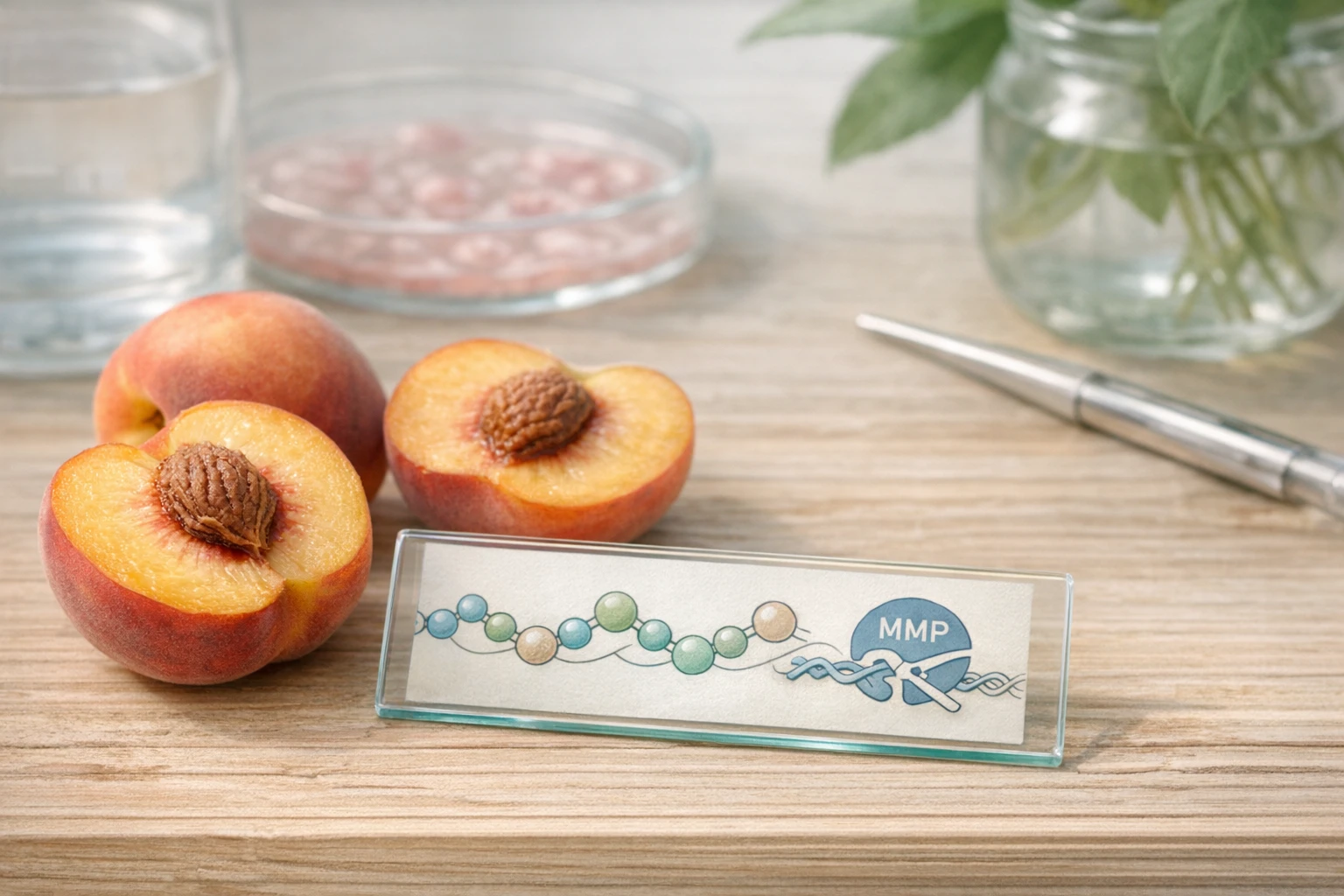
- The observed effects are linked to the modulation of genes and proteins involved in extracellular matrix degradation (metalloproteinases, MMP) and other cellular invasiveness pathways.
- The data are promising at an experimental level but are not direct proof of efficacy in humans: well-designed clinical studies are needed to establish real benefits and applicable dosages.
- There are no therapeutic recommendations based on these results: fruit consumption remains part of a healthy diet, but it is not a clinically proven cure or prevention for cancer.
Abstract: what does science say?
Experimental research on peach extracts and their phenolic components has shown, in cell models and in rats/mice, reductions in tumor cell proliferation and a lower tendency for metastasis formation. The results suggest that certain polyphenols contained in peaches may modulate the expression of enzymes and signaling pathways involved in tumor invasion, particularly matrix metalloproteinases. However, most of the evidence comes from in vitro or in vivo animal studies using concentrated extracts or isolated fractions: bioavailability, metabolic transformation in humans, effective dose, and large-scale safety remain undefined. Biological plausibility exists (modification of gene expression, inhibition of key enzymes, pro-apoptotic effects), but clinical application requires subsequent steps: pharmacokinetic studies, controlled trials, and evaluations of variability related to species, tumor type, and consumption method.
What it means in practice
For the general public: the cited works show that natural compounds present in peaches can interfere in the laboratory with biological processes linked to the growth and dissemination of tumor cells. This is not equivalent to proof that eating peaches prevents or cures cancer in humans. The current evidence is experimental and primarily serves to identify molecules or mechanisms that could, after further investigation, become starting points for therapies or prevention based on clinical evidence. In dietary terms, fruits and vegetables rich in dietary fiber and bioactive compounds contribute to a healthy eating pattern associated with a reduced risk of many chronic diseases; however, there is no solid clinical data to recommend specific peach consumption to prevent metastasis in people diagnosed with cancer.
Main experimental evidence
Laboratory experiments have shown two main types of results: in vitro, peach and plum phenolic extracts and fractions reduce the survival and proliferation of breast cancer cell lines; in vivo, in murine models with aggressive tumor cell transplantation, treatment with phenolic extracts reduced tumor growth and the number of lung metastases. These works are useful for understanding possible molecular targets and for developing testable hypotheses in clinical studies [1][2][3].
Plausible biological mechanisms
Phenolic fractions appear to act on multiple fronts: modulation of the expression of metalloproteinases (MMPs) involved in extracellular matrix degradation, inhibition of signaling pathways that promote invasiveness and angiogenesis, and induction of cell death programs in tumor cells. Review literature indicates that many plant molecules reduce MMP expression and modulate EMT (epithelial-to-mesenchymal transition), NF-κB, PI3K/Akt, and other pathways connected to metastatic potential, but these observations remain predominantly preclinical [4][5].
KEY POINTS TO REMEMBER
- Research on peaches and polyphenols offers promising preclinical results, but does not constitute proof of efficacy in humans.
- Suggested mechanisms include the regulation of metalloproteinases and pathways that promote invasion and angiogenesis.
- Any equivalence between experimental dose and the number of fruits consumed by humans requires pharmacokinetic calculations and should not be taken as a direct dietary recommendation. [DOSE_EQUIVALENCE_CALCULATION_HUMAN]
- Clinical evidence (controlled trials) is lacking: studies on bioavailability, safety, and interactions with oncological therapies are needed.
- Maintaining a varied diet and following the advice of one's oncologist remains the correct recommendation for those living with cancer.
Limitations of the evidence
It is essential to distinguish between observational results, preclinical evidence, and causal evidence obtained from clinical trials. The cited studies are predominantly laboratory studies (in vitro) or animal studies (in vivo). These designs serve to define biological mechanisms and hypotheses, but they have important limitations for clinical application: differences in metabolism between species, concentrations of molecules not achievable with normal consumption of fresh food, variability in the composition of extracts, and experimental conditions not always comparable to the complexity of the human patient. Furthermore, MMP inhibition is a complex biological target: although associated with reduced invasiveness in experimental models, direct pharmacological attempts against MMPs in the clinic have had mixed results due to side effects and pleiotropic roles of MMPs in healthy tissue [5][6]. Reviews summarizing the extensive literature on polyphenols also highlight practical challenges: bioavailability, metabolic conversion by the gut microbiota, standardization of extracts, and lack of long-term trials in human populations [4][7]. For these reasons, a cautious interpretation of findings is essential: mechanistic plausibility does not equate to clinical evidence.
Editorial conclusion
Experimental results on the anti-tumor and anti-metastatic activity of peach extracts and their polyphenols are scientifically interesting and contribute to understanding possible mechanisms that regulate invasion and metastasis. These studies form a basis for further research, but do not justify therapeutic recommendations or the promotion of specific dietary regimens as treatment. The necessary path to move from preclinical observations to clinical recommendations requires repeated confirmations, pharmacokinetic studies, safety evaluations, and, finally, randomized clinical trials. In the meantime, promoting a balanced diet, rich in fruits and vegetables and coordinated with medical care, remains the most prudent and evidence-supported choice for the prevention of chronic diseases.
Editorial note
Article updated for clarity, completeness, and transparency of sources. The content is informative and does not replace personalized medical advice. For clinical questions, consult your specialist.
SCIENTIFIC RESEARCH
- Noratto G, Porter W, Byrne D, Cisneros‑Zevallos L. Polyphenolics from peach (Prunus persica var. Rich Lady) inhibit tumor growth and metastasis of MDA‑MB‑435 breast cancer cells in vivo. Journal of Nutritional Biochemistry. 2014;25(7):796–800. https://doi.org/10.1016/j.jnutbio.2014.03.001
- Noratto G, Porter W, Byrne D, Cisneros‑Zevallos L. Identifying peach and plum polyphenols with chemopreventive potential against estrogen‑independent breast cancer cells. Journal of Agricultural and Food Chemistry. 2009;57(11):5219–5226. https://doi.org/10.1021/jf900259m
- Vizzotto M, Porter W, Byrne D, Cisneros‑Zevallos L. Polyphenols of selected peach and plum genotypes reduce cell viability and inhibit proliferation of breast cancer cells while not affecting normal cells. Food Chemistry. 2014;164:363–370. https://doi.org/10.1016/j.foodchem.2014.05.060
- Avtanski D, Poretsky L. Phyto‑polyphenols as potential inhibitors of breast cancer metastasis. Molecular Medicine. 2018;24:29. https://doi.org/10.1186/s10020-018-0032-7
- Deryugina EI, Quigley JP. Matrix metalloproteinases and tumor metastasis. Cancer Metastasis Reviews. 2006;25(1):9–34. https://doi.org/10.1007/s10555-006-7886-9
- Overall CM, Kleifeld O. Tumour microenvironment—opinion: Matrix metalloproteinases and the tumour microenvironment: evolving paradigms. Seminars in Cancer Biology. 2018; (review). https://doi.org/10.1016/j.semcancer.2017.11.008
- Li Y, Li S, Meng X, et al. Dietary natural products for prevention and treatment of breast cancer. Nutrients. 2017;9(7):728. https://doi.org/10.3390/nu9070728
- Imran A, Rauf A, Khan I, et al. The Anti‑Cancer Effect of Quercetin: Molecular Implications in Cancer Metabolism. International Journal of Molecular Sciences. 2019;20(13):3177. https://doi.org/10.3390/ijms20133177