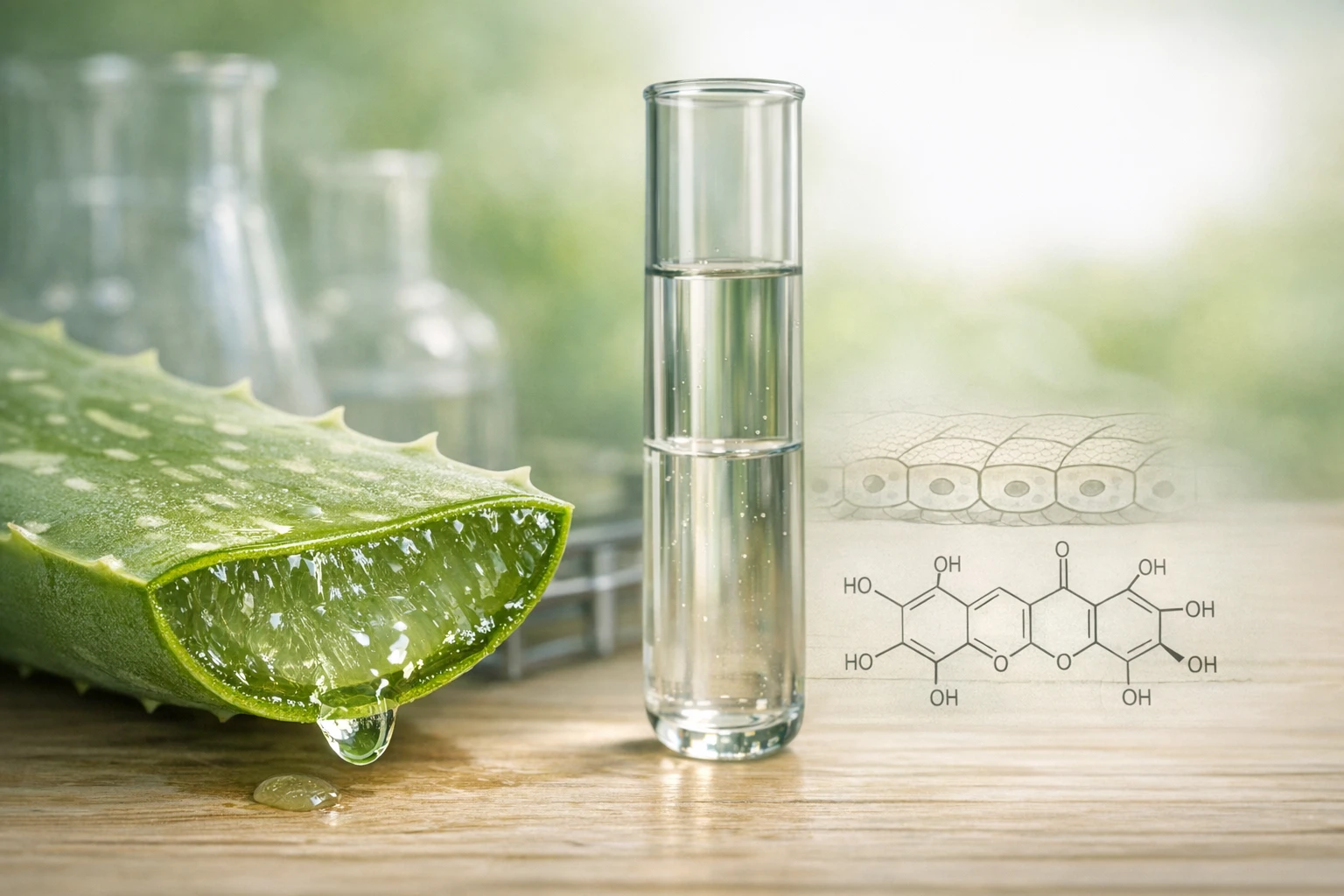
Updated and contextualized version of an article originally published on July 10, 2014
The article retains its original focus by presenting it through a scholarly and accessible perspective, supported by verifiable references.
Authors
- Dr. D. Iodice – Biologist
- Roberto Panzironi –Independent researcher
Note editoriali
- First publication: July 10, 2014
- Last update: April 20, 2026
- Version: 2026 narrative revision
Initial note for the reader: this article was previously published and updated according to scientific and informative criteria. The purpose is informational and does not replace medical advice.
IN BRIEF
- Aloe vera is a plant with a long history of traditional use; modern research explores its effects on skin healing, metabolic parameters, and oral mucosa.
- There are reviews and clinical studies that report a possible benefit of aloe in healing burns and reducing oral mucositis; the evidence varies in quality and context.
- Some controlled studies suggest a favorable effect on glycemic values when aloe is taken orally, but the results are not uniform and depend on preparation, dose, and duration.
- Oral safety largely depends on the type of preparation: unpurified extracts containing latex/anthraquinones have shown signs of risk in animal models.
Abstract: what does science say?
Aloe vera (Aloe barbadensis Miller) is a plant widely used for topical applications and, in some preparations, for oral intake. Systematic reviews show that local application of aloe-based gels or creams can accelerate the healing of small burns and promote wound epithelialization in some clinical contexts; however, the quality of studies is variable and effects are not guaranteed in all conditions. Clinical studies and meta-analyses indicate that standardized oral extracts can modestly reduce fasting glycemia and HbA1c in people with impaired glycemia, but the effect depends on the extract, dose, and duration. Some reviews and an important toxicological study on unpurified extracts have highlighted risks associated with whole-leaf non-decolorized extracts, especially for long-term oral exposure; this does not necessarily apply to purified gels applied to the skin. In summary: there are signs of clinical benefit in specific areas (wound healing, oral mucositis, modest metabolic effects), but also methodological limitations and safety concerns that require caution. Not all formulations are equivalent: form, extraction process, dose, and duration modify results and safety.
Main section
Definition and traditional uses
Aloe vera is a succulent plant whose inner gel has been used for centuries for topical purposes and, less uniformly, for oral intake. In many cultures, it is known for its soothing properties on the skin and for digestive uses. Today, the products available on the market are very diverse: purified gels, juices, capsules based on inner gel, and extracts that also include the outer part of the leaf (whole-leaf). These differences are central to interpreting both clinical studies and safety profiles.
Main available evidence
The clinical literature includes controlled studies, systematic reviews, and meta-analyses on various areas: healing of burns and superficial wounds, prevention and treatment of oral mucositis in cancer patients, and modest metabolic effects of oral preparations on glycemia and lipids. Reviews indicate that topical use can reduce healing times for first and second-degree burns in some studies, but not all methodological rigor is homogeneous, and many studies are sample-based or outdated. For oral intake, some meta-analyses and randomized trials report reductions in glycemic parameters in people with prediabetes or type 2 diabetes, with wide variability between studies. Finally, numerous in vitro and preclinical studies show antimicrobial and antioxidant activity of extracts, which are mechanistically plausible but do not automatically equate to definitive clinical benefits.
Dependence on form, dose, and context
The observed effects are strongly influenced by the preparation: purified inner leaf gel differs chemically from whole-leaf extract which also contains latex rich in anthraquinones. Dose, standardization (content of active components), duration, and route of use (topical vs. oral) are decisive. Many clinical trials use standardized extracts or commercial products with precise specifications; others use artisanal preparations, making it difficult to generalize the results. Furthermore, the context (patients with acute wounds, people with prediabetes, cancer patients undergoing treatment) changes the practical value of the observations.
PRACTICAL SECTION
What it means in practice
For the reader: aloe vera is not a universal cure but can play a targeted role. For minor skin problems (small burns, superficial abrasions), the application of pure aloe gel can accelerate epithelialization in some cases; however, it does not replace medical care for extensive or infected burns. In oncology, some studies suggest that topical use or as a mouthwash can reduce the severity of mucositis from chemo/radiotherapy in some patients, but protocols and products vary. For systemic use (capsules or juices), controlled evidence indicates possible modest improvements in glycemia and some lipid parameters in people with impaired glycemia; these results do not authorize replacing prescribed medications. Important: not all preparations are equivalent in terms of benefit and risk. Extracts containing latex or anthraquinones can cause adverse effects, especially if taken orally for a long time. Before taking supplements, it is advisable to consult a doctor, especially in the presence of concomitant drug therapies or chronic conditions.
Non-prescriptive practical indications
If considering topical use for a small burn: use specific products based on purified inner gel; follow the manufacturer's instructions; consult a doctor if the lesion is extensive, deep, or shows signs of infection. For oral mucositis, formulations such as gel-based mouthwashes can be useful as part of an oral care protocol, but must be integrated with the oncology team's indications. For oral intake of products for metabolic purposes, standardized products should be preferred, their use limited to short periods, and glycemia and blood chemistry parameters monitored with the doctor.
KEY POINTS TO REMEMBER
- Aloe vera shows signs of efficacy for the healing of some superficial wounds and for the reduction of mucositis in selected clinical contexts.
- Some clinical studies indicate modest reductions in glycemia and HbA1c with standardized oral extracts, but the results are not homogeneous.
- Safety depends on the preparation: purified inner gel is different from unpurified whole-leaf extract.
- Quality-controlled products are necessary and, for systemic use, preventive medical evaluation.
LIMITATIONS OF EVIDENCE
Difference between observational studies and causal evidence: many studies on aloe are small, with varied designs and, sometimes, not adequately randomized or blinded. Reviews suggest effects in some areas, but cannot ensure definitive causality in the absence of large, replicated studies with high quality standards. Methodological limitations: small samples, heterogeneity in preparations, subjective outcomes (e.g., pain, healing index), and short follow-up. Context variability: efficacy and safety depend on formulation, purity, and concomitant use of medications. Need for prudent interpretation: promising results in the laboratory or in small trials do not automatically imply general efficacy; multicenter trials, product standardization, and long-term safety monitoring are needed.
Editorial conclusion
Aloe vera remains a plant of great interest for medicine and public health: modern research confirms some traditional uses, but also clarifies its limitations. The most solid evidence concerns topical applications for small burns and some benefits on the oral mucosa; there are also signs of metabolic benefit with standardized oral preparations. Alongside the possible advantages, concerns arise about the safety of specific unpurified extracts for prolonged oral intake. For citizens interested in using aloe: prioritize standardized products, inquire about the composition, and discuss use with your doctor, avoiding unsupervised approaches for important medical conditions. The scientific community continues to study compounds and mechanisms, and further high-quality studies are needed to definitively define efficacy and safety.
EDITORIAL NOTE
This article was originally published in the past and updated with criteria of clarity, rigor, and transparency based on peer-reviewed literature. The information is for informational purposes and does not replace personalized medical advice.
SCIENTIFIC RESEARCH
List of cited research (numbering corresponds to citations in the text):
- Meta-analyses and reviews on burn healing: (see DOI). [1]
- Recent systematic review and meta-analysis on Aloe vera and burns. [2]
- Meta-analysis on the oral effect of aloe on glycemia and HbA1c. [3]
- Randomized clinical trial in subjects with prediabetes: improvement of glycemia and lipid profile. https://doi.org/10.1186/s40200-015-0137-2 [4]
- Controlled clinical trial on anti-hyperglycemic and lipidemic effects (Planta Medica). https://doi.org/10.1055/s-0031-1280474 [5]
- Toxicological study / NTP on whole-leaf extract: signs of carcinogenicity in animals (qualifier: unpurified, whole-leaf). https://doi.org/10.1093/toxsci/kft072 [6]
- Review on the toxicity and adverse effects of aloe (rev. 2016). https://doi.org/10.1080/10590501.2016.1166826 [7]
- Study on potential mutagenicity/genotoxicity in vitro. https://doi.org/10.1039/c4tx00053f [8]
- Experimental study on Aloe-based hydrogel formulations for skin healing (preclinical model). https://doi.org/10.3390/polym13223958 [9]
- Reviews and meta-analyses on natural products (including aloe) for the prevention and treatment of oral mucositis. https://doi.org/10.1111/odi.15046 [10]
Note: the numbered references in the text correspond to their order of appearance in this list. DOIs are provided for transparency and verifiability.