Updated and contextualized version of an article originally published on July 11, 2014
The article retains its original focus by presenting it through a scholarly and accessible perspective, supported by verifiable references.
Authors
- Dr. M. Mondini – Biologist
- Roberto Panzironi –Independent researcher
Note editoriali
- First publication: July 11, 2014
- Last update: April 20, 2026
- Version: 2026 narrative revision
Editorial Note
This article was previously published and is updated here according to evidence-based communication and transparency criteria. The text is for informational purposes only and does not replace the advice of a doctor. If you have significant intestinal symptoms or a known condition, consult a healthcare professional.
In Brief
- Some spices have plausible biological mechanisms (anti-inflammatory, carminative, flora modulation) that can affect gastrointestinal symptoms.
- For some conditions (e.g., mild-to-moderate ulcerative colitis), there are small clinical studies suggesting a complementary role for turmeric; evidence remains limited.
- Ginger and fennel show benefits for nausea, dyspepsia, and infant colic in controlled studies, but with variability in quality and formulation.
- Many studies are preclinical (animal, in vitro) or involve complex products; it is not correct to interpret them as definitive proof of efficacy.
- Before taking supplements or high doses of spices, it is advisable to consult a doctor, especially if you are on medication or have chronic conditions.
Abstract: What Does Science Say?
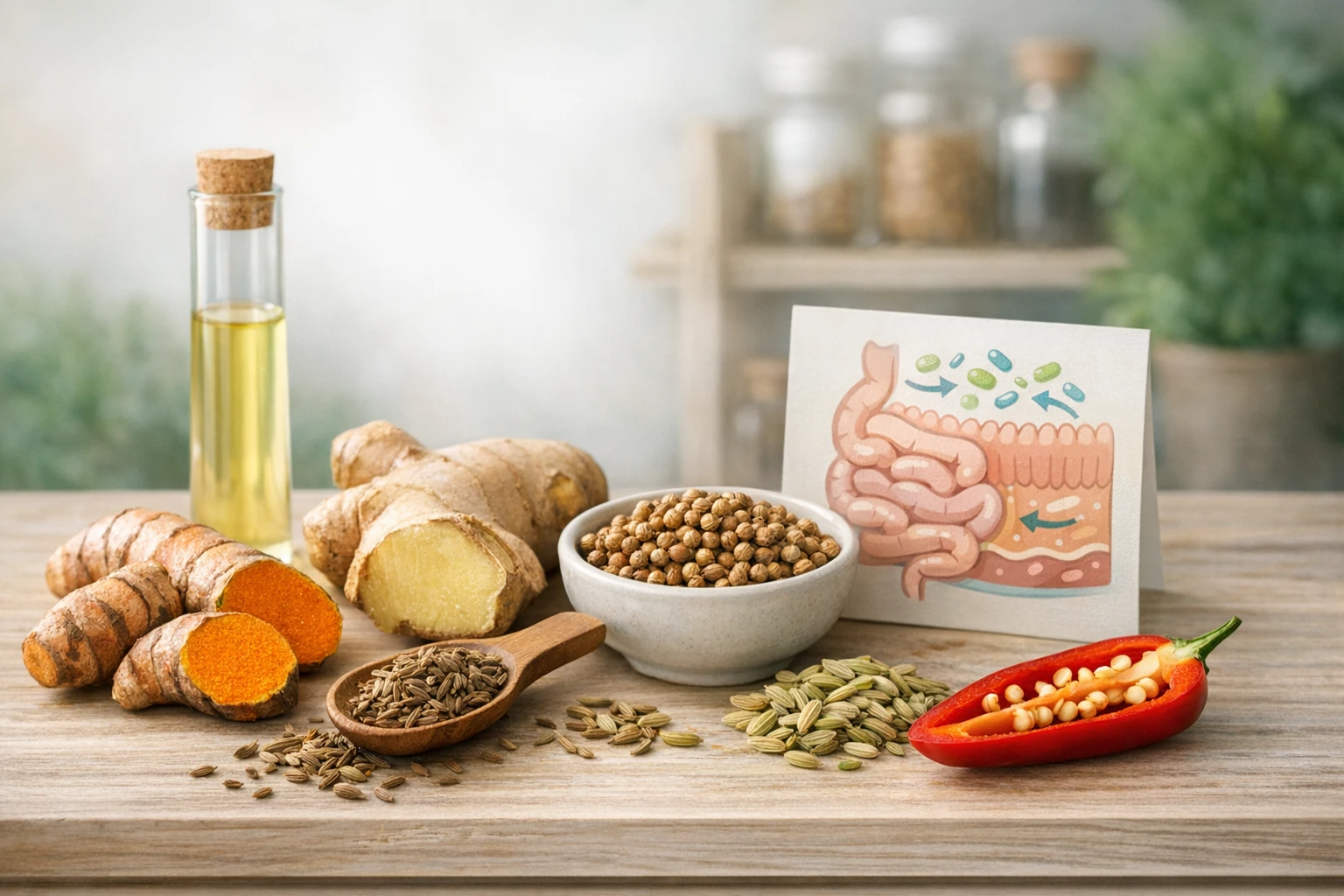
Spices commonly used in cooking—turmeric, coriander, cumin, fennel, ginger, and chili pepper—contain biologically active compounds that, in various experimental models and some clinical studies, show anti-inflammatory, antispasmodic, carminative, and gut microbiota modulating actions. The most robust evidence concerns the use of curcumin as a complement in mild-to-moderate forms of ulcerative colitis (small but repeated clinical studies) and the use of ginger for nausea of various origins. For other spices, data come from phytotherapeutic combinations, studies on components (e.g., geraniol), or animal models: this limits generalizability. The observable effect depends on dose, form (powder, essential oil, standardized extract), duration, and clinical context. Observational and laboratory evidence suggests mechanistic plausibility but does not replace robust causal evidence; larger clinical studies with standardized products and control for side effects are needed.
Main Section
Brief Definition of the Topic
Many cultures use spices not only for flavor but also for digestive problems. Modern medicine evaluates whether the active compounds in these plants can reduce local inflammation, modulate motility, decrease bloating, or affect the gut microbiota. Hypotheses are tested at three levels: laboratory studies (cells), animal models, and human clinical studies. Only the latter can provide useful evidence for decisions in clinical practice, provided they are well-designed and replicated.
Abstract: What's Important to Remember (Summary for Readers)
The listed spices have plausible biological effects, and some studies suggest benefits for specific gastrointestinal symptoms. However, the quality of evidence varies: there are small positive trials (turmeric, ginger, fennel), studies on single compounds (geraniol), and numerous preclinical studies. Conclusions must be cautious: spices can be complementary but are not substitute therapies; safety, doses, and interactions require professional attention.
Spices and the Gut: What the Literature Shows
Turmeric (Curcumin)
Curcumin is the main active polyphenol in turmeric; it has antioxidant and inflammation-modulating properties at the cellular level. Randomized clinical studies, although modest in size, have examined curcumin as a complementary therapy in patients with ulcerative colitis in remission or active. A multicenter trial showed a reduction in relapses compared to placebo when curcumin was added to standard therapy [1]. Another controlled study reported an increase in clinical remissions when curcumin was used with 5-ASA in patients with active disease [2]. Narrative and systematic reviews confirm positive effects but highlight heterogeneity among doses and formulations and the need for larger, standardized studies to define long-term efficacy and safety [3].
Coriander and Aromatic Components (Linalool, Geraniol)
Coriander seeds contain volatile oils rich in linalool and, in some preparations, geraniol. These components have shown antispasmodic and antimicrobial activity in preclinical models. A related approach tested geraniol, a monoterpene with eubiotic activity on the microbiota, in a randomized clinical study on patients with irritable bowel syndrome; the treatment reduced symptomatic severity and modified microbial composition compared to placebo [4]. These results are promising but concern a single compound in a specific formulation, not the general dietary use of coriander.
Cumin (Cuminum cyminum)
Traditionally, cumin is used for digestive disorders such as bloating and flatulence. Most modern evidence comes from preclinical studies: cumin essential oils have shown gastroprotective and anti-inflammatory properties in animal models of ulcers and colitis [8]. These effects include reduction of tissue oxidative stress and modulation of inflammatory mediators. Currently, there are no large controlled clinical trials to support robust conclusions on routine use in humans for specific intestinal conditions.
Fennel (Foeniculum vulgare)
Fennel is known for its carminative properties: anethole, its main component, can relax intestinal muscles and promote gas expulsion. Clinical studies on infant colic have used fennel-containing preparations (alone or in mixtures) and have shown reductions in crying time and episode frequency compared to placebo in small-to-medium sized trials [5]. The evidence suggests a symptomatic effect, but the safety and standardization of formulations (essential oil vs. infusion) are critical points.
Ginger (Zingiber officinale)
Ginger is among the spices with the most solid clinical evidence for managing nausea (pregnancy, motion sickness, partly after anesthesia or chemotherapy). Systematic reviews and meta-analyses report reductions in nausea in various contexts, although results are not always homogeneous across studies [6]. For functional dyspepsia, some trials and phytotherapeutic combinations show improvements in symptoms such as early satiety and epigastric pain, with variability related to formulation. Studies indicate a generally favorable safety profile at moderate doses, but in clinical cases, drug interactions (e.g., anticoagulants) must be evaluated.
Chili Pepper and Capsaicin
Capsaicin is the alkaloid responsible for spiciness: it acts on the TRPV1 receptor present in gastrointestinal sensory fibers. Experimental studies show that at low concentrations, TRPV1 stimulation can promote mucosal defense mechanisms (increased blood flow, mucus secretion, release of protective peptides) and reduce acid secretion; there is also evidence of effects on intestinal motility [7]. However, high concentrations or uncontrolled intake can cause irritation and worsen symptoms in some individuals. Clinical applications are therefore contextual and depend on doses and form.
What This Means in Practice
For individuals interested in using spices as support for gastrointestinal disorders, the practical interpretation of the evidence is as follows: some spices have measurable biological effects in controlled studies, but the observed clinical benefits vary greatly depending on the product (fresh root vs. standardized extract vs. essential oil), dose, and studied population. Curcumin has more consistent clinical data as a complement for mild-to-moderate ulcerative colitis, while ginger and fennel are more studied for nausea and colic, respectively. Many other claims come from studies on specific components or mixed products; therefore, it is not correct to assume that culinary use will have the same effects as the studied preparations.
Non-prescriptive practical indications:
- Prefer a varied and moderate diet; spices can enhance flavor and, in some situations, contribute to symptom relief.
- Use standardized commercial products only after evaluating the label and doses; supplements can contain concentrated extracts with potential effects and interactions.
- If you are on chronic therapies (anticoagulants, immunosuppressants, blood thinners), consult your doctor before introducing extracts at therapeutic doses (e.g., high-dose curcumin).
- In the presence of acute abdominal pain, digestive bleeding, fever, or weight loss, discontinue self-treatment and consult a doctor.
Key Points to Remember
- Some spices possess plausible biological activities and, in certain cases, limited but positive clinical evidence.
- Turmeric (curcumin) has small RCTs suggesting a role as complementary therapy in ulcerative colitis, not as an alternative to prescribed therapy [1][2][3].
- Ginger is supported by reviews for reducing nausea in various contexts; the effect varies with the condition and formulation [6].
- Fennel (or mixtures containing fennel) can reduce colic symptoms in infants in small-to-medium sized clinical studies [5].
- Many other data derive from studies on specific components or preclinical research; more robust clinical trials and standardized products are needed before recommending treatments.
Limitations of the Evidence
The differences between observational studies, controlled clinical trials, and preclinical results are fundamental for interpreting claims about spices and the gut. Many experimental studies show plausible mechanisms (cytokine modulation, mucosal protection, antimicrobial activity), but these results do not guarantee clinical effects in humans. Available trials are often small, with heterogeneous products and dosages, or involve mixed formulations (e.g., herbal teas or commercial products) that do not allow attributing the effect to a single component. Furthermore, studies on essential oils or concentrated extracts are not equivalent to the simple culinary use of spices. There are also risks of drug interactions (e.g., curcumin and anticoagulants) and adverse effects at high doses (e.g., liver reactions reported in some cases of uncontrolled supplementation). For these reasons, practical recommendations must be based on a cautious and personalized approach, preferably in agreement with the treating physician [3][6].
Editorial Conclusion
The described spices represent a cultural and dietary resource with varied scientific evidence: some show positive clinical data in specific contexts, others only biological plausibility or preclinical data. The reasonable and informed use of spices can be part of an integrated approach to digestive health, but it does not replace validated therapies and clinical judgment. Larger clinical studies and better standardized products are needed to define efficacy, doses, and safety profiles.
Editorial Note (Closing)
This text has been updated based on recent systematic reviews and clinical studies available in the literature. The purpose is informational: it does not constitute medical prescription. For personal therapeutic decisions, consult your doctor.
SCIENTIFIC RESEARCH
- Hanai H, Iida T, Takeuchi K, et al. Curcumin maintenance therapy for ulcerative colitis: randomized, multicenter, double‑blind, placebo‑controlled trial. Clin Gastroenterol Hepatol. 2006;4(12):1502‑1506. https://doi.org/10.1016/j.cgh.2006.08.008 [1]
- Lang A, Salomon N, Wu JCY, et al. Curcumin in combination with mesalamine induces remission in patients with mild‑to‑moderate ulcerative colitis in a randomized controlled trial. Clin Gastroenterol Hepatol. 2015;13(8):1444‑1449. https://doi.org/10.1016/j.cgh.2015.02.019 [2]
- Lin Y, Liu H, Bu L, et al. Review of the effects and mechanism of curcumin in the treatment of inflammatory bowel disease. Front Pharmacol. 2022;13:908077. https://doi.org/10.3389/fphar.2022.908077 [3]
- Ricci C, Rizzello F, Valerii MC, et al. Geraniol treatment for irritable bowel syndrome: a double‑blind randomized clinical trial. Nutrients. 2022;14(19):4208. https://doi.org/10.3390/nu14194208 [4]
- Savino F, Cresi F, Castagno E, Silvestro L, Oggero R. A randomized double‑blind placebo‑controlled trial of a standardized extract of Matricaria recutita, Foeniculum vulgare and Melissa officinalis (ColiMil®) in the treatment of breastfed colicky infants. Phytother Res. 2005;19(4):335‑340. https://doi.org/10.1002/ptr.1668 [5]
- Goyal H, Rana SV, Sharma S. Ginger in gastrointestinal disorders: a systematic review of clinical trials. Food Sci Nutr. 2019;7:807‑824. https://doi.org/10.1002/fsn3.807 [6]
- Abdel‑Salam OM, Szolcsányi J, Mozsik G. Capsaicin and the stomach: a review of experimental and clinical data. J Physiol Paris. 1997;91(3‑5):151‑171. https://doi.org/10.1016/S0928-4257(97)89479-X [7]
- Shosha NNH, Fahmy NM, Singab ANB, Mohamed RW. Anti‑ulcer effects of cumin (Cuminum cyminum L.) essential oil on peptic ulcer and ulcerative colitis models in rats. J Herbmed Pharmacol. 2022;11(3):389‑400. https://doi.org/10.34172/jhp.2022.45 [8]