Updated and contextualized version of an article originally published on April 3, 2014
The article retains its original focus by presenting it through a scholarly and accessible perspective, supported by verifiable references.
Authors
- Dr. M. Bitonti – Biologist
- Roberto Panzironi –Independent researcher
Note editoriali
- First publication: April 3, 2014
- Last update: April 18, 2026
- Version: 2026 narrative revision
This article was previously published and updated according to scientific and informative criteria. It is for informational purposes only and does not replace the advice of a doctor or healthcare professional.
In brief
- The xanthophylls lutein and zeaxanthin, also found in eggs, by accumulating in the retina and brain, have been associated with better cognitive performance in the elderly population.
- Observational studies and small clinical interventions have reported associations and some cognitive improvements after lutein/zeaxanthin supplementation; the picture is promising but not definitive.
- Detectable effects depend on dose, duration, and biomarkers (e.g., macular pigment optical density) and can vary between individuals.
- For now, it is not possible to state that eating more eggs prevents dementia; larger, controlled, and long-term studies are needed.
Abstract: what does science say?
The xanthophylls lutein and zeaxanthin are dietary pigments that concentrate in the macula of the eye and in various areas of the brain. Observational research shows correlations between brain or retinal levels of these substances and performance in some cognitive functions in the elderly; some short-to-medium term interventional studies have reported selective improvements after lutein/zeaxanthin supplementation. However, the evidence does not establish a definitive causal relationship: results vary by study design, dose, duration, and participant characteristics. Practically, eggs are a significant dietary source of lutein/zeaxanthin and can contribute to nutritional intake, but any recommendation should consider the overall picture of diet, cardiovascular health, and individual preferences.
What are lutein and zeaxanthin and why are they of interest for memory?
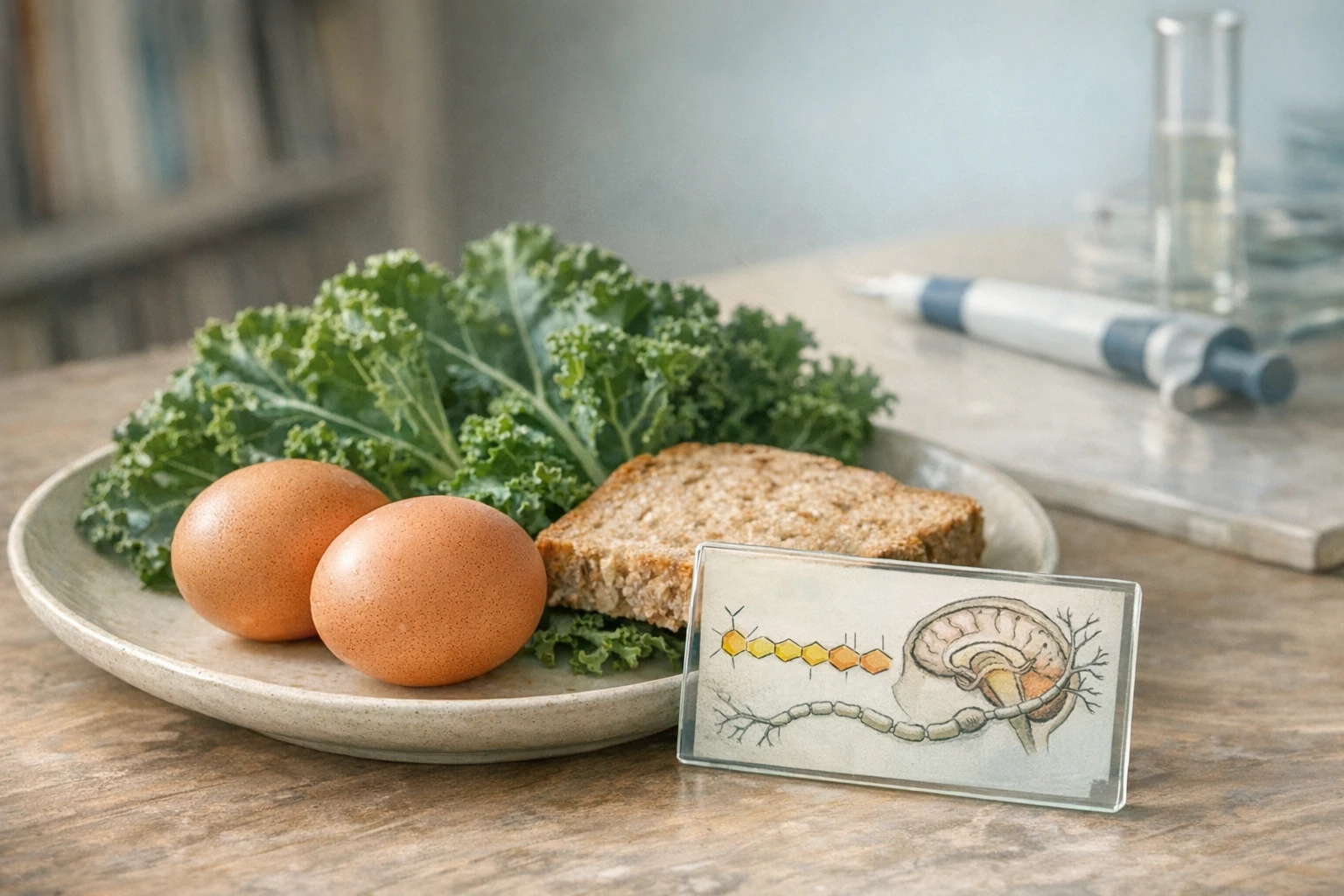
Lutein and zeaxanthin are non-provitamin carotenoids known for their role in retinal protection and blue light filtration. They accumulate in the macular tissue of the eye as "macular pigment" and are also present in various areas of the brain. The biological plausibility of their possible influence on cognitive functions is based on multiple mechanisms: antioxidant activity, anti-inflammatory action, stabilization of neural lipid membranes, and possible modulation of cerebral perfusion. These mechanisms have been discussed in reviews and experimental works that observe effects on markers of oxidative stress and on parameters of cerebral connectivity measured with functional magnetic resonance imaging. It is important to distinguish between biological plausibility and proof of clinical efficacy: the former makes it reasonable to investigate the topic, the latter requires robust and repeated experimental evidence. For the elderly population, where the risk of cognitive deficits increases, the role of nutrients that accumulate in the brain is the subject of observational studies and controlled trials that have produced partially consistent but not yet conclusive results. [1][2][6]
The evidence: what observational studies and clinical trials show
Observational evidence and post-mortem samples
Analyses of post-mortem samples and population studies have found that higher concentrations of lutein and zeaxanthin in brain tissue or retinal indicators (e.g., macular pigment optical density) are associated with better scores in memory tests, verbal fluency, and executive functions in older adults. These works suggest a consistent correlation between xanthophyll biomarkers and cognitive performance in older subjects, including the results of the Georgia Centenarian Study which showed significant correlations between brain xanthophyll levels and ante-mortem cognitive measures. However, given their observational nature, these studies do not prove causality: the link could reflect confounders (lifestyles, overall diet, health status) or the fact that people with better metabolic conditions absorb and retain these pigments better. [2][7]
Clinical trials and intervention with supplementation
Small randomized controlled trials have tested lutein and zeaxanthin supplementation, generally in the order of 6–12 mg/day of lutein (often in combination with 2 mg of zeaxanthin) for months up to a year. Some studies have observed increases in macular pigment and improvements in specific domains such as complex attention, cognitive flexibility, or memory in subgroups of participants. A community trial on older adults reported selective improvements in attentional and flexibility functions after L+Z supplementation; other studies on young adults reported effects on visual memory and learning processes. Overall, the interventions provide positive signals but not definitive proof: the effect size is modest, and the results are not uniform across different cognitive domains or across all studies. [3][5][4]
Why eggs? Nutritional content and practical role
Eggs contain lutein and zeaxanthin in a bioavailable form, as well as choline, high-quality proteins, and other micronutrients. In a typical Western diet, eggs represent one of the most accessible sources of these carotenoids, especially for those who consume few leafy green vegetables. The absorption of lutein/zeaxanthin is facilitated by the presence of lipids in the diet: consuming these pigments in a meal containing fats improves their bioaccessibility. However, it is crucial not to confuse "food source" with "definitive preventive strategy": the effect observed in studies depends on dose, duration, baseline nutritional status, and the presence of other nutrients (e.g., DHA). For this reason, the hypothesis that increasing egg consumption protects memory is reasonable from a nutritional point of view but requires confirmation with specific and large-scale clinical studies. [6]
What it means in practice
For those who wish to reduce the risk of cognitive decline in old age, the evidence on xanthophylls provides some practical points without becoming prescriptive. Supplementing the diet with food sources of lutein and zeaxanthin (dark leafy green vegetables, corn, avocado, and eggs) can contribute to the intake of these nutrients. In contexts where the diet is poor in these foods, a targeted dietary approach, evaluated with a professional, is sensible. However, it is premature to recommend the routine use of pharmacological supplementation exclusively for cognitive prevention in the absence of consolidated clinical indications. For people with particular cardiovascular or lipid conditions, any significant dietary change should be discussed with a doctor. Finally, the protection of cognitive health remains multifactorial: regular physical activity, control of cardiovascular risk factors, quality sleep, and cognitive stimulation are measures with solid supporting evidence. [6][3]
Key points to remember
- Lutein and zeaxanthin accumulate in the retina and brain and are biologically plausible as nutrients that support neuronal function.
- Observational studies and some clinical trials report associations and modest benefits in specific cognitive domains, but there is not yet strong and general causal evidence.
- Eggs are a useful food source of lutein/zeaxanthin, but their consumption should be placed in the context of the overall diet and individual health status.
- Decisions about supplementation or dietary changes must take into account risks, benefits, and personal preferences and, if necessary, be discussed with a healthcare professional.
Limitations of the evidence
It is essential to distinguish between observational studies and causal evidence: the former show associations but cannot exclude confounders or reverse causality; the latter (randomized trials) are more robust but so far relatively few and of modest size. Other methodological limitations include variability in administered doses, duration of interventions, choice of cognitive tests, and selection of participants (age, health status, concomitant use of nutrients such as DHA). The indirect measurement of lutein in the brain via MPOD (macular pigment optical density) is useful but remains a biomarker, not a direct measure of brain function. Finally, the generalizability of studies is limited: much research comes from selected samples or populations with certain lifestyles. For these reasons, the interpretation must remain cautious and oriented towards the need for further confirmatory studies. [1][2][7][8]
Editorial conclusion
The literature on lutein, zeaxanthin, and cognitive function has grown and provides promising signals: there are plausible biological bases and studies showing associations and selective improvements after supplementation. However, we are not yet at the level of proof that allows generalized clinical recommendations. Eggs, as a practical source of lutein/zeaxanthin, can be part of a balanced diet that promotes brain health, but they should not be considered a "cure" for memory loss. The assessment of individual risk profile and the adoption of integrated interventions (balanced diet, physical activity, control of cardiovascular factors) remain a priority. Larger and longer-term studies are awaited to establish to what extent and under what conditions an increase in dietary xanthophylls can translate into tangible prevention of cognitive decline.
Editorial note (closing)
Article updated with transparency and scientific verification criteria. The cited evidence is drawn from peer-reviewed literature; for bibliographic details and DOIs, consult the "Scientific research" section. The informational content does not replace medical advice.
Scientific research
- Johnson EJ. A possible role for lutein and zeaxanthin in cognitive function in the elderly. Am J Clin Nutr. 2012. https://doi.org/10.3945/ajcn.112.034611
- Johnson EJ, Vishwanathan R, et al. Relationship between serum and brain carotenoids, α-tocopherol, and retinol concentrations and cognitive performance in the oldest old from the Georgia Centenarian Study. J Aging Res. 2013. https://doi.org/10.1155/2013/951786
- Hammond BR Jr, Miller LS, Renzi-Hammond LM, et al. Effects of Lutein/Zeaxanthin Supplementation on the Cognitive Function of Community Dwelling Older Adults: A Randomized, Double-Masked, Placebo-Controlled Trial. Front Aging Neurosci. 2017. https://doi.org/10.3389/fnagi.2017.00254
- Lindbergh CA, Mewborn C, Hammond BR, Renzi-Hammond L, Curran-Celentano J, Miller LS. Relationship of Lutein and Zeaxanthin Levels to Neurocognitive Functioning: An fMRI Study of Older Adults. J Int Neuropsychol Soc. 2016. https://doi.org/10.1017/S1355617716000850
- Renzi-Hammond LM, Bovier ER, Fletcher LM, et al. Effects of a Lutein and Zeaxanthin Intervention on Cognitive Function: A Randomized, Double-Masked, Placebo-Controlled Trial of Younger Healthy Adults. Nutrients. 2017. https://doi.org/10.3390/nu9111246
- Stringham JM, Johnson EJ, Hammond BR. Lutein across the Lifespan: From Childhood Cognitive Performance to the Aging Eye and Brain. Curr Dev Nutr. 2019. https://doi.org/10.1093/cdn/nzz066
- Ajana S, Weber C, Helmer C, et al. Macular pigment optical density is related to cognitive function in older people. Age Ageing. 2014. https://doi.org/10.1093/ageing/aft210
- Dietary lutein and zeaxanthin are associated with working memory in an older population. Public Health Nutr. 2020. https://doi.org/10.1017/S1368980019005020