Updated and contextualized version of an article originally published on April 23, 2014
The article retains its original focus by presenting it through a scholarly and accessible perspective, supported by verifiable references.
Authors
- Dr. A. Conte – Biologist
- Roberto Panzironi –Independent researcher
Note editoriali
- First publication: April 23, 2014
- Last update: April 18, 2026
- Version: 2026 narrative revision
Initial note: This article was previously published and has been updated according to scientific and informative criteria. Its purpose is informational: it does not replace medical advice. For clinical questions, please consult your healthcare professional.
IN BRIEF
- Intake of omega-3 rich foods is associated, in some studies, with lower levels of inflammation and a reduction in some aspects of fatigue in breast cancer survivors.
- Data includes both observational studies on large cohorts and small clinical trials; results are not consistent across all studies.
- Plausible mechanisms: reduction of pro-inflammatory cytokines and modification of the omega-3/omega-6 ratio in the cell membrane.
- In practice, prioritizing food sources rich in EPA/DHA (fatty fish) is reasonable; the use of supplements requires individual evaluation and attention to effects and interactions.
Abstract: what does science say?
Omega-3s (especially EPA and DHA, mainly found in fatty fish) are nutrients with anti-inflammatory properties demonstrated in biological models and numerous clinical studies. Observations in breast cancer survivors have shown associations between higher relative intake of omega-3s (compared to omega-6s) and lower levels of fatigue. Small trials and pilot studies suggest benefits on fatigue and sleep quality in some groups, but larger clinical trials have yielded heterogeneous results, sometimes contrary to expectations. The differences depend on the measure of exposure (diet vs. supplement), dose, duration, nutritional status of participants, and chosen outcomes. In summary: there is biological plausibility and interesting clinical signals, but there is not yet definitive proof that omega-3s uniformly treat fatigue for all people with a history of cancer.
How to interpret the evidence: definition and general overview
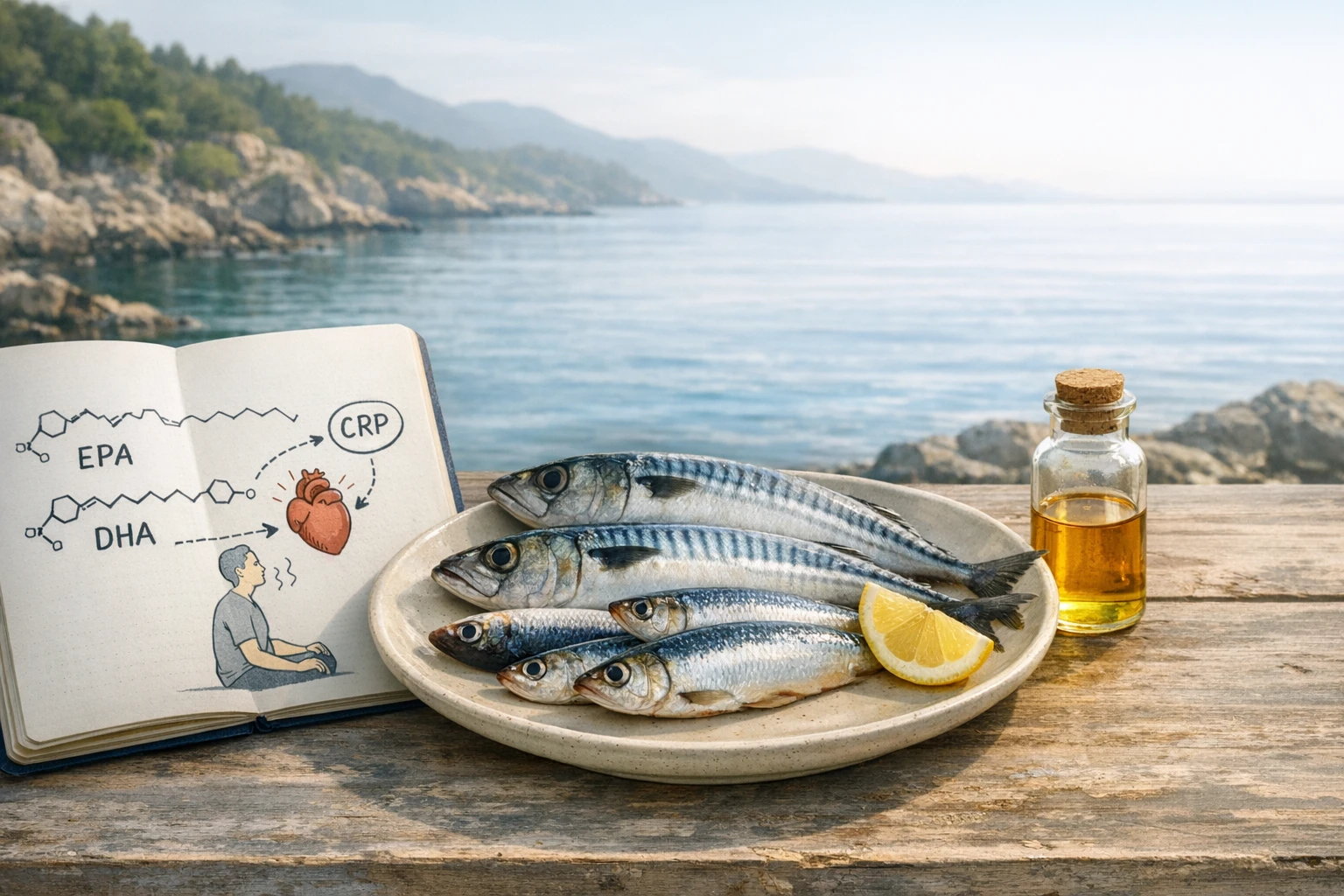
"Omega-3s" primarily refers to long-chain polyunsaturated fatty acids EPA (20:5) and DHA (22:6), found in fatty fish such as salmon, mackerel, sardines, and tuna. These compounds can become components of cell membranes and modulate the production of inflammatory mediators. One line of research has explored whether this anti-inflammatory effect can translate into a reduction of persistent fatigue after oncological treatment. In an observational study of 633 breast cancer survivors, a higher ratio of omega-3 to omega-6 was associated with lower levels of inflammation and less physical fatigue [1]. This type of association is consistent with the biological model where systemic inflammation contributes to the feeling of chronic fatigue. However, observational data show relationships and do not confirm causality: people with healthier diets may also have other protective factors (physical activity, better sleep, less overweight), which must be considered when interpreting the results [1].
Clinical and experimental evidence: what controlled studies show
Clinical trials have used different approaches: dietary interventions that increase the consumption of omega-3 rich foods and trials with fish oil supplements at varying dosages. A small randomized trial (a diet called "fatigue reduction diet") showed improvements in fatigue and sleep in cancer survivors who followed a dietary program rich in fruits, vegetables, whole grains, and omega-3 sources [2]. A multicenter randomized study compared high doses of fish oil with soybean oil (rich in omega-6) and reported unexpected results: in that context, omega-6 supplementation reduced some indicators of fatigue compared to omega-3, highlighting how results can vary by dose, duration, and studied population [3].
Why the results are heterogeneous
The variability of results depends on multiple factors: differences between dietary exposure and supplements (chemical form, co-nutrients), dosages (from a few grams to very high doses), duration of intervention (weeks vs. months), initial nutritional status of participants, and outcome measures (different questionnaires, inflammatory biomarkers). An analysis of trial data across various groups shows that the effect on inflammatory indicators is more easily detectable in longer interventions and in non-obese populations [4].
Plausible biological mechanisms
Omega-3s can reduce the production of certain pro-inflammatory eicosanoids derived from arachidonic acid (omega-6) and promote mediators of inflammation resolution. At the cellular level, EPA/DHA modify membrane composition and modulate the function of receptors and signaling pathways involved in inflammation (e.g., NF-κB) [7]. These effects can reduce circulating levels of inflammatory proteins such as CRP, IL-6, and TNF-α in numerous clinical studies and meta-analyses, although the magnitude of the effect varies among the examined populations [4]. In models of cachexia (muscle loss) and in some oncological conditions, supplementation with EPA/DHA has shown benefits on body mass and biomarkers, suggesting multiple biological pathways for a possible impact on the feeling of energy and fatigue [6].
What it means in practice
For those experiencing cancer or in follow-up, evidence suggests that improving diet quality and including food sources of omega-3s can be a useful component of a multidimensional approach to fatigue. Food sources recommended in the literature include fatty fish (salmon, mackerel, sardines), nuts, and seeds (e.g., flaxseeds, although these provide ALA which has different metabolic conversion), as part of a balanced diet [2][8].
It is important to note that the use of supplements is not always equivalent to dietary consumption: doses, form of omega-3 (ethyl esters, triglycerides, phospholipids), and individual conditions influence absorption and effect. Some studies indicate that baseline nutritional status modulates the ability to increase blood omega-3 levels after supplementation, and thus also the clinical response [4]. Furthermore, large-scale trials on major outcomes (e.g., prevention of cardiovascular disease or cancer) have not demonstrated generalized benefits of supplements in healthy populations, reminding us that the expected effect on fatigue is circumscribed and not a universal therapeutic effect [5].
Before starting a supplement, it is advisable to discuss it with your treating physician, especially if you are taking anticoagulant medications or are undergoing active cancer treatment.
Key takeaways
- Observational and experimental data exist linking a higher omega-3/omega-6 ratio to lower levels of inflammation and aspects of fatigue in cancer survivors. [1]
- Small dietary trials have shown improvements in fatigue by increasing omega-3 rich foods; however, results are not uniform across all controlled clinical trials. [2][3]
- The most plausible mechanisms are the reduction of pro-inflammatory cytokines and the modification of cellular lipid mediators. [7][4]
- The response may depend on dose, form (food vs. supplement), duration, and individual nutritional status. [4]
- Supplements are not a universal cure for fatigue and require clinical consultation, especially in the presence of pharmacological therapies. [5]
Limitations of the evidence
It is crucial to distinguish between observational studies and causal evidence: observed associations do not establish that increased omega-3 intake is the direct cause of fatigue reduction. Observational studies can be influenced by confounding factors (lifestyle, comorbidities, physical activity). RCTs offer greater causal strength, but many are small, short-duration, or have variable outcomes. Furthermore, variability in supplement formulation, doses, and biological indicators makes it difficult to compare studies and produce unambiguous recommendations [3][4][6]. Finally, some large-scale trials with different primary outcomes (e.g., VITAL) have not shown generalized effects of omega-3 supplements on major clinical outcomes, a further reason for caution in interpreting the results [5].
Editorial conclusion
Available evidence indicates that a diet regularly including food sources of omega-3s is plausibly beneficial for general health and may contribute, in some cases, to reducing aspects of fatigue associated with the course of cancer. However, caution is still needed: clinical data are heterogeneous, and the decision to use supplements must be personalized. The most robust approach for individuals with persistent fatigue remains multidimensional and includes medical evaluation, adapted physical activity, sleep support, and balanced nutritional interventions. Further quality clinical studies are needed to establish the dose, duration, and populations most likely to benefit.
Editorial note
This article draws on studies published in the literature and is updated with relevant reviews and clinical trials. It is for informational and educational purposes; it does not provide personalized therapeutic indications. For clinical choices, consult your treating physician or oncology team. Scientific references are provided for transparency and verification.
SCIENTIFIC RESEARCH
- Alfano CM, Imayama I, Neuhouser ML et al. Fatigue, inflammation, and ω‑3 and ω‑6 fatty acid intake among breast cancer survivors. Journal of Clinical Oncology. 2012;30(12):1280–1287. https://doi.org/10.1200/JCO.2011.36.4109
- Zick SM, Colacino J, Cornellier M et al. Fatigue reduction diet in breast cancer survivors: a pilot randomized clinical trial. Breast Cancer Research and Treatment. 2017;161(2):299–310. https://doi.org/10.1007/s10549-016-4070-y
- Peppone LJ, Inglis JE, Kleckner AS et al. Multicenter randomized controlled trial of omega‑3 fatty acids versus omega‑6 fatty acids for the control of cancer‑related fatigue among breast cancer survivors. JNCI Cancer Spectrum. 2019;3(2):pkz005. https://doi.org/10.1093/jncics/pkz005
- Kelei Li, Huang T, Zheng J et al. Effect of marine‑derived n‑3 polyunsaturated fatty acids on C‑reactive protein, interleukin 6 and tumor necrosis factor α: a meta‑analysis. PLoS One. 2014;9(2):e88103. https://doi.org/10.1371/journal.pone.0088103
- Manson JE, Cook NR, Lee IM et al.; VITAL Research Group. Marine n‑3 fatty acids and prevention of cardiovascular disease and cancer. New England Journal of Medicine. 2018;380(1):23–32. https://doi.org/10.1056/NEJMoa1811403
- De Castro I, et al. Omega‑3 fatty acid supplementation and its impact on systemic inflammation and body weight in patients with cancer cachexia — systematic review and meta‑analysis. Frontiers in Nutrition. 2021;8:797513. https://doi.org/10.3389/fnut.2021.797513
- Calder PC. Omega‑3 fatty acids and inflammatory processes: from molecules to man. Nutrients. 2010;2(3):355–374. https://doi.org/10.3390/nu2030355
- Osouli‑Tabrizi S, Mehdizadeh A, Naghdi M et al. The effectiveness of omega‑3 fatty acids on health outcomes in women with breast cancer: a systematic review. Food Science & Nutrition. 2023;11(8):4355–4371. https://doi.org/10.1002/fsn3.3409
- Kleckner AS, Culakova E, Kleckner IR et al. Nutritional status predicts fatty acid uptake from fish and soybean oil supplements for treatment of cancer‑related fatigue: results from a phase II nationwide study. Nutrients. 2022;14(1):184. https://doi.org/10.3390/nu14010184