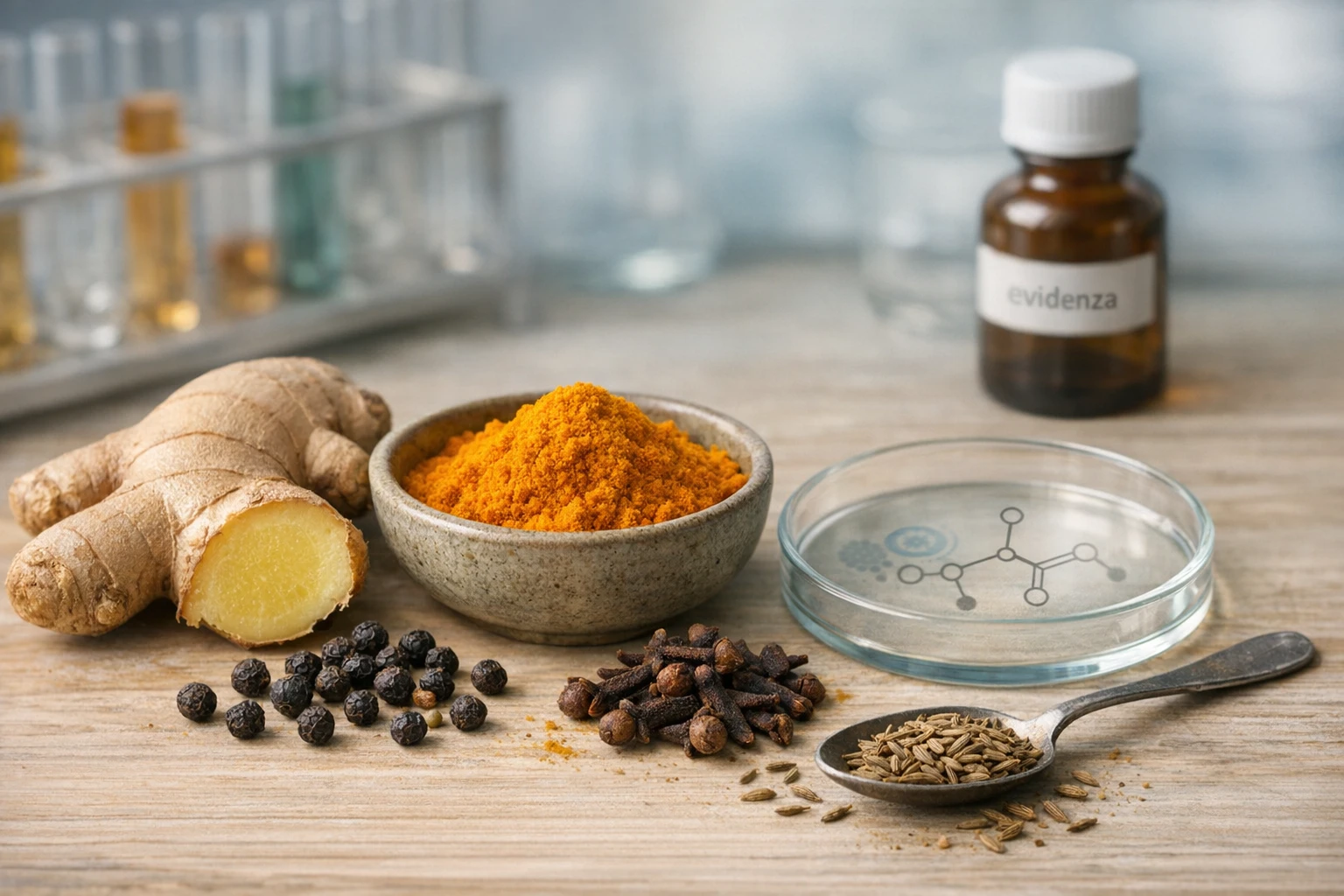
Updated and contextualized version of an article originally published on April 28, 2014
The article retains its original focus by presenting it through a scholarly and accessible perspective, supported by verifiable references.
Authors
- Dr. M. Bitonti – Biologist
- Roberto Panzironi –Independent researcher
Note editoriali
- First publication: April 28, 2014
- Last update: April 18, 2026
- Version: 2026 narrative revision
In brief
- Spices are foods rich in aromatic compounds (essential oils, phenols, alkaloids) that influence taste, digestion, and biological processes through plausible mechanisms.
- Some spices (e.g., turmeric, ginger, cloves) show antioxidant activity and inflammatory modulation in clinical and preclinical studies; the effect depends on dose, form, and co-administration (e.g., piperine with curcumin).
- Interventions with spice mixtures at culinary doses induce measurable changes in the gut microbiota, but the long-term health consequences remain to be clarified.
- Daily use of spices as seasoning is generally safe; however, people with gastric conditions, taking medications, or with sensitivities should discuss their use with a doctor.
Abstract: what does science say?
Spices—dried seeds, roots, berries, or buds of aromatic plants—contain bioactive substances that can influence digestive physiology, inflammatory response, and the microbial composition of the gut. Available evidence includes in vitro experiments, animal studies, controlled clinical trials, and observational research. In general, two key messages emerge: (1) many spices possess compounds with antioxidant and inflammation-modulating activity, and (2) measurable effects in humans depend strongly on quantity, form (whole, extract, high-bioavailability formulation), and dietary context. Some observational associations indicate favorable health correlates for spice-rich diets, but direct causality is not established in many areas. Finally, the interaction between spices and medications or gastrointestinal conditions can be relevant; therefore, practical recommendations are based on a balance between biological plausibility, experimental data, and the limitations of existing clinical studies.
The most common spices: what research shows
Many spices used in cooking have been studied for individual properties: effects on digestive tone, antioxidant action, inflammatory modulation, and interaction with the microbiota. Below are brief profiles of some common spices with reference to available evidence.
Ginger (Zingiber officinale)
Ginger is a rhizome used fresh or dried and contains gingerols and shogaols, compounds associated with pro-motility and antiemetic effects. Controlled clinical studies show that ginger extracts can improve some symptoms of functional dyspepsia and postoperative or pregnancy-related nausea, with a reduction in nausea, feelings of heaviness, and vomiting in several short-term trials. Clinical effects are moderate and depend on the dose and quality of the preparation; tolerability is good in most cases, although burning or reflux may occur in sensitive individuals [3].
Turmeric (Curcuma longa) and curcumin, with piperine
Turmeric contains curcumin, the most studied active ingredient for its antioxidant and anti-inflammatory properties. Reviews and syntheses of the literature show plausible activity on inflammatory biomarkers and some chronic conditions, but the oral absorption of curcumin is very low. Co-administration with piperine (an alkaloid from black pepper) significantly increases the bioavailability of curcumin in pharmacokinetic studies; this can amplify both potential benefits and the risk of drug interactions. In conclusion, there is clinical evidence supporting some effects, but the variability of formulations and doses makes generalization difficult [1][2].
Black pepper and chili pepper (piperine and capsaicin)
Black pepper contains piperine, known for its role as a 'bioenhancer' and for its ability to interfere with the hepatic and intestinal metabolism of certain molecules; this explains the use of piperine to increase the absorption of substances like curcumin, but requires caution in cases of concomitant drug therapies [2]. Chili pepper releases capsaicin, which activates TRPV1 receptors and can influence thermogenesis, pain sensitivity, and, in some studies, metabolic parameters; however, clinical results on weight, glycemia, and lipids are heterogeneous and inconclusive. Chili pepper can worsen symptoms in people with gastritis, ulcers, or gastroesophageal reflux, so it should be used with caution [9].
Cumin and cloves (digestive and antioxidant activity)
Cumin is traditionally linked to carminative effects and stimulation of bile secretion and digestive enzymatic activities in experimental animal studies; some nutritional reviews report its antioxidant activity and metabolic modulation, but clinical evidence in humans is limited. Cloves, rich in eugenol, show strong antioxidant activity in in vitro and preclinical studies; they are traditionally used as digestives and to stimulate appetite, but controlled human data are scarce [10][4][8].
What this means in practice
For the general public, evidence suggests that using spices as part of the diet can have indirect benefits: improving the flavor of dishes reduces the need for salt or fatty condiments, promoting healthier eating habits. Some spices, taken at culinary doses, modify the gut microbiota and can contribute to a favorable environment for beneficial bacteria; this has been documented in controlled interventions with spice mixtures and in short-term studies [5][7].
For specific conditions (e.g., dyspepsia or mild nausea), some standardized extracts like ginger show modest and transient therapeutic effects; however, these are not cures, and their use does not replace medical therapies when indicated [3]. The use of high-concentration extracts or formulations that increase bioavailability (for example, curcumin + piperine) can increase the effect, but also the possibility of interactions with medications or adverse effects; therefore, it is advisable to consult a doctor in case of concomitant therapies [2][1].
In practice: prefer whole spices or powders in cooking, vary spices (do not rely on a single product), avoid concentrated doses without supervision, and inform your doctor about regular intake of spice-based supplements.
Key takeaways
- Spices enhance flavor and can improve diet quality without adding calories.
- Experimental and clinical evidence exists for antioxidant, anti-inflammatory, and pro-digestive effects, but the robustness of the evidence varies greatly among spices.
- The form of consumption (food, extract, high-bioavailability formulation) modifies biological effects.
- Drug interactions (e.g., piperine) and sensitive gastrointestinal conditions require caution.
- Changes in the microbiota after spice intake are real, but the long-term clinical implications are still under study.
Limitations of the evidence
It is important to distinguish between types of evidence: in vitro and animal studies show plausible mechanisms (antioxidation, inhibition of inflammatory pathways, bacterial modulation), but do not guarantee clinical effects in humans. Available clinical studies often have small sample sizes, short durations, and use different formulations, which limits generalizability. Reviews on curcumin, for example, highlight the variability of doses and formulations and the difficulty of comparing different trials [1].
For the microbiota, controlled interventions document compositional changes after the intake of spice mixtures, but it is not yet clear whether these variations translate into stable or measurable clinical benefits in the long term [5][6][7]. Furthermore, epidemiological observations associating spice consumption with favorable outcomes do not establish causality: related dietary factors and lifestyles can confound the relationships. In summary, the evidence is promising but requires randomized, well-characterized studies with relevant clinical outcomes to draw strong conclusions.
Editorial conclusion
Spices offer more than flavor: they contain compounds with measurable biological activities that can contribute to digestion, inflammation modulation, and interaction with the microbiota. However, the current literature shows methodological heterogeneity and not always consistent results. The prudent and informed approach is to value spices in cooking as part of a varied diet based on whole foods, avoid concentrated doses without medical supervision, and consider the individual context (pathologies, medications, tolerances). Research continues, and for now, practical recommendations remain conservative: leverage the sensory power of spices to improve diet quality and use supplements or specific formulations only under professional supervision.
Editorial note
This article was originally published in the past and has been updated according to scientific and divulgative criteria to reflect recent evidence and systematic reviews. The purpose is informative and does not replace medical advice: for therapeutic indications or personal clinical cases, consult a doctor or specialist.
Scientific research
- Hewlings SJ, Kalman DS. Curcumin: A Review of Its’ Effects on Human Health. Foods. 2017. https://doi.org/10.3390/foods6100092
- Shoba G, Joy D, Joseph T, Majeed M, Rajendran R, Srinivas PS. Influence of piperine on the pharmacokinetics of curcumin in animals and human volunteers. Planta Med. 1998. https://doi.org/10.1055/s-2006-957450
- Chin W-S, et al. Effect of ginger on gastric motility and symptoms of functional dyspepsia. World J Gastroenterol. 2011. https://doi.org/10.3748/wjg.v17.i1.105
- Bezerra DP, Militão GCG, De Morais MC, De Sousa DP. The Dual Antioxidant/Prooxidant Effect of Eugenol and Its Action in Cancer Development and Treatment. Nutrients. 2017. https://doi.org/10.3390/nu9121367
- Khine WWT, et al. A single serving of mixed spices alters gut microflora composition: a dose–response randomised trial. Sci Rep. 2021. https://doi.org/10.1038/s41598-021-90453-7
- Dahl SM, Rolfe V, Walton GE, Gibson GR. Gut microbial modulation by culinary herbs and spices. Food Chem. 2022. https://doi.org/10.1016/j.foodchem.2022.135286
- Rossi M, et al. Herbs and Spices Modulate Gut Bacterial Composition in Adults at Risk for CVD: Results of a Randomized, Crossover, Controlled‑Feeding Study. J Nutr. 2022. https://doi.org/10.1093/jn/nxac201
- Platel K, Srinivasan K. Stimulatory influence of select spices on bile secretion in rats. Nutr Res. 2000. https://doi.org/10.1016/S0271-5317(00)80030-5
- McClements DJ, et al. Dietary Capsaicin: A Spicy Way to Improve Cardio‑Metabolic Health? Biomolecules. 2022. https://doi.org/10.3390/biom12121783
- Opara EI, Chohan M. Cumin (Cuminum cyminum) — review in Food Quality and Safety. Food Qual Saf. 2018. https://doi.org/10.1093/fqsafe/fyx031