Updated and contextualized version of an article originally published on April 28, 2014
The article retains its original focus by presenting it through a scholarly and accessible perspective, supported by verifiable references.
Authors
- Dr. A. Conte – Biologist
- Roberto Panzironi –Independent researcher
Note editoriali
- First publication: April 28, 2014
- Last update: April 18, 2026
- Version: 2026 narrative revision
Initial Note
This article has been previously published and updated according to scientific and informative criteria to reflect available evidence. The purpose is to inform the reader about published research and interpretations; it does not replace personalized medical advice. In the presence of clinical conditions (kidney failure, use of medications that affect potassium), consult a healthcare professional before modifying your diet.
IN BRIEF
- Higher dietary potassium intake is associated, in observed populations, with a reduced risk of stroke.
- The effect is plausibly mediated largely by a reduction in blood pressure, but the data are predominantly observational and should be interpreted with caution.
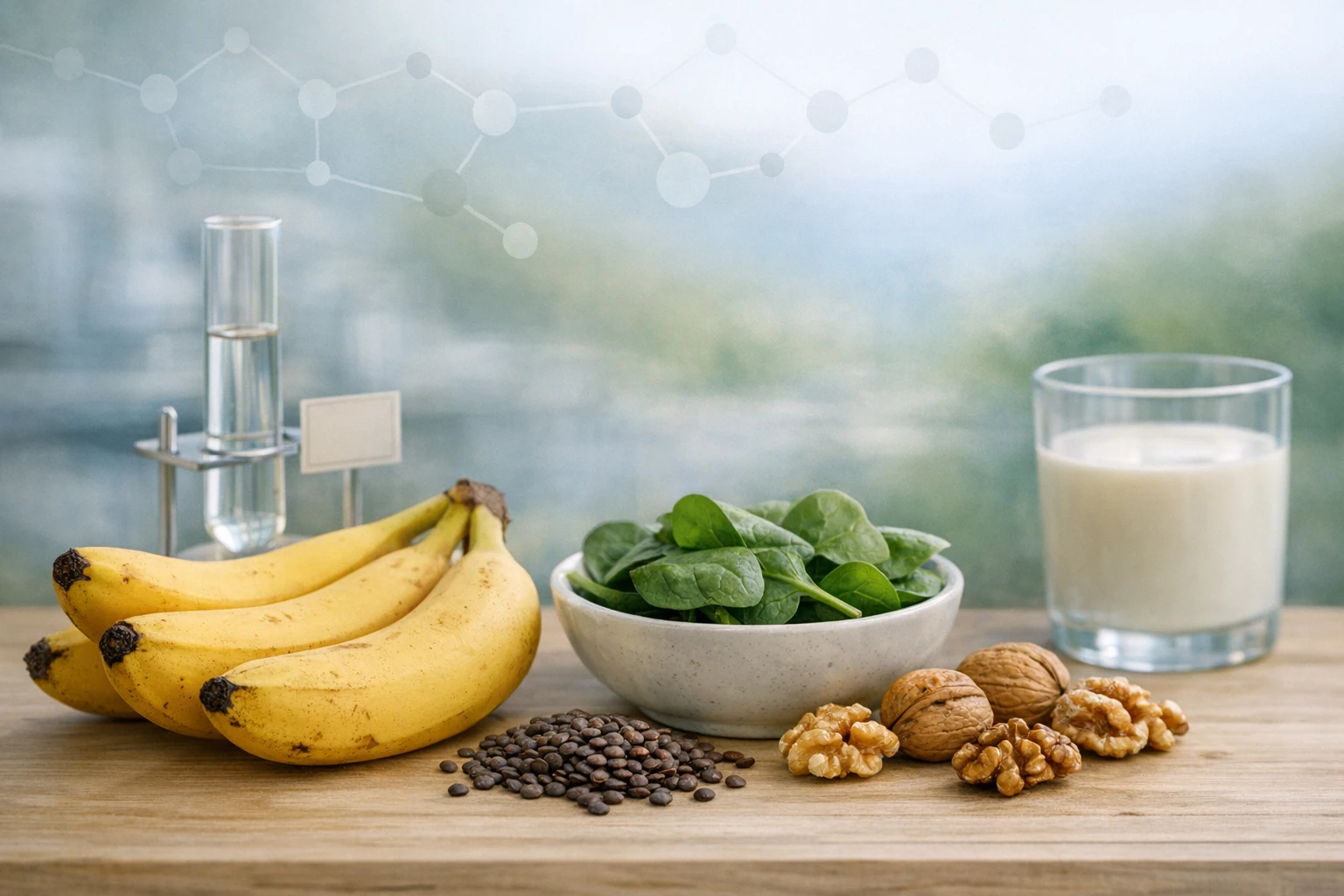
- Dietary sources of potassium include fruits, vegetables, legumes, dairy products, and fish; an average fruit like a banana contains approximately 400–500 mg of potassium [placeholder: exact average value].
- In clinical contexts (e.g., chronic kidney disease or therapies that increase serum potassium), medical judgment is necessary before significantly increasing potassium intake.
Abstract: what does science say?
Potassium is an essential mineral that influences many physiological processes, including blood pressure regulation. Numerous analyses of large observational cohorts show an inverse correlation between potassium intake and stroke incidence: in many studies, moderate increases in daily intake have been associated with reductions in the relative risk of stroke in the order of 10–25%. Controlled experimental studies and meta-analyses of clinical trials also indicate that increasing potassium can reduce blood pressure, especially in people with hypertension or high sodium consumption. However, most direct evidence of stroke reduction comes from observational studies, which cannot definitively prove causality. The sodium to potassium ratio (Na:K) appears to be a useful indicator: low sodium and high potassium tend to be associated with a more favorable vascular profile. Public health interventions based on dietary changes (more fruits/vegetables, salt partially replaced with potassium) can have a population-level impact, but require safety assessments in at-risk groups.
What the available evidence shows
Meta-analyses of cohort studies have shown that an increase in potassium intake of approximately 1.6 g/day is associated with an estimated reduction in stroke risk of around 20–21% in the observed population [1]. Subsequent analyses and dose-response updates confirm an inverse association between potassium intake and stroke risk, with consistent signals also for stroke subtypes and for urinary excretion measures when available [2]. Meta-analyses of clinical trials also show that potassium supplementation or increased intake can lower blood pressure, especially in hypertensive subjects or those with high sodium intake [3][4]. More recent evidence based on multiple urine collections indicates that, at the population level, higher values of urinary potassium excretion are associated with a lower overall cardiovascular risk compared to low levels [6].
Plausible biological mechanisms
Potassium acts on known cardiovascular mechanisms: it facilitates renal sodium excretion, reduces sympathetic nervous system activity, and can improve endothelial function and vasodilation. These effects can translate into reductions in blood pressure and chronic vascular stress, factors that in turn influence stroke risk. Experimental evidence and clinical trials show measurable blood pressure effects with increased potassium, although the magnitude varies with dose and context (hypertension, ethnicity, sodium consumption) [9][4].
Dose, frequency, and method of intake
Recommendations adopted by international bodies and cited in reviews suggest an adequate intake of ~90 mmol per day (approximately 3.5 g) for adults without kidney problems, as a reference target for favorable cardiovascular effects [3]. However, many populations have average consumption below these levels. Estimates based on food show that moderate increases obtained with fruits and vegetables are plausible and safe for most people; the observed effect on blood pressure and risk appears dependent on the cumulative dose and interaction with sodium intake [1][6].
What it means in practice
For the general public, evidence suggests that favoring a diet with a greater presence of potassium-rich foods (fruits, vegetables, legumes, dairy products, and some fish sources) is consistent with healthy guidelines for the prevention of cardiovascular diseases and for blood pressure management [3][5]. The simple strategy of increasing the consumption of natural foods rich in potassium can help improve the sodium:potassium ratio, a parameter associated with cardiovascular outcomes. However, these indications should not be interpreted as clinical prescriptions for individuals with specific medical conditions: people with reduced kidney function, treated with medications that increase serum potassium (e.g., some potassium-sparing diuretics, ACE inhibitors, ARBs, some heart medications) must consult their doctor before significantly increasing potassium intake. At the public health level, interventions such as promoting fruit and vegetable consumption and the prudent use of salt substitutes based on potassium chloride have been tested in trials and population programs and require local feasibility and safety assessments [6][8].
What dietary changes are realistic
Including one fruit a day and additional portions of vegetables, legumes, or dairy products within a balanced diet can increase potassium intake sustainably. Practical sources include (not exhaustive): bananas, spinach, potatoes, legumes, nuts, milk, and fish (list present in the original text). These changes do not require supplements and, in most cases, also improve the overall nutritional profile. In controlled studies, dietary interventions that increase potassium obtained from foods have shown favorable effects on blood pressure [5].
When precautions are needed
At-risk groups (kidney failure, use of medications that reduce potassium excretion, hyperkalemic individuals) must avoid uncontrolled increases in potassium and consult a doctor. Even in public health programs that involve the use of salt with partial replacement of sodium chloride with potassium chloride, it is essential to provide clinical surveillance and clear guidelines for vulnerable groups [6][8].
Key points to remember
- Higher dietary potassium intake is associated with a lower observed risk of stroke, but most evidence comes from observational studies.
- The protective effect is plausibly mediated by a reduction in blood pressure and an improvement in the sodium:potassium ratio.
- Prefer food sources (fruits, vegetables, legumes, dairy products) over supplements, unless otherwise medically indicated.
- People with kidney disease or on medication that affects potassium must consult their doctor before modifying their intake.
Limitations of the evidence
It is important to distinguish between observed association and causal proof. Much of the results linking potassium intake and stroke risk come from observational cohort studies and meta-analyses of these studies: they control for many confounding factors but cannot completely exclude residual bias or confounding from overall lifestyle. Experimental evidence (clinical trials) supports the effect of potassium on blood pressure, but long-term trials directly demonstrating the reduction of major events (e.g., stroke) are rare or difficult to conduct for ethical and practical reasons. Measuring potassium intake is another limitation: many surveys use food questionnaires, while 24-h urine is the gold standard but is rarely collected repeatedly in large cohorts. Finally, the effect of increased potassium depends on the context: health status, sodium consumption, medications, and demographic characteristics can modify the response. For these reasons, public recommendations favor balanced dietary approaches rather than uncontrolled supplementation indications [1][2][3][6].
Editorial conclusion
Evidence gathered over decades of research converges on a practical and prudent message: promoting a diet rich in natural potassium-rich foods is consistent with cardiovascular prevention and can help reduce the risk of stroke at the population level. However, translating the observed association into individual recommendations requires clinical evaluation in subjects at risk of hyperkalemia. Public health policies should simultaneously favor sodium reduction and increased dietary potassium, monitoring benefits and possible risks in vulnerable groups. Finally, further research, particularly studies combining precise intake assessments (e.g., multiple urine collections) and intervention-oriented designs, would improve understanding of the direct impact of targeted dietary changes on stroke risk.
Editorial note
Article updated according to transparency and source quality criteria. The statements reported are based on studies published in peer-reviewed literature listed in the "Scientific Research" section. This content is for informational purposes and does not replace personalized clinical evaluations.
SCIENTIFIC RESEARCH
- D'Elia L, Barba G, Cappuccio FP, Strazzullo P. Potassium Intake, Stroke, and Cardiovascular Disease: A Meta-Analysis of Prospective Studies. J Am Coll Cardiol. 2011;57(10):1210–1219. https://doi.org/10.1016/j.jacc.2010.09.070 [1]
- Vinceti M, Filippini T, et al. Meta-Analysis of Potassium Intake and the Risk of Stroke. J Am Heart Assoc. 2016;5(10):e004210. https://doi.org/10.1161/JAHA.116.004210 [2]
- Aburto NJ, Hanson S, Gutierrez H, Hooper L, Elliott P, Cappuccio FP. Effect of increased potassium intake on cardiovascular risk factors and disease: systematic review and meta-analyses. BMJ. 2013;346:f1378. https://doi.org/10.1136/bmj.f1378 [3]
- Filippini T, et al. Potassium Intake and Blood Pressure: A Dose-Response Meta-Analysis of Randomized Controlled Trials. J Am Heart Assoc. 2020;9(12):e015719. https://doi.org/10.1161/JAHA.119.015719 [4]
- Oral potassium supplementation for management of essential hypertension: a meta-analysis of randomized controlled trials. PLoS One. 2017;12(4):e0174967. https://doi.org/10.1371/journal.pone.0174967 [5]
- Ma Y, He FJ, Sun Q, et al. 24-Hour Urinary Sodium and Potassium Excretion and Cardiovascular Risk. N Engl J Med. 2022;386(3):252–263. https://doi.org/10.1056/NEJMoa2109794 [6]
- O’Donnell MJ, et al. Urinary Sodium and Potassium, and Risk of Ischemic and Hemorrhagic Stroke (INTERSTROKE): a Case-Control Study. Am J Hypertens. 2021;34(4):414–425. https://doi.org/10.1093/ajh/hpaa176 [7]
- Wright J, et al. Dietary Sodium to Potassium Ratio and Risk of Stroke in a Multiethnic Urban Population: The Northern Manhattan Study. Stroke. 2017;48(8):2137–2143. https://doi.org/10.1161/STROKEAHA.117.017963 [8]
- Whelton PK, et al. Effects of Oral Potassium on Blood Pressure: Meta-Analysis of Randomized Controlled Clinical Trials. JAMA. 1997;277(20):1624–1632. https://doi.org/10.1001/jama.1997.03540440058033 [9]