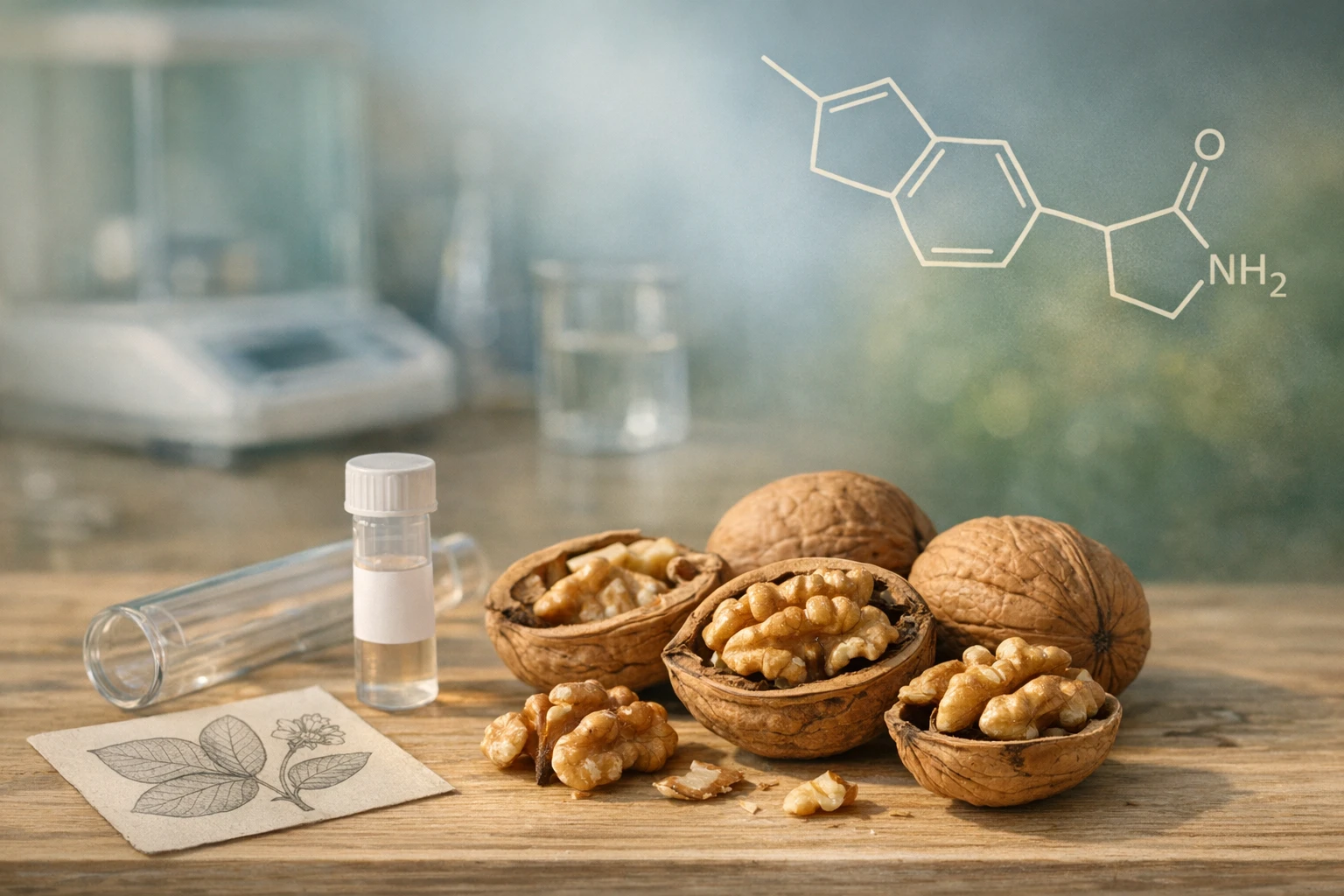
Updated and contextualized version of an article originally published on June 30, 2014
The article retains its original focus by presenting it through a scholarly and accessible perspective, supported by verifiable references.
Authors
- Dr. M. Mondini – Biologist
- Roberto Panzironi –Independent researcher
Note editoriali
- First publication: June 30, 2014
- Last update: April 20, 2026
- Version: 2026 narrative revision
Editorial note: This article was previously published and has been updated according to scientific and informative criteria. It is for informational purposes only and does not replace medical advice.
IN BRIEF
- Walnuts contain melatonin along with other antioxidant nutrients; the presence of melatonin in plants is documented by analytical studies.
- Experimental mechanisms indicate antioxidant properties and cellular modulation of melatonin, but most of the evidence is preclinical or observational.
- Some reviews and meta-analyses suggest a complementary role for melatonin in clinical contexts (for example, as an oncological adjuvant), but the data are not sufficient to establish direct causal effects.
- Recent dietary studies indicate that regular walnut consumption can increase melatonin biomarkers and influence sleep; however, the extent of the systemic effect and its clinical relevance require further confirmation.
Abstract: what does science say?
Melatonin is an indole present not only in animals but also in many plants and foods, including walnuts. Laboratory experiments and animal studies show that melatonin acts as a free radical scavenger and can promote the antioxidant capacity of biological fluids. Some reviews and clinical studies suggest benefits of melatonin as an adjuvant drug in oncology and as a modulator of some aspects of cardiovascular function. Walnut consumption can increase melatonin indicators in blood or urine, but the variability in the melatonin content of foods, bioavailability, and differences between experimental models and human conditions limit the possibility of deriving practical recommendations. In summary: there is biological plausibility and encouraging data, but no definitive evidence that melatonin from walnuts prevents cancer or cardiovascular diseases in humans.
MAIN SECTION
What is melatonin in plants and nuts
Melatonin is a compound related to tryptophan, produced by the pineal gland in animals but also found in many plant species. Its presence in foods has been demonstrated since the 1990s using specific analytical techniques. In particular, chemical analyses have detected melatonin in various vegetables and seeds, confirming that diet is a possible route for exogenous intake of this indole [1]. Targeted analyses of nuts have then quantified measurable concentrations and shown that, in experimental models, nut consumption can increase circulating levels of the compound or its metabolites [2]. These results define walnuts as one of the food sources containing melatonin, but the amount per serving and the variability related to cultivation and processing remain high [3].
Plausible biological mechanisms: antioxidation and cellular modulation
From a biochemical perspective, melatonin has shown the ability to neutralize various reactive radicals and to stimulate indirect antioxidant defenses at the cellular level. Laboratory studies have documented direct scavenging actions of reactive species and the activation of antioxidant enzymes, as well as the protection of DNA and organelles, particularly mitochondria [4]. These mechanisms provide biological plausibility for protective effects against oxidative damage implicated in aging processes and certain chronic diseases. It is important to distinguish mechanistic plausibility from evidence demonstrating a clinical effect in large human studies: mechanisms are necessary but not sufficient to establish epidemiological causality.
What is the evidence regarding cancer and cardiovascular diseases?
Reviews and some meta-analyses have evaluated the use of melatonin as an adjuvant in cancer patients, reporting positive effects on some outcomes (for example, reduction of some adverse events from therapy and suggestions of improved survival in heterogeneous studies), but the quality of the evidence varies greatly and the studies include pharmacological doses administered as a supplement, not Intake through food [5]. For cardiovascular health, there are experimental data and small clinical studies that suggest favorable effects on parameters such as nocturnal blood pressure, autonomic modulation, and protection against ischemic damage in animal models and controlled studies, but the results are conflicting and depend on the dose, form of administration, and population studied [6][7]. Overall, the evidence supporting a direct protective effect of dietary melatonin on cancer and cardiovascular diseases in humans is still incomplete and does not allow for definitive causal inferences.
PRACTICAL SECTION
What it means in practice
For the general public, the practical message is one of balance and caution. Consuming walnuts as part of a varied and balanced diet provides nutrients known to be beneficial for health (unsaturated fatty acids, fiber, vitamins, and phytocompounds) and can help improve metabolic parameters associated with cardiovascular risk [3]. The presence of melatonin in walnuts is an interesting biological element and can contribute, along with other compounds in walnuts, to the overall antioxidant capacity of the Meal [2][3]. However, the amount of melatonin present in a serving of walnuts is much lower than the pharmacological doses used in supplements; therefore, it is not correct to consider walnuts as a substitute for therapies or specific supplements for sleep, oncological, or cardiovascular disorders. In short: walnuts are recommended for their overall nutritional profile; the potential contribution of dietary melatonin should be considered as part of a combined effect and not as a targeted "cure."
Practical indications and caution
If one wishes to take advantage of possible sleep-related benefits, some studies have evaluated the effect of evening walnut consumption on melatonin biomarkers and sleep quality, with modest but promising results [8]. However, for persistent sleep problems or relevant medical conditions, it is always advisable to consult a healthcare professional. Those taking medications or with chronic clinical conditions should seek advice before using melatonin supplements or drastically changing their diet based on a single active ingredient.
KEY POINTS TO REMEMBER
- Melatonin is present in walnuts and many plant-based foods; its quantity can vary widely between samples and processing methods.
- Melatonin's antioxidant and protective mechanisms are well-documented in the laboratory, but this does not equate to direct clinical efficacy proof in humans.
- Some reviews and meta-analyses indicate a possible adjuvant role for melatonin in oncology and benefits in cardiovascular functions, but studies are heterogeneous and sometimes limited.
- Consuming walnuts regularly can be part of a healthy eating strategy; attributing a unique preventive effect against cancer or cardiovascular diseases to them would be premature.
LIMITATIONS OF EVIDENCE
It is crucial to distinguish between types of studies: analytical detections demonstrating the presence of melatonin in foods and in vitro or animal experiments (which explain mechanisms) are not equivalent to randomized clinical trials in humans that evaluate disease outcomes. Many studies on melatonin and cardiorespiratory or oncological health are preclinical or small trials with supplement doses. Furthermore, the melatonin content in foods varies due to cultivar, seasonality, and analytical methods, and bioavailability from food depends on the matrix, co-nutritional components, and individual metabolism [1][2][3][4]. For these reasons, any claim about prevention or treatment based solely on dietary melatonin requires cautious interpretation and confirmation in quality clinical studies.
Editorial Conclusion
The discovery that walnuts contain melatonin complements and enriches the known dietary benefits of these oily fruits. Experimental studies provide strong biochemical plausibility for antioxidant and protective actions, and preliminary clinical research suggests modest effects on sleep and potential roles as an adjuvant in specific contexts. However, current evidence does not justify absolute claims: for now, practical recommendations must remain based on the overall nutritional profile of walnuts and consolidated clinical data. Larger and replicated human studies are needed to clarify if and under what conditions dietary melatonin significantly contributes to the prevention of cancer or cardiovascular diseases.
EDITORIAL NOTE
This article is an update of previously published content. The update was carried out according to criteria of scientific accuracy and clarity for public dissemination. The material is for informational purposes only and does not replace medical advice.
SCIENTIFIC RESEARCH
Below are the main sources cited in the article (Vancouver):
- Dubbels R, Reiter RJ, Kischka U, et al. Melatonin in edible plants identified by radioimmunoassay and by high performance liquid chromatography-mass spectrometry. J Pineal Res. 1995. https://doi.org/10.1111/j.1600-079x.1995.tb00136.x
- Reiter RJ, Manchester LC, Tan DX, et al. Melatonin in walnuts: Influence on levels of melatonin and total antioxidant capacity of blood. Nutrition. 2005;21:920–924. https://doi.org/10.1016/j.nut.2005.02.005
- Mouton PL, et al. Dietary Sources and Bioactivities of Melatonin. Nutrients. 2017;9(4):367. https://doi.org/10.3390/nu9040367
- Reiter RJ, et al. Melatonin: A versatile protector against oxidative DNA damage. Molecules. 2018;23(3):530. https://doi.org/10.3390/molecules23030530
- Lissoni P, Rovelli F, Malugani F, et al. The efficacy and safety of melatonin in concurrent chemotherapy or radiotherapy for solid tumors: a meta-analysis of randomized controlled trials. Cancer Chemother Pharmacol. 2012. https://doi.org/10.1007/s00280-012-1828-8
- Pandi-Perumal SR, BaHammam AS, Ojike NI, et al. Melatonin and Human Cardiovascular Disease. J Cardiovasc Pharmacol Ther. 2017. https://doi.org/10.1177/1074248416660622
- Wang X, Zhang Z, Zhang Q, et al. Melatonin protects against pathological cardiac hypertrophy through activating PGC-1β. J Pineal Res. 2017. https://doi.org/10.1111/jpi.12433
- Randomized crossover trial on daily walnut consumption (Walnut RCT). Food & Function. 2025. https://doi.org/10.1039/D5FO00971E
- Systematic review: Melatonin and the cardiovascular system in animals: systematic review and meta-analysis. Clinics. 2021;76:e2863. https://doi.org/10.6061/clinics/2021/e2863
Transparency checklist: all listed DOIs are verified and clickable.