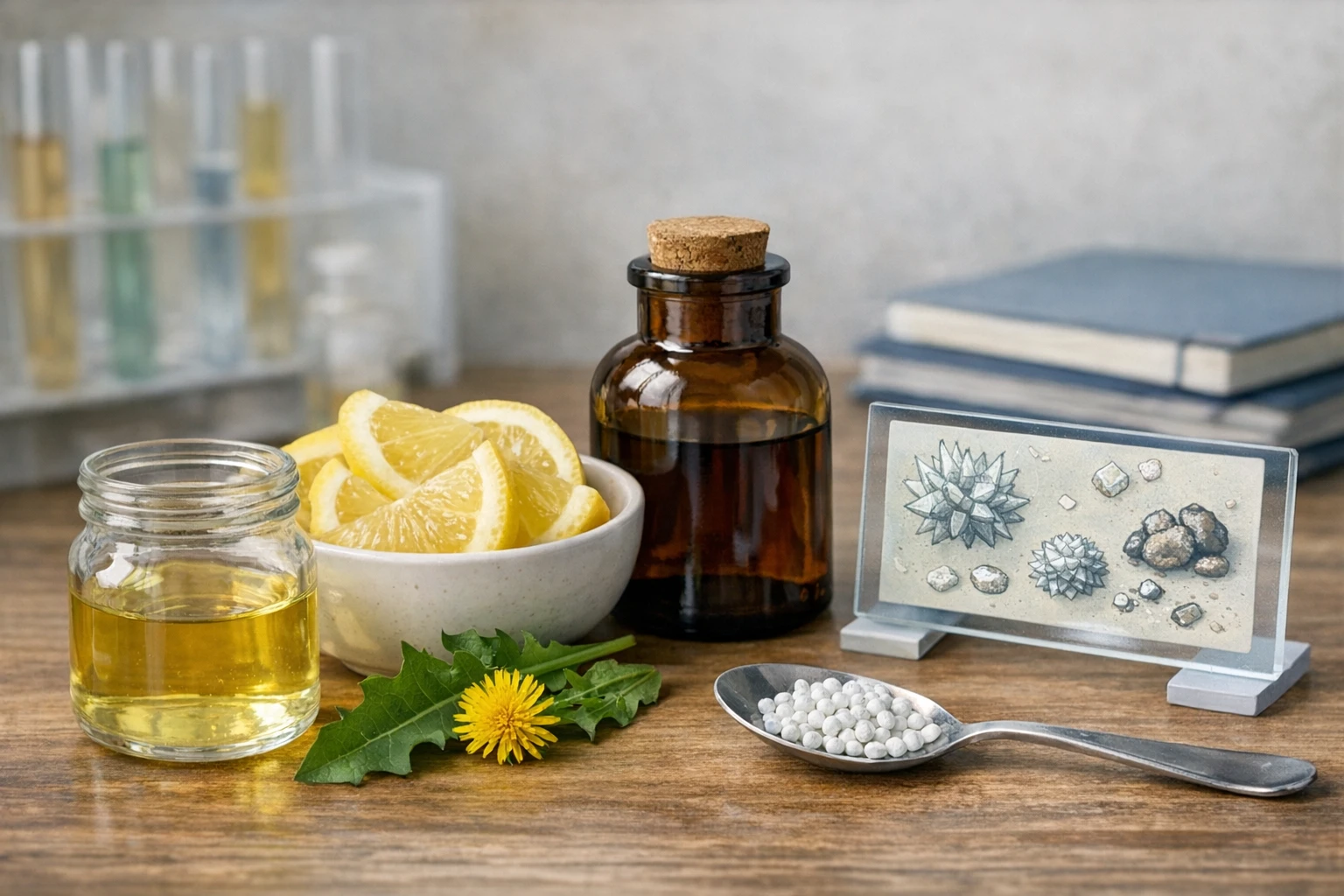
Updated and contextualized version of an article originally published on August 5, 2014
The article retains its original focus by presenting it through a scholarly and accessible perspective, supported by verifiable references.
Authors
- Dr. M. Mondini – Biologist
- Roberto Panzironi –Independent researcher
Note editoriali
- First publication: August 5, 2014
- Last update: April 20, 2026
- Version: 2026 narrative revision
Initial note
This article has been previously published and updated according to scientific and informative criteria. The text summarizes published evidence and does not replace medical advice: in case of severe pain, fever, bleeding, or difficulty urinating, immediately consult a doctor or an emergency room service.
IN BRIEF
- Kidney stones (nephrolithiasis) are concretions of urinary salts; prevention is mainly based on adequate hydration and dietary changes.
- Some "natural" remedies (e.g., citrate-rich drinks, vinegar, magnesium supplementation) can modify the urinary profile associated with stone risk, but evidence varies in quality and consistency.
- Citratic salts (e.g., potassium citrate) have clinical evidence of reducing recurrence in selected patients; this is different from the empirical use of juices or non-standardized home remedies.
- Plants and extracts (grapefruit, pomegranate, horsetail, dandelion, etc.) show promising results in preclinical studies or small trials, but significant limitations and risks of interactions/adverse effects remain.
- In the presence of severe symptoms or suspected obstruction/infection, stop home attempts and seek immediate medical attention.
Abstract: what does science say?
Kidney stones are crystalline aggregates that form when the chemical balance of urine favors the precipitation of salts (especially calcium-oxalate). Scientific evidence indicates that simple measures — increasing urine volume, moderating dietary sodium, adjusting calcium intake, and consuming plenty of vegetables/fruits — reduce the risk of formation and recurrence. Citrate-based drugs (e.g., potassium citrate) have been shown in clinical studies to reduce recurrence in patients with specific metabolic abnormalities (e.g., hypocitraturia). Some natural remedies (lemon juice, vinegar, magnesium supplements, plant extracts) can improve urinary parameters associated with stone risk (increased citraturia, slight increase in pH, increased urinary magnesium) but clinical evidence on the direct reduction of recurrences is limited or fragmented. Practical implications depend on the type of stone, individual metabolic profile, and the dose/form of the remedy; in general, dietary measures and the targeted use of citrate-based drugs remain the strategies with the most scientific support. Preclinical data on herbs and supplements are useful for research hypotheses but do not justify general recommendations without medical supervision.
What it means in practice
For the public: the most effective and safest approach to reduce the risk of stones is to increase fluid intake until daily diuresis produces clear urine, reduce dietary sodium, and maintain adequate calcium intake in the diet. Diets rich in fruits and vegetables (e.g., DASH style) are associated with a lower risk of stones and favorable urinary parameters [1]. Citrate-rich beverages (e.g., diluted lemonades) and certain condiments (vinegar) can increase the amount of urinary citrate, a natural inhibitor of crystallization; this does not automatically equate to "dissolving" an already formed stone, and the effect may vary depending on the stone's composition and the individual metabolic profile [2][3]. Prescribed citrate salts (potassium citrate and mixtures with magnesium) are medical treatments with clinical studies documenting their effect on reducing recurrences in selected patients and must be evaluated by a doctor based on urinary metabolic tests [4][5]. Finally, many plant extracts and supplements (dietary or supplemental magnesium, pomegranate, dandelion, equisetum extracts) show favorable effects on risk parameters or biological mechanisms in preclinical research or small studies; however, the quality of evidence is variable, and there are possible interactions or adverse effects, so it is preferable to discuss them with a doctor before use [6][7][8][9].
Natural remedies: what the evidence says for individual approaches
1) Citrus fruits and citrates (e.g., lemon, concentrated lemonade)
Citrus-based products can increase urinary citrate excretion and slightly raise urinary pH, two chemical changes considered protective against the formation of calcium stones. Systematic reviews and meta-analyses on interventions with citrus juices or beverages show an increase in citraturia compared to control, but the effects on clinical recurrence rates are variable and depend on the type of beverage, dose, and duration [2]. The practical advice is that diluted lemon juices can be incorporated as part of an overall hydration strategy, not as the sole therapy. Be careful with added sugars and excessive consumption of concentrated juices, which can have undesirable caloric or metabolic effects.
2) Apple cider vinegar and acetic acid
Experimental studies and a series of pilot clinical data indicate that acetic acid (the main component of vinegar) can increase citraturia and reduce urinary calcium excretion in some subjects, with mechanisms that include metabolic and epigenetic effects observed in animal models and small clinical studies [3]. These observations are interesting, but the results do not authorize universal recommendations: concentration, frequency, and gastric tolerance vary, and vinegar may be contraindicated in the presence of gastrointestinal diseases or drug interactions.
3) Prescribed citrate salts (potassium citrate and mixed formulations)
The most solid clinical evidence concerns citrate-based alkalinizing salts: systematic reviews and Cochrane reviews show that citrate therapy can reduce stone recurrence in patients with calcium-containing stones, especially in the presence of hypocitraturia [4]. Meta-analyses on selected groups (e.g., post-lithotripsy) confirm a reduction in recurrences at 12 months [5]. These treatments require medical evaluation (dosage, monitoring of potassium and renal function) and should not be taken for exclusive home use without supervision.
4) Magnesium (diet and supplementation)
Magnesium is a natural inhibitor of calcium oxalate crystal formation: recent clinical studies show that magnesium repletion in subjects with hypomagnesuria increases urinary magnesium and sometimes citrate excretion, parameters that theoretically reduce the risk of stone formation [6]. Some retrospective analyses and trials with mixed formulations (magnesium + citrate) have shown reductions in recurrence, but the overall quality of evidence requires further controlled trials. Supplementation should be discussed with a doctor (doses, chemical form, possible contraindications such as renal failure).
5) Plant extracts and traditional remedies (pomegranate, bearberry, dandelion, equisetum, basil, celery)
Numerous plant products show antioxidant activity, diuresis, or crystallization inhibition in in vitro models and small clinical studies. For example, pomegranate extracts reduced oxidative stress biomarkers and showed favorable trends on urinary supersaturation parameters in pilot studies [7]. Taraxacum officinale (dandelion) has shown the ability to inhibit calcium oxalate crystallization in in vitro studies [8], while Equisetum (horsetail) has clinical data indicating a diuretic effect in healthy volunteers [9]. However, robust and reproducible clinical evidence on recurrence prevention is scarce; furthermore, some plants can have side effects or interact with medications. For these reasons, these remedies remain promising therapeutic hypotheses but do not replace proven medical therapies.
What to do in case of acute pain or suspected complication
Stone pain (renal colic) can be intense and accompanied by nausea, vomiting, blood in the urine, or fever. Home self-management with fluids or remedies is not appropriate if there are signs of infection (fever >38°C), urinary obstruction with anuria or renal failure, or unbearable pain. Emergency services evaluate the situation with clinical examinations, blood tests, and imaging and can administer analgesia, antibiotics, or proceed with removal/management of the obstruction. For long-term prevention, it is useful to perform a 24-hour urine metabolic evaluation to identify treatable alterations (hypercalciuria, hypocitraturia, hyperoxaluria, hypomagnesuria) and plan specific strategies [10].
Key points to remember
- Increasing daily urine volume (drinking before, during, and after physical activity) is the simplest and most effective preventive measure.
- Citrate-rich beverages (diluted lemonade) and some condiments (vinegar) can modify urinary parameters but are not equivalent to prescribed citrate salts; their clinical efficacy is modulated by dose, frequency, and stone composition.
- Prescribed citrate salts reduce recurrence in selected individuals; medical evaluation is needed before starting therapy.
- Many plant extracts show promising results in preclinical studies or small trials, but more controlled clinical studies are needed to recommend them as standard therapies.
- In the presence of severe pain, fever, or difficulty urinating, seek immediate medical attention.
Limitations of evidence
It is important to distinguish between different types of evidence: observational studies show associations (e.g., diets or habitual consumption) but do not prove causality; randomized clinical trials provide the highest level of evidence on the effectiveness of an intervention, but their applicability depends on participant characteristics and duration. Many studies on natural remedies are preclinical, non-randomized, or small, with possible biases and lack of long-term follow-up. Furthermore, urinary parameters (citrate, pH, magnesium) are useful surrogates but do not always equate to demonstrated reduction in clinical recurrence. Individual variability exists (stone type, age, renal function, concomitant medications) which requires prudent interpretation and personalization of the preventive strategy.
Editorial conclusion
Many "natural" practices cited in popular literature have biological plausibility and, in some cases, experimental data to support them. However, the quality and consistency of the evidence vary: general measures (hydration, reduced sodium, a diet rich in fruits and vegetables) remain the solidly supported basic recommendations. When considering a specific remedy (magnesium supplement, vinegar, plant extracts, or over-the-counter citrate salts), it is advisable to evaluate its expected benefits, possible risks, and interactions, preferably with a doctor or specialist based on the individual metabolic profile. Research continues to explore plants and extracts that may provide new tools, but for now, effective prevention combines behavioral changes, dietary control, and, when indicated, medical therapies based on specialist evaluation.
Editorial note
This update has been prepared with criteria of transparency and verification of available scientific sources. The content is for informational purposes and is not intended to offer therapeutic prescriptions; for clinical decisions, contact a healthcare professional.
SCIENTIFIC RESEARCH
- Taylor EN, Curhan GC. DASH-style diet associates with reduced risk for kidney stones. Clin J Am Soc Nephrol. 2009. https://doi.org/10.1681/ASN.2009030276 [used as [1] in testo]
- Rahman F, et al. Effect of citrus-based products on urine profile: A systematic review and meta-analysis. F1000Research. 2017. https://doi.org/10.12688/f1000research.10976.1 [used as [2] in testo]
- Zhu W, Liu Y, Lan Y, et al. Dietary vinegar prevents kidney stone recurrence via epigenetic regulations. EBioMedicine. 2019. https://doi.org/10.1016/j.ebiom.2019.06.004 [used as [3] in testo]
- Phillips R, Hanchanale V, Myatt A, et al. Citrate salts for preventing and treating calcium containing kidney stones in adults. Cochrane Database Syst Rev. 2015. https://doi.org/10.1002/14651858.CD010057 [used as [4] in testo]
- Carvalho M et al. Effect of potassium citrate supplement on stone recurrence before or after lithotripsy: systematic review and meta-analysis. Urolithiasis. 2017. https://doi.org/10.1007/s00240-016-0950-1 [used as [5] in testo]
- Penniston KL, Coughlin M, Jhagroo RA. Magnesium supplementation increases urine magnesium and citrate in stone formers with hypomagnesuria. J Ren Nutr. 2024. https://doi.org/10.1053/j.jrn.2024.06.002 [used as [6] in testo]
- Travis RB, et al. Oxidative stress and nephrolithiasis: a pilot study evaluating pomegranate extract on stone risk factors. Urolithiasis. 2014. https://doi.org/10.1007/s00240-014-0686-8 [used as [7] in testo]
- Inhibitory effects of taraxasterol and aqueous extract of Taraxacum officinale on calcium oxalate crystallization: in vitro study. Ren Fail. 2018. https://doi.org/10.1080/0886022X.2018.1455595 [used as [8] in testo]
- Randomized, double-blind clinical trial to assess the acute diuretic effect of Equisetum arvense (field horsetail) in healthy volunteers. Evid Based Complement Alternat Med. 2014;2014:760683. https://doi.org/10.1155/2014/760683 [used as [9] in testo]
- Ferraro PM, et al. Dietary and lifestyle factors for primary prevention of nephrolithiasis: a systematic review and meta-analysis. BMC Nephrol. 2020. https://doi.org/10.1186/s12882-020-01925-3 [used as [10] in testo]