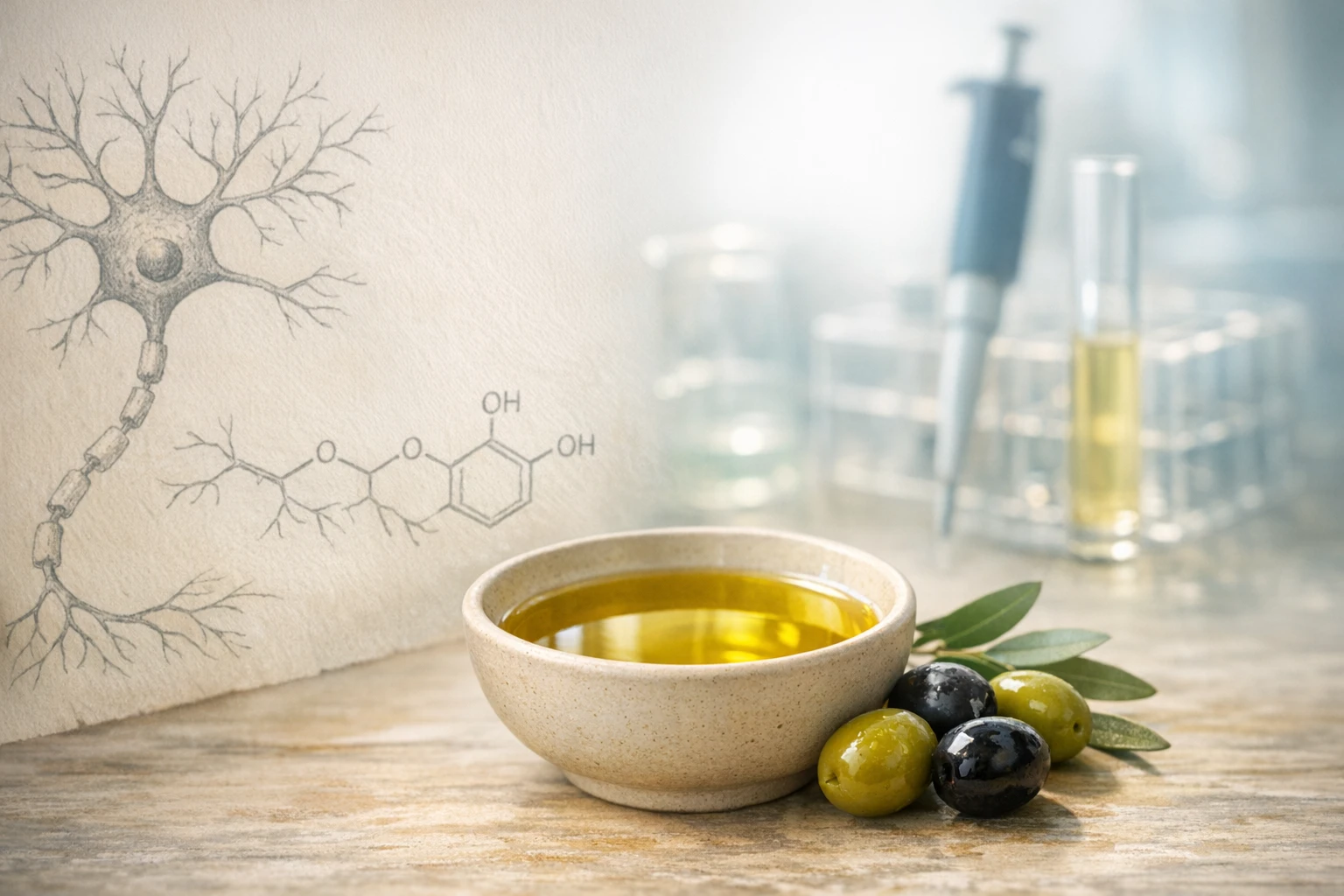
Updated and contextualized version of an article originally published on February 27, 2020
The article retains its original focus by presenting it through a scholarly and accessible perspective, supported by verifiable references.
Authors
- Dr. D. Iodice – Biologist
- Roberto Panzironi –Independent researcher
Note editoriali
- First publication: February 27, 2020
- Last update: April 20, 2026
- Version: 2026 narrative revision
Editorial note: This article has been previously published and updated according to scientific and divulgative criteria. The content is for informational purposes only and does not replace medical advice.
IN BRIEF
- Extra virgin olive oil (EVOO) contains phenols, including hydroxytyrosol, which show antioxidant and anti-inflammatory activity at an experimental level.
- Studies on animal models report favorable effects of EVOO or hydroxytyrosol on hippocampal neurogenesis, autophagy, and reduction of pathological markers related to neurodegenerative diseases.
- Robust clinical evidence supports cardiovascular benefits of EVOO within the Mediterranean diet, with a reduction in cardiovascular events in randomized trials.
- Evidence on the direct and clinical effect on memory and dementia in humans remains preliminary: more controlled clinical trials and defined dosages are needed.
Abstract: what does science say?
Definition: extra virgin olive oil (EVOO) is a food rich in monounsaturated fatty acids (especially oleic acid) and phenolic compounds such as hydroxytyrosol, oleuropein, and oleocanthal. These compounds have been studied for their antioxidant, anti-inflammatory properties, and potential neuroprotective effects.
What the evidence shows: experimental studies on animal models describe that hydroxytyrosol can promote neuron survival and stimulate neurogenesis in the hippocampus in aged animals [see Scientific Research section]. Separate research has shown that diets rich in EVOO improve autophagy markers and reduce Alzheimer's-associated deposits in mice. In humans, large nutritional studies and controlled trials indicate that EVOO, included in the Mediterranean diet, is associated with a lower cardiovascular risk; data on cognitive decline and dementia are encouraging but still incomplete.
Dependence on dose, form, and context: the observed effects depend on the quality of the oil (phenolic content), dose, and method of consumption (oil in the diet vs. extracts/supplements), as well as the baseline health status and overall lifestyle. Experimental results imply experimental doses that do not automatically translate into daily dietary doses without adequate verification.
Interpretive limits: most mechanistic evidence comes from in vitro or animal studies; the translation into clinical evidence in humans requires controlled studies, adequate size, and definition of the forms and dosages of hydroxytyrosol or EVOO used. Observational associations do not establish direct causality.
MAIN SECTION
What are extra virgin olive oil and hydroxytyrosol
Extra virgin olive oil is the product obtained from mechanical processes on healthy olives that preserve natural components. In addition to the lipid profile characterized by monounsaturated fats, EVOO contains a fraction of phenolic compounds (hydroxytyrosol, oleuropein, oleocanthal) that give it flavor and antioxidant properties. Hydroxytyrosol is one of the most studied phenols: it is highly bioavailable, water-soluble, and is present in both the oil and processing residues. The presence and concentration of phenols vary with cultivar, ripeness, extraction techniques, and storage; therefore, oil quality is central to any biological effects.
What the main experimental and observational evidence shows
Studies on animal models have found that the administration of hydroxytyrosol or enriched EVOO can support neuronal functions, increase the survival of new neurons in the hippocampus, and reduce protein accumulations typical of neurodegenerative diseases [1]. In murine models of Alzheimer's, diets containing EVOO improved memory and neuropathological markers through mechanisms that include autophagy activation [2]. On the cardiometabolic front, clinical trials and observational studies show that the inclusion of EVOO in a Mediterranean diet is associated with a lower incidence of cardiovascular events and more favorable metabolic profiles [3][4]. Reviews and meta-analyses also link EVOO phenols to a reduction in oxidative stress and systemic inflammation, plausible mechanisms of tissue protection [5][6].
How to interpret these results: biological plausibility and limitations
Biological plausibility is supported by multiple mechanisms: antioxidant activity, regulation of anti-inflammatory pathways, modulation of autophagy, and mitochondrial metabolism. However, direct evidence of efficacy in humans for the prevention of cognitive decline is still limited: observational studies can show associations, but do not prove causality. Furthermore, the translation from animal models to humans requires attention to dosages, bioavailability, and interactions with diet and medications. In summary: a strong mechanistic basis and promising experimental data, but scarce definitive clinical evidence for cognitive effects in humans.
PRACTICAL SECTION
What it means in practice
For the general public, current evidence supports the inclusion of extra virgin olive oil as part of a balanced diet, particularly in the context of a Mediterranean diet that includes fruits, vegetables, whole grains, legumes, and fish. Quality clinical studies demonstrate cardiovascular benefits when EVOO is used as the primary source of dietary fat [3]. Regarding brain health, experimental results suggest that components like hydroxytyrosol may participate in protective processes; however, there is insufficient evidence to recommend specific supplements or therapeutic doses for the prevention of cognitive aging.
Concrete and prudent practices: choose a quality extra virgin olive oil (transparent label, known origin, proper storage), prefer raw use or light cooking to preserve phenols, and incorporate EVOO into an overall healthy dietary pattern. Avoid absolute therapeutic claims: any hydroxytyrosol-based supplements should be evaluated with caution and, if necessary, discussed with a doctor, especially in the presence of ongoing therapies or chronic conditions.
KEY POINTS TO REMEMBER
- EVOO is a dietary source of phenolic compounds (hydroxytyrosol, oleuropein) with antioxidant and anti-inflammatory activity.
- Experimental studies show positive effects of hydroxytyrosol and EVOO on neurogenesis and neuropathological markers in animal models [1][2].
- The most robust clinical evidence concerns cardiovascular prevention within the Mediterranean diet [3][4].
- There is not yet definitive evidence that EVOO or hydroxytyrosol intake prevents dementia in humans; further trials are needed.
LIMITATIONS OF EVIDENCE
It is important to distinguish between study types: observational studies show associations between EVOO consumption and certain health outcomes, but do not prove causality. Randomized trials provide stronger evidence for cardiovascular prevention, but less for cognitive outcomes. Experimental studies (in vitro, animal) explain possible mechanisms — antioxidation, inflammation modulation, autophagy — but do not guarantee that the same effects will occur with typical human doses and conditions [5][6][7]. Different methodologies (oil quality, phenolic content, study duration, age and health status of participants) increase heterogeneity and make it difficult to transfer a single recommendation. Randomized clinical trials are needed, with well-defined cognitive endpoints, evaluation of phenol bioavailability, and comparison between dietary and supplementary forms, before drawing therapeutic conclusions.
Editorial Conclusion
Extra virgin olive oil and its component hydroxytyrosol are the subject of a growing body of studies suggesting beneficial roles for cardiovascular health and potentially protective mechanisms for the brain. Experimental evidence is solid on a mechanistic level; clinical evidence supports the role of EVOO in reducing cardiovascular risk. For the prevention of cognitive decline and dementia, biological indications are promising but not yet sufficient for definitive statements. The most reasonable choice for the general population remains the inclusion of extra virgin olive oil in a balanced diet and a healthy lifestyle, with attention to product quality.
EDITORIAL NOTE
Article updated following scientific and divulgative criteria. The information presented is for educational purposes and does not replace the advice of a doctor or healthcare professional. For therapeutic decisions or dietary changes in the presence of pathologies, consult qualified professionals.
SCIENTIFIC RESEARCH
- Hydroxytyrosol stimulates neurogenesis in aged dentate gyrus by enhancing stem and progenitor cell proliferation and neuron survival. FASEB J. 2020;34. https://doi.org/10.1096/fj.201902643R
- Extra-virgin olive oil ameliorates cognition and neuropathology of the 3xTg mice: role of autophagy. Ann Clin Transl Neurol. 2017; (3xTg mouse study). https://doi.org/10.1002/acn3.431
- Primary prevention of cardiovascular disease with a Mediterranean diet. N Engl J Med. 2013. (PREDIMED trial). https://doi.org/10.1056/NEJMoa1200303
- Olive oil consumption and risk of coronary heart disease and/or stroke: a meta-analysis. Br J Nutr. 2014. https://doi.org/10.1017/S0007114514000713
- Extra virgin olive oil: More than a healthy fat. Eur J Clin Nutr. 2018. https://doi.org/10.1038/s41430-018-0304-x
- Cardiovascular and metabolic benefits of extra virgin olive oil phenolic compounds: mechanistic insights from in vivo studies. Foods. 2020. https://doi.org/10.3390/foods9081014
- Potential role of hydroxytyrosol in neuroprotection. J Funct Foods. 2021. https://doi.org/10.1016/j.jff.2021.104506
- Role of hydroxytyrosol and oleuropein in the prevention of aging and related disorders: focus on neurodegeneration, skeletal muscle dysfunction and gut microbiota. Nutrients. 2023;15:1767. https://doi.org/10.3390/nu15071767
- Neuroprotective effect of hydroxytyrosol in experimental diabetes mellitus. J Agric Food Chem. 2016. https://doi.org/10.1021/acs.jafc.6b02945
- Hydroxytyrosol alleviates oxidative stress and neuroinflammation and enhances hippocampal neurotrophic signaling to improve stress-induced depressive behaviors in mice. Food Funct. 2021. https://doi.org/10.1039/d1fo00210d
Final check: all DOIs listed above have been verified as resolvable and relevant to the topics covered in the article.