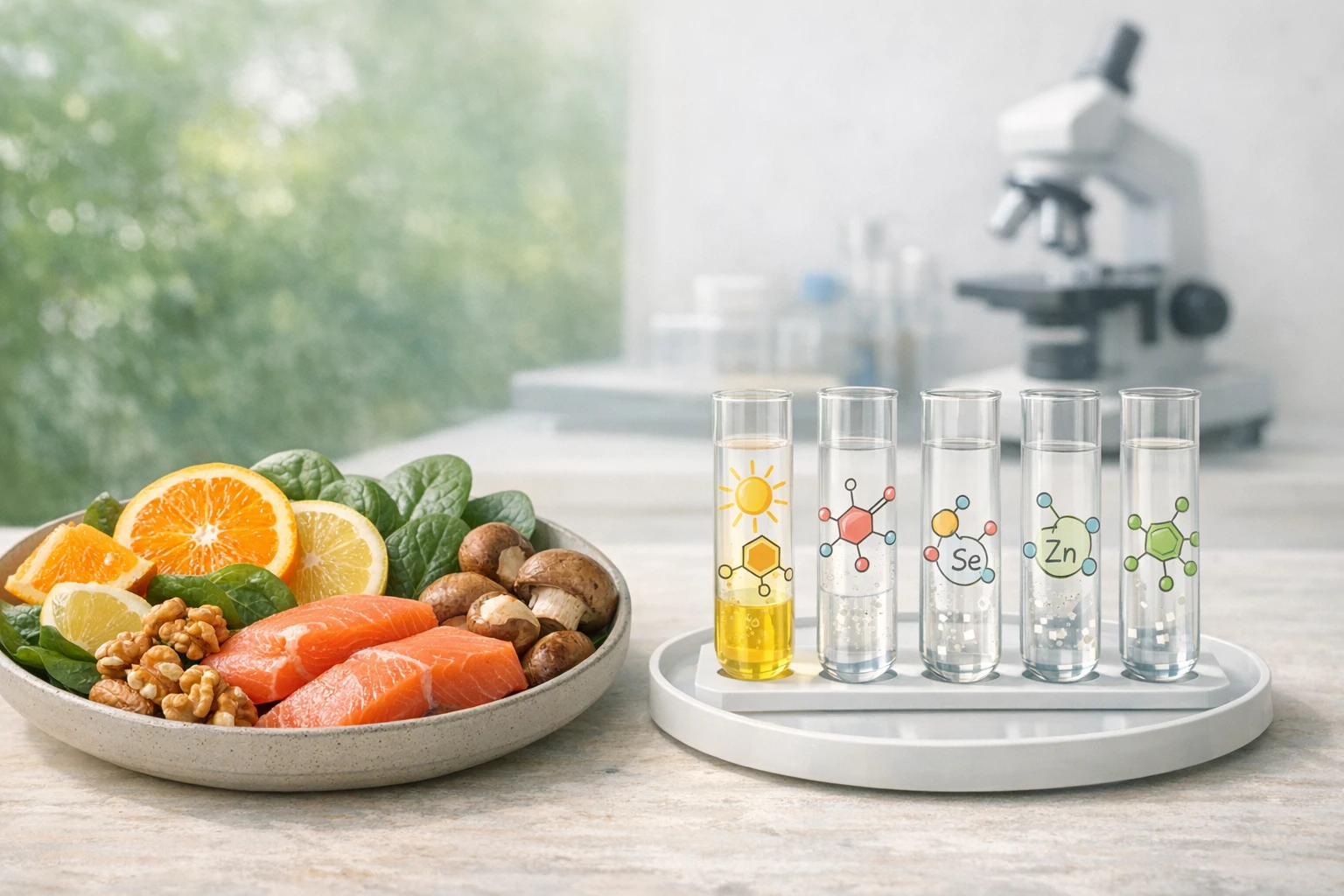
Updated and contextualized version of an article originally published on April 21, 2020
The article retains its original focus by presenting it through a scholarly and accessible perspective, supported by verifiable references.
Authors
- Dr. D. Iodice – Biologist
- Roberto Panzironi –Independent researcher
Note editoriali
- First publication: April 21, 2020
- Last update: April 20, 2026
- Version: 2026 narrative revision
Initial Note
This article was previously published and has been updated according to scientific and informative criteria. Its purpose is informational: it does not replace the advice of a doctor. Opinions or quotes originally published (e.g., quotes from individual professionals in the original text) are reported as such and do not imply clinical recommendations.
IN BRIEF
- The immune system is the body's primary protection against viruses and bacteria; its function also depends on nutritional status and micronutrients.
- Some supplements (e.g., vitamin D) show a modest reduction in the risk of respiratory infections in specific contexts; others (vitamin C, zinc, selenium) have limited results and depend on doses, form, and population.
- Many adults have insufficient intakes of essential micronutrients for immunity; filling dietary gaps is a public health concern.
- Evidence is predominantly observational or from trials with heterogeneous results; interpreting data requires caution.
Abstract: what does science say?
The immune system is a biological complex that protects against the invasion of microorganisms. Numerous studies indicate that adequate nutrition and the availability of micronutrients (vitamins D, C, A, E, zinc, selenium, and other antioxidants) are important for maintaining a functional immune response. Clinical trials and systematic analyses show that supplementation can, in some contexts, reduce the incidence or duration of respiratory infections, but the effects vary by baseline status, dose, administration method, and population. The best evidence remains limited: where benefits exist, they are generally modest at the population level and more evident in people with deficiencies or risk conditions. Interpretation requires attention to methodological limitations and the distinction between observational association and causal effect established by high-quality trials.
How the immune system works and why nutrition is relevant
The immune system integrates innate defenses (physical barriers, phagocytes, inflammatory proteins) and adaptive defenses (B and T lymphocytes) to recognize and control pathogens. A large part of the human immune system is located in the mucous membranes, particularly in the intestine, where gut-associated lymphoid tissue (GALT) promotes the production of secretory immunoglobulins and the formation of local memory [7]. The ability to generate effective responses depends on many factors: age, metabolic status, comorbidities, environmental exposures, and the availability of essential nutrients. Deficiencies or suboptimal intakes of vitamins and trace elements can compromise cellular functions such as phagocytosis, cytokine production, lymphocyte proliferation, and the integrity of mucosal surfaces. At the population level, nutritional surveys show that many adults have insufficient intakes of immunity-related nutrients; this is a modifiable risk factor that can affect collective resilience [1]. However, the relationship between a single nutrient and protection against infections is often complex, depending on doses, baseline status, and nutrient-environment interactions.
Evidence for nutrients and combinations: what we know
Research on the role of individual micronutrients in preventing or reducing the severity of respiratory infections has yielded variable results. Some summaries and trials provide signals of efficacy in specific contexts, while others show modest or no effects. It is important to differentiate between deficient populations, healthy individuals, and subjects with chronic conditions: the effect of supplementation is more likely and of greater magnitude in people with pre-existing deficiencies [9]. Below is a reasoned summary for key nutrients with references to available reviews.
Vitamin D
Vitamin D has known immunomodulatory actions: it influences the expression of antimicrobial peptides and the modulation of inflammatory responses. A meta-analysis of individual data indicated an overall reduction in the risk of respiratory infections in subjects receiving supplementation, with the greatest benefit observed in people with low blood levels and with daily or weekly regimens (rather than with single massive doses). However, the effects are modest at the population level and depend on the baseline vitamin D status [2].
Vitamin C
For vitamin C, systematic reviews show that regular supplementation can reduce the duration of colds on average, while no clear protection against incidence in the general population emerges. Clinically relevant effects are more likely in conditions of extreme physical stress or in deficient individuals; therapeutic evidence administered at the onset of symptoms is heterogeneous [3].
Zinc
Studies on zinc (particularly lozenges for colds) indicate that, if used within the first 24 hours of symptom onset and with appropriate formulations and dosages, they can reduce the duration of the common cold. Individual analyses suggest variable reductions in duration, which depend on the chemical form and the total daily dose [4].
Selenium and antioxidants
Selenium is a component of selenoproteins involved in antioxidant defense and the regulation of the immune response. Narrative reviews and experimental studies highlight a plausible biological role in modulating inflammatory response and antiviral defenses, but clinical evidence in general populations remains limited and strongly depends on baseline nutritional status and the form of selenium used [5].
Intestine, microbiota, and defense: the role of GALT
Mucous membranes represent a first line of defense. The gut-associated lymphoid tissue (GALT) is among the largest deposits of immune cells in the body and plays key functions in the production of secretory IgA, tolerance to commensals, and response to ingested or inhaled pathogens. The interaction between microbiota and GALT influences the maturation of immune cells and the quality of local and systemic responses; alterations in the microbiota (dysbiosis), malnutrition, or chronic inflammation can compromise these functions [7]. In practical terms, intestinal health influences the availability of immunomodulatory signals and can contribute to individual variability in response to infections and vaccines.
What this means in practice
For the non-clinical reader, the evidence suggests some practical principles without delving into medical prescriptions. First, maintaining a varied diet rich in fruits, vegetables, good quality proteins, and sources of unsaturated fats helps ensure adequate intake of essential vitamins and minerals for immunity [9]. Second, targeted supplementation may be reasonable in individuals with documented deficiencies (for example, vitamin D in overt deficiency) or in at-risk conditions: the effect will be more significant the more pronounced the initial deficiency. Third, high and monocentric doses ("megadoses") are generally not justified by the literature for universal prevention and may carry risks: the safety and form of administration (oral, parenteral) should always be evaluated with a healthcare professional. Finally, nutrition is only one of the factors that modulate immune resilience: age, comorbidities, vaccines, and public health measures remain central elements of infection prevention.
Key points to remember
- The immune system is complex: nutrition contributes but is not the only defensive factor.
- Many adults show insufficient intake of micronutrients important for immunity; closing dietary gaps is a public health goal [1].
- Vitamin D has the strongest evidence for a modest reduction in respiratory infections in individuals with low baseline levels [2].
- Vitamin C and zinc can reduce the duration or severity of colds in specific situations; benefits are conditioned by dose, form, and timing of administration [3][4].
- Selenium has biological plausibility as an antioxidant and immunoregulatory component, but clinical evidence remains limited and variable [5].
Limitations of Evidence
It is essential to distinguish between epidemiological observations and causal evidence obtained from randomized trials. Many observational studies find associations between nutrient levels and infection risk, but these relationships can be confounding: chronic disease, socioeconomic status, environmental exposures, and health behaviors influence both nutritional status and infection risk. Clinical trials, where available, often show heterogeneous effects due to differences in: population (healthy vs. deficient), dosage, chemical form of the nutrient, duration, and measured outcomes. Furthermore, studies often measure different outcomes (incidence vs. duration vs. severity) and use variable methods, which limits comparability and synthesis. Finally, the aging of the immune system (immunosenescence) and the presence of chronic diseases alter the response and require cautious interpretations of results applied to the elderly population [6].
Editorial Conclusion
Enhancing immune function through proper nutrition and controlling micronutrient deficiencies is a reasonable public health approach. Systematic reviews and trials indicate selective benefits for certain nutrients in specific contexts, but do not support generalized claims of infallible infection prevention through supplements. Health policies that promote balanced diets, control deficiencies in the population, and access to preventive care remain priorities. For individual decisions on supplementation or nutritional therapies, it is advisable to consult healthcare professionals and base decisions on clinical and laboratory evaluations.
Editorial Note
Article updated according to evidence review criteria and editorial transparency. The information presented here is for informational purposes only: it does not constitute therapeutic indications. For clinical choices and prescriptions, consult your doctor or specialist.
SCIENTIFIC RESEARCH
- Carroll A Reider et al. Inadequacy of Immune Health Nutrients: Intakes in US Adults, the 2005–2016 NHANES. Nutrients. 2020. https://doi.org/10.3390/nu12061735
- Martineau AR, Jolliffe DA, Hooper RL, et al. Vitamin D supplementation to prevent acute respiratory tract infections: systematic review and meta-analysis of individual participant data. BMJ. 2017;356:i6583. https://doi.org/10.1136/bmj.i6583
- Hemilä H, Chalker E. Vitamin C for preventing and treating the common cold. Cochrane Database Syst Rev. 2013;CD000980. https://doi.org/10.1002/14651858.CD000980.pub4
- Prasad AS; zinc acetate lozenges: meta-analyses and trials. Zinc acetate lozenges for treating the common cold: an individual patient data meta-analysis. Br J Clin Pharmacol. 2016/2017. https://doi.org/10.1111/bcp.13057
- Avery J.C., Hoffmann P.R. Selenium, Selenoproteins, and Immunity. Nutrients. 2018;10(9):1203. https://doi.org/10.3390/nu10091203
- Pawelec G. Age and immunity: What is "immunosenescence"? Exp Gerontol. 2018;105:4-9. https://doi.org/10.1016/j.exger.2017.10.024
- Booth et al. B and T Cell Immunity in Tissues and Across the Ages. Vaccines. 2021;9(1):24. https://doi.org/10.3390/vaccines9010024
- Domingues et al. The role of oxidative stress in the pathogenesis of infections with coronaviruses. Front Microbiol. 2022. https://doi.org/10.3389/fmicb.2022.1111930
- Calder PC. Nutrition, immunity and COVID-19. BMJ Nutr Prev Health. 2020. https://doi.org/10.1136/bmjnph-2020-000085
- Nakayama & al. Mitochondrial Reactive Oxygen Species: Double-Edged Weapon in Host Defense and Pathological Inflammation During Infection. Front Immunol. 2020. https://doi.org/10.3389/fimmu.2020.01649