Updated and contextualized version of an article originally published on August 24, 2020
The article retains its original focus by presenting it through a scholarly and accessible perspective, supported by verifiable references.
Authors
- Dr. D. Iodice – Biologist
- Roberto Panzironi –Independent researcher
Note editoriali
- First publication: August 24, 2020
- Last update: April 18, 2026
- Version: 2026 narrative revision
Initial note: this article was previously published and has been updated following scientific and informative criteria. The content is for informational purposes only and does not replace medical advice. For personal information, please consult your healthcare professional.
IN BRIEF
- Sleep is sensitive to temperature: peripheral heat loss facilitates falling asleep, while oppressive heat can hinder this process.
- Nighttime exposure to high temperatures is associated with reduced sleep duration and quality at a population level.
- Melatonin and environmental interventions show limited but useful effects: choice and context matter.
- Chronic sleep deprivation and circadian misalignment are associated with metabolic and cardiovascular risks, but the relationship is complex and mediated by many factors.
- Small environmental and routine changes can improve rest during hot nights; in case of persistent problems, it is advisable to consult a healthcare professional.
Abstract: what does science say?
Human sleep is closely linked to thermoregulation: falling asleep is facilitated by heat dissipation from the extremities to the environment and by a reduction in central thermal tone. Experimental and observational evidence shows that nights with high ambient temperatures reduce sleep duration and quality at a population level, with differentiated impacts by age, sex, and socioeconomic conditions. Melatonin can, on average, reduce sleep onset latency in some sleep-wake rhythm disorders, but its usefulness depends on dose, timing, and context. Associations between sleep deprivation, circadian misalignment, and cardiovascular/metabolic risk are documented by observational and experimental studies; however, methodological limitations prevent attributing strictly causal relationships without further verification.
Heat and the thermal regulation of sleep
The transition from day to night involves a series of physiological changes that promote sleep: among these, the redistribution of body heat with peripheral vasodilation and a reduction in central thermal tone. Experimental studies have identified the so-called distal-proximal temperature gradient (DPG) — i.e., the temperature of the hands/feet compared to the trunk — as one of the best predictors of how quickly one falls asleep: a higher DPG (warmer extremities compared to the trunk) is associated with shorter sleep onset latency. [1] The same observations have been confirmed in controlled protocols that highlight a functional link between distal vasodilation and the speed of sleep onset. [2] In hot and humid conditions, the ability to dissipate heat is compromised: warmer air reduces the temperature gradient between the skin and the environment and increases sweating as a compensatory mechanism. This leads to a higher probability of nocturnal awakenings, sleep fragmentation, and a reduction in the overall depth of rest.
Essential biological mechanisms
The circadian system controls rhythms such as core body temperature and melatonin secretion; these signals coordinate biological readiness for sleep. Melatonin is a temporal mediator associated with physiological preparation for sleep and also has effects on peripheral thermoregulation. In some clinical contexts, the use of melatonin can advance sleep onset, but the effect varies with dose and timing. [3] The mechanisms linking temperature, melatonin, and sleep are complex and subject to individual variables (age, chronotype, medications, vascular conditions) and environmental factors (humidity, ventilation, nightwear).
Effects of oppressive heat on sleep and health
Analyses of large-scale data and observational studies place increased nighttime temperatures among the factors that collectively reduce sleep duration at a population level. Research that has cross-referenced sleep measures collected with wearable devices and meteorological data shows that even small nighttime temperature anomalies (e.g., +1 °C above average) increase the probability of nights with insufficient sleep. The effect is more pronounced during warmer months and in vulnerable groups (elderly, lower incomes). [5] Experimental and observational studies also indicate that nighttime heat alters sleep structure (increased awakenings, reduced deep sleep) and can worsen the perception of rest upon waking.
Long-term risks and cardiovascular link
A vast observational literature has associated altered sleep duration and quality with an increase in cardiovascular events and worse metabolic indicators. Meta-analyses and cohort studies describe a U-shaped relationship between sleep duration and cardiovascular risk: both too short and excessively long sleep are associated with increased risk, with variations according to contexts and confounding factors. [7] Furthermore, experiments simulating circadian misalignment show physiological alterations (glucose, blood pressure, stress hormones) that can contribute to an increased risk if exposure is chronic. [4] However, most of the evidence is observational: biological mechanisms are plausible, but attributing causality requires caution.
What it means in practice
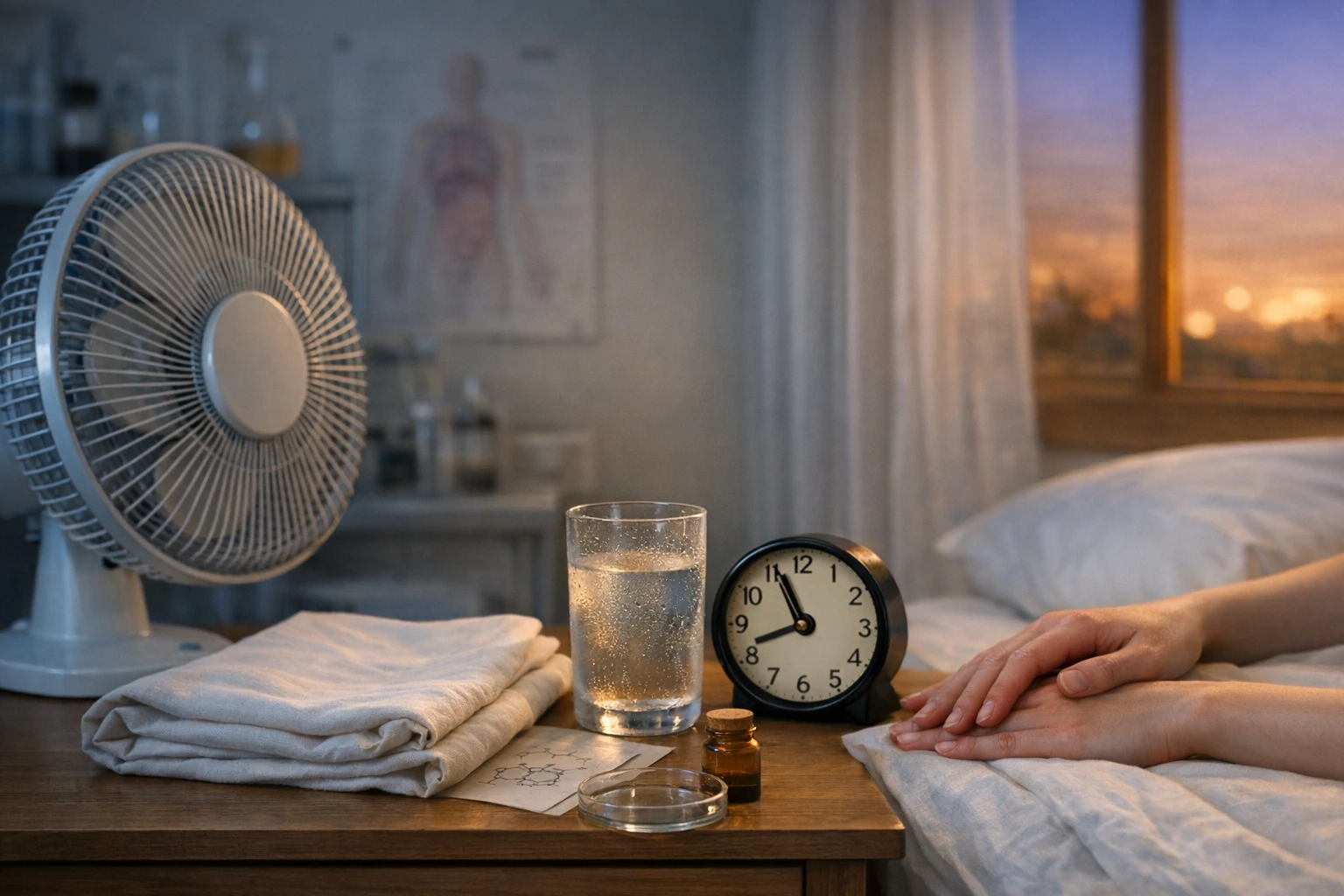
For citizens experiencing hot nights, scientific evidence suggests some practical principles: facilitate peripheral heat dissipation before going to bed, control the nighttime environment (temperature, ventilation, humidity), and adopt regular routines that promote circadian synchronicity. Simple interventions such as foot baths or lukewarm baths before bed can temporarily increase the temperature of the extremities and promote the transfer of body heat from the core to the periphery, facilitating falling asleep. [6] The use of air conditioners, fans, or localized cooling techniques can reduce sleep fragmentation during heatwaves. There are no universal solutions: effectiveness changes with age, habits, and health conditions. In particular, the elderly and people with cardiovascular or vascular diseases may have different thermal responses and should receive personalized advice from a professional.
Expert advice
The original text includes comments from Christian Orlando, a biologist, who emphasizes the importance of simple routines, hydration, light physical activity, and the role of B vitamins, vitamin C, and — as support for the sleep-wake rhythm — melatonin. These suggestions reflect general supportive practices: maintaining a regular sleep-wake routine, prioritizing hydration during the day, and promoting moderate physical activity (not in the hours immediately preceding sleep) are measures with biological plausibility to support well-being. The use of melatonin can be useful in specific conditions of sleep-wake rhythm misalignment (e.g., jet lag or phase delays), but the choice of dose and timing is critical to achieve a favorable effect. [3]
Environmental strategies and sleep hygiene
To improve sleep quality on hot nights, consider: optimizing room ventilation or cooling, using breathable bedding, reducing evening lighting, and establishing a regular bedtime. Small temporary measures, such as a lukewarm foot bath, can affect peripheral thermoregulation and facilitate sleep onset. [1][6] The combined effect of multiple measures tends to be more effective than a single isolated intervention.
Key takeaways
- Thermoregulation is central to falling asleep: warming of the extremities and heat loss promote sleep. [1][2]
- Oppressive heat reduces the ability to dissipate heat and increases awakenings and sleep fragmentation; the effect is greater in vulnerable populations. [5]
- Melatonin can shorten sleep onset latency in some contexts, but efficacy and risk/benefit profile depend on dose and timing. [3]
- Circadian misalignment and chronic sleep deprivation are associated with metabolic and cardiovascular worsening; however, much evidence is observational. [4][7]
- Simple and contextual practical strategies (environment, routine, hydration) can reduce the impact of oppressive heat on rest; personalized advice should be sought from a doctor in case of persistent disturbances.
Limitations of evidence
It is important to distinguish between observational associations and causal evidence. Many studies linking sleep and disease are observational and can be influenced by confounders (lifestyles, comorbidities, socioeconomic status). Experimental evidence manipulating temperature or circadian rhythm offers mechanistic support, but often these are conducted on small populations or in laboratory conditions that do not reproduce all real variables. Furthermore, the effectiveness of interventions (e.g., melatonin, baths, ventilation) depends on dose, timing, form of administration, and individual characteristics. For these reasons, practical recommendations must be interpreted with caution and adapted to the personal context.
Editorial conclusion
Oppressive heat is an environmental factor that can compromise sleep quality and duration through thermoregulatory effects and increased nocturnal fragmentation. Scientific literature combines mechanistic evidence—explaining why peripheral cooling facilitates falling asleep—with observational data documenting the effects of increased nighttime temperatures on the population. Practical, tempered, and contextualized measures (adapting the environment, establishing routines, considering supports like melatonin in specific cases) are the most reasonable strategies to reduce discomfort. When sleep disturbances persist or are severe, it is appropriate to consult healthcare professionals to evaluate causes and targeted interventions.
Editorial note
Article updated following criteria of accuracy, transparency, and verifiability of sources. The text is for informational purposes only and does not constitute clinical advice. For therapeutic choices or integrations, consult your treating physician.
SCIENTIFIC RESEARCH
- Kräuchi K, Cajochen C, Werth E, Wirz‑Justice A. Warm feet promote the rapid onset of sleep. Nature. 1999;401:36–37. https://doi.org/10.1038/43366
- Kräuchi K, Cajochen C, Werth E, Wirz‑Justice A. Functional link between distal vasodilation and sleep‑onset latency? Am J Physiol Regul Integr Comp Physiol. 2000;278:R741–R748. https://doi.org/10.1152/ajpregu.2000.278.3.R741
- Ferracioli‑Oda E, Qawasmi A, Bloch MH. Meta‑Analysis: Melatonin for the Treatment of Primary Sleep Disorders. PLoS ONE. 2013;8(5):e63773. https://doi.org/10.1371/journal.pone.0063773
- Scheer FAJL, Hilton MF, Mantzoros CS, Shea SA. Adverse metabolic and cardiovascular consequences of circadian misalignment. Proc Natl Acad Sci U S A. 2009;106(11):4453‑4458. https://doi.org/10.1073/pnas.0808180106
- Obradovich N, Migliorini R, Mednick SC, Fowler JH. Nighttime temperature and human sleep loss in a changing climate. Sci Adv. 2017;3(5):e1601555. https://doi.org/10.1126/sciadv.1601555
- Maeda T, Higuchi S. Effects of bathing‑induced changes in body temperature on sleep. J Physiol Anthropol. 2023;42:20. https://doi.org/10.1186/s40101-023-00337-0
- Cappuccio FP, Cooper D, D'Elia L, Strazzullo P, Miller MA. Sleep duration predicts cardiovascular outcomes: a systematic review and meta‑analysis of prospective studies. Eur Heart J. 2011;32(12):1484–1492. https://doi.org/10.1093/eurheartj/ehr007
- Irwin MR, Olmstead R, Carroll JE. Sleep disturbance, sleep duration, and inflammation: a systematic review and meta‑analysis of cohort studies and experimental sleep deprivation. Biol Psychiatry. 2016;80(1):40‑52. https://doi.org/10.1016/j.biopsych.2015.05.014