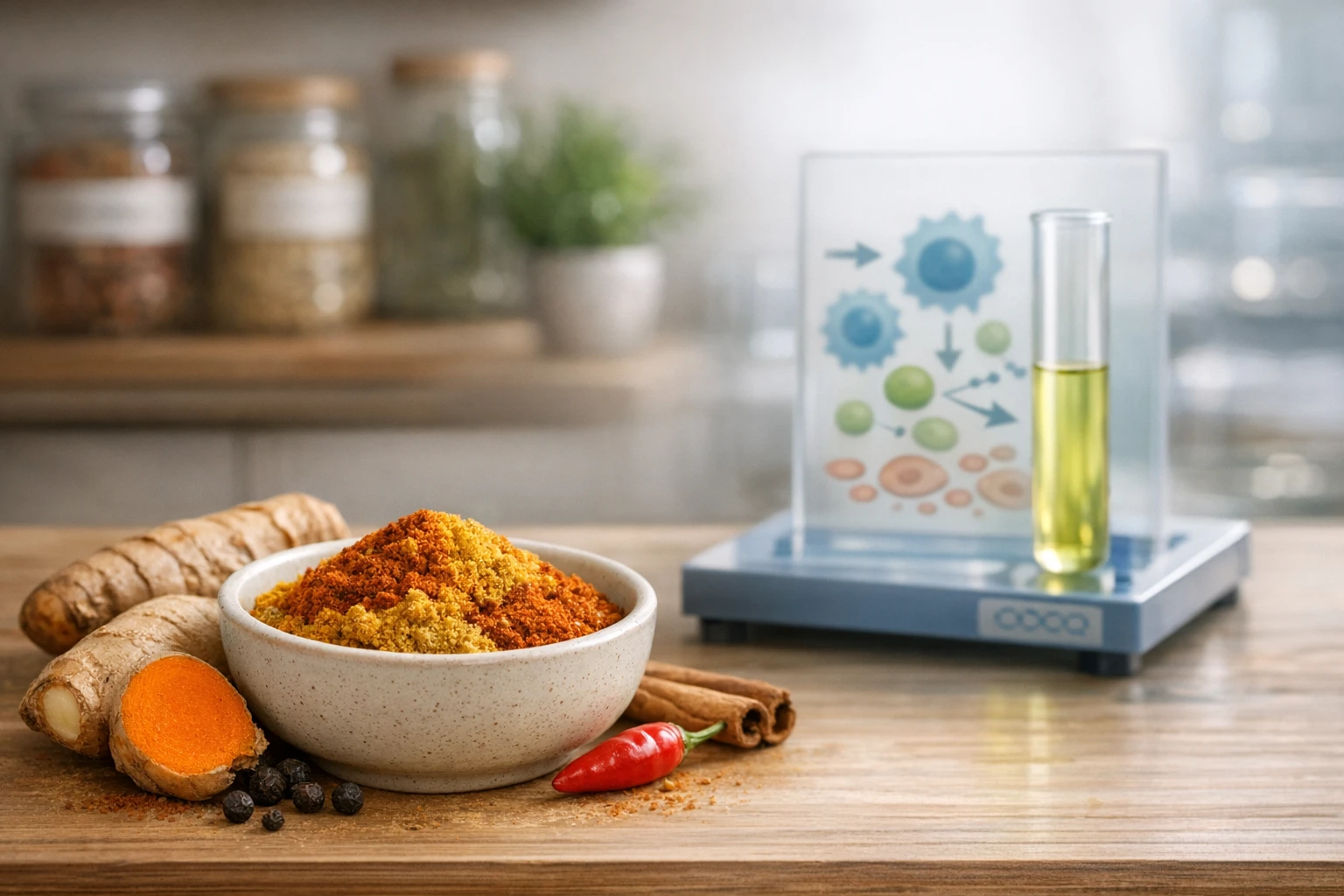
Updated and contextualized version of an article originally published on May 28, 2020
The article retains its original focus by presenting it through a scholarly and accessible perspective, supported by verifiable references.
Authors
- Dr. A. Conte – Biologist
- Roberto Panzironi –Independent researcher
Note editoriali
- First publication: May 28, 2020
- Last update: April 20, 2026
- Version: 2026 narrative revision
Note: This article was previously published and has been updated according to scientific and divulgative criteria. It provides general information and does not replace medical advice.
In brief
- A series of controlled clinical studies suggests that adding spice mixtures to high-fat and high-carbohydrate Meals can attenuate some post-Meal inflammatory and metabolic responses.
- The observed benefits are generally modest, depend on the dose, composition of the mixture, form of consumption, and dietary context, and do not imply certain "curative" effects.
- Short-term evidence shows reductions in the secretion of certain cytokines from immune cells and decreases in triglycerides or insulin after experimental Meals; longer-term studies have found favorable signals on systemic inflammation and the gut microbiota.
- To use spices realistically: regularly incorporating them into recipes as part of a balanced diet is reasonable; therapeutic doses or supplements require clinical evaluation.
Abstract: what does science say?
Spices contain bioactive compounds (polyphenols, terpenes, alkaloids) that show antioxidant activity and modulation of inflammatory pathways in experimental models. Controlled clinical studies, often in crossover design, have tested spice mixtures (variable "culinary" doses, typically 2–14 g) added to high-fat and high-carbohydrate meals: the results indicate a reduction in the secretion of certain cytokines from immune cells stimulated in vitro and, in some studies, a lower post-prandial elevation of triglycerides or insulin. Longer-term trials (weeks) suggest modest reductions in circulating cytokines and favorable effects on blood pressure, microbiota, and metabolic markers. However, the effects are conditioned by dose, mixture composition, studied population, and adopted measures; the literature does not demonstrate that the use of spices alone prevents or cures chronic diseases. Further studies are needed, preferably larger and replicated, to clarify the duration of the effect, mechanisms, and clinical relevance.
What the evidence shows and how to interpret it
Clinical research on spices has followed two main lines: acute studies evaluating post-prandial responses to standardized meals and prolonged exposure studies analyzing biomarkers downstream of diets containing controlled amounts of spices. In controlled crossover trials, a high-fat, high-carbohydrate meal with the addition of a spice mixture reduced the secretion of certain cytokines from peripheral blood mononuclear cells compared to the same meal without spices, suggesting a modulation of the meal-induced inflammatory response [1].
Other studies on experimental meals have reported attenuations of the post-prandial triglyceride and insulin response when the diet included an antioxidant-rich mixture from spices [2], and a small pilot study observed temporary improvements in endothelial function after meals containing spices at culinary doses (2–6 g) [3].
Evidence over longer periods (weeks) shows that regular consumption of aromatic mixtures can modestly reduce plasma concentrations of some pro-inflammatory cytokines and alter monocyte function, with possible secondary effects on cardiometabolic risk, although the clinical significance remains to be defined [4]. Plausible mechanisms include inhibition of digestive enzymes (pancreatic lipase and phospholipase A2), modulation of intracellular inflammatory pathways, and interactions with the gut microbiota that can reduce post-prandial endotoxemia [5][3].
Finally, meta-analyses on individual spice molecules (e.g., curcumin) show reductions in inflammatory markers (CRP, IL-6, TNF-α) in selected clinical contexts, but the effect varies by dose, formulation, and selected population; hence the need to distinguish biological plausibility and statistical association from evidence of direct causality and general applicability [8].
What it means in practice
For those seeking practical advice and not medical prescriptions: spices can be considered a food support of interest when regularly included in an overall balanced diet. Evidence indicates that small culinary doses (e.g., 2–6 g as needed in a Meal) or moderate consumption repeated over time can attenuate some metabolic peaks and inflammatory signals after Meals rich in fats and carbohydrates [1][2][3].
This does not mean that spices cancel out the negative effects of a consistently poor diet: studies show relative and temporary reductions in markers, not cures or certain prevention of chronic diseases. For most people, recommending the culinary use of spices (curry, ginger, cinnamon, chili pepper, aromatic herbs) to flavor and enrich dishes is reasonable and low-risk if there are no contraindications (allergies, specific drug interactions) [2][3].
If considering concentrated supplements (extracts, high-dose curcumin, piperine, etc.), it is important to consult a professional: bioavailability, interactions, and therapeutic dosages vary significantly and require clinical evaluation. In summary: using spices regularly as a culinary strategy is consistent with current evidence; specific treatments or supplementation should be discussed with a doctor.
Natural remedies and where to find them
Individual spices contain various bioactive compounds that can contribute to the observed effects in mixtures. Below is a popular overview of the main ingredients cited in the literature and in experimental mixtures. For each item, the biological plausibility and specific clinical evidence, when available, are summarized. The descriptions are not intended to replace professional advice.
Cumin
Cumin is used in many culinary traditions and contains essential oils and phenolic compounds. In experimental models, digestive and antimicrobial properties have been described that could contribute to gastrointestinal well-being and microbiota modulation. Direct clinical studies on cumin as a single food are less numerous than those on mixtures; however, cumin is frequently present in blends used in meal trials where favorable post-prandial effects are observed [1][2].
Turmeric (curcumin)
Turmeric is among the most studied spices: curcumin, its main phenolic constituent, has demonstrated anti-inflammatory and antioxidant activity in experimental models and in numerous clinical trials. Meta-analyses of RCTs indicate modest but detectable reductions in CRP, IL-6, and TNF-α with supplementation in selected contexts; however, the effect depends on formulation and dose, and bioavailability is a critical factor. In food mixtures, turmeric plausibly contributes to the observed effect on inflammatory responses [8].
Ginger
Ginger is known for its role against nausea and digestive disorders; clinical studies support its antiemetic efficacy in specific contexts. Various compounds present in ginger (gingerols, shogaols) have anti-inflammatory properties in vitro. In trials with mixtures, ginger is often included and can contribute to the post-prandial modulation of metabolic markers and digestive perception, but specific clinical evidence on immunometabolic responses remains partial [2][5].
Cloves
Cloves contain eugenol, a substance with antioxidant and antimicrobial activity in preclinical studies. Isolated clinical evidence is limited, but cloves are components of antioxidant blends that, in trials, have contributed to reducing markers of oxidative stress and post-prandial lipemia [2].
Cinnamon
Cinnamon has been studied primarily for possible effects on glycemic regulation: some trials in subjects with diabetes or impaired glycemia report improvements in metabolic parameters with standardized extracts, while results are not consistent across populations and formulations. In culinary mixtures, cinnamon can affect carbohydrate digestion and insulin responses, but the effect depends on the cinnamon species and dose [2][7].
Chili pepper (capsaicin)
Capsaicin is responsible for the spicy character and in experimental studies influences energy metabolism and thermogenesis; some studies suggest modest appetite reductions and metabolic improvements. For inflammation modulation, data are promising at the biological level, but clinical evidence on long-term results is still limited [5].
Sage
Sage is appreciated for its aromas and phenolic compound content. Traditional studies attribute cognitive and metabolic benefits, but robust clinical evidence in the metabolic or anti-inflammatory fields is scarce. It can be useful as an aromatic component in mixtures, with marginal antioxidant profiles at the dietary level.
Parsley
Rich in micronutrients and antioxidant compounds, parsley contributes to the overall nutritional value of a herb-rich diet. It is mainly used as an aromatic herb; its clinical efficacy as a single anti-inflammatory agent is not established, but it can support a dietary pattern rich in phytochemicals.
Key takeaways
- Adding spice mixes to experimental high-fat/high-carb meals has produced measurable reductions in some post-prandial inflammatory and metabolic responses in controlled studies. [1][2]
- Positive effects are generally modest and depend on the mixture's composition, dose, and dietary context. [3][4]
- Long-term evidence indicates potential for reducing some inflammatory markers and modulating the gut microbiota, but the clinical relevance for long-term events is not proven. [4][5]
- Turmeric (curcumin) is the single ingredient with the most studies and meta-analyses, but even here, effects vary by formulation and dose. [8]
- Using spices in cooking is generally safe and can improve the sensory profile and nutritional value of dishes; high-dose supplements require medical attention.
Limitations of Evidence
It is crucial to distinguish between observational studies, acute clinical studies, and long-term trials. Acute post-prandial studies measure immediate responses and do not allow for direct inferences about the prevention of chronic diseases. Many trials have small sample sizes, crossover designs, and surrogate measures (biological markers), with possible issues of replicability and variability among populations [1][2][3].
Other limitations include: heterogeneity of tested mixtures, lack of perfect blinding in some culinary experiments, different bioavailability of phytochemicals depending on the food matrix and the presence of compounds that influence their absorption (e.g., piperine). Meta-analyses on single extracts (e.g., curcumin) show effects but with high heterogeneity; therefore, caution is needed in interpretation and generalization [8].
Editorial Conclusion
Spices and aromatic blends represent culinary tools with solid biological bases and interesting clinical signals for modulating post-prandial inflammatory and metabolic responses. The most robust evidence concerns small but consistent reductions in biological markers in controlled experimental settings; however, the implications for the prevention of chronic diseases require larger and longer-term studies. Integrating spices into a varied diet based on unprocessed foods is a reasonable and low-risk choice for most people, while the use of high-dose formulations or supplements should be discussed with a doctor. Future research will need to define dose-response, mechanisms, and populations that can most benefit from these simple culinary strategies.
Editorial Note
Article updated according to transparency criteria and references to cited research. The content is for informational purposes only and does not constitute medical advice. For personal issues or therapies, consult a qualified healthcare professional.
Scientific research
- Oh ES, Petersen KS, Kris‑Etherton PM, Rogers CJ. Spices in a high‑saturated‑fat, high‑carbohydrate meal reduce postprandial proinflammatory cytokine secretion in men with overweight or obesity: a 3‑period, crossover, randomized controlled trial. The Journal of Nutrition. 2020. https://doi.org/10.1093/jn/nxaa063
- Skulas‑Ray AC, Kris‑Etherton PM, Teeter DL, Chen C‑YO, Vanden Heuvel JP, West SG. A high antioxidant spice blend attenuates postprandial insulin and triglyceride responses and increases some plasma measures of antioxidant activity in healthy, overweight men. The Journal of Nutrition. 2011;141(8):1451–1457. https://doi.org/10.3945/jn.111.138966
- Petersen KS, Rogers CJ, Kris‑Etherton PM, et al. The effect of culinary doses of spices in a high‑saturated fat, high‑carbohydrate meal on postprandial lipemia and endothelial function: a randomized, controlled, crossover pilot trial. Food & Function. 2020. https://doi.org/10.1039/C9FO02438G
- Oh ES, Petersen KS, Kris‑Etherton PM, Rogers CJ, et al. Four weeks of spice consumption lowers plasma proinflammatory cytokines and alters the function of monocytes in adults at risk of cardiometabolic disease: secondary outcome analysis in a 3‑period, randomized, crossover, controlled feeding trial. American Journal of Clinical Nutrition. 2021. https://doi.org/10.1093/ajcn/nqab331
- McCrea CE, Montoya A, et al. Effects of culinary spices and psychological stress on postprandial lipemia and lipase activity: results of a randomized crossover study and in vitro experiments. Journal of Translational Medicine. 2015. https://doi.org/10.1186/s12967-014-0360-5
- Nakayama H, et al. A single consumption of curry improved postprandial endothelial function in healthy male subjects: a randomized, controlled crossover trial. Nutrition Journal. 2014;13:67. https://doi.org/10.1186/1475-2891-13-67
- Johnston KL, et al. Polyphenol‑rich curry made with mixed spices and vegetables increases postprandial plasma GLP‑1 concentration in a dose‑dependent manner. European Journal of Clinical Nutrition. 2018. https://doi.org/10.1038/s41430-017-0069-7
- Dehzad MJ, Ghalandari H, Nouri M, Askarpour M. Antioxidant and anti‑inflammatory effects of curcumin/turmeric supplementation in adults: a GRADE‑assessed systematic review and dose–response meta‑analysis of randomized controlled trials. Cytokine. 2023;164:156144. https://doi.org/10.1016/j.cyto.2023.156144