Updated and contextualized version of an article originally published on June 17, 2020
The article retains its original focus by presenting it through a scholarly and accessible perspective, supported by verifiable references.
Authors
- Dr. M. Mondini – Biologist
- Roberto Panzironi –Independent researcher
Note editoriali
- First publication: June 17, 2020
- Last update: April 20, 2026
- Version: 2026 narrative revision
Editorial Note
This article was previously published and has been updated according to current editorial and scientific criteria for clarity, transparency, and verifiability. The information is for informational and educational purposes only and does not replace medical advice. For clinical or therapeutic choices, always consult a qualified healthcare professional.
IN BRIEF
- Antioxidants are molecules that neutralize oxidizing species; they are present both endogenously and in foods (fruits, vegetables, oils, tea, cocoa).
- For athletes, some substances (e.g., omega-3) can aid recovery and reduce inflammatory markers in specific contexts, but results are not uniform.
- Some high-dose vitamin C and E supplements can attenuate cellular signals useful for training adaptation.
- Clinical evidence is heterogeneous: effects depend on dose, timing, baseline nutritional status, and objective (performance vs. health).
- Before using supplements, assess nutritional status and individual needs with qualified professionals.
Main Section — Abstract: What does science say?
Essential definition: antioxidants are molecules that limit the formation or neutralize reactive oxygen species produced by the body or the environment. In the context of physical activity, increased oxygen utilization and associated inflammatory processes generate reactive species that participate in both damage and biological signaling useful for muscle adaptation. Available evidence shows that: (1) foods rich in polyphenols, vitamins, and long-chain polyunsaturated fats (EPA/DHA) can modulate inflammation and some measures of oxidative stress; (2) targeted supplements like omega-3 show benefits on recovery in some studies, while the effect of high-dose antioxidants (vitamin C and E) on training adaptation is controversial; (3) there are products with evidence for subjective reduction of muscle pain, but the clinical impact is often modest. Effects strongly depend on dose, duration, chemical form, timing of intake (pre/post exercise), initial nutritional status, and type of effort. Many studies use biochemical markers (e.g., CK, IL-6, MDA, GSH/GSSG ratio) and surrogate outcomes; methodological limitations (small samples, different protocols, lack of baseline status measurement) reduce the possibility of general recommendations. In epidemiological terms, there is an association between oxidative stress and cardiovascular, metabolic, and neurodegenerative diseases, but translating this into supplementation recommendations for athletes requires caution given the heterogeneity of evidence and the risk, in some cases, of interfering with physiological adaptations to exercise.
Antioxidants and sport: key evidence
Biological mechanisms (brief explanation)
During exercise, the production of reactive species increases within the muscle and in circulation. These molecules can damage lipids, proteins, and DNA if excessive, but at the same time activate signaling pathways that promote mitochondrial biogenesis, increase endogenous antioxidant defenses, and improve insulin sensitivity. For this reason, antioxidant intervention is not automatically beneficial: excessively reducing the oxidative signal can limit useful adaptations, while appropriate containment of oxidative damage can promote recovery and function in specific contexts. Molecular complexity requires each substance to be evaluated individually and in the context of dose and timing.
Evidence on supplements and training adaptations
Experimental and clinical studies show diversified results. Some controlled trials indicate that high doses of vitamin C (e.g., 1 g/day) and vitamin E can attenuate the increase in mitochondrial markers induced by training, suggesting a potential interference effect with aerobic adaptation. Other studies have found no impact on final performance, emphasizing that effects may depend on intervention duration, population, and type of training. Interpretation requires attention: laboratory data and clinical trials provide indications on potential risks of high-dose supplementation during training periods aimed at increasing aerobic capacity or strength.
Foods and compounds of greatest interest for athletes
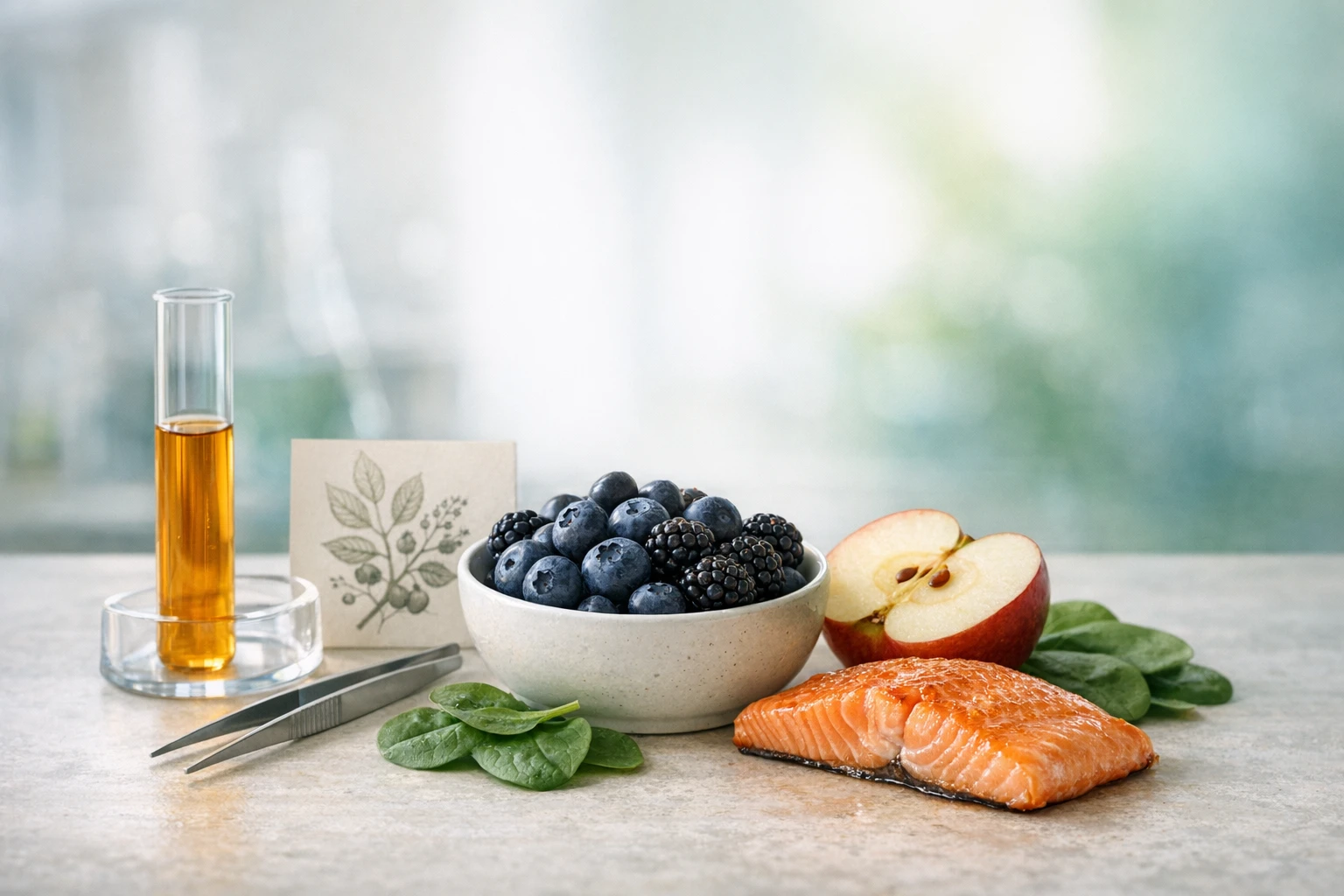
A food-based approach prioritizing natural foods is often preferable to the routine use of high-dose supplements. Fruits, vegetables, legumes, nuts, seeds, fish, and some spices contain combinations of antioxidant molecules (vitamins, carotenoids, polyphenols) and nutrients that act synergistically and contribute to antioxidant balance without suppressing signals useful for adaptation. Several compounds have received attention for sports applications: omega-3 fatty acids (EPA/DHA), some polyphenols (anthocyanins, quercetin), and specific compounds like curcumin. The choice between food and supplement must consider stability, bioavailability, potential drug interactions, and baseline nutritional status.
Omega-3: recovery and inflammatory modulation
Recent research indicates that omega-3 (EPA/DHA) supplementation can reduce some markers of post-exercise inflammation and attenuate CK/LDH rises in certain protocols and dosages, with benefits on subjective recovery and some performance parameters in selected studies. However, the literature shows heterogeneity in terms of dose (often >1–2 g/day), duration, and outcome measures; more homogeneous protocols and assessments of baseline omega-3 status are needed to define practical recommendations. [1]
Polyphenols and curcumin: natural anti-inflammatories
Polyphenols present in red fruits, tea, cocoa, and spices show antioxidant activity in vitro, and some clinical evidence suggests reductions in muscle pain and damage markers in exercise contexts. In particular, curcumin has been studied to reduce the intensity of DOMS and some inflammatory indices, albeit with variations related to formulation and bioavailability. Dietary use (e.g., fruits, spices) is safe and can support recovery; supplements require critical evaluation regarding dose and quality. [7]
What it means in practice
For those who engage in regular physical activity, the advisable approach is to first nourish resilience through a varied diet, rich in fruits and vegetables, fish, legumes, nuts, and whole grains; these foods provide mixtures of antioxidants and essential nutrients without overdosing. Evidence suggests that targeted supplementation can be useful in specific cases (e.g., omega-3 in high-intensity training cycles or for athletes with documented deficiencies), but the routine use of high doses of antioxidant vitamins during intense training periods can, in some cases, reduce biological signals useful for adaptation. Systematic reviews, however, indicate that the effect of antioxidants on muscle pain is modest and clinically insignificant for most athletes. Before starting supplementation, evaluate: objective (recovery vs. performance vs. health), nutritional status, possible drug interactions, and product quality. When deciding to supplement, prefer interventions supported by clinical trials and agree on them with qualified healthcare professionals.
Key takeaways
- Dietary antioxidants contribute to overall health but are not a miracle cure for performance or disease prevention.
- Foods rich in antioxidants (fruits, vegetables, tea, cocoa, fish) are preferable to supplements not motivated by specific needs.
- Some supplements (omega-3) show benefit on recovery and inflammation in selected contexts; quality and dosage matter.
- High doses of vitamin C and E during training can interfere with cellular adaptations; use caution and evaluate the context.
- Many conclusions are based on biochemical markers: translating into practical actions requires clinical judgment and personalization.
Limitations of evidence
The literature on antioxidants and physical activity presents recurring methodological limitations: often small sample sizes, variety of training and supplementation protocols, prevalent use of surrogate outcomes (biomarkers) rather than clinical endpoints, and poor assessment of baseline nutritional status. It is important to distinguish between observational associations (which may indicate correlations between oxidative marker levels and disease) and causal evidence derived from randomized trials. Some meta-analyses on supplements like CoQ10 show favorable effects on oxidative biomarkers in selected populations, but the heterogeneity of studies limits generalizable conclusions. At the same time, systematic reviews and controlled trials have documented both potentially negative effects of high-dose antioxidants on training adaptation and minimal benefits on DOMS. For this reason, critical reading and personalization of interventions are essential. [2][6]
Editorial conclusion
The role of antioxidants in sport is complex and depends on many variables: type and intensity of exercise, individual nutritional status, timing, and chemical form of compounds. The main message is pragmatic and cautious: prioritize a complete diet, consider supplements only when justified by specific evidence or documented deficiencies, and evaluate potential risks of interference with physiological adaptations. For athletes and non-elite practitioners, the best strategy remains a balanced diet, adequate energy intake, and a personalized recovery plan; the use of supplements must be guided by professionals and based on solid clinical evidence.
Final editorial note
The article has been updated to reflect current scientific knowledge and major systematic reviews. It remains for informational purposes and does not replace individual medical or nutritional consultations.
SCIENTIFIC RESEARCH
- Clayton DJ, et al. Omega-3 Fatty Acid Supplementation on Post-Exercise Inflammation, Muscle Damage, Oxidative Response, and Sports Performance in Physically Healthy Adults—A Systematic Review of Randomized Controlled Trials. Nutrients. 2024. https://doi.org/10.3390/nu16132044 [1]
- Akbari A, Mobini GR, Agah S, et al. Coenzyme Q10 supplementation and oxidative stress parameters: a systematic review and meta-analysis of clinical trials. Eur J Clin Pharmacol. 2020;76:1483–1499. https://doi.org/10.1007/s00228-020-02919-8 [2]
- Gómez-Cabrera MC, et al. Oral administration of vitamin C decreases muscle mitochondrial biogenesis and hampers training-induced adaptations in endurance performance. Am J Clin Nutr. 2008;87(1):142–149. https://doi.org/10.1093/ajcn/87.1.142 [3]
- Paulsen G, Cumming KT, Holden G, et al. Vitamin C and E supplementation hampers cellular adaptation to endurance training in humans: a double-blind, randomised, controlled trial. J Physiol. 2014;592(8):1887–1901. https://doi.org/10.1113/jphysiol.2013.267419 [4]
- Ristow M, Zarse K, Oberbach A, et al. Antioxidants prevent health-promoting effects of physical exercise in humans. Proc Natl Acad Sci U S A. 2009;106(21):8665–8670. https://doi.org/10.1073/pnas.0903485106 [5]
- Ranchordas MK, et al. Antioxidants for preventing and reducing muscle soreness after exercise: Cochrane review. Br J Sports Med. 2018; doi:10.1136/bjsports-2018-099599. https://doi.org/10.1136/bjsports-2018-099599 [6]
- Tanabe M, et al. Modulation of Exercise-Induced Muscle Damage, Inflammation, and Oxidative Markers by Curcumin Supplementation in a Physically Active Population: A Systematic Review. Nutrients. 2020;12(2):501. https://doi.org/10.3390/nu12020501 [7]
- Pashkow FJ, et al. Oxidative Stress and Inflammation in Heart Disease: Do Antioxidants Have a Role in Treatment and/or Prevention? Int J Inflam. 2011;2011:514623. https://doi.org/10.4061/2011/514623 [8]