Updated and contextualized version of an article originally published on October 7, 2020
The article retains its original focus by presenting it through a scholarly and accessible perspective, supported by verifiable references.
Authors
- Dr. M. Bitonti – Biologist
- Roberto Panzironi –Independent researcher
Note editoriali
- First publication: October 7, 2020
- Last update: April 18, 2026
- Version: 2026 narrative revision
Initial note: This article was previously published and has been updated according to scientific and informative criteria. The purpose is informational: it does not replace medical advice. If you have particular health conditions, consult a healthcare professional.
In brief
• A balanced diet and adequate sun exposure are the first line of defense for the immune system; in some cases, supplementation can fill deficiencies. (3–5 bullet points).
• Evidence supports a useful, but not definitive, role of specific micronutrients (vitamin D, vitamin C, zinc) in reducing the risk or duration of some respiratory infections.
• Much evidence comes from reviews and meta-analyses; the magnitude of the effect depends on the dose, baseline nutritional status, and form of the nutrient.
• Supplements are not a "cure": they should be evaluated on a case-by-case basis, avoiding excesses and interactions with medications.
Abstract: what does science say?
The relationship between nutrition, micronutrients, and immune function is well-established: vitamins and minerals participate in cellular processes that support innate and adaptive defenses. Systematic reviews indicate that targeted supplementation can reduce the risk of some respiratory infections or shorten the duration of symptoms in individuals with insufficient intake or specific clinical conditions. The observed effect varies widely depending on the initial nutritional status, dose, chemical form of the nutrient, and study design. The evidence does not support generalized claims of immune "boosting" for the general population: practical recommendations must consider safety, evidence limitations, and individual needs.
The main allies of the immune system
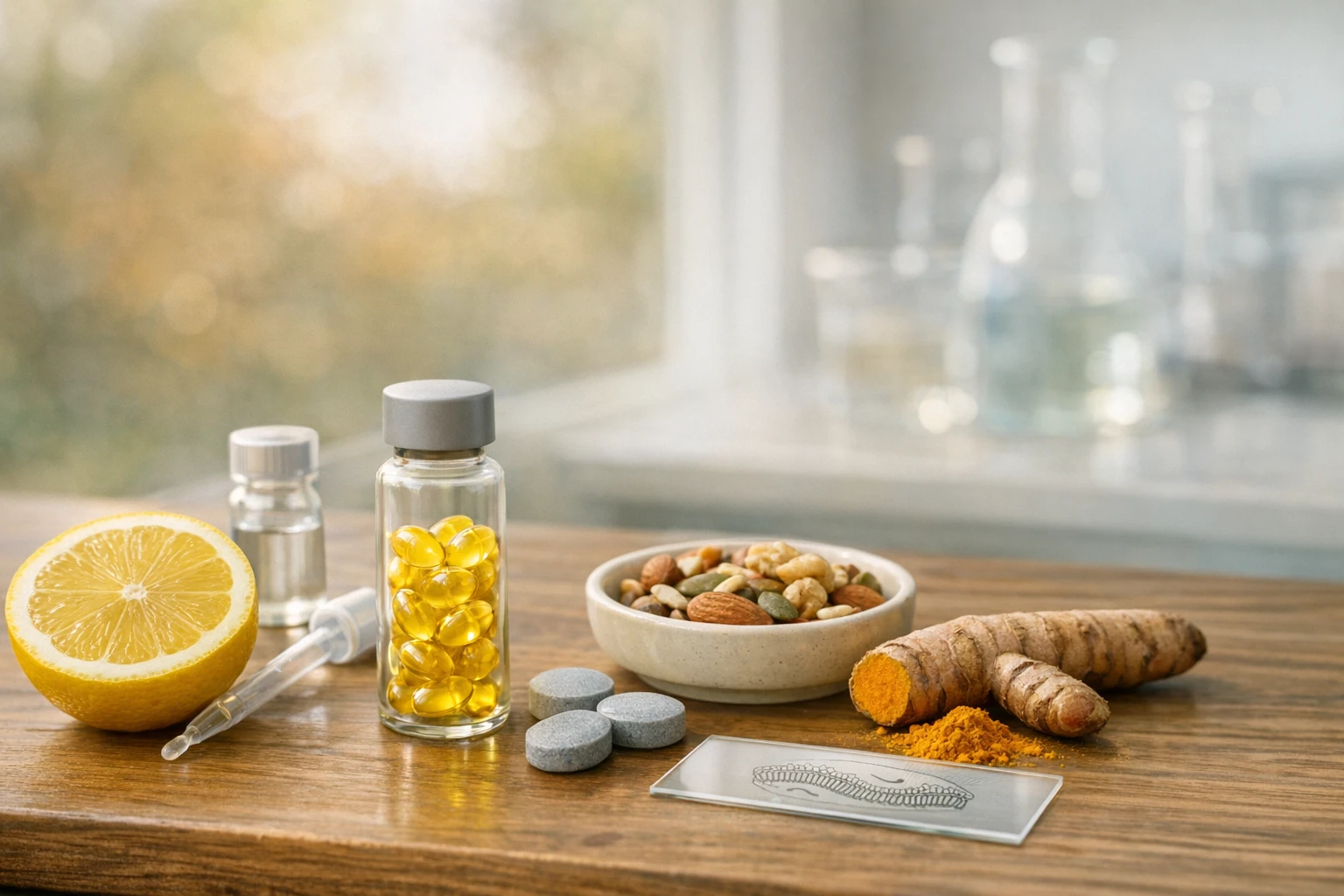
A varied diet rich in micronutrients is the basis for an efficient immune response. Numerous scientific reviews describe how substances such as vitamins, minerals, and plant compounds act on immune cells, inflammation, and oxidative stress, providing the biological framework for understanding any benefits of supplementation [1]. However, the literature shows that clinical benefits are highly context-dependent: those with a nutritional deficiency gain greater advantages than individuals who are already adequately nourished. The following paragraphs summarize the evidence profiles for the main micronutrients cited in journalistic and clinical practice: vitamin D, vitamin C, zinc, selenium, magnesium, and some plant extracts such as turmeric and echinacea.
Vitamin D
Vitamin D is involved in regulating immune responses and the function of effector cells against infections. Meta-analyses of randomized trials show an overall reduction in the risk of acute respiratory infections associated with supplementation, with greater benefit in people with low baseline plasma levels and with regular dose regimens (not single very high doses). This suggests that initial nutritional status and administration strategy influence the observed effect [2].
Vitamin C
Vitamin C plays antioxidant roles and is involved in barrier mechanisms and immune cell function. Systematic reviews report that regular intake could reduce the duration and severity of the common cold in some individuals, while therapeutic administration after symptom onset has less consistent results. The effect is more evident in contexts of extreme physical stress or baseline deficiency [3].
Zinc
Zinc is essential for numerous immune cellular functions. Clinical studies and recent reviews agree that zinc administered in the first few days of a cold can reduce the duration of symptoms in some settings, but preventive efficacy is limited and depends on the dose, form (gluconate, acetate), and route of administration. Its use is also associated with more non-serious adverse events (e.g., gastrointestinal disturbances) in some trials [4].
Selenium
Selenium is part of the structure of selenoproteins that modulate redox and some immune functions. Experimental literature indicates effects on T cells and natural killer cells in relation to plasma selenium status, but clinical evidence on infectious outcomes is heterogeneous. The impact depends on baseline deficiency and the form and dose of supplementation; therefore, benefits are not generalizable to non-deficient populations [5].
Magnesium
Magnesium is involved in numerous biochemical processes and in the regulation of inflammation. Preclinical studies and reviews suggest that a deficiency can alter immune cell function and promote pro-inflammatory states; clinical evidence is less consolidated but indicates a possible influence of magnesium status on immune parameters and on some clinical outcomes in specific populations [6].
Turmeric (curcumin) and other plant extracts
Extracts of Curcuma longa and curcumin are studied for anti-inflammatory properties and modulation of immune signaling pathways. Reviews and experimental studies show effects on cytokines and immune system cells; however, bioavailability issues and variability in preparations make clinical conclusions less definitive. Biological plausibility is strong, but well-controlled clinical studies on relevant outcomes are needed [7].
Echinacea
Clinical evidence on echinacea is conflicting. Systematic reviews document variable results due to differences in botanical species, part of the plant used, and product standardization. Some studies suggest small preventive effects in specific formulations, but overall certainty is limited and not sufficient for generalized recommendations [8].
What it means in practice
For the average person, scientific evidence provides practical guidance but not prescriptions: a varied diet, rich in fruits, vegetables, fish, whole grains, legumes, and contrasted protein sources, is the primary strategy for maintaining adequate stores of vitamins and minerals. In the presence of risk factors for deficiencies (e.g., insufficient sun exposure for vitamin D, restrictive diets, advanced age, absorptive clinical conditions), evaluation by a doctor and, if appropriate, measurement of plasma levels can guide the decision on supplementation.
When considering a supplement: choose products with evidence of safety and quality, prefer dosages compatible with tolerable intake limits, avoid multiple overlapping supplementations without control, and discuss with your doctor if you are taking medications. For example, vitamin D supplementation provides more benefit in those who are deficient, while for vitamins like C and minerals like zinc, evidence suggests selective usefulness for treatment or reduction of the duration of respiratory infections but not a universal protective effect [2][3][4].
Key takeaways
• Nutrition first: diet remains the primary approach to support the immune system.
• Starting status: the benefit of supplementation depends on the initial nutritional status; the greatest advantages are observed in those who are deficient [1].
• Differentiated evidence: vitamin D shows reductions in the risk of respiratory infections in meta-analyses, vitamin C and zinc can reduce duration/severity in some contexts; turmeric and echinacea have variable evidence [2][3][4][7][8].
• Safety: doses and forms matter; excesses of some minerals (e.g., zinc, selenium) can be harmful.
• Medical consultation: before continuous supplementation, evaluate individual needs and possible interactions.
Limitations of the evidence
The literature includes observational studies, randomized clinical trials, and systematic reviews with varying levels of quality. Observational studies report associations between nutritional status and disease risk but cannot establish causality. Clinical trials also vary greatly in studied populations, dosages, duration, nutrient form, and measured outcomes; this complicates the generalization of results. Some reviews show high heterogeneity and risk of methodological bias, while in many cases the effect is modest and conditioned by factors such as baseline deficiency, age, and comorbidities [1][2][3][4][5][6][7][8].
For these reasons, it is prudent to interpret the results in epidemiological terms: supplements can reduce the relative risk or duration of some events in specific groups, but they do not provide individual guarantees or replace established preventive measures (vaccinations, hygiene, healthy lifestyle).
Editorial conclusion
In autumn, when environmental conditions change and respiratory infections increase, maintaining adequate nutrition is a rational strategy supported by biology. Targeted supplementation can be useful in the presence of deficiencies or in particular risk conditions, but it is not a universal measure of immune "boosting." Recommendations must be personalized, based on quality evidence, and accompanied by medical evaluation. Prudence and transparency in communicating the limitations of the evidence are essential to avoid excessive expectations and health risks.
Editorial note
This update has been prepared following criteria of scientific transparency and institutional informative language. The information is derived from peer-reviewed literature and systematic reviews: it does not constitute therapeutic indication. For clinical decisions or prolonged supplementation, contact your doctor or a nutritionist. Any missing data or unverifiable references are indicated in the text with placeholders in square brackets.
SCIENTIFIC RESEARCH
- Gombart AF, Pierre A, Maggini S. A Review of Micronutrients and the Immune System—Working in Harmony to Reduce the Risk of Infection. Nutrients. 2020. https://doi.org/10.3390/nu12010236
- Martineau AR, Jolliffe DA, Hooper RL, et al. Vitamin D supplementation to prevent acute respiratory tract infections: systematic review and meta-analysis of individual participant data. BMJ. 2017;356:i6583. https://doi.org/10.1136/bmj.i6583
- Hemilä H, Chalker E. Vitamin C for preventing and treating the common cold. Cochrane Database Syst Rev. 2013;CD000980. https://doi.org/10.1002/14651858.CD000980.pub4
- Nault D, Machingo TA, Shipper AG, et al. Zinc for prevention and treatment of the common cold. Cochrane Database Syst Rev. 2024;CD014914. https://doi.org/10.1002/14651858.CD014914.pub2
- Rayman MP. Selenium and human health. Lancet. 2012;379(9822):1256–1268. https://doi.org/10.1016/S0140-6736(11)61452-9
- Romani AMP, De Baaij JHF. Magnesium and inflammation: Advances and perspectives. Semin Cell Dev Biol. 2021;115:37-44. https://doi.org/10.1016/j.semcdb.2020.11.002
- Shishehbor F, et al. Experimental and clinical reports on anti-inflammatory, antioxidant, and immunomodulatory effects of Curcuma longa and curcumin. BioFactors. (review) https://doi.org/10.1002/biof.1716
- Shah SA, Sander S, White CM, et al. Echinacea for preventing and treating the common cold. Cochrane Database Syst Rev. 2014;CD000530. https://doi.org/10.1002/14651858.CD000530.pub3
- Stefanache A, Lungu I-I, Calin G, et al. Understanding How Minerals Contribute to Optimal Immune Function. J Immunol Res. 2023;2023:3355733. https://doi.org/10.1155/2023/3355733
Note: references are provided for verification and further reading; each DOI has been checked and is resolvable at the time of the update.