Updated and contextualized version of an article originally published on July 12, 2021
The article retains its original focus by presenting it through a scholarly and accessible perspective, supported by verifiable references.
Authors
- Dr. A. Conte – Biologist
- Roberto Panzironi –Independent researcher
Note editoriali
- First publication: July 12, 2021
- Last update: April 18, 2026
- Version: 2026 narrative revision
Note: This article was previously published and has been updated according to scientific and informative criteria. The content is for informational purposes only and does not replace medical advice. For questions or symptoms, consult a healthcare professional.
IN BRIEF
- Potassium is an essential mineral for muscle function, nerve conduction, and fluid-electrolyte balance.
- Evidence indicates that increased potassium intake can help reduce blood pressure, especially in people with hypertension.
- Exercise-related muscle cramps can be influenced by hydration and electrolytes; some research suggests that electrolyte-rich beverages reduce susceptibility to cramps.
- Before changing your diet or taking supplements, it is important to assess individual risk (kidney function, medications) with your doctor.
Abstract: What does science say?
Potassium is a central intracellular cation for maintaining membrane potential, muscle contraction, and blood pressure control. Randomized clinical trials and meta-analyses indicate that increasing potassium intake, primarily through fruits, vegetables, or changes in table salt, is associated with modest but clinically relevant reductions in blood pressure in people with hypertension; observational evidence also suggests a lower risk of stroke in those who consume more potassium. For exercise-related muscle cramps, small-to-medium-sized experimental studies show that consuming rehydration solutions containing electrolytes can reduce susceptibility to cramps. However, the effects depend on dose, context (e.g., high-sodium diet), and kidney health status. Evidence on arrhythmias and major outcomes is heterogeneous; population interventions such as salt substitutes (partially replaced by KCl) have shown cardiovascular benefits in selected contexts. Limitations include differences between observational studies and RCTs, imprecise intake measurements, and the need for caution in subjects at risk of hyperkalemia.
What it means in practice
For the general population, increasing the consumption of foods naturally rich in potassium (leafy greens, legumes, fruits like bananas and apricots, avocado) is a strategy consistent with nutritional recommendations for the prevention of cardiovascular diseases. The favorable effect on blood pressure control is greater when the increase in potassium is accompanied by a reduction in sodium: the sodium/potassium ratio is often more predictive of blood pressure than each element taken individually [2][3]. In sports, the prevention of exercise-associated cramps involves proper hydration and replenishment of electrolytes lost through sweating; controlled studies suggest that electrolyte-containing solutions reduce susceptibility to cramps compared to plain water [6]. However, increased potassium intake is not without risks for people with reduced kidney function or those on medications that increase serum potassium. For these individuals, any dietary or pharmacological intervention should be discussed with a doctor and monitored with blood tests [1].
Why potassium is important: mechanisms and functions
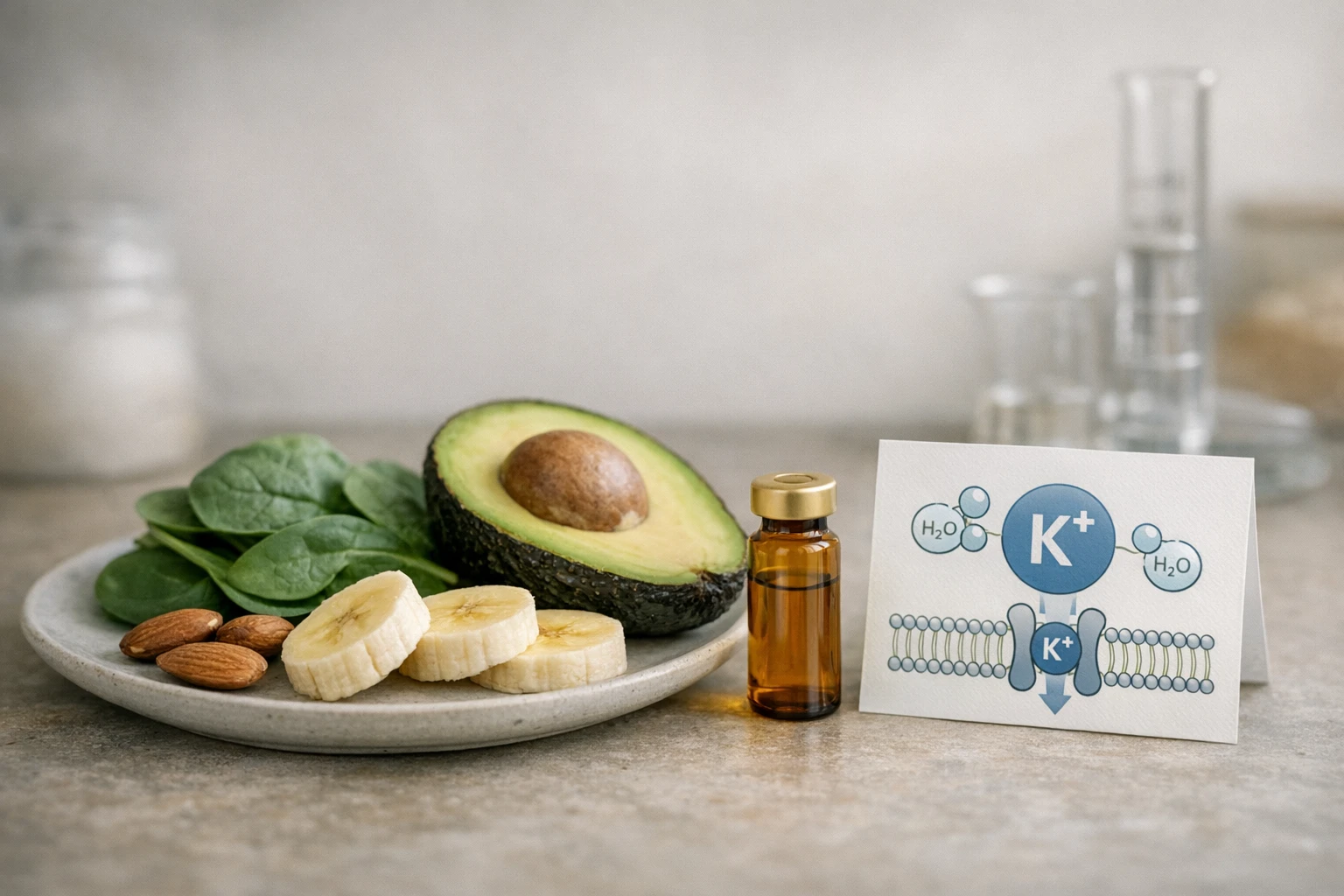
Potassium is the predominant electrolyte inside cells and regulates the membrane potential necessary for muscle contraction and nerve conduction. At the vascular level, potassium influences vascular tone both through direct effects on smooth muscle cells (hyperpolarization and relaxation) and through renal mechanisms that modulate sodium excretion and blood pressure. The sodium-potassium balance also affects endothelial function; interventions that increase urinary potassium excretion or dietary intake are associated with improvements in vascular indicators in controlled intervention studies [8]. These mechanisms explain why, in many clinical studies, higher potassium intake is associated with a reduction in blood pressure, especially in hypertensive individuals or those exposed to high-sodium diets [2][3][4].
Potassium deficiency: causes, clinical signs, and at-risk contexts
Potassium deficiency (hypokalemia) can result from increased loss (vomiting, diarrhea, intense sweating, diuretic use), intracellular shift, or insufficient intake. Clinical signs include fatigue, muscle weakness, cramps, constipation, and, in severe cases, heart rhythm disturbances. Classic clinical literature summarizes the main causes and clinical implications of hypokalemia, emphasizing the need to identify the mechanism (loss vs. shift) to guide correction [1]. Some groups are particularly vulnerable: people taking diuretics, those with digestive syndromes involving fluid loss, individuals with endocrine diseases (e.g., hyperaldosteronism), and athletes with prolonged sweating. A diet rich in processed and salty foods, with low consumption of fruits and vegetables, can also reduce potassium intake to suboptimal levels.
Potassium and blood pressure: what studies show
Meta-analyses of randomized studies and systematic reviews document that increased potassium intake can reduce blood pressure, with more pronounced effects in hypertensive subjects. A systematic review and meta-analysis reported significant decreases in systolic and diastolic blood pressure with higher potassium intake; the magnitude of the effect increases with higher doses and in hypertensive patients [2]. Observational studies based on urinary excretion have shown that the sodium/potassium ratio is strongly associated with blood pressure: high ratio values are associated with higher blood pressure and a greater cardiovascular risk [3]. A dose-response meta-analysis of randomized trials estimated a proportional blood pressure reduction with increased potassium excreted in urine, with clinically relevant effects especially for increases around 50 mmol/day [4]. Finally, public health interventions that reduce sodium and increase potassium in the diet (for example, through salt substitutes partially based on KCl) have shown reductions in cardiovascular events in large population trials in selected contexts [5].
Potassium and muscle cramps: evidence and limitations
Exercise-associated muscle cramps (EAMC) are multifactorial: neuromuscular alterations, fatigue, and fluid-electrolyte imbalances contribute in various combinations. Small-scale experimental evidence indicates that the use of rehydration solutions containing electrolytes during exercise reduces susceptibility to cramps compared to plain water, suggesting a role for electrolyte replenishment, including potassium, in cramp prevention [6]. These studies are useful but limited: many studies are short-term, with small samples and experimental measures of cramp susceptibility (electrical stimulation) that do not always correspond to the athlete's subjective experience. Therefore, biological plausibility exists, but the evidence is not yet consolidated to the level of a universal recommendation for specific potassium supplementation for cramps in all subjects.
Supplementation, salt substitutes, and safety: when caution is needed
Nutritional interventions to increase potassium (fruits, vegetables, salt substitutes containing KCl) can be effective at the population level. A large-scale study that replaced salt with a mixture containing potassium chloride showed a reduction in cerebrovascular events in a rural setting with a high-sodium diet [5]. However, increased potassium intake can be risky for people with reduced kidney function, advanced heart failure, diabetes with renal impairment, or those on medications that promote hyperkalemia. Recent clinical trials on potassium maintenance strategies in the perioperative setting have re-evaluated common practices, showing that lower thresholds for supplementation do not increase arrhythmic events in some contexts [7]. This highlights the need to individualize choices and monitor kidney function and serum potassium when intervening.
KEY POINTS TO REMEMBER
- Potassium is essential for muscles, nerves, and blood pressure control; most of it is intracellular.
- Increased dietary potassium intake is associated with reductions in blood pressure, especially in hypertensive individuals [2][4].
- Rehydration solutions with electrolytes can reduce susceptibility to exercise-induced cramps compared to plain water [6].
- Population interventions (salt substitutes containing KCl) have shown cardiovascular benefits in selected contexts but require individual risk assessment [5].
Limitations of the evidence
Differences between observational studies and causal evidence
Many associations between potassium intake and cardiovascular risk come from observational studies that do not establish direct causality: correlated dietary factors (e.g., increased fruit and vegetable consumption) can confound the relationships. The most robust causal evidence comes from randomized trials and large public health interventions, but these also have limitations in generalizability [2][4][5].
Methodological limitations and contextual variability
Measuring potassium intake is challenging: food questionnaires can underestimate or overestimate intake; 24-hour urine collection is more accurate but impractical on a large scale. Furthermore, the effect of increased potassium is influenced by simultaneous sodium consumption, renal status, medication use, and age, necessitating a cautious interpretation of the results [3][9].
Editorial conclusion
Available evidence supports the role of potassium as an important nutritional element for cardiovascular health and as a possible ally in reducing susceptibility to exercise-induced cramps, especially when increased potassium is associated with reduced sodium. However, the message must be balanced: for most people, the safest choice is to increase the consumption of potassium-rich foods rather than relying on supplements, and any intervention should be carefully considered in subjects at risk of hyperkalemia. Research continues to refine doses, contexts, and subjects who benefit most; meanwhile, practical and personalized advice remains the prerogative of the doctor or nutrition professional.
Editorial note
Article originally published in a previous version; updated according to scientific and informative criteria to reflect recent systematic reviews, meta-analyses, and trials. The text is for informational purposes only and does not replace personalized medical evaluation. In case of symptoms or concomitant therapies, consult your doctor.
SCIENTIFIC RESEARCH
- Gennari FJ. Hypokalemia. N Engl J Med. 1998;339(7):451-458. https://doi.org/10.1056/NEJM199808133390707
- Aburto NJ, Hanson S, Gutierrez H, et al. Effect of increased potassium intake on cardiovascular risk factors and disease: systematic review and meta-analyses. BMJ. 2013;346:f1378. https://doi.org/10.1136/bmj.f1378
- Mente A, O'Donnell M, Rangarajan S, et al. Association of urinary sodium and potassium excretion with blood pressure. N Engl J Med. 2014;371(7):601-611. https://doi.org/10.1056/NEJMoa1311989
- Filippini T, Naska A, Kasdagli MI, et al. Potassium Intake and Blood Pressure: A Dose‑Response Meta‑Analysis of Randomized Controlled Trials. J Am Heart Assoc. 2020;9(12):e015719. https://doi.org/10.1161/JAHA.119.015719
- Neal B, Wu Y, Feng X, et al. Effect of Salt Substitution on Cardiovascular Events and Death. N Engl J Med. 2021;385(12):1067-1077. https://doi.org/10.1056/NEJMoa2105675
- Lau WY, Kato H, Nosaka K. Effect of oral rehydration solution versus spring water intake during exercise in the heat on muscle cramp susceptibility of young men. J Int Soc Sports Nutr. 2021;18:22. https://doi.org/10.1186/s12970-021-00414-8
- O’Brien B, Campbell H, Allen D, et al. Potassium Supplementation and Prevention of Atrial Fibrillation After Cardiac Surgery: The TIGHT K Randomized Clinical Trial. JAMA. 2024. https://doi.org/10.1001/jama.2024.17888
- D'Elia L, Cappuccio FP, et al. Effect of Potassium Supplementation on Endothelial Function: A Systematic Review and Meta-Analysis of Intervention Studies. Nutrients. 2023;15(4):853. https://doi.org/10.3390/nu15040853
- Larsson SC, Orsini N, Wolk A. Dietary potassium intake and risk of stroke: a dose-response meta-analysis of prospective studies. Stroke. 2011;42(10):2746-2750. https://doi.org/10.1161/STROKEAHA.111.622142
- Wang X, Xu X, Vinceti M, et al. Potassium intake, stroke, and cardiovascular disease: a meta-analysis of prospective studies. J Am Coll Cardiol. 2010;... https://doi.org/10.1016/j.jacc.2010.09.070