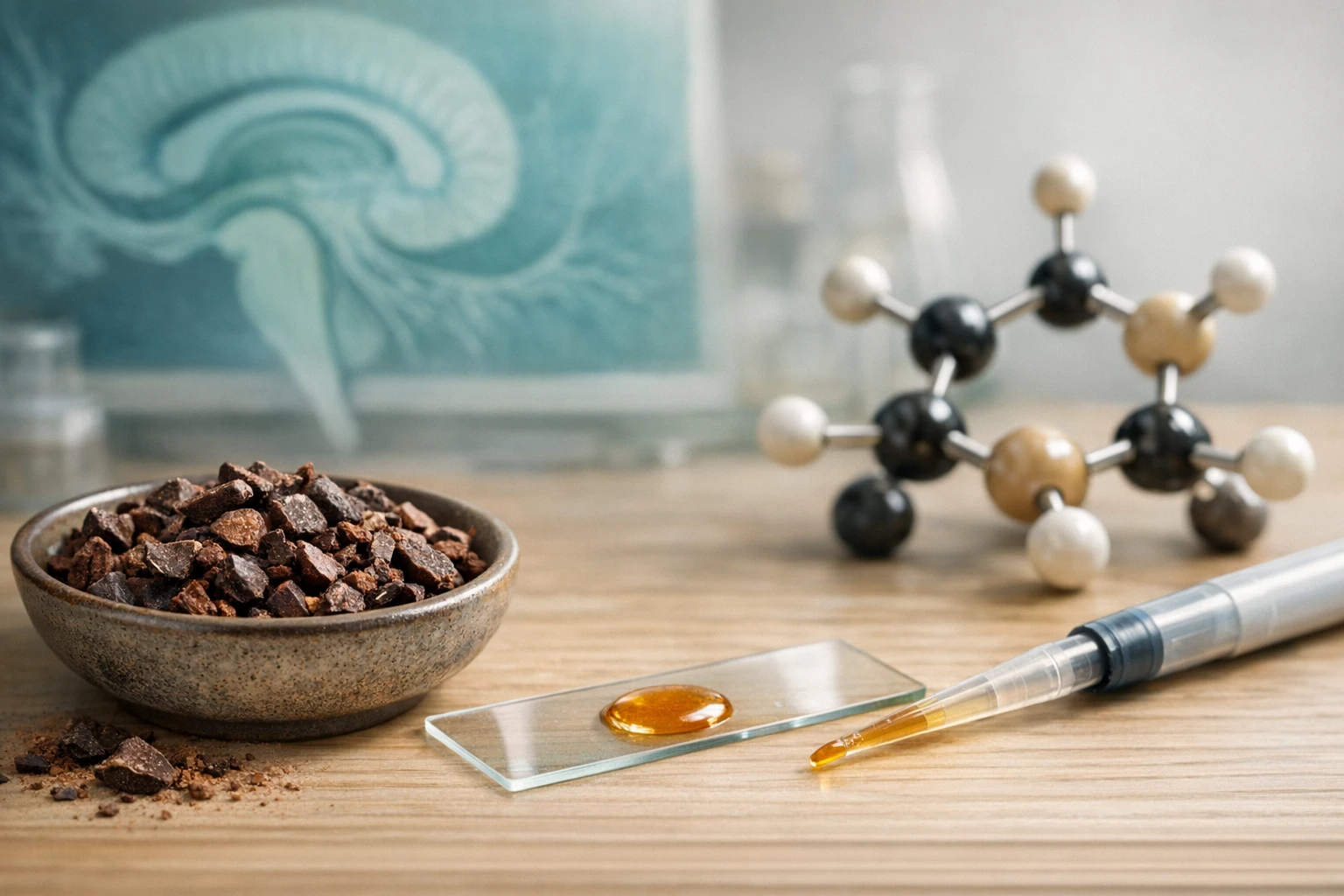
Updated and contextualized version of an article originally published on June 29, 2020
The article retains its original focus by presenting it through a scholarly and accessible perspective, supported by verifiable references.
Authors
- Dr. A. Conte – Biologist
- Roberto Panzironi –Independent researcher
Note editoriali
- First publication: June 29, 2020
- Last update: April 20, 2026
- Version: 2026 narrative revision
Initial Note
Article previously published and updated according to scientific and divulgative criteria. The purpose is informative: it does not replace medical advice. [Editorial and bibliographic update].
IN BRIEF
- Cocoa contains flavanols and epicatechin, compounds that can influence vascular and cellular mechanisms relevant to brain function.
- Preclinical studies show that some cocoa extracts (e.g., Lavado) can interfere with β-amyloid protein aggregation in experimental models.
- Small clinical trials and imaging studies have reported temporary improvements in cerebral perfusion and memory in older adults after consuming cocoa flavanols.
- Meta-analyses indicate modest effects on blood pressure and vascular parameters; robust evidence of Alzheimer's prevention in humans does not yet exist.
- Evidence suggests biological plausibility, but translation into clinical recommendations requires further controlled and long-term evidence.
Abstract: what does science say?
Cocoa is a dietary source of flavanols (particularly epicatechin) which, in laboratory and animal models, show antioxidant activity, endothelial modulation, and interaction with molecular pathways involved in memory and neurodegeneration. Some polyphenol-rich extracts, such as the so-called "Lavado" cocoa, have reduced β-amyloid oligomer formation and improved synaptic signals in experimental models; clinical trials on small groups of elderly individuals have shown temporary improvements in cognitive functions and cerebral perfusion. However, clinical results are heterogeneous: meta-analyses show modest effects on blood pressure and cerebral blood flow, while a large-scale study with cocoa extract did not find an improvement in global cognition at 3 years. The evidence supports biological plausibility and indicates that dose, form of cocoa, duration, and population influence the results; there is currently insufficient evidence to state a direct preventive effect on Alzheimer's in humans.
What the main studies show
Experimental evidence (cellular and animal models)
Research on cells and murine models has shown that polyphenol-rich extracts from cocoa can limit the formation of β-amyloid oligomers and restore synaptic plasticity parameters under experimental conditions attributable to pathogenic processes typical of Alzheimer's [1]. These experiments provide plausible mechanisms — for example, inhibition of protein aggregation, reduction of oxidative stress, and modulation of inflammatory pathways — but remain preliminary steps: in vitro and in vivo animal results do not automatically translate into clinical efficacy in humans [1].
Clinical evidence (controlled studies and imaging studies)
Small clinical studies and imaging evidence indicate that cocoa flavanol intake can improve cerebral perfusion, hippocampal circuit efficiency, and some memory tests in middle-aged and older adults, often with short-term exposures (weeks-months) and high doses of flavanols [3][4]. A controlled trial in people with mild cognitive impairment showed improvements in cognitive function and metabolic profiles after administering flavanol-rich beverages for 8 weeks [2]. However, larger and longer-term studies, including a major double-blind trial on cocoa extract conducted on thousands of participants, did not document a significant effect of the extract on global cognition after 3 years, although other secondary results related to different supplementation were noted [9]. These data show encouraging but not conclusive results, with high variability among protocols, doses, and tested products.
Meta-analyses and reviews
Systematic analyses and meta-analyses on flavanol interventions have reported modest but consistent effects on vascular parameters (blood pressure, endothelial function) and signs of cognitive improvement in selected populations; however, the quality of the studies and methodological heterogeneity limit definitive conclusions [5][8]. The most recent reviews emphasize the need for standardized measurements of flavanol content and studies of adequate duration and power to evaluate clinically relevant effects on dementia.
Plausible biological mechanisms
Vascular effects and cerebral perfusion
Cocoa flavanols, and epicatechin in particular, can increase nitric oxide (NO) production, promoting vasodilation and improved microvascular perfusion, including cerebral vascularization. Studies in humans have shown improvements in endothelial function and changes in cerebral blood flow response after acute or chronic flavanol intake, mechanisms that are relevant for brain nutrition and cognitive function [6][4].
Cellular and molecular actions
Polyphenols can modulate intracellular signals involved in synaptic plasticity, the expression of neurotrophins like BDNF, and antioxidant/inflammatory responses. Clinical trials have associated increases in BDNF with flavonoid-rich interventions, suggesting a possible molecular pathway connecting diet and cognitive function, although the causal relationship remains to be defined [7].
Interference with protein aggregation
In experimental models, specific cocoa extracts have reduced β-amyloid oligomerization, a process implicated in the synaptic damage typical of Alzheimer's. This effect has been described for extracts with a particular polyphenol profile (e.g., Lavado) and not for all types of cocoa, suggesting that processing methods and polyphenol content influence biological activity [1].
What it means in practice
Evidence indicates that cocoa components have biological properties consistent with potential benefits for vascular health and, consequently, for brain function. However, translating these results into concrete recommendations requires caution: the observed benefits depend on factors such as the dose of flavanols, the form of the product (standardized extract vs. commercial chocolate), the duration of intake, and the characteristics of the studied population (e.g., age, cardiovascular risk, presence of mild cognitive impairment). Some short-term interventions have shown temporary cognitive improvements or changes in vascular biomarkers, but there is no robust evidence that habitual consumption of chocolate or cocoa-based products demonstrably prevents the onset of Alzheimer's in the general population. Therefore, cocoa consumption can be considered part of a varied diet and a healthy lifestyle, but should not be seen as an isolated preventive measure or therapy. For people with specific metabolic or cardiovascular problems, it is appropriate to evaluate the calories, sugars, and fats present in the chocolate product.
Key takeaways
- Cocoa is a source of flavanols (epicatechin) with measurable biological actions on the endothelium and neuronal signaling [6][7].
- Specific polyphenol-rich extracts (e.g., Lavado) have shown anti-oligomerization effects on β-amyloid in experimental models [1].
- Small clinical studies and imaging studies document temporary improvements in cerebral perfusion and memory in some groups of older adults [3][4].
- Meta-analyses indicate modest reductions in blood pressure and vascular improvements, factors relevant to brain health [5].
- A large trial on cocoa extract did not confirm an improvement in global cognition at 3 years, highlighting the need for further studies on duration and different populations [9].
Limitations of the evidence
It is important to distinguish between types of studies: observational studies show associations, experimental studies (in vitro/animal) show plausible mechanisms, while controlled clinical trials provide the best evidence of efficacy in humans. Many studies on cocoa have small sample sizes, short durations, non-standardized exposures (different flavanol contents), or surrogate endpoints. The heterogeneity of products (dutched vs. natural chocolate; concentrated extracts) alters the availability of biologically active compounds. Some positive results refer to flavanol doses not easily achievable with common consumption of commercial chocolate; finally, individual variability (metabolism, microbiota, nutritional status) can modulate the effects. To move from biological plausibility to causal proof of Alzheimer's prevention, long-term studies with standardized products and clearly defined populations are needed.
Editorial conclusion
Research on cocoa and cognitive function is an example of how nutrition and biomedicine intertwine: there are biological signals and experimental results that make a role for cocoa flavanols in supporting brain health plausible, especially through vascular and synaptic modulation mechanisms. However, the proof that cocoa prevents Alzheimer's in humans is not consolidated. The prudent approach is to recognize the potential scientific interest, value the methodological quality of future research, and integrate available evidence into dietary recommendations that consider energy balance and the risks associated with consuming high-calorie products. For those who wish to include cocoa in their diet, choosing low-sugar products and paying attention to quantity are reasonable measures to associate with an overall healthy lifestyle.
Editorial note
This article has been updated to integrate experimental studies, clinical trials, and systematic reviews with verified DOIs. The content is for informational and divulgative purposes: it does not replace personalized medical evaluations. For clinical questions, consult qualified healthcare professionals.
SCIENTIFIC RESEARCH
- Wang J, Varghese M, Ono K, Yamada M, Levine S, Tzavaras N, Gong B, Hurst WJ, Blitzer RD, Pasinetti GM. Cocoa Extracts Reduce Oligomerization of Amyloid-β: Implications for Cognitive Improvement in Alzheimer's Disease. Journal of Alzheimer's Disease. 2014;41(2):643–650. https://doi.org/10.3233/JAD-132231
- Desideri G, Kwik‑Uribe C, Grassi D, et al. Benefits in cognitive function, blood pressure, and insulin resistance through cocoa flavanol consumption in elderly subjects with mild cognitive impairment: the Cocoa, Cognition, and Aging (CoCoA) study. Hypertension. 2012;60(3):794–801. https://doi.org/10.1161/HYPERTENSIONAHA.112.193060
- Brickman AM, Khan UA, Provenzano FA, et al. Enhancing dentate gyrus function with dietary flavanols improves cognition in older adults. Nature Neuroscience. 2014;17(12):1798–1803. https://doi.org/10.1038/nn.3850
- Sorond FA, Hurwitz S, Salat DH, Greve DN, Fisher ND. Neurovascular coupling, cerebral white matter integrity, and response to cocoa in older people. Neurology. 2013;81(10):904–909. https://doi.org/10.1212/WNL.0b013e3182a351aa
- Ried K, Fakler P, Stocks NP. Effect of cocoa on blood pressure. BMC Medicine. 2010;8:39. https://doi.org/10.1186/1741-7015-8-39
- Schroeter H, Heiss C, Balzer J, et al. (–)-Epicatechin mediates beneficial effects of flavanol-rich cocoa on vascular function in humans. Proceedings of the National Academy of Sciences USA. 2006;103(4):1024–1029. https://doi.org/10.1073/pnas.0510168103
- Neshatdoust S, Saunders C, Castle SM, Vauzour D, Williams C, Butler L, Lovegrove JA, Spencer JPE. High-flavonoid intake induces cognitive improvements linked to changes in serum brain-derived neurotrophic factor: Two randomised, controlled trials. Nutrition and Healthy Aging. 2016;4(1):81–93. https://doi.org/10.3233/NHA-1615
- de Vries K, Medawar E, Korosi A, Witte AV. The Effect of Polyphenols on Working and Episodic Memory in Non‑pathological and Pathological Aging: A Systematic Review and Meta‑Analysis. Frontiers in Nutrition. 2021;8:720756. https://doi.org/10.3389/fnut.2021.720756
- Vossoughi M, Baker K, et al. Effects of cocoa extract and a multivitamin on cognitive function: a randomized clinical trial (COSMOS‑Mind). Alzheimer’s & Dementia. 2022; [Article: Effects of cocoa extract and a multivitamin on cognitive function: a randomized clinical trial]. https://doi.org/10.1002/alz.12767
[If some references are incomplete or published in a different form, please insert any updates here: [placeholder: DOI or metadata update]]