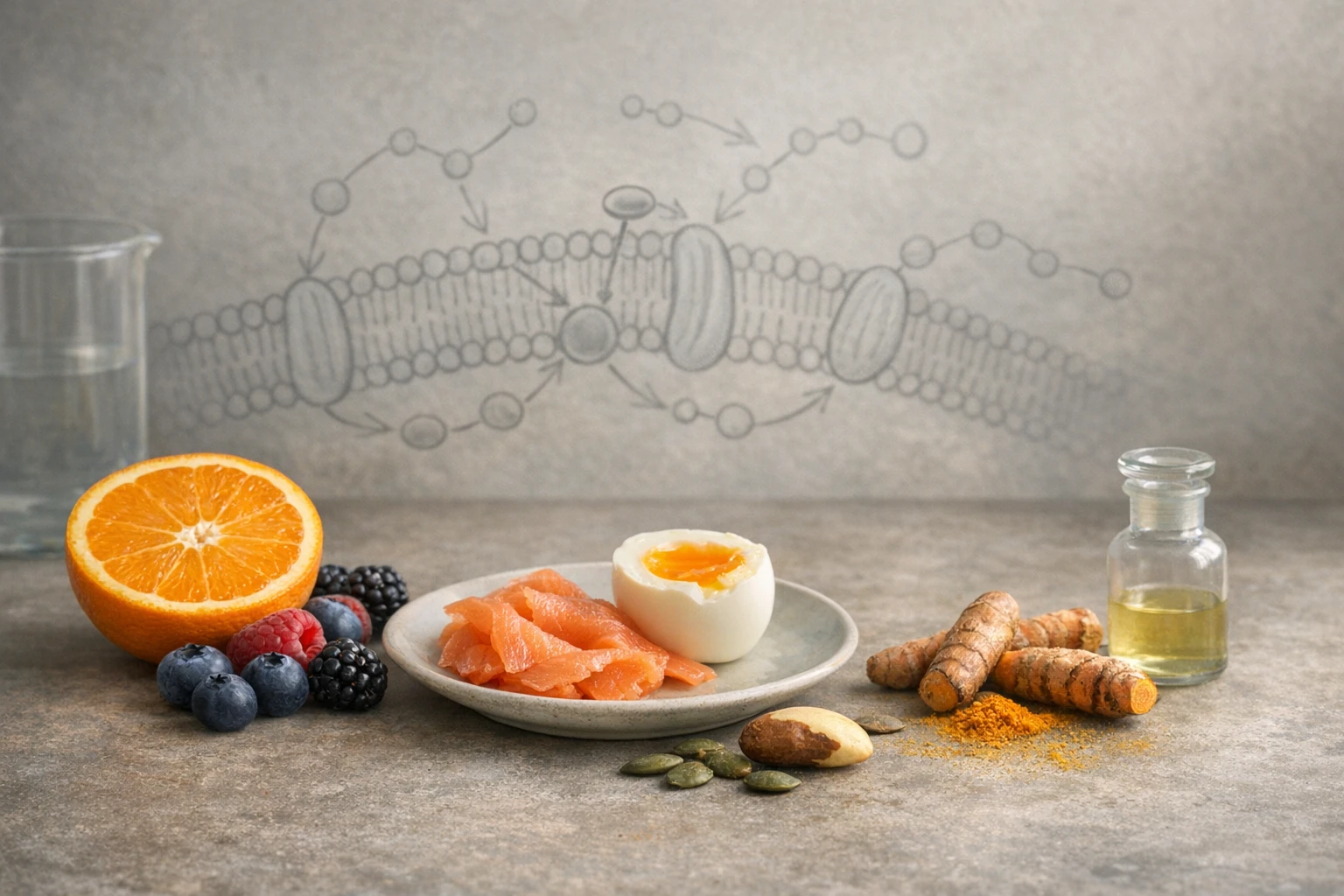
Updated and contextualized version of an article originally published on October 21, 2020
The article retains its original focus by presenting it through a scholarly and accessible perspective, supported by verifiable references.
Authors
- Dr. D. Iodice – Biologist
- Roberto Panzironi –Independent researcher
Note editoriali
- First publication: October 21, 2020
- Last update: April 18, 2026
- Version: 2026 narrative revision
Initial note: This text is based on a previously published article and has been updated to reflect the latest scientific reviews and communication criteria. Its purpose is informative: it does not replace the advice of a doctor or healthcare professional.
In brief
- Antioxidants, vitamins, and some minerals support basic immune functions and the protection of bodily barriers, but they are not a "cure" for infections.
- Evidence shows supportive roles for vitamin C, vitamin D, zinc and selenium in immune-related processes; effects on infections vary by dose, baseline status and study design.
- A varied diet, reasonable sun exposure, and attention to deficiencies remain priorities; supplementation should be targeted and evaluated by a professional.
- Many studies are observational or heterogeneous: results should be interpreted with caution and in an epidemiological context.
Abstract: what does science say?
Antioxidants (molecules that limit oxidative stress) and micronutrients (vitamins and minerals) participate in cellular and barrier functions that support the immune response. The literature shows consistent associations between adequate nutritional status and improved immune response capacity, but the protective effect against acute infections depends on the context: baseline nutrient levels, form and dose of administration, timing of intake, and characteristics of the studied population. In some cases, supplements have reduced the duration or severity of respiratory symptoms; in others, the benefits are modest or uncertain. Methodological limitations (heterogeneity of studies, different outcome measures, possible biases) require cautious interpretations: the most robust strategy for the general population remains a varied diet, control of deficiencies, and targeted use of supplementation on medical advice.
Main section
Antioxidants, oxidative stress and the immune system
Oxidative stress is the set of processes in which reactive species (ROS) overcome the body's antioxidant defenses, promoting inflammation and cellular alterations. This link with inflammatory responses and tissue damage is well documented in reviews on the pathophysiology of oxidative damage and inflammation. In conditions of intense physical exercise, smoking, aging, or malnutrition, redox imbalance can be more pronounced and influence the function of innate and adaptive immune cells [1]. Endogenous and dietary antioxidants (e.g., vitamins C and E, polyphenolic compounds) contribute to maintaining redox homeostasis and limiting the damaging effects of oxidative stress at the mucosal and tissue levels.
Micronutrients that influence immune defense
A broad framework of reviews synthesizes how multiple nutrients collaborate in supporting physical barriers, cellular functions, and inflammatory response. Vitamins (A, C, D, E, some B-group), minerals (zinc, selenium, iron in balance), and plant compounds act on different processes: antibody production, phagocyte activity, lymphocyte function, and inflammation modulation [2]. Evidence indicates that clinical outcomes often depend on the initial status (e.g., deficiency or sufficiency) and the methods of supplementation.
Vitamin C: role and evidence
Vitamin C is a water-soluble antioxidant that supports the function of immune cells, contributes to the integrity of mucosal barriers, and participates in various metabolic reactions. Reviews and syntheses of clinical studies show that, while not a universal protection against infections, vitamin C can reduce the duration and severity of some cold episodes, especially in individuals with increased needs or documented deficiencies [3][4]. The effect depends on the dose, method of administration, and population: clearer benefits are observed in those starting from low baseline levels or in conditions of metabolic stress.
Vitamin D: evidence on respiratory infections
Vitamin D regulates innate and adaptive immune functions, and its insufficiency is common in many populations. Meta-analyses of individual data from randomized trials indicate that supplementation can reduce the risk of respiratory infections in some groups, with a more marked effect in those with very low 25-OH-vitamin D levels at baseline and when supplementation is administered regularly (daily or weekly) rather than in large intermittent doses [5]. These results do not imply that massive supplementation is always necessary: the practical impact varies by age, nutritional status, and clinical conditions.
Zinc and selenium: functions and limitations of evidence
Zinc and selenium are involved in antioxidant processes and in regulating the immune response. The clinical value of zinc during a cold has been studied in numerous trials; recent systematic reviews show that zinc can modestly reduce the duration of symptoms, but the quality of evidence and the variability of formulations limit definitive conclusions [6]. For selenium, experimental and observational studies suggest roles in modulating viral infections and in the synthesis of antioxidant selenoproteins, with historical examples linking severe deficiencies to increased infectious diseases [7][8]. However, indiscriminate supplementation is not recommended: excess minerals can be harmful.
Plant extracts and active ingredients (turmeric, echinacea)
Some plants and their extracts (e.g., Turmeric/curcumin, Echinacea spp.) show immunomodulatory effects in experimental studies and some clinical research. Reviews indicate that these compounds can modulate inflammatory pathways and immune activity parameters, but the quality, standardization, and variability of preparations make it difficult to translate results into generalized recommendations [9][10]. In practice, use should be based on standardized products and, if necessary, under professional supervision.
Practical section
What it means in practice
For the general population, the concrete priorities are: following a varied diet rich in fruits, vegetables, quality protein sources, and healthy fats; maintaining a lifestyle that includes regular physical activity, adequate sleep, and avoiding tobacco. These habits reduce the risk of deficiencies and support overall immune function [2][1]. In the presence of specific risk factors (advanced age, chronic diseases, restrictive diets, prolonged exposure to physical or environmental stress), it is sensible to check micronutrient status (laboratory tests) and talk to a doctor about the advisability of targeted supplementation. Supplementation can be useful in cases of documented deficiency (for example, vitamin D insufficiency), while generalized and unsupervised use of high doses is not recommended due to the risk of overdose or drug interactions [5][7]. For those who engage in intense exercise: there is evidence that prolonged or very intense exercise can temporarily alter immune parameters; attention to recovery, energy intake, and a balanced diet is important to maintain immune defenses in balance [11].
Key points to remember
- Micronutrients and antioxidants support basic immune functions; their importance is greater in conditions of deficiency or increased need.
- Vitamin C and D have the largest body of studies with observable effects; real clinical benefits vary based on individual context [3][5][4].
- Zinc and selenium show plausible biological roles, but definitive clinical evidence for infection prevention is limited and depends on formulation and initial status [6][7].
- Plant extracts like curcumin and echinacea have immunomodulatory potential, but clinical results are heterogeneous and linked to specific preparations [9][10].
- There are no "miracle solutions": prioritize a balanced diet, control deficiencies, and consult a doctor for targeted supplementation.
Limitations of evidence
Difference between observational studies and causal evidence: many studies linking nutritional status and infection risk are observational and do not establish direct causality. Randomized clinical trials provide more robust evidence, but often present heterogeneity in populations, dosages, and measured outcomes; this makes it difficult to generalize results [2][3][5]. Methodological limitations: sample sizes are not always adequate, different measurements (self-reported symptoms vs. clinical diagnoses), and variations in formulations (e.g., different forms of zinc or curcumin) reduce the comparative quality of evidence [6][9]. Context variability: the effectiveness of supplementation depends on the baseline nutrient level, age, comorbidities, and environmental factors (sun exposure for vitamin D). Therefore, recommendations must be personalized. Need for caution: unsupervised use of high-dose supplements can carry risks (toxicity, drug interactions). Further well-designed research is needed to define efficacy thresholds, optimal doses, and groups that benefit most.
Editorial conclusion
Research confirms that antioxidants and micronutrients play essential roles in maintaining immune functions. However, the complexity of biological mechanisms and the variability of studies require a balanced approach: promoting a varied diet and healthy lifestyles, identifying and correcting documented deficiencies, and using supplementation following clinical evaluations. Public communication must avoid absolute messages or therapeutic promises: evidence suggests targeted benefits in specific contexts, not universal solutions.
Editorial note
Editorial staff: this update has been prepared with criteria of divulgative rigor and citation. Scientific sources are indicated in the final section. For personal clinical questions, consult your doctor.
Scientific research
- Reuter S, Gupta SC, Chaturvedi MM, Aggarwal BB. Oxidative stress, inflammation, and cancer: How are they linked? Free Radic Biol Med. 2010;49(11):1603–1616. https://doi.org/10.1016/j.freeradbiomed.2010.09.006
- Gombart AF, Pierre A, Maggini S. A review of micronutrients and the immune system—working in harmony to reduce the risk of infection. Nutrients. 2020;12(1):236. https://doi.org/10.3390/nu12010236
- Carr AC, Maggini S. Vitamin C and immune function. Nutrients. 2017;9(11):1211. https://doi.org/10.3390/nu9111211
- Hemilä H, Chalker E. Vitamin C reduces the severity of common colds: a meta-analysis. BMC Public Health. 2023;23:2468. https://doi.org/10.1186/s12889-023-17229-8
- Martineau AR, Jolliffe DA, Hooper RL, et al. Vitamin D supplementation to prevent acute respiratory tract infections: systematic review and meta-analysis of individual participant data. BMJ. 2017;356:i6583. https://doi.org/10.1136/bmj.i6583
- Nault D, Machingo TA, Shipper AG, et al. Zinc for prevention and treatment of the common cold. Cochrane Database Syst Rev. 2024;5:CD014914. https://doi.org/10.1002/14651858.CD014914.pub2
- Rayman MP. Selenium and human health. Lancet. 2012;379(9822):1256–1268. https://doi.org/10.1016/S0140-6736(11)61452-9
- Beck MA, Levander OA, Handy J. Selenium deficiency and viral infection. J Nutr. 2003;133(5 Suppl 1):1463S–1467S. https://doi.org/10.1093/jn/133.5.1463S
- Catanzaro M, Corsini E, Rosini M, Racchi M, Lanni C. Immunomodulators inspired by nature: a review on curcumin and echinacea. Molecules. 2018;23(11):2778. https://doi.org/10.3390/molecules23112778
- Hewlings SJ, Kalman DS. Curcumin: a review of its effects on human health. Foods. 2017;6(10):92. https://doi.org/10.3390/foods6100092
- Nieman DC. Exercise immunology: future directions for research related to athletes, nutrition, and the elderly. J Sport Health Sci. 2020;9(5):432–445. https://doi.org/10.1016/j.jshs.2019.12.003