Initial Note: This article was previously published and has been updated according to scientific and communication criteria. The content is for informational purposes only and does not replace individual medical advice; for health problems, consult a healthcare professional.
IN BRIEF
- Prolonged stress can affect the status of certain micronutrients (e.g., magnesium, zinc), with possible impacts on energy and mood.
- Evidence supports a modular role of B vitamins on fatigue and stress in at-risk individuals, but does not attest to universal efficacy in all contexts.
- In subjects with deficiency, vitamin C and D can improve symptoms related to energy and mood; however, some clinical evidence is heterogeneous.
- For those who engage in intense physical activity, the loss of electrolytes through sweat (sodium, potassium, magnesium) is significant and should be considered in hydration management.
- A balanced diet and clinical evaluation remain the primary strategy; supplementation should be assessed on a case-by-case basis with professionals.
MAIN SECTION
Abstract: what does science say?
The relationship between psycho-physical stress, fatigue, and micronutrient status is complex. There is observational and experimental evidence showing associations between low levels of certain vitamins and minerals (B-vitamins, magnesium, vitamin C, vitamin D, zinc) and symptoms such as fatigue, mood changes, and reduced resilience to stress. Randomized clinical trials suggest selective benefits: B-complex supplements can reduce stress symptoms in people with suboptimal nutritional status; vitamin D shows dose-dependent effects on depressive symptoms in some trials; vitamin C, in subjects with low status, can improve feelings of vitality. However, many studies are heterogeneous in design, populations, and doses, so results should be interpreted with caution and contextualized to individual nutritional status.
PRACTICAL SECTION
What it means in practice
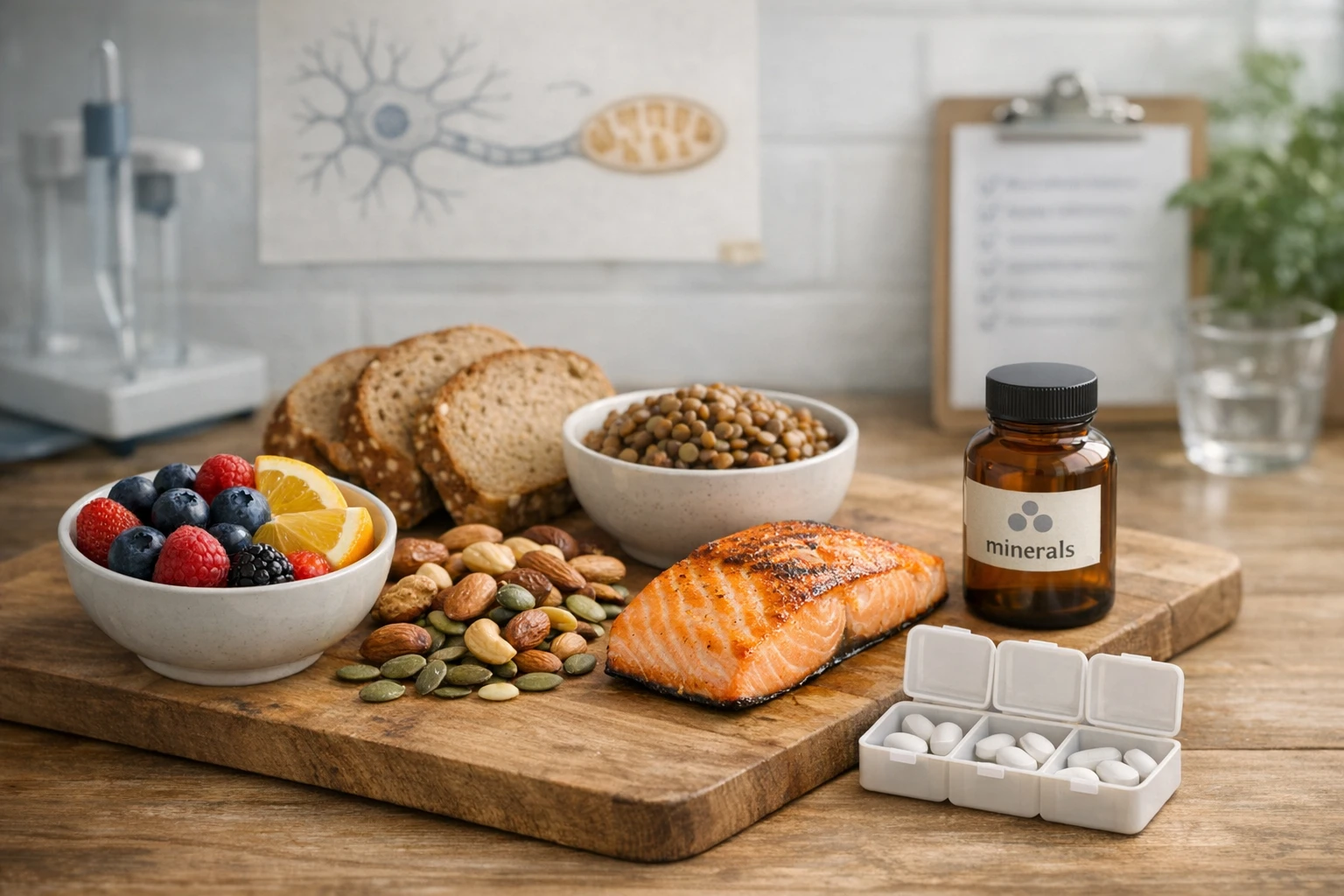
For the reader, this means: first, evaluate your general status (diet, sleep, physical activity, symptoms). In the presence of chronic fatigue, mood swings, or reduced performance, it may be useful to check your nutritional status with your doctor (tests for vitamin D, iron, B12, hemoglobin, electrolyte profile) and not start arbitrary supplementation. There are two practical strategies: optimize your diet with micronutrient-rich foods (whole grains, legumes, leafy vegetables, fresh fruit, nuts, fish, eggs) and, when indicated, consider targeted supplementation under clinical supervision. For active individuals or athletes, attention is paid to hydration and the replenishment of electrolytes lost through sweat. The extent of the deficiency and the context (age, pregnancy, chronic diseases, medication use) guide the clinical decision.
Specialized literature indicates that stress and physical exertion can alter the distribution and excretion of certain micronutrients, with potential impact on energy and immune function [1]. Furthermore, interventions with B-vitamins have shown improvements in some stress parameters in "at-risk" populations or those with suboptimal status [2]. For example, increasing vitamin C intake with rich foods can improve feelings of vitality in people with low vitamin C status [3]. Small clinical trials suggest effects on anxiety reduction in specific contexts with vitamin C supplementation [4]. For magnesium, meta-analyses and reviews indicate positive effects on depressive symptoms and aspects related to anxiety and sleep, albeit with variability between studies [5]. Vitamin D shows dose-dependent evidence on depressive symptoms in some combined analyses [6]. Zinc, which plays immune and antioxidant functions, has been associated with mood status and can enhance the effect of antidepressants in some trials [7]. Finally, the loss of sodium and other electrolytes in sweat is well documented in athletes, and their replacement should be weighed based on the duration and intensity of exercise [8].
Practical operational points
Non-prescriptive guidelines
- Prioritize a varied diet rich in whole foods as a first measure to support micronutrient balance.
- Evaluate, with your doctor, the dosage and necessity of supplementation if there are clinical signs or tests indicating deficiencies (e.g., vitamin D, B12, iron).
- For those who engage in intense physical activity, evaluate electrolyte rebalancing (sodium, potassium, magnesium) based on sweat loss and exercise duration; hydration based on thirst is a basic strategy, but in endurance, targeted replenishment may be necessary.
- Do not use high-dose supplements as a first-line solution without clinical supervision; overdosing on some micronutrients can be harmful.
KEY POINTS TO REMEMBER
- Stress can be associated with variations in micronutrient status, but association does not equate to direct causation.
- B-vitamins and magnesium are among the most studied micronutrients in relation to fatigue, stress, and nervous function; benefits emerge especially in people with suboptimal status. [2][5]
- Vitamin C can increase feelings of vitality in those with low plasma levels; some small studies indicate anxiety reduction in specific contexts. [3][4]
- Vitamin D shows dose-dependent effects on depressive symptoms in meta-analyses, but the response varies by population and intervention duration. [6]
- Electrolyte replacement is relevant for athletes and for prolonged heat exposure; sweat composition varies greatly between individuals. [8]
LIMITATIONS OF EVIDENCE
It is important to distinguish between types of studies and their limitations. Observational studies show associations between low intake or low plasma concentration of a micronutrient and a higher prevalence of symptoms (e.g., fatigue, depression), but they do not establish causality: sick people or those under prolonged stress may consume less food or absorb nutrients poorly, leading to inverse associations. Reviews of randomized clinical trials provide more robust evidence, but trials often differ in dose, duration, population (healthy subjects vs. patients), and measured outcomes, producing heterogeneous results. Common methodological limitations include small samples, short follow-up, absence of baseline nutritional status measurements, and use of different supplement formulations. Individual variability (genetics, medications, health status, microbiota) makes it difficult to generalize results. Therefore, practical recommendations must be personalized and based on clinical evaluation.
Editorial conclusion
The idea of an "anti-stress diet" that prioritizes food sources of vitamins and minerals is supported by the literature: cautious science shows that optimizing nutritional status can contribute to resilience, energy, and mood, especially in those with suboptimal status or risk conditions. However, there are no miraculous cures: diet, sleep, physical activity, stress management, and integrated medical evaluation remain fundamental choices. Specific supplements may be useful if justified by tests and a clinical evaluation. Public communication should promote evidence-based and safe food choices, avoiding generalized approaches and uncontrolled doses.
Editorial note
Article originally published in the past and updated to current editorial and scientific criteria for accuracy, clarity, and transparency. The text is informative and not intended to replace personalized medical advice. For diagnosis, therapy, or therapeutic changes, consult your doctor or specialist.
SCIENTIFIC RESEARCH
- Conner TL, Young LM, Pipingas A, White DJ, Gauci S, Scholey A. A Systematic Review and Meta‑Analysis of B Vitamin Supplementation on Depressive Symptoms, Anxiety, and Stress: Effects on Healthy and ‘At‑Risk’ Individuals. Nutrients. 2019. https://doi.org/10.3390/nu11092232
- Moabedi M, Aliakbari M, Erfanian S, Milajerdi A. Magnesium supplementation beneficially affects depression in adults with depressive disorder: a systematic review and meta‑analysis of randomized clinical trials. Frontiers in Psychiatry. 2023. https://doi.org/10.3389/fpsyt.2023.1333261
- Conner T, et al. KiwiC for Vitality: Results of a Placebo‑Controlled Trial Testing the Effects of Kiwifruit or Vitamin C Tablets on Vitality in Adults with Low Vitamin C Levels. Nutrients. 2020. https://doi.org/10.3390/nu12092898
- De Souza VV, Motta V, Da‑Silva SL. Effects of Oral Vitamin C Supplementation on Anxiety in Students: A Double‑Blind, Randomized, Placebo‑Controlled Trial. Pakistan Journal of Biological Sciences. 2015. https://doi.org/10.3923/pjbs.2015.11.18
- Tarleton EK, et al. The Effects of Magnesium Supplementation on Subjective Anxiety and Stress — A Systematic Review. Nutrients. 2017. https://doi.org/10.3390/nu9050429
- Semnani S, et al. The effect of vitamin D supplementation on depression: a systematic review and dose‑response meta‑analysis of randomized controlled trials. Psychological Medicine. 2024. https://doi.org/10.1017/S0033291724001697
- Lai JT, et al. Zinc supplementation combined with antidepressant drugs for treatment of patients with depression: a systematic review and meta‑analysis. Nutrition Reviews. 2021. https://doi.org/10.1093/nutrit/nuaa039
- Pepin ME, et al. Sweating Rate and Sweat Sodium Concentration in Athletes: A Review of Methodology and Intra/Interindividual Variability. Sports Medicine. 2017. https://doi.org/10.1007/s40279-017-0691-5
- Stuart K, et al. The Effects of Psychological and Environmental Stress on Micronutrient Concentrations in the Body: A Review of the Evidence. Advances in Nutrition. 2019. https://doi.org/10.1093/advances/nmz082