Updated and contextualized version of an article originally published on June 23, 2021
The article retains its original focus by presenting it through a scholarly and accessible perspective, supported by verifiable references.
Authors
- Dr. M. Mondini – Biologist
- Roberto Panzironi –Independent researcher
Note editoriali
- First publication: June 23, 2021
- Last update: April 18, 2026
- Version: 2026 narrative revision
Initial note: This article was previously published and has been updated according to scientific and informative criteria to offer the reader a current, clear, and transparent overview. The information is for informational purposes only and does not replace medical advice.
IN BRIEF
- Antioxidants are molecules that limit the action of free radicals and participate in cellular defense; their role depends on the biological context and the source (dietary vs. supplemental).
- Physical activity increases the production of reactive oxygen species, but these also contribute to the beneficial adaptations of training.
- Clinical evidence on antioxidant supplements is contradictory: randomized studies do not show clear, established benefits for the heart and cancer, and in some cases, indicate risks associated with high-dose supplementation.
- A diet rich in fruits, vegetables, nuts, fish, and foods rich in polyphenols and omega-3 offers a prudent and sustainable strategy to support antioxidant protection.
Abstract: what does science say?
Simple definition: antioxidants are substances that limit the formation or action of reactive oxygen species and other oxidizing agents. Available evidence shows that oxidative stress is involved in biological processes related to inflammation, aging, and chronic diseases, but the protective effect of antioxidants varies greatly depending on the source (food vs. supplements), dose, and clinical context. Randomized trials on supplements have not confirmed generalized benefits for cardiovascular or cancer prevention; some studies even indicate adverse effects at high doses. For athletes, the balance is delicate: exercise generates radicals that are also signals for adaptation; some supplements can interfere with these processes. Interpretive limitations: many observations come from observational studies or experimental evidence on biomarkers, and cannot be automatically translated into clinical recommendations. In summary, diet remains the first choice for modulating antioxidant status; the use of supplements should be evaluated on a case-by-case basis with a healthcare professional.
What are antioxidants and how do they work?
Antioxidants include a wide range of molecules: endogenous enzymes (e.g., superoxide dismutase, catalase, glutathione peroxidase), water-soluble and fat-soluble vitamins (C, E), carotenoids, polyphenols, and micronutrients like selenium. From a biological perspective, their main role is to control the cell's redox balance, i.e., the equilibrium between the production of reactive species (ROS/RNS) and defense systems that neutralize them. Under physiological conditions, this balance is dynamic: ROS are not only harmful but also perform signaling and metabolic regulatory functions. When the production of reactive species exceeds the defensive capacity, oxidative stress occurs, with potential damage to lipids, proteins, and DNA. Scientific reviews describe these molecular mechanisms and their relationship with chronic diseases, emphasizing that the impact of antioxidants depends on the type of molecule, concentration, duration of exposure, and tissue involved [1].
Antioxidants in sports: benefits, limitations, and caution
For those who practice sports, the topic of antioxidants is particularly relevant because exercise temporarily increases the production of reactive species. This phenomenon is a physiological response to increased energy expenditure and mitochondrial activity: it can cause damage if excessive, but it is also the signal that initiates beneficial adaptations such as mitochondrial biogenesis and improved insulin sensitivity. From a practical point of view, an adequate diet that provides carotenoids, vitamins, and polyphenols supports recovery and muscle function without suppressing the physiological signals necessary for adaptation [2].
Why physical activity increases oxidative stress
Increased oxygen consumption during exertion leads to greater production of free radicals at the mitochondrial level and in muscle cells. This overproduction is often temporary and balanced by the activation of endogenous antioxidant mechanisms, which are strengthened with regular training. In other words, exercise teaches the body to "repair" itself better: oxidative stress acts as an adaptive signal, not just a threat. In pathological conditions or in the presence of extreme and repeated efforts without adequate recovery, however, damage can exceed defenses and promote inflammation and fatigue [2].
Supplements, adaptation, and possible interferences
Experimental evidence in humans has shown that high-dose supplementation with antioxidant vitamins (e.g., vitamin C and E) can attenuate some cellular responses to training, such as the induction of endogenous antioxidant enzymes and mitochondrial biogenesis. This suggests that the indiscriminate use of high-dose supplements could reduce some of the benefits of exercise, particularly those related to metabolism and glucose tolerance [3]. These results should not be interpreted as a universal "prohibition," but as a call for caution: doses, timing, and population (athletes vs. sedentary; training phase vs. recovery) make a difference.
Antioxidants and chronic diseases: what studies say
Research has explored the role of antioxidants in the prevention of cardiovascular, metabolic, and oncological diseases. Observational studies have often found inverse associations between the consumption of antioxidant-rich foods and disease risk, but clinical trials with purified supplements have yielded contradictory results. Meta-analyses of randomized studies on antioxidant vitamins do not show a consistent reduction in cardiovascular events and in some cases indicate a lack of benefit or potential harm [4]. For cancer, large randomized trials on single supplements have not confirmed a uniform protective effect; one of the most well-known studies (SELECT) did not demonstrate prostate cancer prevention and raised doubts about possible adverse effects in specific subgroups [6].
Cardiovascular: conflicting evidence
Meta-analyses on antioxidant supplements have generally shown null or inconsistent results for reducing major cardiovascular events. The analyses suggest that the simple administration of large doses of vitamin E, vitamin C, or beta-carotene does not reproduce the benefits observed in diets rich in plant foods; factors such as population type, dosage, duration, and underlying conditions influence the results [4].
Cancer: results from randomized trials
Large-scale randomized trials have evaluated single supplements for cancer prevention. The SELECT (Selenium and Vitamin E Cancer Prevention Trial) project included over 35,000 participants and did not show a reduction in prostate cancer risk with the tested doses; in some cases, the hypothesis of an increased risk in specific subgroups emerged [6]. These results highlight the complexity of the interaction between micronutrients and tumors and the importance of not automatically transferring observational evidence on dietary benefits to pharmacological supplements.
Food sources and bioavailability
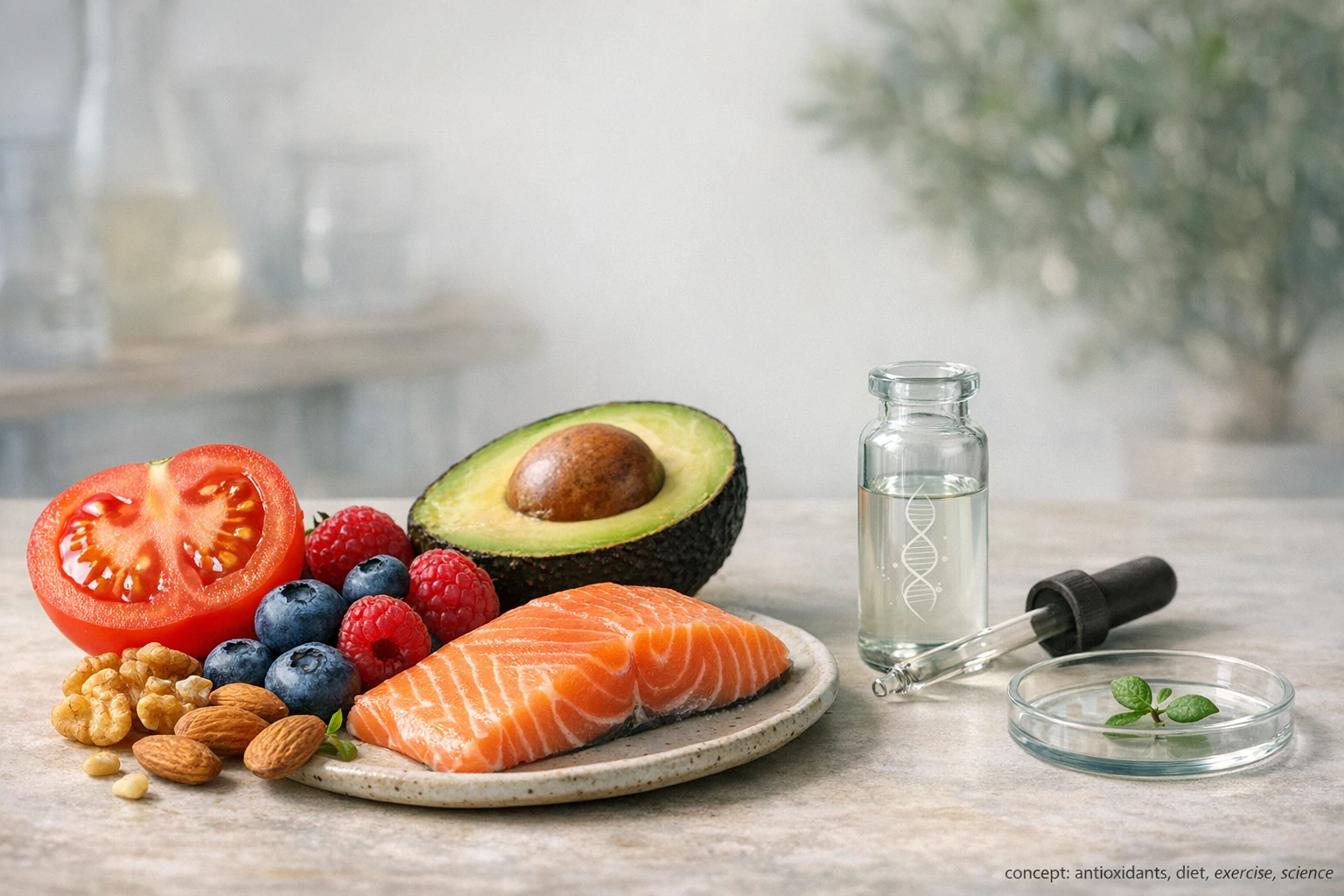
Many antioxidants useful for health are present in foods: vitamin C in citrus fruits and peppers, vitamin E in vegetable oils and avocado, carotenoids in yellow-orange fruits and vegetables, polyphenols in tea, coffee, berries, grapes, and cocoa. The bioavailability and biological effect of these molecules depend on the food matrix, transformation during digestion, and individual factors (gut microbiota, nutritional status). Reviews on the bioaccessibility and metabolism of polyphenols highlight that diet provides a complex combination of compounds that act synergistically, with different effects compared to isolated single compounds [7]. A diversified dietary approach maximizes the availability of useful antioxidants without the risks associated with pharmacological doses.
Omega-3: role, evidence, and limitations
Omega-3 fatty acids from marine sources (EPA, DHA) have anti-inflammatory effects and can influence lipid peroxidation. Clinical evidence on omega-3 supplements for cardiovascular prevention is extensive but heterogeneous: some meta-analyses show benefits in particular contexts or with specific pharmacological preparations, while others find no significant effects on all cardiovascular outcomes. Various factors—dose, composition (EPA vs. DHA), studied population, and therapeutic background—influence the outcome and require contextual interpretations [8].
What it means in practice
1) Diet before supplements. Prioritize diet as the primary source of antioxidants: fruits, vegetables, whole grains, nuts, seeds, oily fish, and tea contain compounds that act complementarily and safely. 2) Contextualize supplementation. The use of antioxidant supplements can be evaluated in specific clinical or nutritional conditions (e.g., documented deficiencies), but it is not recommended as a generalized preventive strategy without medical supervision. 3) Athletes and amateurs. For athletes, promote recovery with an adequate diet and moderate nutrient intake; be cautious with high-dose supplements that can interfere with training adaptations [3]. 4) Evaluate risks and benefits. Some trials show a lack of benefit or possible risks with high-dose supplements; therefore, their use should be considered based on age, health conditions, concomitant medications, and clinical objectives [4][5]. 5) Prefer evidence-based interventions. Multifactorial interventions (diet, physical activity, weight control, smoking cessation) show greater evidence of benefit compared to the isolated use of supplements.
KEY POINTS TO REMEMBER
- Antioxidants are important components of biological defense, but they are not a universal cure.
- Diet remains the primary and safest strategy to obtain health-promoting antioxidants.
- High-dose supplements are not always beneficial: large trials have not confirmed clear reductions in cardiovascular or oncological events and in selected cases have shown signs of harm.
- For athletes, radicals produced by exercise also have an adaptive role; be cautious with supplementation that can attenuate these signals.
- The choice of supplements should always be personalized and discussed with a healthcare professional.
Limitations of evidence
It is crucial to distinguish between types of studies: observational studies (which find correlations between food consumption and disease risk) are not equivalent to causal evidence; randomized clinical trials (RCTs) are the most robust criterion for evaluating the effects of specific interventions. However, RCTs also have limitations: selected populations, dosages not comparable to real dietary behavior, follow-up duration, compliance, and variable outcome measures. Much research measures biomarkers of oxidative stress rather than long-term clinical events, which complicates practical inferences. Furthermore, the effect of antioxidants is influenced by individual factors such as baseline nutritional status, genetics, gut microbiota, and co-therapies. Therefore, conclusions must be prudent and contextualized: no automatic substitution of diet with supplements, and the need for further well-designed studies to clarify effective subgroups and dosages [4][5].
Editorial conclusion
Current scientific literature suggests that antioxidants are biologically relevant components for health, but their role is neither linear nor universally protective when administered as single high-dose supplements. For most of the population, the most robust and sustainable strategy is a varied and balanced diet that provides a full range of antioxidants and co-factor nutrients. For athletes, the priority is adequate nutrition and a recovery plan; specific supplementation can be evaluated on a case-by-case basis in light of the evidence. Finally, therapeutic or preventive choices regarding supplementation should always be discussed with a doctor or nutritionist, evaluating risks, benefits, and individual context.
Editorial note
Article updated based on peer-reviewed sources and meta-analyses. The update aims to promote clarity, transparency, and verifiability of sources. The information presented is for informational purposes and does not replace personalized medical advice.
SCIENTIFIC RESEARCH
- Valko M, Leibfritz D, Moncol J, Cronin MT, Mazur M, Telser J. Free radicals and antioxidants in normal physiological functions and human disease. Int J Biochem Cell Biol. 2007;39:44–84. https://doi.org/10.1016/j.biocel.2006.07.001
- Powers SK, Jackson MJ. Exercise-Induced Oxidative Stress: Cellular Mechanisms and Impact on Muscle Force Production. Physiol Rev. 2008;88(4):1243–1276. https://doi.org/10.1152/physrev.00031.2007
- Ristow M, Zarse K, Oberbach A, et al. Antioxidants prevent health-promoting effects of physical exercise in humans. Proc Natl Acad Sci U S A. 2009;106(21):8665–8670. https://doi.org/10.1073/pnas.0903485106
- Vivekananthan DP, Penn MS, Sapp SK, Hsu A, Topol EJ. Use of antioxidant vitamins for the prevention of cardiovascular disease: meta-analysis of randomised trials. Lancet. 2003;361:2017–2023. https://doi.org/10.1016/S0140-6736(03)13637-9
- Bjelakovic G, Nikolova D, Gluud LL, Simonetti RG, Gluud C. Mortality in randomized trials of antioxidant supplements for primary and secondary prevention: systematic review and meta-analysis. JAMA. 2007;297(8):842–857. https://doi.org/10.1001/jama.297.8.842
- Lippman SM, Klein EA, Goodman PJ, et al. Effect of Selenium and Vitamin E on Risk of Prostate Cancer and Other Cancers: The Selenium and Vitamin E Cancer Prevention Trial (SELECT). JAMA. 2009;301(1):39–51. https://doi.org/10.1001/jama.2008.864
- Manach C, Scalbert A, Morand C, Rémésy C, Jiménez L. Polyphenols: food sources and bioavailability. Am J Clin Nutr. 2004;79(5):727–747. https://doi.org/10.1093/ajcn/79.5.727
- Aung T, Halsey J, Kromhout D, et al. Associations of Omega-3 Fatty Acid Supplement Use With Cardiovascular Disease Risks: Meta-analysis of 10 Trials Involving 77,917 Individuals. JAMA Cardiol. 2018;3(3):225–233. https://doi.org/10.1001/jamacardio.2017.5205