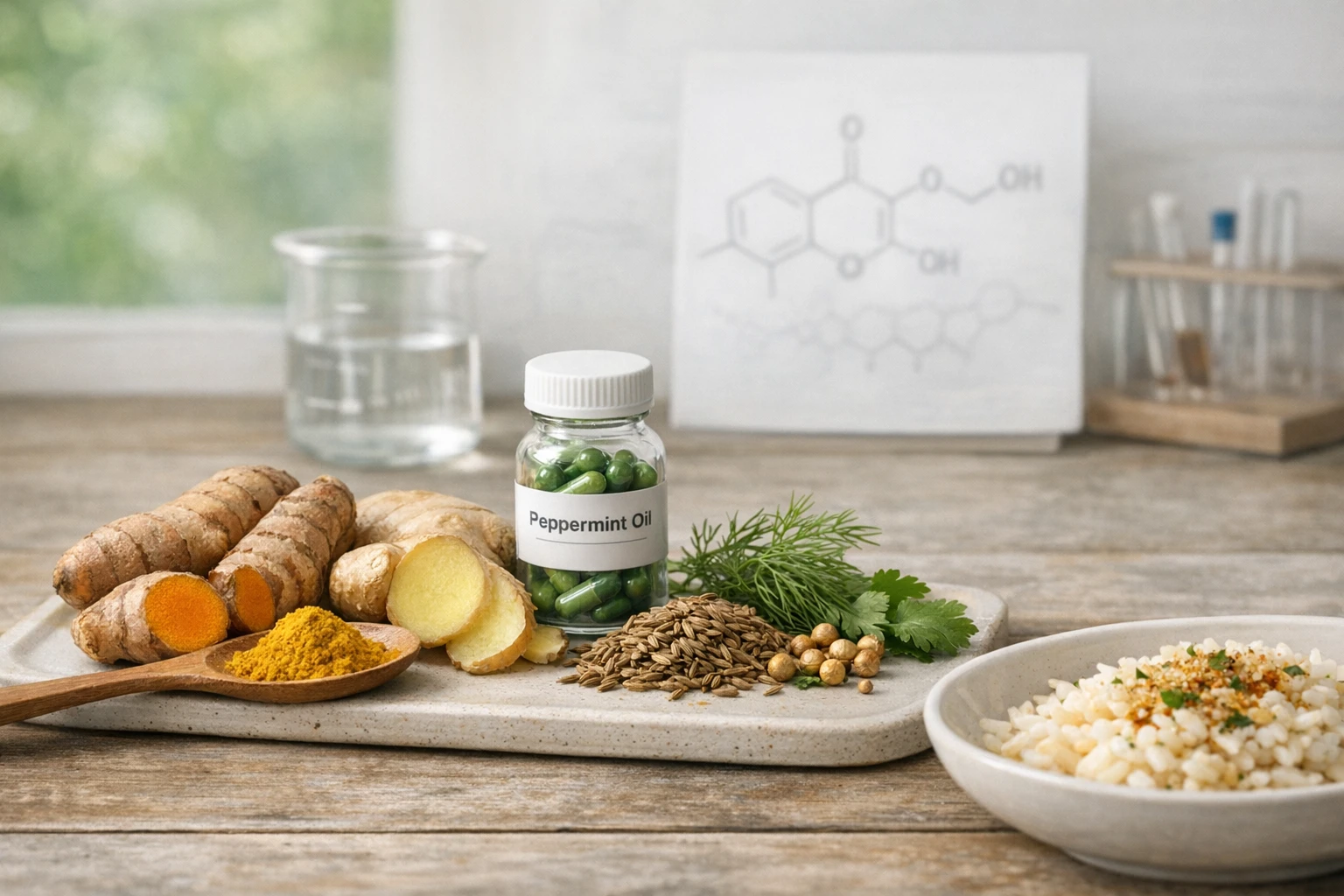
Updated and contextualized version of an article originally published on May 7, 2021
The article retains its original focus by presenting it through a scholarly and accessible perspective, supported by verifiable references.
Authors
- Dr. M. Bitonti – Biologist
- Roberto Panzironi –Independent researcher
Note editoriali
- First publication: May 7, 2021
- Last update: April 18, 2026
- Version: 2026 narrative revision
Initial note: This article was previously published and has been updated according to scientific and informative criteria. The text is for informational purposes only and does not replace medical advice. For therapeutic choices, always consult a healthcare professional.
In brief
- Spices commonly used in cooking contain bioactive compounds with antioxidant properties and modulatory effects on inflammatory processes and intestinal motility.
- Clinical studies and reviews show signs of benefit for turmeric (particularly in contexts of ulcerative colitis as an adjuvant), ginger (nausea, gastric motility), and mint (IBS symptoms), but the strength of evidence varies greatly.
- An experimental spice blend reduces markers of inflammation after a high-fat, high-carbohydrate meal in overweight subjects; however, the results do not imply general therapeutic effects.
- Quality, dose, form of intake (food vs. extract), and duration determine the observable effect; larger and more controlled studies are still needed.
Abstract: What does science say?
Spices used in cooking — including turmeric, ginger, cumin, fennel, coriander, and mint — contain molecules with antioxidant, anti-inflammatory, and gastrointestinal motility-modulating activity. Clinical studies and systematic reviews indicate specific benefits: for example, curcumin has been studied as a complement in ulcerative colitis, and ginger for nausea and gastric motility; mint (peppermint oil) shows favorable effects on irritable bowel syndrome (IBS) symptoms. Controlled research has also shown that the culinary addition of a spice blend to a high-fat, high-carbohydrate meal can attenuate the postprandial inflammatory response. However, the evidence is not homogeneous: many proofs come from small studies, with different formulations and limited durations. The effect depends on the botanical species, the active ingredient, the dose, the form (food spices vs. standardized extracts), and the clinical context. In conclusion, spices are interesting from a biological and nutritional point of view and can contribute to digestive well-being as part of a balanced diet, but they do not replace specific therapies for inflammatory or functional intestinal disorders.
Main section
Why spices are of interest for digestive health
Spices are concentrated sources of bioactive compounds (curcuminoids, gingerols, thymols, piperines, etc.) capable of modulating biological processes relevant to digestion: inflammation, oxidative stress, motility, and interaction with the gut microbiota. Population studies and clinical interventions have shown that culinary consumption of spices can reduce the acute inflammatory response after a high-fat, high-carbohydrate meal, suggesting a measurable impact at the metabolic and immune level [1]. Reviews that gather evidence on various herbs and spices highlight a frequent identification of anti-inflammatory and antioxidant effects, albeit with strong heterogeneity among studies and species examined [2].
General implications and limitations of evidence
The literature combines laboratory data, animal studies, small clinical studies, and some systematic reviews. This mosaic helps to understand plausible mechanisms but does not automatically establish a universal clinical effect. Decisive variables include the form of intake (cooking, concentrated extracts, essential oils), dose, duration, studied population (healthy, overweight, patients with IBD or IBS), and study design. In practice, many strong claims are not supported by robust and repeated evidence; therefore, results must be interpreted with caution and within the specific context of the cited study [2].
Turmeric
What research shows
The main component of turmeric, curcumin, is studied for its anti-inflammatory and antioxidant properties. In clinical contexts, curcumin has been evaluated as an adjuvant therapy in ulcerative colitis; a multicenter randomized study suggested a role in maintaining remission when used with standard therapy [3]. Systematic reviews of clinical trials indicate potential benefits, but also highlight variability in doses and formulations used, as well as methodological limitations in available studies [4].
Form of consumption and practical limits
The potential benefit depends on the bioavailability of curcumin: the substance alone is poorly absorbed and is often administered with delivery systems or piperine to improve its bioavailability. Furthermore, most positive studies have evaluated curcumin as a complement to medical therapy in patients with inflammatory bowel disease, not as a substitute. For this reason, any therapeutic use requires discussion with the treating physician and attention to drug interactions.
Ginger
Evidence on nausea and motility
The rhizome of Zingiber officinale contains gingerols and shogaols, compounds studied for their antiemetic activity and effects on gastric motility. Clinical studies in subjects with functional dyspepsia and in volunteers show that ginger consumption can accelerate gastric emptying time compared to placebo in certain contexts [5]. Reviews on nausea in pregnancy and chemotherapy-related nausea indicate a favorable effect, albeit with methodological limitations and variability in tested doses [6].
Safety and form of intake
Ginger is generally considered safe for food use and as a supplement at moderate doses, but the dose, duration, and possible effect on bleeding (interaction with anticoagulants) must be evaluated on a case-by-case basis. In pregnancy, most reviews conclude that moderate use can be helpful for nausea, but obstetric advice is important for each individual situation.
Cumin
Proposals and available evidence
Cumin (Cuminum cyminum) is traditionally used as a carminative and digestive aid. Controlled clinical studies are limited; some case series and small trials suggest a reduction in symptoms such as bloating and abdominal pain, but the evidence remains preliminary and often does not report robust DOIs or large population randomized controlled designs. In broader reviews on spices, cumin is cited among plants with potentially active compounds on digestion and enzymatic activity [2].
Interpreting the evidence
For cumin, biological plausibility (effects on digestive enzymes and bile flow) is supported by preclinical studies and limited clinical experience; however, well-designed and replicated trials are needed to confirm a defined role in the treatment of functional intestinal disorders.
Fennel
Properties and review of evidence
Fennel (Foeniculum vulgare) is traditionally used to reduce gas, cramps, and digestive discomfort. A comprehensive review summarizes phytocompounds, preclinical data, and clinical studies documenting antispasmodic, carminative, and antioxidant activities; however, most evidence comes from studies that are not always homogeneous and of variable quality [7].
Practical use and precautions
Fennel is commonly used as a remedy after meals to aid digestion. Forms based on herbal teas or extracts are the most common. Some components may have a modest estrogenic activity; therefore, in estrogen-sensitive conditions, it is advisable to consult a specialist.
Coriander
Mechanisms and applications
Coriander is valued for its carminative and antispasmodic properties that can reduce gastrointestinal gas retention. Laboratory studies and clinical observations support the plausibility of an effect on intestinal smooth muscles and some inflammatory processes, but large controlled trials confirming its efficacy in conditions like IBS are lacking. The available evidence makes the use of coriander a reasonable choice in terms of dietary support, not specific therapy [2].
Practical advice
For those seeking relief from bloating or cramps, culinary use of coriander or herbal teas can be considered as part of an overall dietary approach; however, if symptoms are persistent, clinical evaluation is necessary.
Mint
Clinical evidence for IBS
Peppermint oil (enteric-coated) is among the most studied herbal remedies for irritable bowel syndrome. Meta-analyses and reviews aggregate clinical trials that indicate a global improvement in symptoms and abdominal pain compared to placebo, with a variable effect size and some signs of transient adverse effects (epigastric burning, reflux) [8]. However, more recent large studies do not always replicate strong results for all formulations, highlighting the importance of specific formulation and intestinal release [9].
Method of use and safety
Peppermint oil in controlled-release capsules is the most studied form; topical or undiluted use is not recommended in the presence of reflux or esophagitis. The antispasmodic action is pharmacologically plausible, but the clinical effect depends on the dose and quality of the product.
Practical section
What it means in practice
For the general public, the practical interpretation of the evidence is simple and cautious: spices can enrich the nutritional and sensory value of meals and, in some cases, help reduce mild digestive symptoms and postprandial inflammatory responses when included in a balanced diet. For moderate or severe clinical problems (IBD, severe IBS, persistent vomiting), spices do not replace medical diagnoses and therapies; however, they can be considered as complementary tools, evaluating the form, dose, and possible drug interactions. In the presence of ongoing therapies (e.g., anticoagulants) or particular conditions (pregnancy, allergies), it is advisable to consult a doctor before taking concentrated extracts or supplements.
Key points to remember
- Spices contain compounds with biological activity relevant to digestion and inflammation, but the strength of evidence varies by species and condition.
- Turmeric/curcumin shows signs of benefit as an adjuvant therapy in ulcerative colitis in some controlled studies, but it is not a substitute for established treatments [3][4].
- Ginger is among the spices with the most evidence for nausea (in pregnancy and as an adjuvant), and it can influence gastric motility in some subjects [5][6].
- Peppermint oil can reduce IBS symptoms in aggregated studies, with efficacy linked to formulation and selected patients [8][9].
- A culinary spice blend can attenuate postprandial inflammation in overweight individuals, but this does not imply general therapeutic efficacy [1].
Limitations of evidence
What to consider when reading studies
There are crucial differences between observational studies and causal evidence. Many favorable results come from small, pilot, or preclinical studies; high-quality RCTs are rarer and often heterogeneous in dose, duration, and formulation. Systematic reviews help synthesize data but highlight methodological limitations, publication bias, and variability in results. Population characteristics (healthy vs. sick, age, comorbidities) and dietary context can modify the observed effect. Therefore, it is prudent not to generalize positive outcomes obtained under experimental conditions to all people or to all forms of consumption.
Editorial conclusion
Spices are food and cultural resources with an interesting biological profile. Current scientific evidence supports the plausibility of benefits for digestion, motility, and inflammation modulation in selected contexts. However, the picture is not uniform: solid benefits emerge in some cases (e.g., peppermint oil for IBS, ginger for nausea, curcumin as a complement in some studies on ulcerative colitis), while for other applications, the evidence remains initial. The recommended approach is one of informed moderation: valuing spices in the diet as part of a healthy eating style, discussing the use of extracts or supplements with a doctor in the presence of pathologies or concomitant therapies, and considering continuous research as a source of updates for more precise indications.
Editorial note
This update was carried out with criteria of scientific relevance, clear dissemination, and E-E-A-T (Experience, Expertise, Authoritativeness, Trustworthiness). The article summarizes evidence published in peer-reviewed literature and does not replace a medical visit or personalized therapeutic decisions.
Scientific research
The sources listed below are cited in the text with progressive numbering (Vancouver). DOIs are provided as verifiable links to allow direct checking of publications.
- Oh ES, Petersen KS, Kris‑Etherton PM, Rogers CJ. Spices in a High‑Saturated‑Fat, High‑Carbohydrate Meal Reduce Postprandial Proinflammatory Cytokine Secretion in Men with Overweight or Obesity: A 3‑Period, Crossover, Randomized Controlled Trial. The Journal of Nutrition. 2020. https://doi.org/10.1093/jn/nxaa063
- Vázquez‑Fresno R, et al. Herbs and Spices—Biomarkers of Intake Based on Human Intervention Studies: A Systematic Review. Genes & Nutrition. 2019. https://doi.org/10.1186/s12263-019-0636-8
- Hanai H, Iida T, Takeuchi K, et al. Curcumin Maintenance Therapy for Ulcerative Colitis: Randomized, Multicenter, Double‑Blind, Placebo‑Controlled Trial. Clinical Gastroenterology and Hepatology. 2006. https://doi.org/10.1016/j.cgh.2006.08.008
- Soares‑Mota M, et al. The Use of Curcumin as a Complementary Therapy in Ulcerative Colitis: A Systematic Review of Randomized Controlled Clinical Trials. Nutrients. 2020;12(8):2296. https://doi.org/10.3390/nu12082296
- Hu ML, Wu KL, Tai WC, Chou YP, Chuah SK. Effect of Ginger on Gastric Motility and Symptoms of Functional Dyspepsia. World Journal of Gastroenterology. 2011;17(1):105–110. https://doi.org/10.3748/wjg.v17.i1.105
- Vutyavanich T, et al. The Effectiveness and Safety of Ginger for Pregnancy‑Induced Nausea and Vomiting: Systematic Review. Women and Birth (WOMB). 2012. https://doi.org/10.1016/j.wombi.2012.08.001
- Badgujar SB, Patel VV, Bandivdekar AH. Foeniculum vulgare Mill: A Review of Its Botany, Phytochemistry, Pharmacology, Contemporary Application, and Toxicology. Biomed Research International. 2014;2014:842674. https://doi.org/10.1155/2014/842674
- Alammar N, et al. The Impact of Peppermint Oil on the Irritable Bowel Syndrome: A Meta‑Analysis of the Pooled Clinical Data. BMC Complementary and Alternative Medicine. 2019;19:21. https://doi.org/10.1186/s12906-018-2409-0
- de Wit NJW, et al. Efficacy and Safety of Peppermint Oil in a Randomized, Double‑Blind Trial of Patients With Irritable Bowel Syndrome. Gastroenterology. 2019. https://doi.org/10.1053/j.gastro.2019.08.026